
Beyond the Billion-Dollar Benchmark: Why ‘The Mandalorian and Grogu’ Signals a New Era for Star Wars
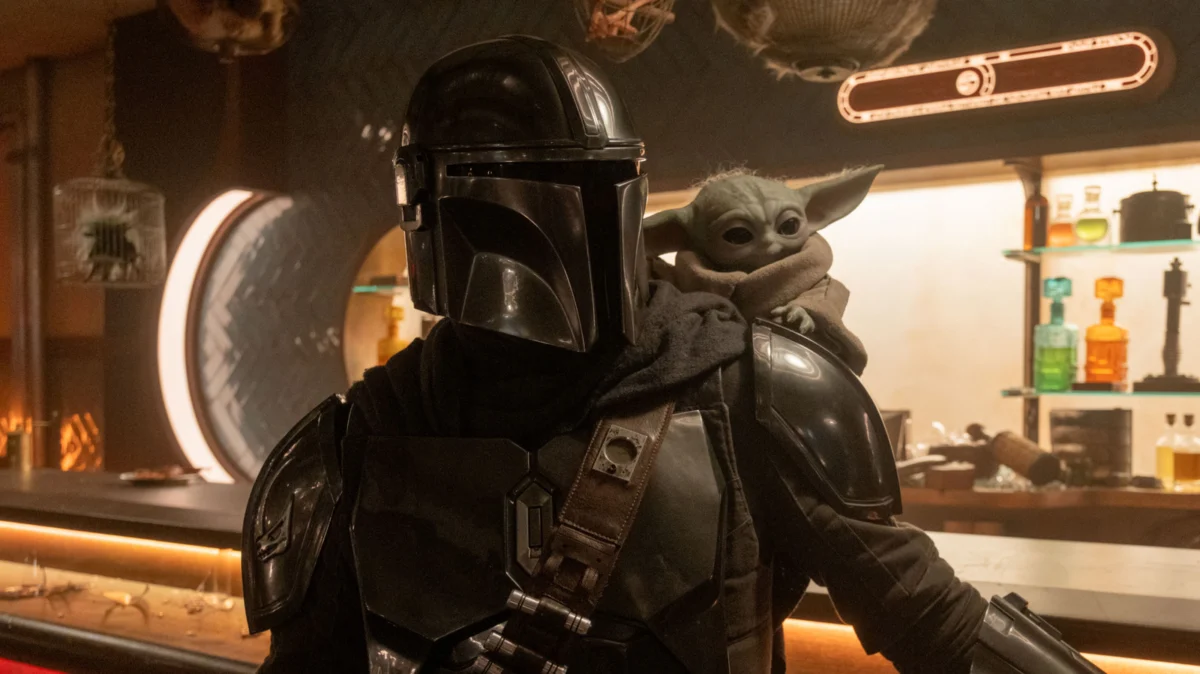
The cinematic landscape of 2026 is witnessing a milestone that fans and industry analysts have anticipated for nearly seven years: the return of the Star Wars franchise to the silver screen. Since the 2019 release of The Rise of Skywalker, the galaxy far, far away has resided almost exclusively on the Disney+ streaming platform. However, with the impending release of The Mandalorian and Grogu, Lucasfilm is not merely returning to theaters; it is testing a new financial and creative philosophy.
Directed by Jon Favreau and starring Pedro Pascal alongside Sigourney Weaver, the film carries the weight of a franchise that has historically been defined by record-breaking box office hauls. Yet, as the industry evolves, the metrics for "success" are shifting. For The Mandalorian and Grogu, a win does not require a $2 billion global intake. Instead, through fiscal pragmatism, strategic brand positioning, and a focus on family-oriented merchandising, this film is poised to revitalize the brand by proving that Star Wars can be both profitable and sustainable without needing to break every record in the book.
The Main Facts: Projections and Fiscal Realities
As The Mandalorian and Grogu prepares for its Memorial Day weekend debut on May 22, 2026, tracking data suggests a robust, if not unprecedented, opening. Preliminary forecasts from Box Office Theory and industry trackers place the domestic three-day opening between $74 million and $90 million. When accounting for the four-day Memorial Day holiday, that figure is expected to climb north of $100 million.
While these numbers are modest compared to the $247 million domestic opening of The Force Awakens (2015), they are remarkably healthy within the context of the current theatrical market. Perhaps the most significant "fact" regarding the film is its production budget. Reported at approximately $165 million, the film is a relative bargain compared to previous Disney-era Star Wars entries, which frequently saw budgets ballooning toward $300 million before marketing costs.
This lower overhead changes the math for Disney. In an era where Hollywood is grappling with a "budget problem"—where films often need to gross $800 million just to break even—The Mandalorian and Grogu enters the fray with a much lower hurdle. If the film performs similarly to Solo: A Star Wars Story, which grossed $393 million worldwide, it would likely be viewed as a respectable performer rather than a financial catastrophe, simply because its costs were kept in check.
Chronology: From the Small Screen to the Great Hiatus
To understand the stakes of this release, one must look at the timeline of the franchise over the last decade. Following the acquisition of Lucasfilm by Disney, the studio released five films in five years (2015–2019). While the Sequel Trilogy was a massive financial success, the performance of Solo in 2018 signaled "franchise fatigue."
Following 2019’s The Rise of Skywalker, which grossed $1.07 billion but polarized audiences and critics, Disney pivoted to television. The Mandalorian launched in late 2019 as the flagship series for Disney+, introducing the world to Din Djarin and the cultural phenomenon known as Grogu (colloquially "Baby Yoda"). For three seasons, these characters anchored the "Mando-verse," a series of interconnected shows including The Book of Boba Fett and Ahsoka.
The decision to transition the fourth season of The Mandalorian into a theatrical feature marks a pivotal shift in strategy. After a six-and-a-half-year hiatus from theaters—the longest gap since the period between the Prequels and the Sequels—Lucasfilm is using its most beloved TV characters to bridge the gap back to the cinema. This chronological shift suggests that Disney no longer views TV and film as separate silos, but as a fluid ecosystem where characters can graduate to the big screen once they have captured the cultural zeitgeist.
Supporting Data: The Power of the Family Demographic
Market data from 2025 and early 2026 underscores a clear trend: family-friendly, "four-quadrant" movies are the most reliable engines of the box office. Hits such as Lilo & Stitch, A Minecraft Movie, and The Super Mario Galaxy Movie have demonstrated that parents are willing to spend on theatrical experiences that appeal to children.
The Mandalorian and Grogu is uniquely positioned to capitalize on this. While the Sequel Trilogy often leaned into darker, more operatic themes, the relationship between Mando and his apprentice has a cross-generational appeal that mirrors the "Disney Magic" formula.
Comparison of Key Star Wars Openings (Domestic)
- The Force Awakens (2015): $247.9M
- The Last Jedi (2017): $220M
- The Rise of Skywalker (2019): $177.3M
- Rogue One (2016): $155M
- Solo (2018): $84.4M
- The Mandalorian and Grogu (2026 Forecast): $80M–$100M+ (4-day)
While the projected opening of The Mandalorian and Grogu sits at the lower end of this spectrum, it aligns with 2002’s Attack of the Clones, which opened to $80 million and went on to gross over $650 million globally. In 2026, a similar trajectory—bolstered by international markets and strong "legs" through the summer—would represent a massive win for a film with a $165 million price tag.
Official Sentiment: A Focus on Sustainable Growth
While Lucasfilm executives have been careful with their public pronouncements, the move toward a $165 million budget reflects an internal mandate for fiscal responsibility. Industry insiders suggest that the "billion-dollar-or-bust" mentality that characterized the mid-2010s is being replaced by a desire for sustainable franchise management.
Jon Favreau, the architect of this corner of the Star Wars universe, has emphasized the cinematic quality of the story. By utilizing "The Volume" (StageCraft technology) and streamlined production pipelines developed for the Disney+ series, the production was able to achieve "Star Wars scale" without the sprawling waste associated with many modern blockbusters.
The sentiment from Disney’s distribution arm is one of cautious optimism. They recognize that The Mandalorian is a proven brand with high "Q-Scores" (a measurement of a brand’s familiarity and appeal). Even if the film doesn’t reach the $1 billion mark, its role in maintaining the brand’s relevance during the lead-up to other announced projects—such as the Rey Skywalker film or James Mangold’s "Dawn of the Jedi"—is invaluable.
Implications: The Merchandising Juggernaut and Franchise Legitimacy
The most significant implication of The Mandalorian and Grogu lies in revenue streams that don’t appear on a box office chart. Since 2019, Grogu has been a merchandising goldmine. From plush toys to high-end collectibles, the character’s "toyetic" nature far exceeds that of characters from Rogue One or the Sequel Trilogy.
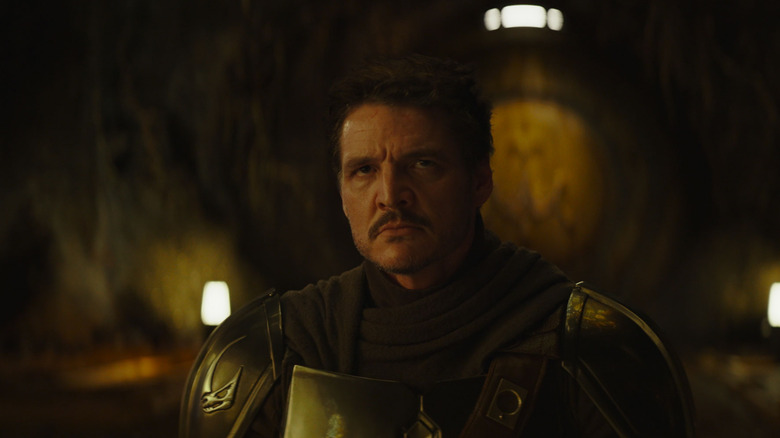
A theatrical release serves as a massive, global marketing campaign for these consumer products. While Rogue One was a critical and commercial darling, its characters did not drive toy sales in the same way a "Baby Yoda" movie will. For Disney, the box office is often just the "loss leader" (or in this case, a "profit leader") for a much larger ecosystem of theme park attractions and retail merchandise.
Furthermore, the film’s success will dictate the future of the "TV-to-Film" pipeline. If Din Djarin and Grogu can successfully make the jump, it legitimizes the Disney+ series as more than just "content"—it frames them as the minor leagues for the cinematic main stage. It proves to casual fans that the characters they’ve been watching at home are "real" Star Wars icons, worthy of the grandest scale possible.
The New Definition of "Success"
In conclusion, The Mandalorian and Grogu is a litmus test for a more disciplined Lucasfilm. By moving away from the $300 million "event" film and toward a more focused, family-friendly adventure, Disney is attempting to recalibrate expectations.
If the film grosses between $500 million and $700 million globally, it will be a significant financial success given its controlled budget. More importantly, it will have re-established Star Wars as a theatrical force, satisfied the core fanbase, and sold millions of Grogu plushies in the process. In the modern Hollywood landscape, that isn’t just a win—it’s a masterclass in franchise survival. As the film hits theaters on May 22, 2026, the industry will be watching not to see if it breaks records, but to see if it builds a sustainable bridge to the future of the galaxy.



Leave a Comment