
Beyond the Fatality: How ‘Mortal Kombat II’ Aims to Redefine the Video Game Cinematic Experience
The transition from pixelated arcade screens to the high-stakes world of Hollywood cinema has historically been a treacherous path. For decades, the Mortal Kombat franchise has stood as a titan of the gaming industry, yet its cinematic journey has been marked by a mixture of cult adoration and critical skepticism. Following the 2021 reboot, which successfully reintroduced the bloody mythology of Earthrealm to a modern audience, director Simon McQuoid has returned for the highly anticipated sequel, Mortal Kombat II.
In a recent exclusive deep dive into the production, McQuoid revealed that the secret to elevating the sequel beyond its predecessor lay not in more digital gore, but in technical authenticity and emotional resonance. By focusing on the "meta" history of fan-favorite Johnny Cage and the introduction of the regal but lethal Kitana, the production team aims to deliver what early buzz suggests is the most definitive live-action adaptation of the franchise to date.
Main Facts: A Sequel Built on Emotional Stakes and Meta-Narratives
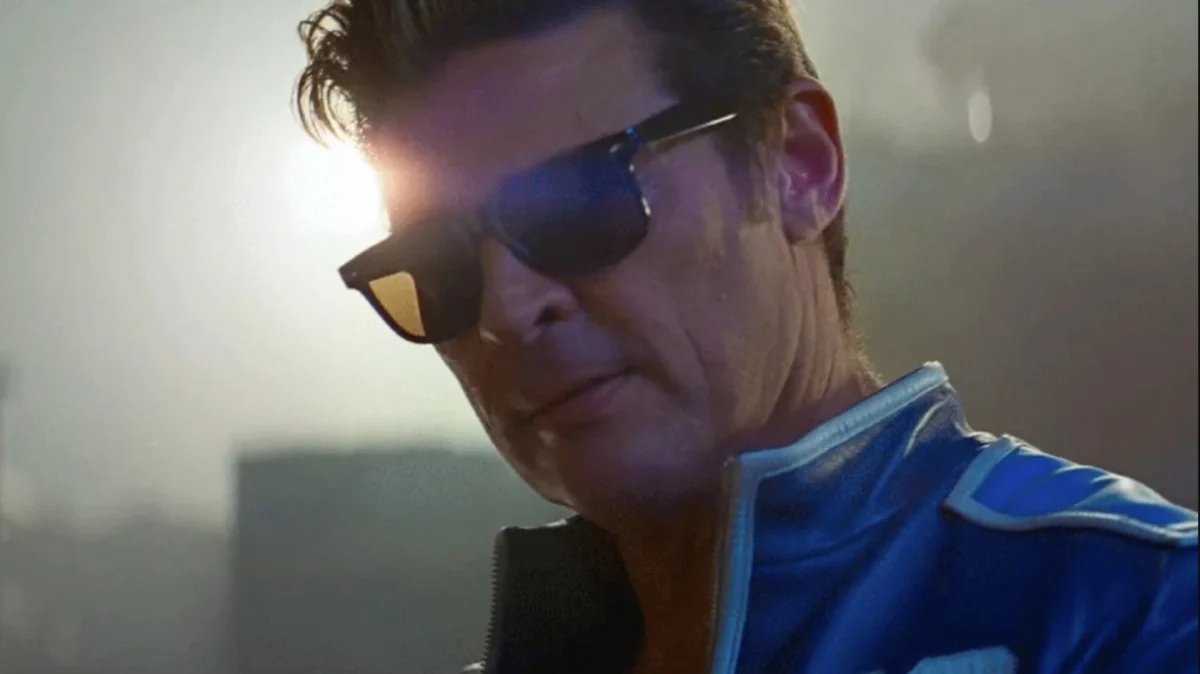
Mortal Kombat II picks up where the 2021 film left off, expanding the roster to include some of the most iconic figures in gaming history. The narrative core of the sequel revolves around the recruitment of Johnny Cage, played by Karl Urban (The Boys, Star Trek), and the introduction of Kitana, portrayed by Adeline Rudolph.
Director Simon McQuoid has emphasized a shift in philosophy for the sequel. While the first film was tasked with the heavy lifting of world-building and introducing the concept of "Arcana," the sequel dives straight into the character dynamics that have fueled the games for over thirty years. Central to this is the "movie-within-a-movie" concept—a portrayal of Johnny Cage’s waning Hollywood career that serves as both comic relief and a grounded backstory for the character.
Key technical highlights from the production include:
- Authentic Cinematography: The use of period-accurate lenses and actual film stock to recreate Johnny Cage’s fictional 1980s/90s action movies.
- Practical Stunt Work: A commitment to "in-camera" action, exemplified by high-level acrobatics performed by stunt professionals like Zia Kelly.
- Character-Driven Conflict: Fight sequences designed to mirror internal character growth rather than serving as mere spectacle.
Chronology: From the 2021 Reboot to the Tournament’s Return
The road to Mortal Kombat II began immediately following the commercial success of the 2021 reboot. Despite a day-and-date release on HBO Max during the pandemic, the first film became one of the platform’s most-watched titles, signaling a massive appetite for a R-rated, lore-accurate Mortal Kombat universe.
![Mortal Kombat II Director Reveals How They Made Johnny Cage's In-Universe Movie [Exclusive Interview]](https://www.slashfilm.com/img/gallery/mortal-kombat-ii-director-reveals-how-they-made-johnny-cages-in-universe-movie-exclusive-interview/l-intro-1778250365.jpg)
2021–2022: Feedback and Development
Following the release of the first film, McQuoid and the creative team took note of audience feedback. While the action was praised, fans clamored for the inclusion of Johnny Cage—who was notably absent from the first film’s main roster—and a more direct focus on the actual tournament. In early 2022, New Line Cinema and Warner Bros. officially greenlit the sequel, bringing on screenwriter Jeremy Slater (Moon Knight) to sharpen the script’s narrative edge.
2023: Production in Australia
Principal photography took place primarily in Australia. The production faced the challenge of balancing a massive ensemble cast while maintaining the "gritty" realism McQuoid established in the first installment. It was during this phase that the team decided to lean into Johnny Cage’s Hollywood persona, filming the "meta" sequences that McQuoid describes as vital to the film’s texture.
2024–2025: Post-Production and Release
The post-production phase focused on refining the visual effects for the more supernatural elements of the Outworld characters, ensuring that the "Fatalities" met the high expectations of the ESRB-defying source material.
Supporting Data: The Technical Artistry of Johnny Cage’s Backstory
One of the most discussed aspects of Mortal Kombat II is the portrayal of Johnny Cage as a "washed-up former ’90s action star." To make this feel authentic, McQuoid did not simply use digital filters. Instead, the production team treated the "fake" Johnny Cage movie as a legitimate period piece.
The Film Stock Strategy
McQuoid revealed that for the sequences depicting Cage’s past filmography, the crew utilized physical film and vintage lenses from the late 1980s and early 1990s. This choice was crucial for several reasons:
- Texture: Digital cameras often struggle to replicate the specific "grain" and light bleed of older action films.
- Color Science: The color palettes of the 1990s—often saturated with high contrast—were better captured through traditional chemical processing.
- Authenticity: By shooting on film, the production avoided the "Halloween costume" look, ensuring that even though the scenes were "cheesy" on purpose, they felt like legitimate artifacts of cinematic history.
The Stunt Integration
The film also leans heavily on the physical prowess of its cast and stunt doubles. A standout sequence involves a fight between Johnny Cage and Kitana. Rather than relying on "wire-fu" or heavy CGI augmentation, the sequence features a "giant flip" performed by Zia Kelly, the stunt double for Kitana. McQuoid noted that this maneuver was performed roughly 20 times to get the perfect take, all captured in-camera. This dedication to physical performance provides a weight and "impact" that modern CGI-laden blockbusters often lack.
![Mortal Kombat II Director Reveals How They Made Johnny Cage's In-Universe Movie [Exclusive Interview]](https://www.slashfilm.com/img/gallery/mortal-kombat-ii-director-reveals-how-they-made-johnny-cages-in-universe-movie-exclusive-interview/intro-1778250365.jpg)
Official Responses: Simon McQuoid on Balancing Tone
In his discussions regarding the film’s direction, Simon McQuoid has been vocal about the need to respect the "earnestness" of the Mortal Kombat lore. While the games are known for their over-the-top violence, the characters themselves take their world very seriously.
"It was important that they met each other early," McQuoid said regarding the initial meeting between Cage and Kitana. "They’re the main pillars of the film… we’re seeing the fight through Johnny’s eyes, and then we’re also seeing it through Kitana’s eyes."
McQuoid explained that the fight serves a dual purpose: it establishes Johnny as a "fish out of water" who needs to find his inner champion, and it establishes Kitana as a strategic, vengeful operative with her own agenda. This "emotional recipe," as McQuoid calls it, is what prevents the movie from becoming a series of disconnected fight scenes.
Regarding the "meta" Johnny Cage movie, McQuoid shared a lighthearted anecdote from the set: "What’s out of shot in those shots is there was like an office with a staircase… a large number of the other cast members were all standing on the staircase watching Karl [Urban] do his thing and cheering at the end of every move." This camaraderie among the cast, according to the director, translates into the chemistry seen on screen.
Implications: A New Standard for Game-to-Film Adaptations?
The approach taken by McQuoid and his team for Mortal Kombat II has broader implications for the film industry’s relationship with video games. For years, the "video game movie curse" was attributed to a lack of respect for the source material or an inability to translate game mechanics into narrative beats.
1. The Rise of "Meta-Faithfulness"
By embracing the "cheesy" history of Johnny Cage while maintaining high production values, Mortal Kombat II suggests that filmmakers no longer need to run away from the "sillier" aspects of gaming. Instead, they can integrate them into the character’s psychology.
![Mortal Kombat II Director Reveals How They Made Johnny Cage's In-Universe Movie [Exclusive Interview]](https://www.slashfilm.com/img/gallery/mortal-kombat-ii-director-reveals-how-they-made-johnny-cages-in-universe-movie-exclusive-interview/mcquoid-talks-balancing-and-then-flipping-his-protagonists-1778250366.jpg)
2. The Focus on Martial Arts Legends
The inclusion of actual martial artists and high-level stunt performers (like Zia Kelly and the returning Joe Taslim) reinforces a trend toward "action-first" filmmaking. Much like the John Wick franchise, Mortal Kombat II prioritizes the clarity of the fight, a move that is likely to be praised by both hardcore gamers and action cinema aficionados.
3. Expansion of the "Earthrealm" Universe
If Mortal Kombat II succeeds in being the "best live-action adaptation yet," as early reviews suggest, it paves the way for a much larger cinematic universe. With hundreds of characters in the MK library, the focus on emotional stakes in this sequel provides a blueprint for how to introduce more complex figures like Shao Kahn, Sindel, or Quan Chi in future installments.
Conclusion
Mortal Kombat II represents a pivotal moment for the franchise. By blending the "preposterous nature" of Johnny Cage’s Hollywood ego with the technical precision of 35mm film and practical stunts, Simon McQuoid is attempting to bridge the gap between arcade nostalgia and modern blockbuster storytelling. As the film hits theaters, the focus remains on whether this combination of "heart and hits" will resonate with the fans who have kept the franchise alive for over three decades. For now, the director’s commitment to authenticity—both emotional and technical—suggests that the tournament is in very capable hands.

Leave a Comment