
Elliott Gould’s Enduring Legacy: The Voice That Defined Philip Marlowe for a New Generation
Los Angeles, CA – Raymond Chandler’s iconic private detective, Philip Marlowe, remains one of the most indelible figures in American literature, a trench-coated knight-errant navigating the seedy underbelly of Los Angeles. While Marlowe has been brought to life by numerous actors on screen and radio, one particular interpretation, often overlooked by mainstream audiences, has proven profoundly influential for many: Elliott Gould’s comprehensive audiobook narrations. Though Gould’s cinematic portrayal of Marlowe in Robert Altman’s 1973 film The Long Goodbye remains a subject of fervent debate among Chandler aficionados, his vocal performances across the entire Marlowe canon have quietly established a benchmark for authenticity, transforming casual readers into devoted fans.
The revelation of Gould’s exceptional audio work sheds new light on the nuanced art of character interpretation, demonstrating how an actor can embody a role differently across various mediums. This dichotomy in Gould’s legacy — a divisive screen performance versus critically acclaimed audio narration — highlights the unique power of the spoken word to convey the intricate layers of a literary creation, particularly in the realm of hardboiled detective fiction.
A Detective’s Genesis: From Pulp to Icon
Raymond Chandler’s literary journey with Philip Marlowe began not with novels, but in the gritty pages of pulp magazines like Black Mask. Before Marlowe emerged fully formed, Chandler honed his craft and character archetypes through a series of short stories featuring proto-Marlowe figures such as Carmady and John Dalmas. These early narratives, characterized by their stark prose, moral ambiguity, and vivid depictions of urban decay, laid the groundwork for the cynical yet principled detective who would become a literary legend.
The evolution from Carmady to Dalmas, and finally to Marlowe, was a gradual refinement. Chandler often "cannibalized" elements from his short stories, expanding them into his full-length novels. For instance, the short story version of "The Lady in the Lake" later became the basis for the novel of the same name. This process allowed Chandler to deepen the psychological complexity of his detective and the labyrinthine plots he navigated. By 1942, Chandler had largely moved away from short story writing, dedicating himself to the longer form that would secure Marlowe’s place in literary history.
The Divisive Screen: Elliott Gould in The Long Goodbye
When Robert Altman cast Elliott Gould as Philip Marlowe in the 1973 neo-noir The Long Goodbye, it marked a radical departure from established cinematic interpretations. Prior actors like Humphrey Bogart and Dick Powell had portrayed Marlowe with a blend of stoicism and sharp wit, often adhering closely to the traditional hardboiled aesthetic. Altman and Gould, however, reimagined Marlowe for the counter-culture era, transplanting him from the 1940s to a contemporary 1970s Los Angeles.
Gould’s Marlowe was an anachronism: disheveled, perpetually smoking, and seemingly adrift in a world that had moved past him. His casual, almost lackadaisical demeanor, combined with the film’s loose narrative structure and improvisational feel, shocked many purists. The film was critically polarizing upon its release, with some hailing it as a brilliant deconstruction of the detective genre and others lambasting it as a betrayal of Chandler’s vision. For many long-time fans of the original novels, Gould’s on-screen portrayal felt too removed from the gritty, world-weary but ultimately honorable detective they cherished. Indeed, for some, like the contributor behind the "A (Black) Gat in the Hand" series, initial attempts to appreciate Gould’s The Long Goodbye proved futile, leading to repeated abandonments of re-watches. This strong reaction underscored the film’s significant divergence from the popular image of Philip Marlowe.
The Unsung Triumph: Gould’s Audiobook Narrations
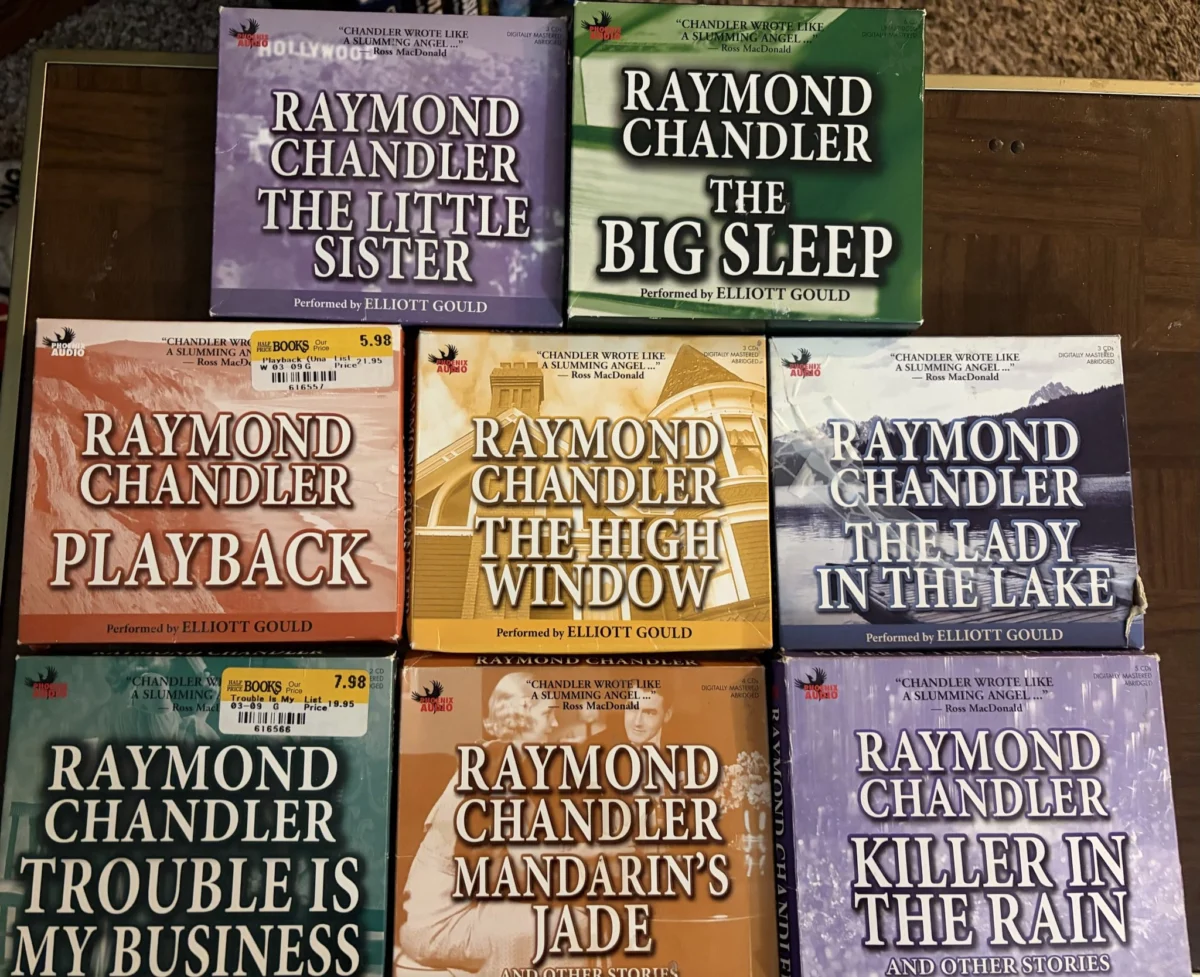
Despite the controversy surrounding his film, Elliott Gould embarked on a project that would cement his interpretative genius in an entirely different medium: narrating the complete Philip Marlowe novels and several non-Marlowe short stories as audiobooks. Recorded in the era of cassettes, these audio productions, many later released on CD, offered an intimate and profoundly faithful rendition of Chandler’s prose. The collection included all seven Marlowe novels: The Big Sleep, Farewell, My Lovely (though not explicitly listed in the provided snippet, it’s part of the complete set), The High Window, The Lady in the Lake, The Little Sister, The Long Goodbye (the novel), and Playback. Gould also narrated Poodle Springs, an unfinished Chandler novel later completed by Robert B. Parker. Beyond the novels, his work extended to several short story collections, including Killer in the Rain and Other Stories, Mandarin’s Jade and Other Stories, and Trouble is My Business.
For many, these audiobooks served as a gateway to Raymond Chandler’s literary brilliance. The original author of the piece, for example, credits Gould’s audiobooks, alongside Powers Boothe’s acclaimed HBO series Philip Marlowe, Private Eye, with converting them from a Chandler skeptic to a devoted fan. This transformative experience highlights the power of a well-executed audiobook to unlock the essence of a literary work, even for those initially resistant to its charm.
The Voice of Marlowe: An Analytical Deep Dive
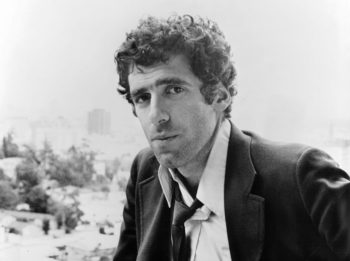
Gould’s success as an audiobook narrator lies in his uncanny ability to capture the very cadence and soul of Philip Marlowe as envisioned by Chandler. His voice is smooth, yet infused with the characteristic cynicism and world-weariness that define the detective. He doesn’t merely read the words; he embodies the narrative voice, allowing listeners to visualize the rain-slicked streets, the smoke-filled offices, and the shadowy figures of Chandler’s Los Angeles.
One of Gould’s particular strengths is his vocal portrayal of Marlowe’s distinctive interactions. The detective frequently encounters "hard dames," corrupt police, arrogant clients, and tough-guy thugs. Gould masterfully conveys Marlowe’s subtle reactions – his ability to "roll with it," often ignoring rather than arguing back, and his quiet defiance. Specific pronunciations, such as "coupe" as "coop-ay" and his consistent delivery of "porte-cochere" (a word Chandler was evidently fond of), add a touch of old-world class and authenticity that transports the listener directly into the period.
This vocal artistry stands in stark contrast to his cinematic performance. While his on-screen Marlowe was loose and deconstructed, his audio Marlowe is precise, layered, and deeply internalized. It’s a testament to his range that he could offer such divergent yet equally valid interpretations. The phenomenon mirrors that of Alfred Molina, whose modern-day film adaptation of Murder on the Orient Express received mixed reviews, but whose radio play performance as Hercule Poirot in "The Murder on the Links" was widely praised for its fidelity and nuance. In both cases, the auditory medium allowed the actors to delve into the character’s internal world with a depth that visual adaptation sometimes struggles to achieve. Gould sounds, as one might imagine, exactly "like Chandler reads."
The Canonical Works: A Map of Marlowe’s World
Gould’s comprehensive narration project provides a vital auditory archive of Chandler’s work. The novels, from the intricate web of secrets in The Big Sleep to the more introspective and melancholy Playback, showcase Marlowe’s evolution and the darkening landscape he inhabits.
His short story narrations are equally significant. Killer in the Rain and Other Stories is a crucial collection, featuring early Carmady tales that reveal the foundational elements of Marlowe’s character. Similarly, Mandarin’s Jade and Other Stories includes more Carmady adventures and introduces John Dalmas, who is essentially Marlowe in all but name. Trouble is My Business, a short novella, further cements Dalmas’s proto-Marlowe identity. These collections allow listeners to trace Chandler’s development of his signature detective, observing how he refined the character’s voice, moral code, and investigative style from the pulp magazines to the full-length novels.
Accessibility and Contemporary Alternatives
While many of Gould’s original audiobooks were recorded on cassettes and later released on CD, their enduring appeal has ensured their continued presence. Portions of his narrations can be found on platforms like YouTube, and many are accessible through library apps like Libby or via Audible subscriptions. Those fortunate enough to possess the original CD sets can still revisit these classic performances.
For those seeking alternative auditory experiences of Philip Marlowe, the BBC radio plays featuring Toby Stephens as the detective are widely considered excellent and are readily available for digital purchase. These productions offer another strong interpretation, but Gould’s pioneering work set a high bar for bringing Chandler’s world to life through sound alone.
Implications and Enduring Influence
Elliott Gould’s audiobook narrations have secured his place as a pivotal interpreter of Raymond Chandler’s Philip Marlowe. Far from being overshadowed by his controversial film role, his vocal performances have cultivated a deeper understanding and appreciation for the literary character among countless listeners. This legacy underscores the profound impact that a skilled narrator can have on a literary work, demonstrating that sometimes, the most authentic portrayal lies not in visual spectacle but in the intimacy of the spoken word.
His work highlights the unique power of audiobooks to connect audiences with classic literature, making complex narratives and iconic characters accessible to new generations. In an era where visual adaptations often dominate, Gould’s audio Marlowe stands as a testament to the enduring magic of voice acting and the written word. As the hardboiled genre continues to captivate audiences, Gould’s voice will remain a touchstone for what it means to truly inhabit the world of Philip Marlowe – a gumshoe with a gasper and a rod, forever walking those mean streets.
This exploration of Elliott Gould’s dual legacy is part of the ongoing "A (Black) Gat in the Hand" series, which consistently delves into the rich history and vibrant future of hardboiled and pulp fiction. As summer approaches, the series continues to explore the depths of detective narratives, affirming the timeless appeal of a genre defined by its sharp wit, moral complexities, and unforgettable characters.
About the Contributor:
Bob Byrne’s ‘A (Black) Gat in the Hand’ made its Black Gate debut in 2018 and has returned every Summer since. His ‘The Public Life of Sherlock Holmes’ column ran every Monday morning at Black Gate from March, 2014 through March, 2017. He irregularly posts on Rex Stout’s gargantuan detective in ‘Nero Wolfe’s Brownstone.’ He is a member of the Praed Street Irregulars, and founded www.SolarPons.com (the only website dedicated to the ‘Sherlock Holmes of Praed Street’). He organized Black Gate’s award-nominated ‘Discovering Robert E. Howard’ series, as well as the award-winning ‘Hither Came Conan’ series, which is now part of THE Definitive guide to Conan. He also organized 2023’s ‘Talking Tolkien.’ He has contributed stories to The MX Book of New Sherlock Holmes Stories – Parts III, IV, V, VI, XXI, and XXXIII. He has written introductions for Steeger Books, and appeared in several magazines, including Black Mask, Sherlock Holmes Mystery Magazine, The Strand Magazine, and Sherlock Magazine. You can definitely ‘experience the Bobness’ at Jason Waltz’s ‘24? in 42’ podcast.



Leave a Comment