
Embracing the Dark Side: Why the Villainous Series Reignites Our Love for Antagonists
For Immediate Release
[City, State] – [Date] – In a world saturated with tales of valiant heroes and their noble quests, there’s a refreshing allure in stepping into the shoes of the antagonist. The Villainous board game series, particularly its Star Wars iteration, has masterfully tapped into this primal desire, offering players a captivating journey into the minds and motivations of iconic cinematic villains. Far from being a mere novelty, Villainous has cemented its reputation as one of the most engaging two-player board games on the market, inviting participants to scheme, conquer, and revel in their darker impulses.
The traditional narratives of saving kingdoms, rescuing damsels, or thwarting environmental disasters often feel, well, a little too predictable. There’s a distinct, almost liberating thrill in casting aside the mantle of the goody-two-shoes and embracing the cunning, ambition, and sheer audacity that defines a truly great villain. Villainous doesn’t just allow this; it actively encourages it, turning the pursuit of evil into a strategic, competitive, and immensely satisfying experience.
The Genesis of a Phenomenon: A Chronology of Villainy
The Villainous saga began not in a galaxy far, far away, but in the magical realms of Disney. Ravensburger, the esteemed publisher, launched the series with Disney Villainous: The Worst Takes It All in 2018. This inaugural game immediately captivated players with its innovative asymmetrical gameplay, where each participant assumed the role of a classic Disney villain – Maleficent, Jafar, Ursula, Captain Hook, Prince John, or Queen of Hearts – each with unique objectives and strategies directly inspired by their on-screen exploits.
The core premise was simple yet brilliant: achieve your villain’s personal goal before your opponents can achieve theirs. However, the path to villainous victory was anything but straightforward, complicated by a shared "Fate" deck that allowed players to hinder their rivals by bringing heroes and troublesome events into their domains. This ingenious mechanic ensured constant interaction and strategic depth, preventing any single player from running away with the game unopposed.
The resounding success of the initial Disney offering quickly paved the way for a rapid expansion of the series, demonstrating Ravensburger’s commitment to exploring the full spectrum of villainy across various beloved franchises.
Expanding the Disney Empire: A Growing Roster of Malice
Following the debut, Ravensburger diligently continued to enrich the Disney Villainous universe with a steady stream of expansions, each introducing new iconic antagonists and fresh challenges:
- Wicked to the Core (2019): Brought villains like Hades, Dr. Facilier, and Evil Queen to the forefront.
- Evil Comes Prepared (2019): Introduced Scar, Yzma, and Ratigan, each with distinct, thematically rich objectives.
- Perfectly Wretched (2020): Added Cruella De Vil, Mother Gothel, and Pete, further diversifying gameplay.
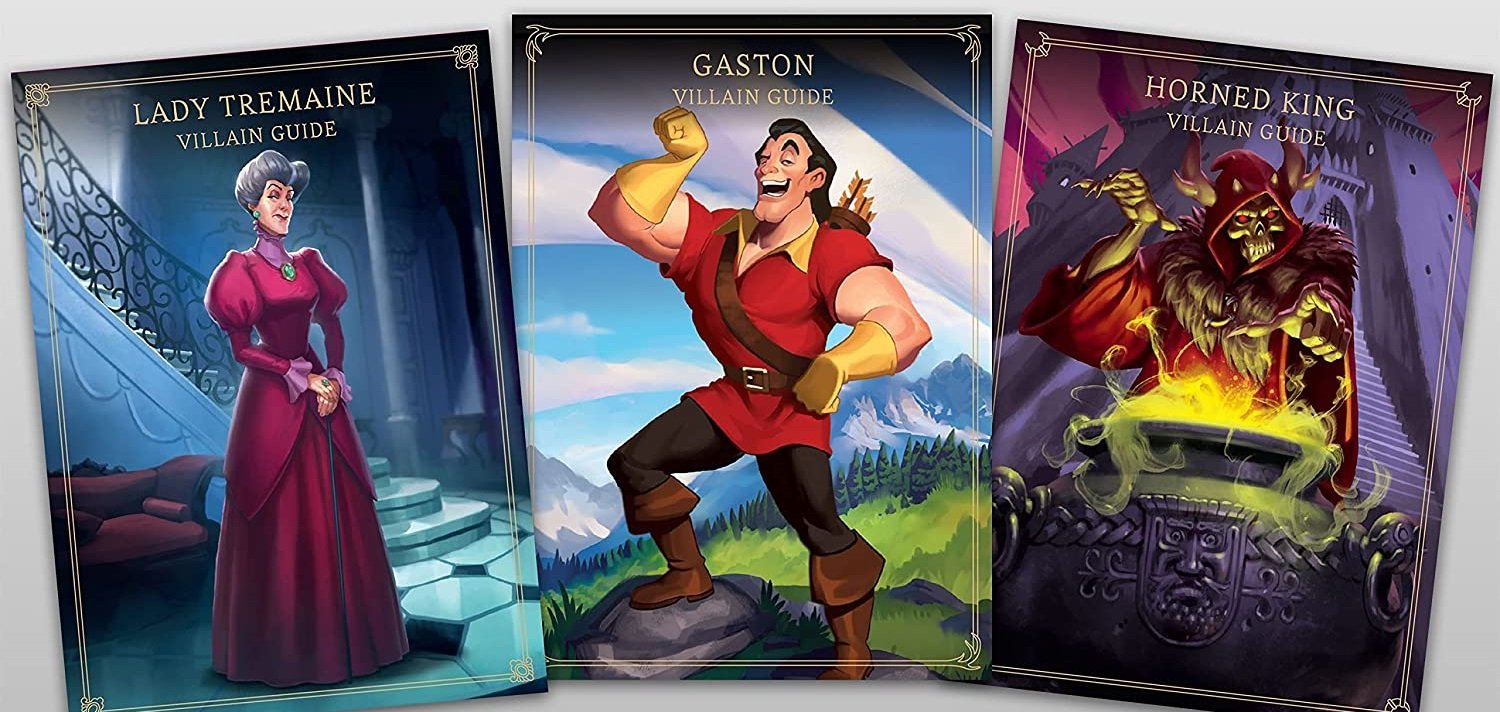
- Despicable Plots (2021): Delved deeper into Disney lore with Gaston, Lady Tremaine, and the surprisingly popular deep cut, The Horned King from The Black Cauldron, showcasing the series’ willingness to embrace even lesser-known but equally formidable antagonists.
- Bigger and Badder (2022): Introduced Syndrome, Lotso, and Madam Mim, continuing the tradition of unique gameplay styles.
- Filled With Fright (2023): Welcomed Oogie Boogie, Maleficent (a slightly different version perhaps, or a new interpretation of an existing villain, though typically expansions bring new ones), and other frightful figures.
Each expansion wasn’t just a character pack; it was a carefully crafted module that integrated new mechanics or refined existing ones to perfectly capture the essence of its featured villains, maintaining the game’s high standard of thematic immersion.
A Universe Apart: Marvel Villainous Enters the Fray
The triumph of Disney Villainous naturally led to speculation about other major intellectual properties. In 2020, Ravensburger answered the call with Marvel Villainous: Infinite Power. This iteration transported players into the Marvel Cinematic Universe and comic book mythos, allowing them to embody formidable foes such as Thanos, Hela, Ultron, Taskmaster, and Killmonger.
While retaining the core asymmetrical gameplay, Marvel Villainous introduced subtle but significant modifications to better reflect its source material. A shared Fate deck still existed, but "Event" cards could affect all players, mirroring the universe-spanning threats often seen in Marvel comics and films. The inclusion of "Allies" and "Items" specific to each villain further deepened the strategic layers, requiring players to adapt their tactics to the unique challenges of the Marvel universe. Subsequent Marvel expansions, such as Mischief & Malice (with Loki, Madame Masque, and M.O.D.O.K.) and We Are Venom (featuring the titular symbiote), continued to expand this universe with fresh villainous perspectives.
The Dark Side Rises: Star Wars Villainous Takes Center Stage
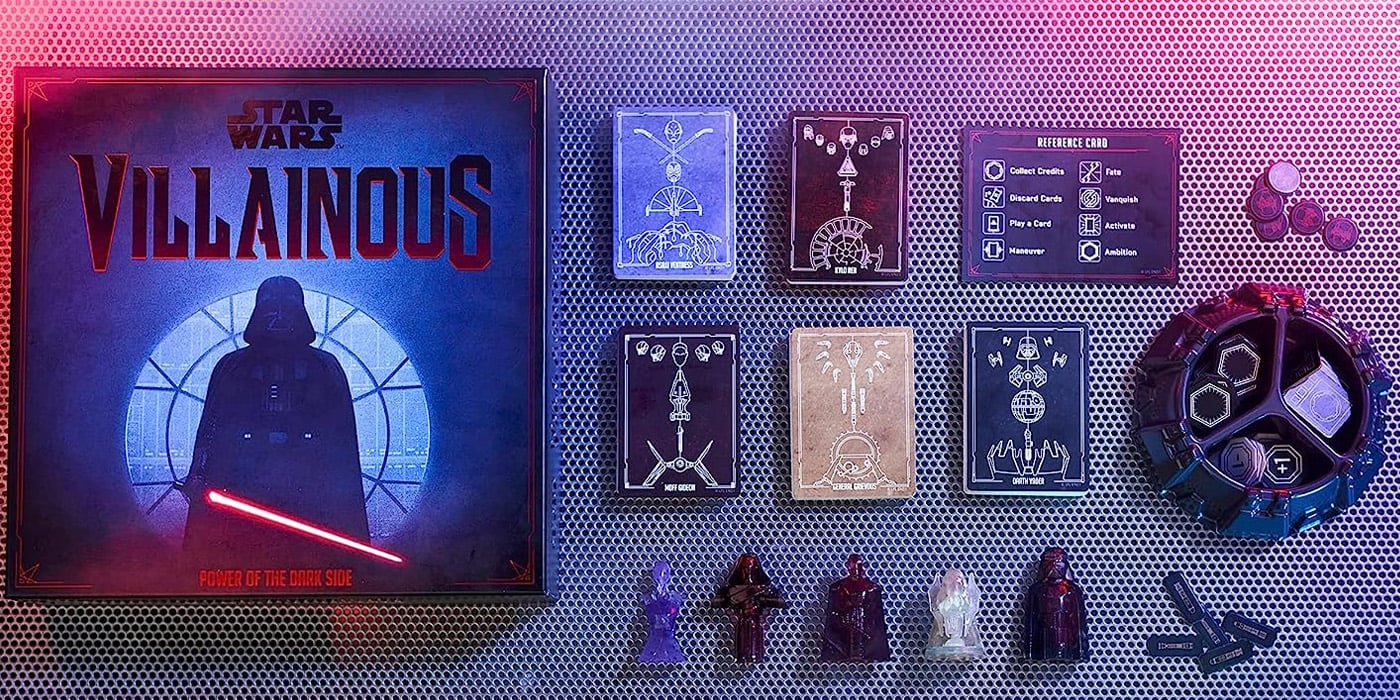
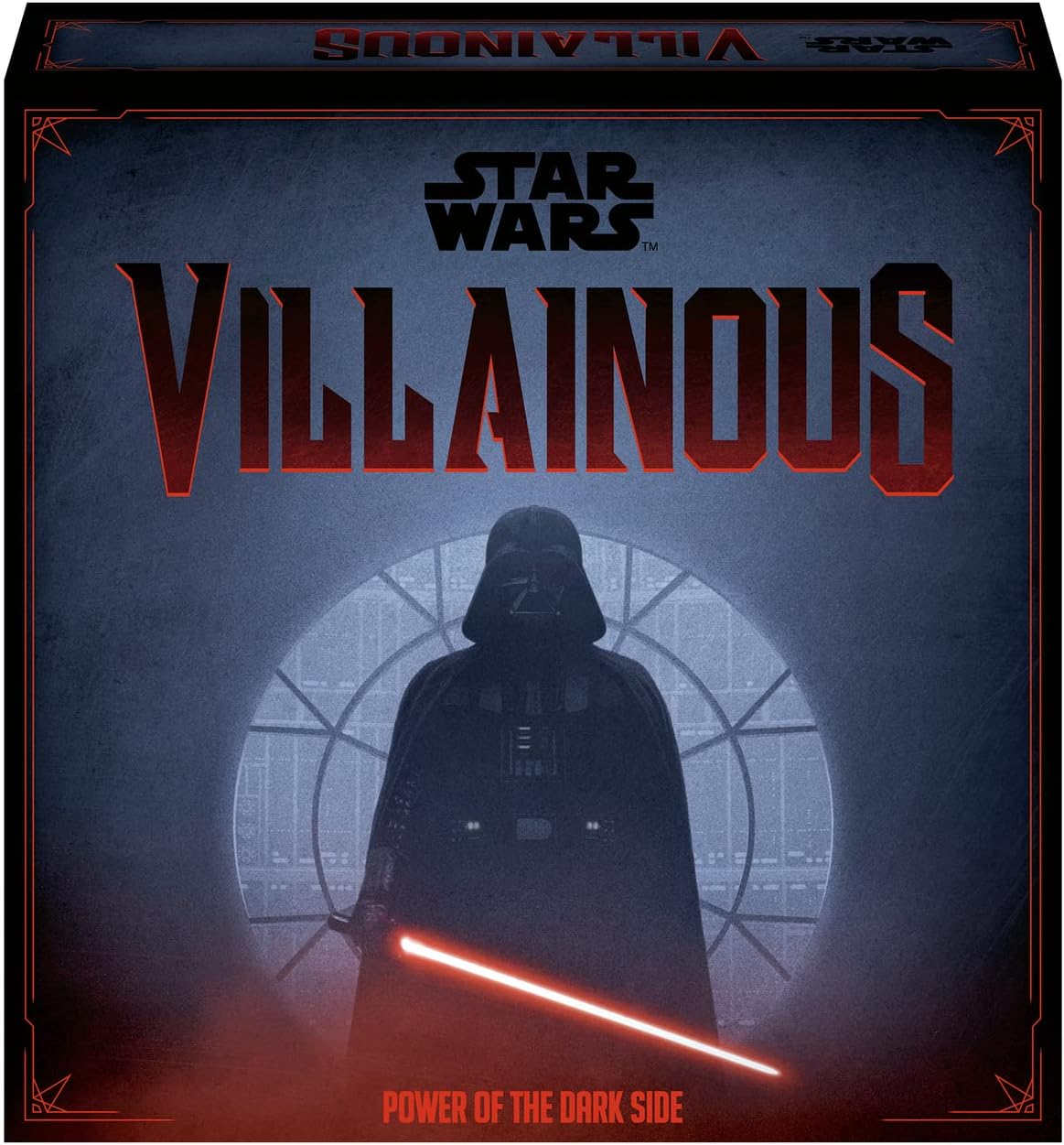
The logical next step for the Villainous series was to venture into one of the most iconic fictional universes of all time: Star Wars. In 2022, Ravensburger unleashed Star Wars Villainous: Power of the Dark Side. This installment was met with immense anticipation, promising players the chance to wield the power of the Force and the might of the Empire (or the First Order).
Power of the Dark Side introduced several innovative mechanics that beautifully integrated the unique elements of the Star Wars saga. Players navigated a sector-based board representing their villain’s domain, moving their characters and ships between locations. The concept of "Ambition" tokens added another layer of strategic depth, allowing players to activate special abilities or powerful actions. Iconic vehicles and unique "Ally" cards further enriched the thematic experience, immersing players in the galactic conflict.
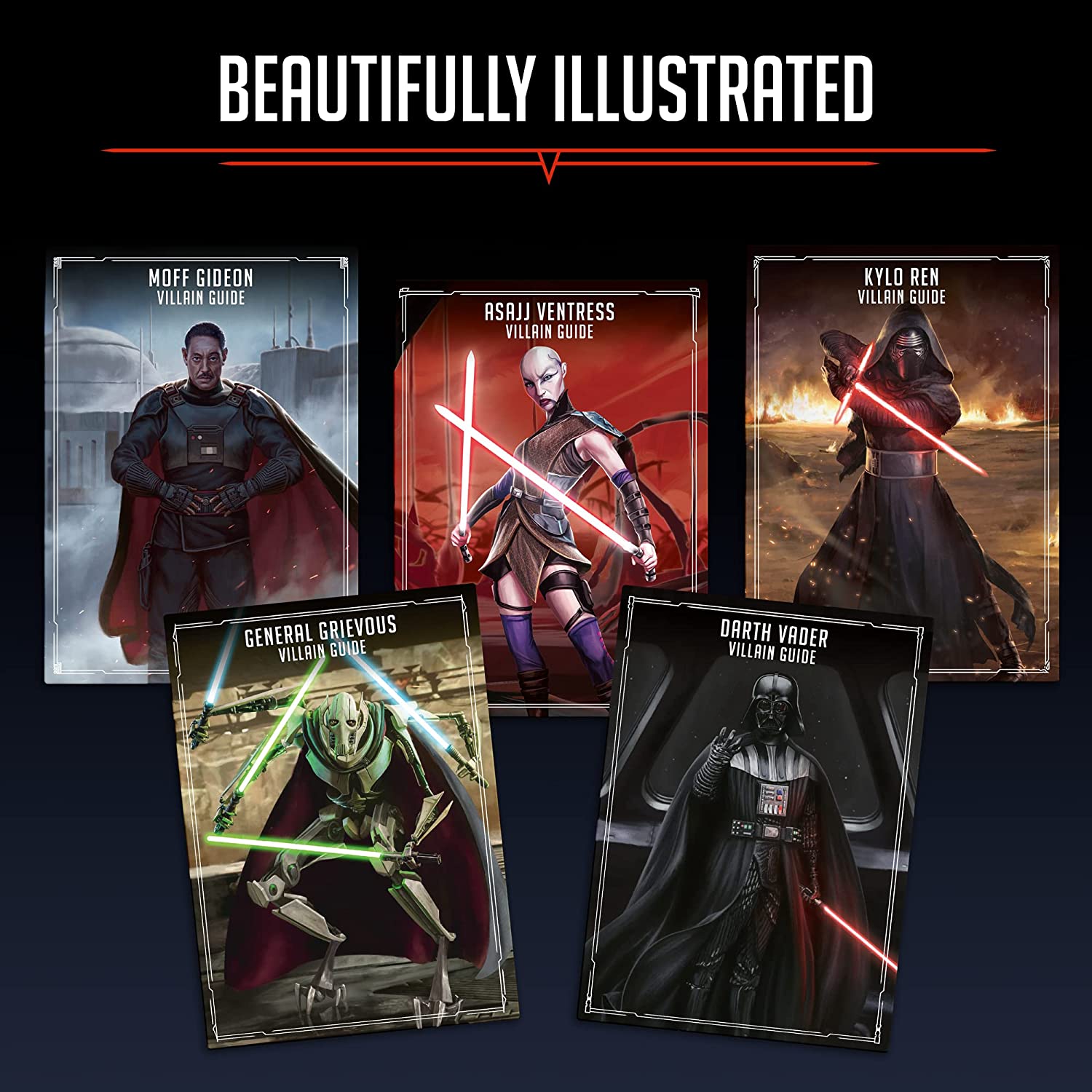
The initial lineup for Power of the Dark Side was a masterclass in villain selection:
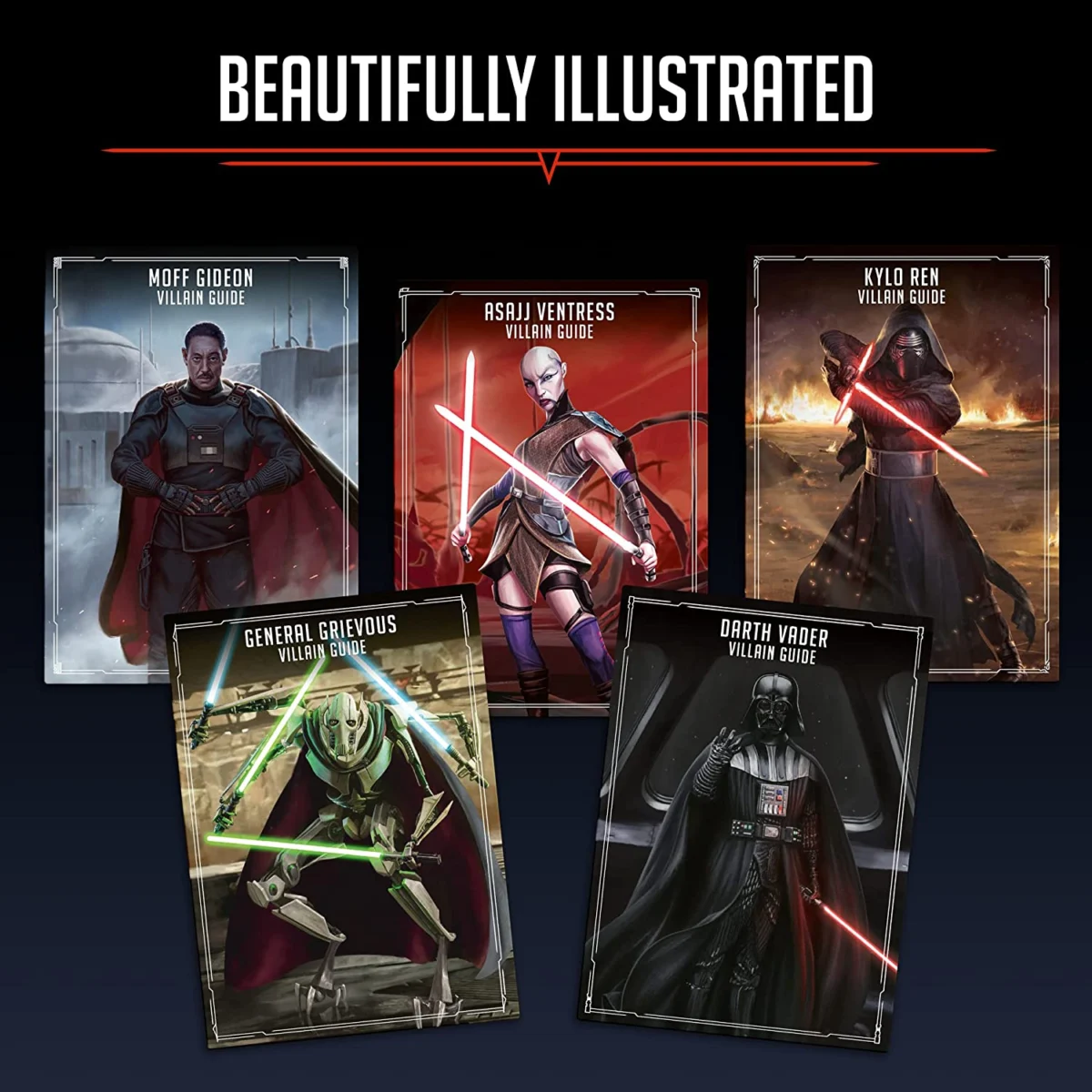
- Darth Vader: The quintessential embodiment of evil, seeking to lure Luke to the dark side.
- Kylo Ren: The conflicted but powerful leader of the First Order, striving to achieve ultimate power.
- General Grievous: The lightsaber-wielding cyborg general, on a relentless quest to collect Jedi sabers.
- Asajj Ventress: The deadly Sith assassin, seeking to prove her worth and exact revenge.
- Moff Gideon: The calculating Imperial officer, pursuing his own nefarious goals.
Each villain’s objective was meticulously designed to mirror their narrative arc in the Star Wars universe, making the gameplay deeply resonant for fans. The thrill of playing as a Sith Lord, manipulating events, and crushing the Rebellion (or the Resistance) added an irresistible bonus to an already compelling game system. The subsequent expansion, Scum and Villainy, further expanded the galaxy with fan-favorites like Boba Fett, Cad Bane, and Iden Versio, solidifying Star Wars Villainous as a cornerstone of the series.
The Craft of Villainy: Understanding the Core Gameplay
At its heart, the Villainous series thrives on elegant, asymmetrical design and robust player interaction. While specific rules vary between Disney, Marvel, and Star Wars iterations, the fundamental mechanics remain consistent:
- Asymmetrical Gameplay: This is the bedrock of Villainous. Each of the dozens of available villains possesses a unique player board, a dedicated deck of Villain cards (featuring Allies, Items, Effects, and Conditions), and a distinct victory objective. This ensures that every game offers a fresh strategic puzzle, as players must not only master their own villain but also anticipate the diverse strategies of their opponents.
- Objective-Driven Victory: Unlike many board games that rely on victory points or conquering territory, Villainous ties victory directly to each villain’s narrative goal. Maleficent needs to curse all realms, Jafar needs to obtain the lamp and the Sultan, Thanos needs to collect the Infinity Stones, and Darth Vader needs to defeat Luke Skywalker. This thematic integration is a huge draw, making every action feel purposeful within the context of the character’s story.
- The Fate Deck: A Double-Edged Sword: This shared deck is where much of the player interaction and emergent storytelling occurs. On a player’s turn, they can choose to "Fate" an opponent, drawing cards from the Fate deck and playing a "Hero" or "Event" into that opponent’s realm. These Fate cards actively hinder the opponent, blocking actions, requiring resources, or even forcing them to discard crucial cards. This creates a dynamic push-and-pull, as players must balance their own progress with disrupting their rivals.
- Power Tokens and Actions: Players collect "Power" tokens, the game’s primary currency, to play cards from their hand. Each turn, a player selects a location on their board and performs the actions available there (e.g., gain Power, play a card, move a card, Fate an opponent, defeat a Hero). Strategic allocation of Power and careful sequencing of actions are crucial for success.
- Thematic Integration: Perhaps the greatest strength of Villainous is its impeccable thematic integration. Every card, every action, every objective feels perfectly aligned with the source material. Playing as Ursula means making contracts, and her opponents can play Ariel to thwart her. As General Grievous, you literally collect Lightsabers. This deep connection to the intellectual property elevates the game beyond a mere card-and-board exercise into a rich narrative experience.
Why Villainous Shines as a Two-Player Experience
While Villainous supports up to four or even six players (depending on the base game and expansions), it truly shines as a two-player game. This optimal player count offers several distinct advantages:
- Reduced Downtime: With fewer players, turns cycle faster, keeping both participants engaged and minimizing waiting periods. This maintains momentum and intensity throughout the game.
- Increased Strategic Depth: In a two-player duel, the interaction is more direct and personal. Players can more accurately track their opponent’s progress, anticipate their moves, and tailor their Fate actions to deliver maximum impact. It becomes a true chess match of villainous wits.
- Faster Game Flow: Games typically conclude more quickly with two players, making it easier to fit into a casual evening or to play multiple rounds trying different villain matchups.
- Direct Confrontation: The "duel" aspect between two competing villains feels incredibly satisfying. Whether it’s Lady Tremaine trying to marry off one of her daughters against Yzma trying to turn Kuzco into a llama, the direct competition fosters a sense of personal rivalry that’s less diluted than in larger player counts.
This makes Star Wars Villainous, or any Villainous title for that matter, an exceptional choice for couples, friends, or anyone looking for a engaging head-to-head board game experience.
Strategic Depth, Replayability, and the Allure of the Anti-Hero
Beyond its engaging mechanics, the Villainous series boasts immense replayability. With dozens of unique villains across the different sets, each offering a distinct playstyle and victory condition, players can spend countless hours exploring new strategies. Mastering a single villain is a rewarding challenge, but the true depth comes from understanding how each villain interacts with and counters the others.
The unpredictability of the Fate deck ensures that no two games are exactly alike. Players must constantly adapt to the heroes and events that their opponents throw their way, forcing them to think on their feet and adjust their plans. This dynamic environment keeps the game fresh and exciting, even after numerous plays.
The appeal of playing as the anti-hero is a significant draw. It allows players to explore darker themes, indulge in Machiavellian schemes, and experience power fantasies without real-world consequences. This psychological release, combined with the expertly crafted gameplay, makes Villainous more than just a game; it’s an opportunity to temporarily shed moral constraints and embrace the thrill of being truly, delightfully evil.
Market Impact and the Future of Villainy
The Villainous series has carved out a significant niche in the crowded board game market. It has proven that licensed intellectual properties can be integrated into board games in innovative and mechanically sound ways, moving beyond simple re-skins to create genuinely unique experiences. Its success has undoubtedly influenced other publishers to explore similar themes and licensed properties with greater depth.
Furthermore, Villainous has played a crucial role in introducing modern board gaming to a wider audience. Its familiar characters and relatively accessible rules make it an excellent gateway game for those new to the hobby, while its strategic depth keeps seasoned gamers coming back for more.
The ongoing success of the Villainous line suggests a bright future. As long as there are beloved fictional universes with compelling antagonists, there will be fertile ground for new expansions and iterations. Fans frequently speculate about potential future versions, perhaps exploring villains from Harry Potter, Lord of the Rings, or even independent film franchises. The possibilities are, much like a true villain’s ambition, seemingly infinite.
Embrace Your Inner Antagonist
Whether you’re a seasoned board gamer or simply looking for a compelling reason to embrace your darker side, the Villainous series offers an unparalleled experience. Its blend of thematic richness, asymmetrical gameplay, and strategic depth makes it a standout choice for any game night, especially for a competitive two-player showdown.
With Star Wars Villainous and other titles in the series currently available at significant discounts, there has never been a better time to answer the call of the dark side and discover the immense fun of being the villain. After all, sometimes, it’s just more fun to be bad.


Leave a Comment