
Eternia Awakens: Final Trailer for Masters of the Universe Unleashes Nostalgia and Hints at a Bold New Era
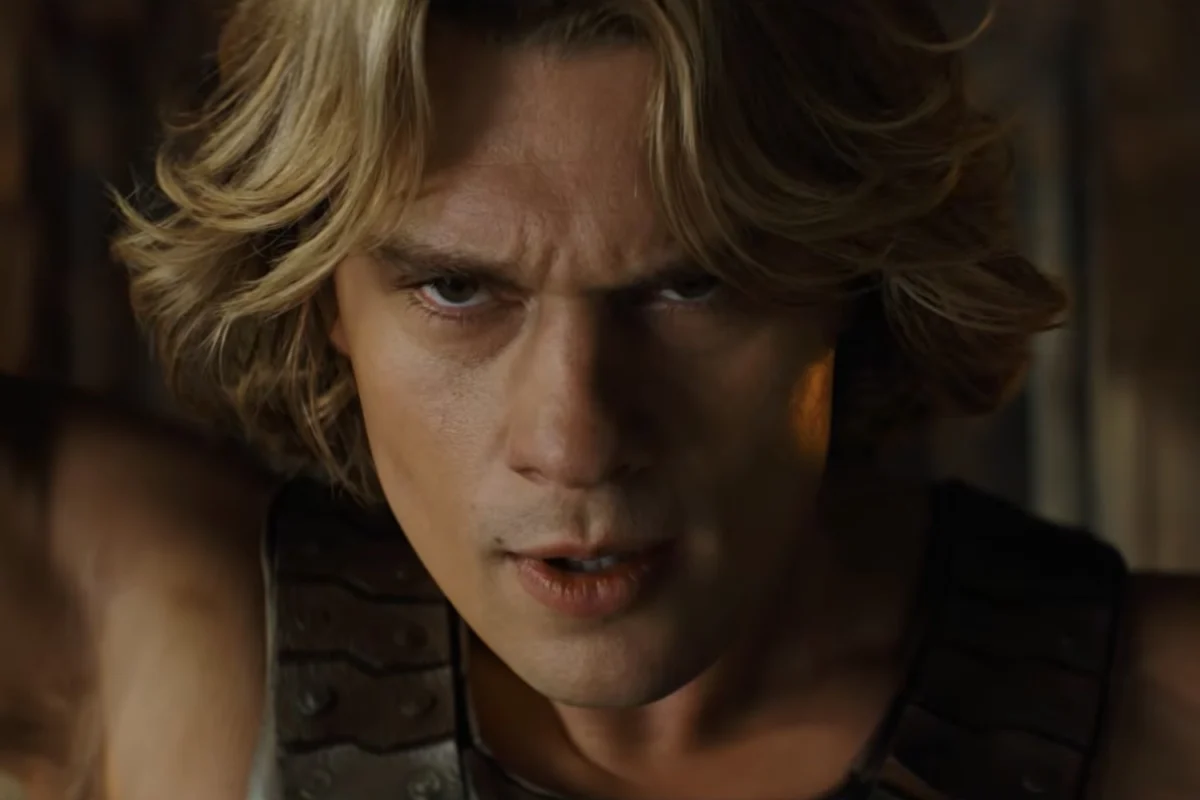
Los Angeles, CA – The hallowed halls of Castle Grayskull once again beckon, as the final, highly anticipated trailer for the live-action Masters of the Universe film has dropped, sending waves of nostalgia through generations of fans while simultaneously positioning itself for a new era. Slated for release on June 5, the film promises a vibrant return to Eternia, replete with heroic struggles, a colorful cast of characters, and an apparent self-awareness that aims to blend classic charm with contemporary sensibilities.
The trailer, notably devoid of the He-Man moniker despite its central protagonist, instead opts for the overarching Masters of the Universe title, a subtle nod perhaps to the expansive ensemble of characters it seeks to introduce or reintroduce. This strategic framing is immediately evident in the trailer’s overt embrace of its four-decade legacy. A fleeting, yet potent, glimpse of the original animated He-Man serves as an undeniable tether to the past, reminding long-time enthusiasts that this saga is far from its "first rodeo." Yet, the trailer’s genius lies in its dual appeal: a rapid-fire sequence of character name-checks, delivered with an almost playful urgency, not only rekindles memories for veteran fans but also conveniently serves as a crash course for a new generation potentially unfamiliar with the rich tapestry of Eternia’s inhabitants. "Hey, Mekaneck! Ram Man! ‘And you! Fisto!’" is not merely dialogue; it’s a deliberate marketing beat, designed to resonate and educate.
However, a notable asymmetry in these introductions has sparked early discussion. While the male heroes are called out by name, the prominent female characters showcased in the trailer—engaged in crucial counsel with Prince Adam or admiring his formidable physique—are not afforded the same explicit, declarative welcome. This perceived imbalance hints at a potential thematic undercurrent regarding gender roles and narrative focus, suggesting a deliberate choice by the filmmakers that will undoubtedly be scrutinized upon the film’s release.
Main Facts: A New Chapter for Eternia
The final trailer for Masters of the Universe serves as the definitive preview for what is poised to be a significant cinematic event. At its core, the film reintroduces audiences to Prince Adam, portrayed by Nicholas Galitzine, a reluctant hero burdened by destiny. The narrative thrust sees Adam, who has spent his formative years away from his home world, compelled to return to Eternia to confront an impending crisis. This journey will demand not only a confrontation with his past but also an embrace of his alter-ego, He-Man, and the iconic, if somewhat revealing, attire that accompanies the transformation.
The film boasts an impressive ensemble cast, bringing a blend of established stars and rising talents to beloved roles. Camilla Mendes steps into the formidable boots of Teela, the warrior companion to He-Man. Jared Leto takes on the pivotal villainous role of Skeletor, promising a potentially complex and menacing portrayal. Idris Elba lends his gravitas to Man-at-Arms, a trusted mentor and skilled inventor. Alison Brie is cast as the cunning sorceress Evil-Lyn, while Morena Baccarin embodies the mystical Sorceress. Supporting characters such as Sam C. Wilson as Trap Jaw, Hafþór Júlíus Björnsson as Goat Man, Kojo Attah as Tri-Klops, and Jóhannes Haukur Jóhannesson as Fisto further populate Eternia’s vibrant world.
Behind the camera, the film is directed by Travis Knight, known for his critically acclaimed work on Laika animation studios’ Kubo and the Two Strings and the beloved Transformers spin-off, Bumblebee. Knight’s background suggests a potential for both visual grandeur and heartfelt storytelling. The screenplay and/or story credits are shared by Chris Butler, Adam Nee, Dave Callaham, Alex Litvak, and Michael Finch, indicating a collaborative effort to craft this new iteration of the Masters of the Universe lore.
The film’s release date is set for June 5, promising a summer blockbuster entry that aims to capture the imaginations of both long-standing fans and a fresh audience. Early reactions, though still under embargo for full reviews, have been generally positive, with descriptors such as "gloriously campy" and a focus on "themes of fragile masculinity and ego" hinting at a film that is both entertaining and potentially thought-provoking.
Chronology: The Enduring Legacy of Eternia
The Masters of the Universe franchise is far more than just a single film; it is a cultural phenomenon spanning over four decades, rooted deeply in toy lines, animated series, comics, and previous cinematic attempts. Understanding this rich history is crucial to appreciating the significance of this new live-action adaptation.
The Birth of a Legend (1980s): The saga of He-Man began not on screen, but on toy shelves. In the early 1980s, Mattel, having missed out on the Star Wars action figure license, sought to create its own fantasy/sci-fi franchise. Designer Roger Sweet is credited with creating the initial He-Man prototype, emphasizing a powerful, barbarian-like figure. Launched in 1982, the Masters of the Universe toy line was an instant success, distinguished by its unique blend of sci-fi technology, sword-and-sorcery fantasy, and muscular, heroic characters. Each figure came with a mini-comic that fleshed out the lore of Eternia, Castle Grayskull, and the endless battle between He-Man and Skeletor.
Filmation’s Animated Revolution (1983-1985): To further promote the toy line, Mattel partnered with Filmation Studios to produce He-Man and the Masters of the Universe. Debuting in 1983, the animated series became a global sensation. It established much of the core mythology: Prince Adam, the seemingly lazy royal heir who secretly transforms into the mighty He-Man; his loyal companions Teela, Man-at-Arms, and Orko; the mysterious Sorceress; and his arch-nemesis, Skeletor, who perpetually seeks to conquer Castle Grayskull and harness its secrets. The show was renowned for its moral lessons, innovative animation techniques (for its time), and iconic voice acting. Its success quickly led to a spin-off, She-Ra: Princess of Power, further expanding the universe.
The First Live-Action Foray (1987): The popularity of the franchise naturally led to a big-screen adaptation. The 1987 Masters of the Universe film, starring Dolph Lundgren as He-Man and Frank Langella as Skeletor, was a valiant, if ultimately flawed, attempt to bring Eternia to life. Directed by Gary Goddard, the film famously transported He-Man and his allies to Earth, a creative decision largely driven by budgetary constraints. While it developed a cult following over the years for its practical effects and Langella’s committed performance, it was not a commercial success and failed to launch a planned franchise.
Attempts at Revival and Reimagining (1990s-2010s):
- The New Adventures of He-Man (1990-1991): A radical departure, this animated series reimagined He-Man in a futuristic, space-faring setting, largely alienating existing fans.
- Masters of the Universe (2002-2004): This well-received animated series, produced by Mike Young Productions, offered a modernized take on the classic Filmation aesthetic, with updated designs and more complex storylines. It was praised for its faithfulness to the original spirit while appealing to a new generation.
- Comic Books and Other Media: Throughout these decades, various comic book series from publishers like Marvel, Image, and DC Comics continued to explore and expand the lore, often offering darker or more mature interpretations of the characters and their world.
The Netflix Era (2020s): In recent years, Netflix has become a key player in the Masters of the Universe revival:
- Masters of the Universe: Revelation (2021): Developed by Kevin Smith, this animated series served as a direct continuation of the 1983 Filmation series, aiming to resolve unanswered plotlines and provide a more mature narrative. Its bold creative choices sparked both passionate praise and intense debate among fans.
- He-Man and the Masters of the Universe (2021-2022): A separate, CGI-animated series also on Netflix, this iteration offered a completely reimagined origin story for Prince Adam and his friends, targeting a younger audience with simplified designs and themes.
This extensive chronological journey underscores the enduring appeal and adaptability of the Masters of the Universe brand. Each iteration has sought to capture the essence of the original while attempting to innovate, reflecting changing tastes and technological advancements in storytelling. The new live-action film thus inherits a legacy of both triumphs and challenges, aiming to forge its own path within this storied history.
Supporting Data: Deconstructing the Trailer and Creative Vision
A deeper dive into the final trailer reveals much about the filmmakers’ intentions and the potential tone of this Masters of the Universe adaptation.
Nostalgia as a Cornerstone: The trailer masterfully deploys nostalgia, not just as a fleeting nod, but as a foundational element. The appearance of the classic Filmation He-Man is a powerful, almost Pavlovian trigger for older fans. This isn’t just about showing an old image; it’s about invoking the emotional connection millions have to their childhood. The explicit name-checking of characters like Mekaneck, Ram Man, and Fisto goes further. For those who grew up with the toy line and cartoon, these names conjure immediate images and memories, signifying that the film intends to populate Eternia with familiar faces beyond the core heroes and villains. For newer audiences, it introduces a colorful roster, hinting at a vast, imaginative world to explore, potentially inspiring interest in the source material or action figures. This dual-pronged approach is a clever marketing strategy in a franchise-heavy cinematic landscape.
Prince Adam’s Journey and Humorous Underpinnings: The plot outlines a familiar "chosen one" narrative: Prince Adam, exiled to Earth for his safety, must return to a imperiled Eternia. This allows for an "everyman in a fantastic world" dynamic, potentially making Adam more relatable before his transformation. Nicholas Galitzine’s portrayal of Adam, particularly his "very expressive, very mobile face" doing "very goofy things," suggests a deliberate embrace of humor and a lighter tone. This contrasts with more grim and gritty superhero fare and aligns with the "gloriously campy" descriptor from early reactions. It hints that the film won’t take itself too seriously, allowing for a broader appeal and acknowledging the inherent fantastical nature of the source material. His physical transformation into He-Man, requiring him to "wear some very tiny outfits," is also openly acknowledged, playing into the iconic, often-parodied, aesthetic of the character. Galitzine’s physique is clearly chosen to embody the action figure ideal, bridging the gap between toy and live-action hero.
The Glimmer of Gender Dynamics: The trailer’s differentiation in how male and female characters are introduced is a significant point of analysis. While Mekaneck, Ram Man, and Fisto receive direct, almost celebratory shout-outs, the women — Teela (Camilla Mendes), Evil-Lyn (Alison Brie), and the Sorceress (Morena Baccarin) — are shown in more functional, albeit powerful, roles: advising Prince Adam, or admiring his strength. This subtle distinction raises questions about the film’s broader approach to gender representation.
The original Masters of the Universe was criticized by some for its male-centric focus, even with strong female characters like Teela and the Sorceress. Modern adaptations often strive for more equitable representation. Will this film lean into traditional archetypes, or will the women be given equally dynamic and independent narrative arcs, despite the trailer’s initial framing? Camilla Mendes as Teela, a traditionally strong warrior, and Alison Brie as Evil-Lyn, a formidable sorceress, certainly have the potential to deliver complex performances that defy simple categorization. The implications of this observed difference will be keenly watched by critics and audiences sensitive to contemporary gender narratives in media.
Casting Choices and Their Impact:
- Nicholas Galitzine (Prince Adam/He-Man): His prior roles often showcase charm and a youthful energy, which could lend itself well to Adam’s initial reluctance and eventual heroism, balancing vulnerability with strength. His "goofy" expressions suggest a He-Man who isn’t just a stoic muscleman, but one with personality.
- Camilla Mendes (Teela): Known for her role in Riverdale, Mendes brings a modern sensibility and a strong screen presence. Her portrayal of Teela will be critical in shaping the film’s female representation.
- Jared Leto (Skeletor): Leto’s reputation for intense, transformative roles makes him an intriguing choice for Skeletor. His ability to embody complex villains could elevate Skeletor beyond a cartoonish antagonist into a truly menacing and memorable foe.
- Idris Elba (Man-at-Arms): Elba’s commanding presence and experience in action and fantasy roles make him a perfect fit for the wise and capable Man-at-Arms, providing a strong mentor figure for Adam.
- Alison Brie (Evil-Lyn) & Morena Baccarin (Sorceress): Both actresses are known for their versatility and strength. Brie could bring nuanced villainy to Evil-Lyn, while Baccarin’s presence could imbue the Sorceress with both power and warmth.
Creative Team: Director Travis Knight’s background is particularly interesting. His work on Kubo and the Two Strings demonstrated a keen eye for imaginative world-building and emotional depth, while Bumblebee proved his ability to handle beloved IPs with respect and a fresh perspective, successfully blending action with heart and humor. This suggests the Masters of the Universe film could be visually stunning, emotionally engaging, and possess a tone that balances action, fantasy, and a touch of wit, precisely the "self-aware, clever vibe" the trailer seems to hint at. The multiple screenwriters also indicate a complex development process, common for major franchise reboots, aiming to distill decades of lore into a cohesive and appealing cinematic story.
Official Responses: Navigating Early Critical Currents
While full critical reviews for Masters of the Universe remain under a strict embargo, the early responses aggregated by The Hollywood Reporter provide the first public glimpse into how the film is landing with initial viewers. The general sentiment appears to be positive, with two key descriptors emerging: "gloriously campy" and a focus on "themes of fragile masculinity and ego." These phrases offer intriguing insights into the film’s potential character and thematic depth.
"Gloriously Campy": This suggests that the film is not shying away from the inherent theatricality and over-the-top nature of its source material. Masters of the Universe, in its original form, was a colorful, often dramatic, and undeniably fantastical world. A "campy" approach implies that the filmmakers are embracing this legacy rather than attempting to ground it in excessive realism. This could manifest in exaggerated performances (perhaps Galitzine’s "goofy" expressions are part of this), vibrant costume design, elaborate sets, and action sequences that prioritize spectacle and fun over strict adherence to physics. Such a tone could be a strategic move, differentiating it from the darker, more serious superhero films prevalent today, and aligning it more with recent successful nostalgia-driven projects that found humor in their own origins (e.g., Barbie). If executed well, "gloriously campy" promises an entertaining and self-aware experience that celebrates the franchise’s unique charm.
"Themes of Fragile Masculinity and Ego": This is perhaps the most surprising and potentially significant revelation from the early reactions. He-Man, as an icon of hyper-masculinity, presents a rich ground for exploring such themes in a modern context. Prince Adam’s transformation into He-Man is a literal embodiment of power and strength, but the suggestion of "fragile masculinity" implies that the film might delve into the psychological weight of this power, the expectations placed upon male heroes, and the vulnerabilities that lie beneath a strong exterior. Is Adam struggling with the pressure of being He-Man? Does Skeletor’s relentless pursuit of power stem from an underlying insecurity or inflated ego?
Such themes would add a layer of sophistication to what might otherwise be perceived as a straightforward fantasy adventure. It positions the film not just as a nostalgic romp, but as a work that engages with contemporary discussions about identity, power, and societal pressures on men. This could appeal to a broader adult audience, demonstrating that even a property known for its muscle-bound heroes can offer meaningful commentary. It hints at a film that is "clever" and "self-aware," as the original article noted, using its fantastical premise to explore relatable human struggles.
The combination of "gloriously campy" and "fragile masculinity" suggests a nuanced tone: a film that is fun and visually engaging on the surface, but with a surprising depth underneath. This balance will be key to its critical and commercial success, as it attempts to satisfy both the craving for nostalgic escapism and the demand for relevant, thoughtful storytelling.
Implications: Charting the Future of Eternia
The release of Masters of the Universe carries significant implications, not only for the franchise itself but also for the broader landscape of nostalgia-driven reboots and cinematic universes.
The Future of the Masters of the Universe Franchise: This film represents Mattel’s latest and most ambitious attempt to revitalize its flagship property in live-action. A strong performance, both critically and commercially, could ignite a new cinematic universe centered around Eternia. This could lead to sequels exploring deeper lore, spin-off films focusing on other key characters (Teela, Skeletor, She-Ra), or even a new wave of animated series and merchandise. Conversely, if the film underperforms, it could signal a period of dormancy for live-action MOTU, perhaps relegating it once again to animated projects or niche comic book series. The stakes are undeniably high for Mattel, which has been actively investing in transforming its IPs into film and television properties.
Nostalgia Fatigue vs. Resurgence: Hollywood is currently awash in reboots, remakes, and legacy sequels. While some, like Top Gun: Maverick or Barbie, have achieved phenomenal success by expertly blending nostalgia with fresh storytelling, others have faltered due to a perceived lack of originality or a misreading of audience expectations. Masters of the Universe enters this crowded arena with a strong brand recognition but also the challenge of appealing to both the core fanbase (who have seen numerous iterations) and new viewers. Its "gloriously campy" and "self-aware" approach suggests it might lean into the fun and absurdity of its origins, potentially sidestepping the "gritty reboot" trap that has plagued other fantasy adaptations. Its success will be a barometer for how far the nostalgia wave can stretch, particularly for properties that have seen multiple reboots.
Balancing Old and New Audiences: The trailer’s dual strategy of summoning classic He-Man and introducing characters to a "new generation of action-figure-desiring children" highlights a critical challenge: how to craft a film that resonates with both existing adult fans and younger viewers. The humor, the visually dynamic action, and the accessible "chosen one" narrative are likely aimed at universal appeal. However, the deeper themes of "fragile masculinity" suggest a more mature undertone that might primarily engage adult audiences. Striking this balance without alienating either demographic is a delicate act, and the film’s success in this regard will offer valuable lessons for future franchise revivals.
Thematic Resonance in Modern Cinema: The exploration of "fragile masculinity and ego" within a franchise known for its muscular hero is particularly relevant today. In an era where traditional notions of heroism are being re-examined, a film that deconstructs or comments on the pressures of being "the most powerful man in the universe" could resonate powerfully. It could elevate Masters of the Universe beyond simple escapism, offering a nuanced perspective on strength, vulnerability, and leadership. This would be a significant step for a property often associated with simpler good-versus-evil narratives.
Economic Impact: Beyond the artistic and cultural implications, there are significant economic stakes. A successful film could rejuvenate the Masters of the Universe merchandise line, from action figures to apparel and collectibles. For Mattel, which has strategically moved into film production, a hit with MOTU would validate its creative direction and bolster its position as a major player in intellectual property development. The film’s performance will be closely watched by industry analysts as an indicator of the commercial viability of lesser-tapped legacy franchises.
As Masters of the Universe prepares to storm theaters on June 5, it carries the weight of a rich history and the promise of a vibrant future. The final trailer, with its potent blend of nostalgia, humor, and hints of deeper thematic exploration, suggests a film that is playing it safe in its core premise while daring to be bold in its execution. The kingdom of Eternia awaits its fate, and with it, potentially, the dawn of a new era for He-Man and his allies.


Leave a Comment