
"Loss Protocol": A Dystopian Elegy for a Changing World, Rooted in Trauma and Psychedelic Dreams
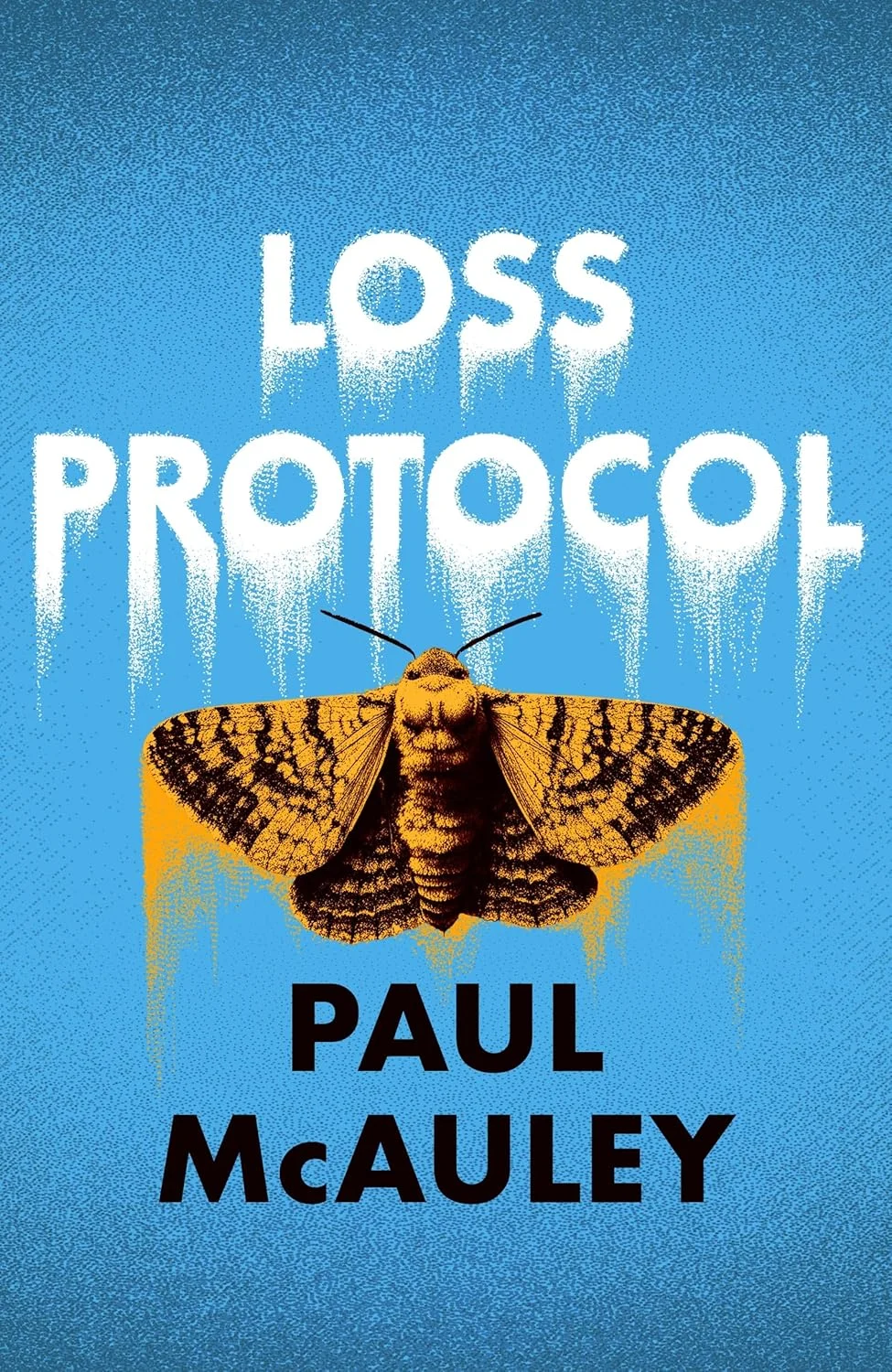
LONDON, England – In an era increasingly defined by environmental anxiety and the search for meaning amidst profound global shifts, Paul McAuley’s latest novel, Loss Protocol, emerges as a prescient and deeply affecting work of speculative fiction. Set against the backdrop of a heat-ravaged England in 2078, the novel intricately weaves a gripping personal quest with a haunting meditation on ecological collapse, the malleability of memory, and the elusive nature of agency. At its core lies Marc Winters, a man haunted by a traumatic past, thrust into a bewildering pursuit that challenges his very existence, all while the natural world around him continues its slow, inexorable decline.
McAuley, a seasoned architect of intricate futuristic landscapes and complex human dramas, delivers a narrative that is both intellectually stimulating and emotionally resonant. Loss Protocol is not merely a thriller; it is a meticulously crafted elegy for what we are losing, and a defiant whisper of hope for what might still be saved. It asks profound questions about our responsibility to the planet and to each other, wrapping them in a story that is as urgent as it is unforgettable.
Main Facts: A Ranger’s Ordeal in a Scorched Future
Loss Protocol introduces readers to Marc Winters, a ranger stationed on Cynsea Island in the Blackwater Estuary, Essex, in the year 2078. Eight years prior, his life was irrevocably altered by the death of his sister and the mysterious "siege at Wakestone Farm," an event he has diligently tried to bury in his past. Winters’ daily existence is a testament to humanity’s ongoing struggle against the pervasive effects of global heating, meticulously maintaining a fragile natural reserve in a world where "all the recent summers have been hot."
The novel’s driving force ignites when Winters is confronted with the shocking revelation that his sister, Izzy, believed dead in the Wakestone tragedy, is in fact alive. This discovery shatters his carefully constructed peace and propels him into a desperate search for her. This personal odyssey, however, quickly intertwines with the larger, more existential mysteries of Wakestone Farm: what truly transpired there, the hallucinogenic experiments conducted under the charismatic guru Kasey Motte, and the mind-bending belief that the commune managed to "dream a better world into being."
As Winters navigates this treacherous landscape of past traumas and present dangers, he finds himself caught between disparate factions—rogue "deep dreamers" seeking Izzy’s supposed hidden knowledge, and powerful, enigmatic figures like Lady Armstrong, desperate for answers about her own lost son. McAuley masterfully crafts a narrative that is part ecological warning, part psychedelic thriller, and part poignant exploration of grief and resilience in a world teetering on the brink. The novel is a compelling, multi-layered work that resonates deeply with contemporary concerns about climate change, the nature of reality, and the enduring human spirit.
Chronology: Unraveling the Threads of a Traumatized Future
The narrative of Loss Protocol unfolds with a deliberate, almost hypnotic rhythm, moving between Marc Winters’ present reality and the insidious pull of his past.
Marc Winters’ Present: A Guardian of Fading Nature (2078)
When we first meet Marc Winters, he embodies a quiet stoicism, dedicated to his role as a ranger on Cynsea Island. His days are a relentless, often solitary, effort to preserve what little remains of the natural world. England in 2078 is a land scarred by "global heating," a reality made palpable through McAuley’s vivid descriptions. Winters replaces dead trees with drought-resistant Spanish oaks, observes the northward migration of species, and meticulously maintains the infrastructure of the reserve. He is aided by a quiet, almost invisible technological infrastructure: swarms of drones for monitoring, and AI "agents" accessed via phones, seamlessly integrated into the background of daily life rather than dominating it. This portrayal of a future where technology serves quietly underscores the novel’s focus on organic rather than artificial intelligence.
Despite the grim environmental realities, a fragile optimism persists in the presence of dedicated birders, though their stories are invariably tales of "loss." One recounts the poignant "song of an endling," the last known wood warbler, singing for a mate it would never find. Others reminisce about the colossal starling murmurations of old, a spectacle now alien to Winters. These anecdotes are not mere background detail; they are the emotional anchors for the novel’s pervasive theme of "solastalgia," a profound melancholy born from witnessing the irreparable degradation of one’s home environment.
The Wakestone Past: A Commune’s Vision and Catastrophe (Eight Years Prior)
The catalyst for Winters’ current turmoil lies in the events eight years prior at Wakestone Farm. His sister, Izzy, a passionate environmental campaigner, had grown disillusioned with traditional activism. She believed that genuine change lay in radical restoration and "living lightly upon the earth," leading her to join the Wakestone commune. However, the commune, like many utopian experiments, proved susceptible to the influence of a charismatic leader. Kasey Motte arrived, bringing with him a potent, dangerous vision: the belief that through shared dreams, enhanced by specific strains of psychedelic mushrooms, they could literally "dream a better world into being."
Motte’s philosophy, steeped in ancient archetypes like the Wild Hunt and the Green Man, promised a path to altering reality itself. Winters himself was drawn into this vortex, having been dosed by Motte. His experience of vivid, hallucinatory encounters with these "emblems of a deeper reality" lingers, leaving him with an unsettling ambiguity: were these genuine glimpses into an altered reality, or merely the powerful suggestions of a mind under the influence? The "siege" at Wakestone culminated in what was widely believed to be the self-immolation of the commune members, a tragic end to a radical experiment.
The Resurfacing Truth: A Sister’s Ghost Returns
Winters’ carefully constructed peace shatters with a revelation from the police: Izzy was not among the dead at Wakestone. This shocking news ignites a desperate need to find her, to understand, and perhaps, to help. However, Winters is not alone in his pursuit. Other survivors of Wakestone, the "deep dreamers," have since been proselytizing Motte’s psychedelic gospel. They too seek Izzy, believing she holds vital "hidden knowledge" of the Wakestone experiments.
Adding another layer of complexity is Lady Armstrong, a powerful figure with her own agenda. Her son was also a member of the commune, and she seeks proof of what happened to him, willing to employ a private investigator, Bailey, and considerable resources to uncover the truth. The discovery that other communers are still alive fuels her relentless determination.
The Chase and Its Mind-Bending Revelations
Winters embarks on a reluctant but urgent cross-England journey, often more taken than traveling by his own volition. This "goose chase" is fraught with danger and manipulation. The "deep dreamers" eventually shift their focus from Izzy to Winters himself, believing his very existence is a miraculous "side-effect" of Wakestone’s reality-altering dreams. In their altered timeline, a less climate-ravaged world was created, where Izzy, originally an only child, now has a younger brother—Marc. This revelation presents Winters with an almost unbearable existential crisis: how to reconcile his fully established timeline and life with the idea that he might be a dreamed-into-being anomaly?
Throughout this ordeal, Winters is frequently outmaneuvered, a "non-player character" in a plot largely dictated by others. His intellectual, often overthinking nature, combined with moments of forced dosing by adversaries, strips him of genuine agency. He finds an unlikely ally in S, a young drifter ("Just S. They/them"), who acts as a kind of guardian angel or lucky charm, offering moments of unexpected help. This intricate web of pursuit, revelation, and existential questioning culminates in a profound re-evaluation of memory, reality, and the enduring human connection in a world desperately trying to heal.
Supporting Data: The Weaving of Climate, Consciousness, and Craft
McAuley’s Loss Protocol is a masterclass in thematic depth, where scientific rigor, psychological insight, and literary artistry converge to create a truly immersive experience.
Climate Change as a Pervasive Force and Emotional Landscape
The environmental backdrop of Loss Protocol is not merely scenery; it is an active character, shaping every aspect of life in 2078. The "hot summer of 2078" is not an anomaly but a continuation of "all the recent summers," a stark reminder that "global heating has taken hold." McAuley vividly portrays the "thinning of the natural world," the desperate measures of replacing native trees with more resilient species, and the continuous northward migration of wildlife. This scientific accuracy lends gravitas to the narrative, grounding its speculative elements in a chillingly plausible future.
Central to the novel’s emotional core is the concept of solastalgia. McAuley introduces this term with devastating precision: "knowing everything’s changing in all kinds of bad ways you can’t control, and also knowing that it’s only going to get worse. Anticipating a future that’s even more fucked up than the present—and thereby creating a nostalgia even for the present." This powerful definition captures the pervasive grief and helplessness that permeates Winters’ world, mirroring a growing sentiment in our own time. The poignant stories of "endling" birds—the last wood warbler singing for a mate it would never find—and the lost spectacle of starling murmurations serve as potent metaphors for this profound sense of ecological bereavement. These are not just scientific observations but emotional benchmarks, highlighting the "shifting baseline syndrome" where each generation accepts a diminished natural world as the new normal.
Yet, despite this grim portrayal, McAuley injects a crucial element of resilience. The "ongoing presence of birds and birders," however diminished, signifies a stubborn refusal to abandon hope. Winters’ own dedicated work as a ranger, painstakingly maintaining a reserve, embodies this spirit of active, localized resistance against overwhelming forces. The detailed, evocative nature writing, as exemplified by passages like Winters stumbling into a "dreamworld polder," paints a picture of enduring beauty and the profound connection between humanity and its environment. These moments are not just background; they are a vital plea for engagement, a reminder that the world around Winters, and around us, is "not merely background."
The Psychedelic Lens: Reality, Belief, and Suggestion
The exploration of psychedelic substances in Loss Protocol is far more nuanced than a simple recreational narrative. Kasey Motte’s ideology, that certain mushroom strains can facilitate a collective dream to "make the world better," challenges the very fabric of reality. The ambiguity surrounding the Wakestone experiments—did they genuinely alter the timeline, or was it a potent, shared delusion induced by powerful hallucinogens?—forms a crucial philosophical tension. Winters’ own experience of seeing "emblems of a deeper reality" (the Wild Hunt, the Green Man) while dosed by Motte forces him to confront the unreliability of his own memories and perceptions. His "rational mind attempts to reject" these vivid "waking dreams" that have become "true memories," reflecting a deep human struggle to reconcile subjective experience with objective truth.
McAuley deftly connects this theme to his earlier work, particularly Mind’s Eye (2007), which also explored the profound impact of complex visual images and hallucinogenic plants on the human psyche. This continuity demonstrates McAuley’s long-standing fascination with the frontiers of consciousness and the potential for altering perception to reshape reality, or at least, our understanding of it.
Literary Craft: Precision, Immediacy, and the Power of the Fragment
McAuley’s prose style is a distinctive element of Loss Protocol, contributing significantly to its impact. His "focus on detail is often present, in peopled places as well as empty ones," creating a rich, textured world. A hallmark of his writing, which he has honed since his first novel, Four Hundred Billion Stars (1988), is the "tendency to write incomplete sentences," or as the reviewer terms it, the "phrase with a full stop." This stylistic choice, far from being grammatically incorrect, is a "powerful tool in this author’s arsenal." It encourages an immediate, sensory "engagement with the senses," forcing the reader to absorb information "all at once rather than in the seriality of reading." In action sequences, this fragmented style effectively conveys the impression that "events are happening too fast to allow for excess words," heightening the sense of urgency and chaos.
Furthermore, the "cool, cerebral narration" and Winters’ tendency to "always be thinking—perhaps overthinking" contributes to his perceived lack of agency. This internal monologue, often detached and analytical, contrasts sharply with the external forces that manipulate him, reinforcing his role as a character swept along by events rather than actively directing them. It’s a subtle but effective way McAuley underscores the theme of individual powerlessness in the face of larger, systemic forces, whether they be environmental, social, or even reality-bending.
Subtle Technology and Environmental Optimism
Unlike many dystopian futures that foreground overt, oppressive AI or gleaming technological marvels, Loss Protocol integrates technology almost invisibly. The "no great, visible AI; it has melded into the background of the world" makes the setting feel eerily plausible. Drones and phone-accessed agents are tools, not masters, allowing the focus to remain firmly on the human and natural elements. This understated approach to technology enhances the novel’s realism and emphasizes that even with advanced tools, the fundamental challenges of environmental decay and human conflict remain.
Official Responses: Critical Resonance and Authorial Legacy
While Loss Protocol is a work of fiction, its themes resonate deeply with critical discourse surrounding environmental literature, speculative fiction, and the very real "official responses" to climate change in our world.
A Timely Contribution to Cli-Fi
Paul McAuley’s Loss Protocol stands as a significant contribution to the burgeoning genre of "cli-fi" (climate fiction). It moves beyond mere warning to explore the psychological and existential impacts of a warming planet. The novel’s portrayal of "solastalgia" and "shifting baseline syndrome" offers a critical lens through which to examine our own societal anxieties and the gradual acceptance of environmental degradation. Critics and readers alike are likely to see in McAuley’s 2078 England a reflection of current scientific forecasts and the urgent need for a societal "official response" to climate crisis. The book’s nuanced depiction of ongoing conservation efforts, however small, acts as a subtle encouragement to real-world environmental organizations and activists.
McAuley’s Enduring Vision
As a long-established figure in science fiction, McAuley’s work has consistently explored the intersections of science, technology, and the human condition. Loss Protocol solidifies his reputation as an author who doesn’t shy away from complex scientific concepts or challenging philosophical questions. His decision to foreground the natural world, even within a thriller framework, underscores his commitment to environmental themes, a thread visible throughout his career. This novel is not just a thrilling read; it is a thoughtful engagement with the legacy of human impact on Earth, viewed through the distinctive prism of his literary style. It invites readers to consider their own "official response" to the dire forecasts that loom large in both fiction and reality.
The Power of Narrative to Inspire
The novel’s underlying "implied reprimand" is balanced by a profound sense of encouragement. Despite the multiplying "end-times-believers" and the undeniable suffering of ecosystems, Loss Protocol manages to be "carefully written and thoughtful," presenting a surprisingly resilient vision. It posits that "The natural world, and all who care for it, including Winters, are more resilient than we fear." This message, while fictional, acts as a powerful "official response" to despair, suggesting that "There are still many options open, both for Winters and the world he (and we) live in." It encourages readers to find their own agency and hope in the face of overwhelming odds, mirroring the quiet determination of Marc Winters himself.
Implications: Agency, Reality, and the Path Forward
Loss Protocol leaves readers with a complex tapestry of implications, challenging their perceptions of reality, individual agency, and the collective future.
Re-evaluating Human Agency
Marc Winters’ journey serves as a powerful metaphor for the human condition in an age of overwhelming global challenges. His constant manipulation by external forces, his status as a "non-player character" in a plot he barely controls, and the existential revelation that his very existence might be a "side-effect" of an altered timeline, all speak to a profound question: how much agency do we truly possess in shaping our destinies, or the destiny of the planet? The novel suggests that while individual efforts might seem small, like Winters’ painstaking work on Cynsea Island, they are crucial. The narrative subtly pushes back against fatalism, implying that even a perceived lack of agency does not absolve one of responsibility. The "options open" are often found in persistence and connection.
The Malleability of Reality and Memory
McAuley’s exploration of psychedelic-induced "shared dreams" and their potential to alter reality has profound implications for how we understand truth and memory. If a collective belief, fueled by hallucinogens, can create a new timeline where a brother exists who didn’t before, what does that say about the solidity of our own perceived reality? The novel blurs the lines between subjective experience, shared delusion, and objective truth, inviting readers to question their own cognitive biases and the power of belief systems. This thematic thread resonates with contemporary discussions about misinformation and the construction of reality in a digital age.
A Call for Resilience and Optimism
Perhaps the most significant implication of Loss Protocol is its carefully cultivated message of resilient optimism. Despite painting a stark picture of environmental degradation and the psychological toll it exacts, the novel ultimately offers encouragement. It is not a naive hope, but one born from observing the tenacity of life and the unwavering dedication of those who strive to protect it. The enduring presence of nature, however diminished, and the continued efforts of characters like Winters, suggest that giving up is not an option.
The novel serves as a powerful reminder that while "ecosystems have undeniably suffered," and the future promises further challenges, "the natural world, and all who care for it… are more resilient than we fear." Loss Protocol implores us to engage with the world around us, to acknowledge the losses, but also to remain vigilant, active, and optimistic about the "many options open." Paul McAuley has not just delivered a compelling story, but a profound and timely reflection on our shared future, urging us to find our own protocol for navigating loss with hope and action.

Leave a Comment