
Subnautica 2’s Depths: Navigating the "Amusement Park" of Open Worlds and the Echoes of Colonialism
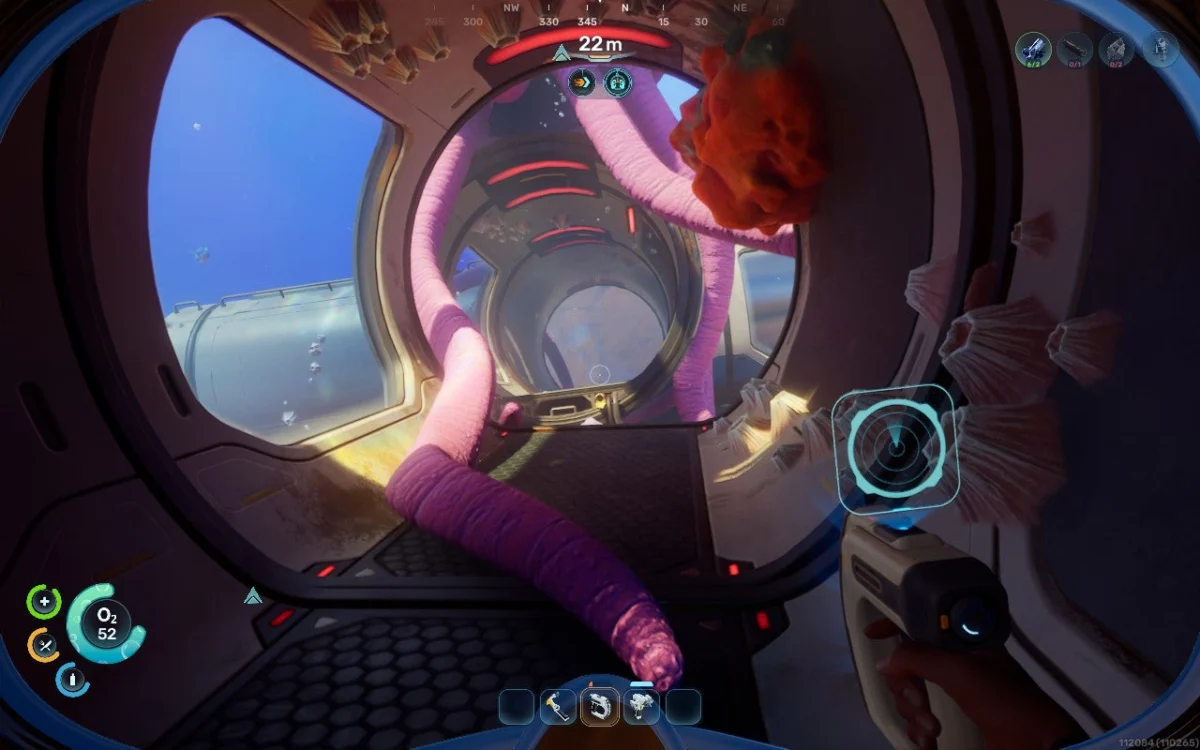
A conversation with designer Nikhil Murthy reveals how the upcoming underwater survival game challenges conventional open-world design, drawing parallels to colonial narratives and offering a fresh perspective on player agency.
The vast, unexplored oceans of Subnautica 2 beckon with promises of discovery and survival. Yet, beneath the surface of its compelling gameplay lies a deeper narrative, one that critiques the very fabric of open-world design and its often-unexamined colonial undertones. This exploration is further illuminated by insights from writer and designer Nikhil Murthy, whose thoughtful critiques of the genre offer a powerful lens through which to understand Subnautica 2’s unique approach.
As players descend into the alien depths, they encounter a world that simultaneously exists independently and is meticulously crafted for their interaction. This duality, a hallmark of many open-world games, is precisely what Murthy identifies as the "amusement park" design: a world that springs to life only in the player’s presence and recedes into dormancy upon their departure. This design choice, Murthy argues, can render game worlds hollow, reducing them to mere backdrops for a solitary hero’s adventure.
The "Amusement Park" of Open Worlds: A Colonial Legacy
Nikhil Murthy, an Indian developer known for his innovative work in genres ranging from basketball roguelikes to Civilization parodies, has extensively documented the problematic underpinnings of conventional open-world design. In a conversation months before Subnautica 2’s early access release, he elaborated on this concept:
"You go to the village, all the rides spin up," Murthy explained, drawing an analogy to player-centric game worlds. "You leave the village, all the rides spin down. They’re only moving while you’re there. And it makes the world feel hollow because if Ganondorf is there, if he’s got this giant floating castle of evil, and you have all of these heroic characters all across the world – why are they just waiting for you? Why are you the centre of everyone’s attention?"
This "amusement park" model, Murthy contends, perpetuates a narrative where the player is the sole protagonist, the linchpin around which the entire world revolves. Such design, he argues, carries a significant "colonial heritage." It mirrors historical colonial fantasies, such as Rudyard Kipling’s novel Kim, where India is depicted as an elaborate chessboard for the "Great Game" between imperial powers, with its inhabitants serving as passive pawns in a narrative that prioritizes the colonizer’s perspective.
"The idea that this person is the hero who comes out of nowhere and goes back into nowhere, and everything is built just so that this one guy can have fun," Murthy continued, discussing the common archetype of the "action man" protagonist. "Then what are we even talking about, you know – there is no good, there is no evil, there are no statements to be made. It’s just like, we’re here for this one person’s amusement, and that is a narrative that has colonial heritage."
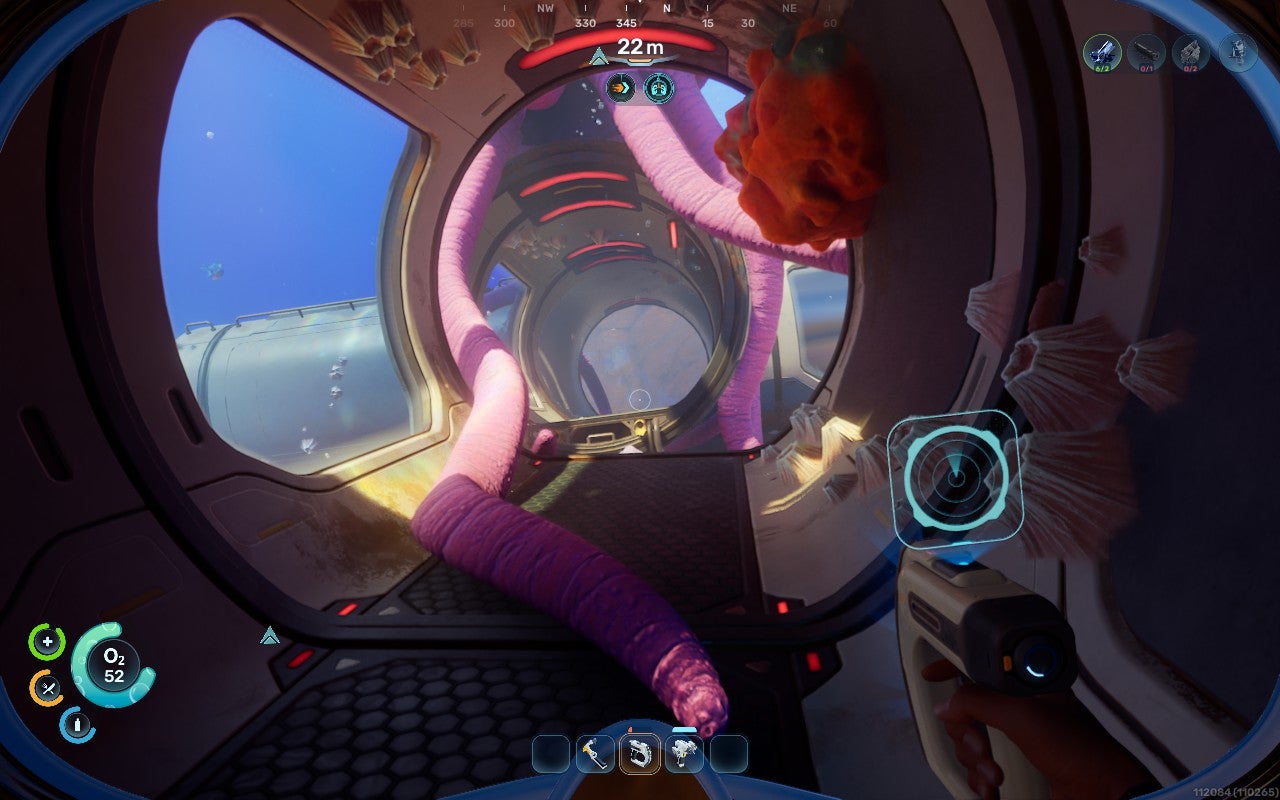
This solipsistic escapism, where the world exists solely for the player’s entertainment and progression, is a design choice that Subnautica 2 actively seeks to subvert.
Subnautica 2: A "Postcolonial" Dive into Player Agency
While acknowledging the presence of some "amusement park" elements in Subnautica 2, the game distinguishes itself by swimming against the dominant currents of its genre. It presents a world that is not merely a canvas for the player’s conquest but a complex ecosystem with its own internal logic and ongoing narratives.
The game’s approach to player interaction is particularly noteworthy. Unlike many open-world titles that equip players with an arsenal to dominate their environment, Subnautica 2 offers minimal weaponry. The focus shifts from being a "conqueror, colonist, dominator," as design lead Anthony Gallegos puts it, to a more nuanced role.
The Grotesque of Disposable Labor: A New Protagonist
Instead of a heroic figure, players embody a "grotesque of disposable labor" – a clone "pioneer" 3D-printed by an artificial intelligence named "Noa." This premise directly challenges the concept of the "blank tablet" protagonist that Murthy described. While players still "come out of nowhere and go back to nowhere," this recurrence is not a testament to their power but a stark illustration of their vulnerability and expendability within the game’s narrative.
This reimagining of the protagonist’s role is central to Subnautica 2’s "postcolonial" aspirations. The game doesn’t aim to have players impose their will on the world but rather to navigate a complex conflict between an insidious AI overlord and a mysterious, networked indigenous organism.
The Dual Threats: Noa and the Oceanic Entity
The early access narrative of Subnautica 2 traps players between two formidable forces vying for control over the game’s humanoid characters.
- Noa, the AI Supervisor: This automated entity is responsible for printing the clone pioneers and overseeing their investigation into the disappearances of their predecessors. Noa’s methods are starkly utilitarian, involving a "purgative ‘medical’ regimen" of euthanasia and reprinting for its minions. Its network of autonomous base terminals, intriguingly, is modeled on the cognitive architecture of cephalopods, blurring the lines between organic and artificial intelligence and presenting Noa itself as a form of "sea monster."
- The Indigenous Oceanic Entity: This networked organism, characterized by "comblike growths," reworks other lifeforms to ambiguous ends. It infests castaways, inducing delirium and mutations while luring them towards a strange, treelike structure on the horizon.
These two antagonists mirror each other in their pursuit of control, highlighting the game’s exploration of agency and exploitation. The lines between them are intentionally blurred, creating a narrative ambiguity that forces players to question their allegiances and motivations.

Beyond the "Action Man": Deconstructing Conventional Tropes
Subnautica 2 deliberately eschews the archetypal hero’s journey. The player’s biobed rebirths, far from being a triumphant emergence from an enchanted slumber like Link’s in The Legend of Zelda: Breath of the Wild, are presented as a "travesty," a grim testament to the character’s disposability.
While much of the game’s intrigue lies in its writing and narrative, the moment-to-moment gameplay still incorporates familiar routines of exploration and extraction. Fixed biomes, populated by creatures designed for easy recognition as resources or threats, are present. However, the artistry of these creatures, while drawing inspiration from real-world ocean fauna, also serves to position them as animate props within the broader game ecosystem.
Crucially, the passage of time in Subnautica 2 is not solely dictated by the player’s actions. While developers implement early access updates, the world itself possesses an agency that extends beyond the player’s direct influence. This stands in stark contrast to many open worlds that only react to the player’s presence.
The "Absence" of Weapons: A Subversive Design Choice
The "absence" of traditional weaponry in Subnautica 2 has been a point of contention for some players, accustomed to open worlds designed for conquest. However, this design choice is not mere contrarianism; it’s a deliberate move to subvert the expectation of player dominance.
Most open worlds are presented as passive, exotic landscapes to be explored and conquered. They may offer resistance, but ultimately, they lack the capacity to fundamentally alter the player. Subnautica 2, by restricting the player’s ability to kill, challenges this power dynamic. This move aligns with the sanitization of empire often presented in depictions of "unspoilt" worlds, whose apparent "emptiness" is frequently the result of unacknowledged violence.
Murthy’s Vision: Towards Decolonized Open Worlds
Nikhil Murthy’s ideas for postcolonial game design, discussed in his earlier conversation, resonate strongly with Subnautica 2’s current trajectory. His proposals offer a roadmap for creating open worlds that are more dynamic, complex, and less centered on the player as the sole arbiter of narrative and action.
Reversing and Distributing Agency
A core tenet of Murthy’s vision is the distribution of agency. He advocates for game worlds where other characters, events, places, and things can "happen" and continue to occur independently of player involvement.

"It can even be something like a dynamic stalemate, where you come into the situation, not from the start of the story, but the middle of the story," Murthy explained. "A town is constantly being besieged and there’s just that ongoing back and forth, so when you enter it, it doesn’t feel like you’ve come in at the start of the chapter, but more at the middle."
This concept of entering a world already in motion is evident in Subnautica 2. By the time players arrive, the conflict between Noa, the indigenous organism, and the other human colonists is well underway. The abandoned bases and labs scattered across the seabed are testaments to the ongoing struggles and differing approaches of those who came before.
Embracing Incoherence and Permanent Consequences
Murthy also champions worlds that possess a degree of self-unawareness, featuring historical accounts that contradict each other and sites of "incoherence" rather than a singular, authoritative lore.
"I think it’s important to give players that, to tell players that there are things that the game itself doesn’t know, that as a game designer, I don’t actually know," he stated. "The game itself, the world of the game, there are things within it that it doesn’t understand."
Furthermore, Murthy argues for the implementation of permanent consequences. Players should be able to leave indelible marks on the world, even when acting with the best intentions, rather than experiencing locations that reset between visits. This fosters a sense of genuine impact and permanence, moving away from the ephemeral nature of many game worlds.
Subnautica 2’s Evolving Depths: A Living, Breathing Ocean
Subnautica 2’s early access build already exhibits many of these postcolonial design principles. The narrative presents players with contrasting perspectives from fellow colonists, offering a spectrum of potential solutions to their predicament, including the intriguing possibility of "solidarity" with the sealife. The seabed itself serves as a narrative repository, littered with the remnants of past endeavors and the physical manifestations of failed experiments.
The ocean simulation itself demonstrates a departure from player-centric design. Creatures exhibit a greater capacity to interact with each other, with larger, territorial beings actively driving off rivals. This imbues the world with a "live" agency that transcends its relationship with the player, offering a more compelling experience than static lore entries or scripted encounters.

However, the "liveliness" of Subnautica 2’s ocean is carefully managed. While overfishing is possible, the predators do not decimate the smaller fauna essential for player survival. This delicate balance, while justifiable by the limited duration of player observation, ultimately suggests that the world, to meet genre expectations, still "waits upon you" to some extent.
Implications for the Future of Open-World Gaming
Subnautica 2, even in its incomplete early access state, offers a compelling glimpse into a future of open-world game design that actively interrogates and challenges its own conventions. By drawing parallels between the "amusement park" model and colonial narratives, and by thoughtfully distributing agency and embracing ambiguity, the game carves out a unique space for itself.
The conversation with Nikhil Murthy serves as a crucial framework for understanding these design choices. His insights illuminate how games can move beyond the solitary hero trope and offer richer, more complex, and ethically considered interactive experiences. As Subnautica 2 continues to evolve, its journey through the uncharted waters of open-world design promises to be one of the most fascinating explorations in recent gaming history, offering players not just a world to conquer, but a world to understand.


Leave a Comment