
The 90% Paradox: Why the World Discards Nuclear Fuel with Vast Energy Potential Unchecked
In the global quest for carbon-neutral baseload power, nuclear energy remains a cornerstone of the transition. However, a glaring inefficiency haunts the industry: the standard lifecycle of a nuclear fuel rod. Currently, when a fuel rod is removed from a reactor and labeled as "spent," it still contains approximately 90% of its potential thermal energy. This paradox—discarding a high-density energy source that is nearly full—represents one of the most complex intersections of economics, chemistry, and international security in modern science.
While the public often views nuclear waste as an empty shell of exhausted material, the reality is that "spent" fuel is more akin to a battery discarded after losing only 10% of its charge. The reasons why the United States and much of the world choose to bury this potential rather than harness it are rooted in a half-century of geopolitical tension and the cold mathematics of the global commodities market.
Main Facts: The Anatomy of "Spent" Fuel
To understand why so much energy is left on the table, one must first understand the composition of nuclear fuel. In a typical light-water reactor (LWR), fuel consists of ceramic pellets made of low-enriched uranium oxide. These pellets are stacked inside long metal tubes, or cladding, to form fuel rods.
The primary driver of energy in these rods is the isotope Uranium-235 (U-235). While natural uranium is mostly U-238, fuel rods are enriched so that U-235 makes up about 3% to 5% of the total mass. Through the process of nuclear fission—where neutrons split atoms to release heat—this U-235 is consumed.
The "spent" designation occurs not when the energy is gone, but when the concentration of U-235 drops below a level (typically less than 1%) where it can no longer efficiently sustain a chain reaction in a standard reactor. At the point of extraction, the rod’s composition has shifted:
- 96% Uranium: Mostly U-238, which did not fission but remains fertile and capable of being converted into fuel.
- 1% Plutonium: Created as a byproduct of U-238 absorbing neutrons. This plutonium is highly fissionable and holds immense energy potential.
- 3% Fission Products: True waste materials, such as cesium and strontium, which are highly radioactive but hold no further fuel value.
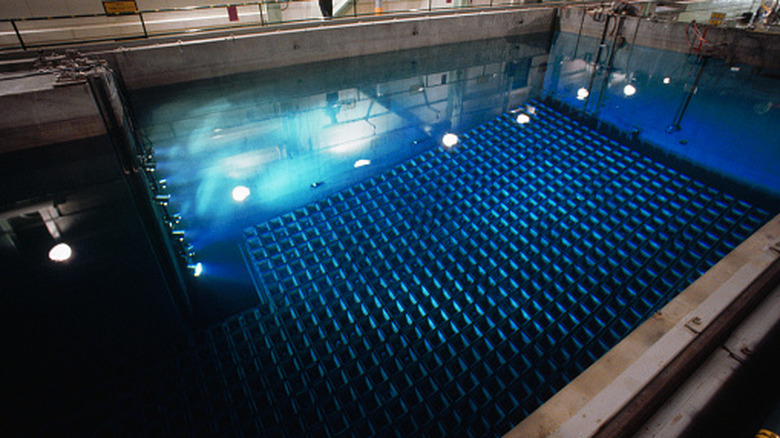
Essentially, 97% of the material in a "spent" rod is either unused uranium or newly created plutonium—both of which are potent fuel sources. Yet, in the United States, this material is moved to cooling pools and eventually to dry cask storage at more than 70 sites across 35 states, generating roughly 2,200 tons of waste annually.
Chronology: From the "Closed Loop" Dream to the "Once-Through" Reality
The history of nuclear fuel recycling is a narrative of shifting priorities. In the early days of the Atomic Age (the 1950s and 60s), scientists envisioned a "closed fuel cycle." The plan was simple: use uranium in a reactor, reprocess the spent fuel to extract the remaining uranium and plutonium, and feed it back into the system.
However, the 1970s brought a paradigm shift. In 1977, amid concerns over the proliferation of nuclear weapons, President Jimmy Carter issued an executive order to indefinitey suspend the commercial reprocessing and recycling of plutonium in the U.S. The fear was that the chemical separation of plutonium—a necessary step in recycling—could provide a pathway for state or non-state actors to acquire weapons-grade material.
While President Ronald Reagan lifted this ban in 1981, the damage to the commercial recycling industry was done. By then, the "once-through" cycle—mining uranium, using it once, and burying it—had become the institutional standard. In the decades since, the discovery of vast, high-grade uranium deposits in Kazakhstan, Canada, and Australia made raw ore so inexpensive that the costly chemical infrastructure required for reprocessing became economically unviable for private utilities.
Supporting Data: The Economics of Waste vs. Recycling
The decision to throw away 90% of potential energy is largely driven by the bottom line. According to data from the World Nuclear Association, the cost of raw uranium remains a fraction of the total cost of nuclear power generation. As long as "fresh" uranium is cheap, the incentive to invest billions into reprocessing facilities like France’s Orano plant at La Hague remains low.
France provides the most significant data point for the pro-recycling camp. The Orano facility reprocesses spent fuel from several countries, extracting uranium and plutonium to create Mixed Oxide (MOX) fuel. Currently, about 10% of France’s nuclear electricity is generated from recycled materials. Over its history, the facility has processed over 40,000 tonnes of spent fuel—enough to prove the technology’s scalability.
However, critics point to the limitations of current recycling. MOX fuel can generally only be recycled once in conventional reactors. After it is "spent" a second time, the isotopic buildup makes it unusable for further cycles in current-generation plants. Thus, while recycling extends the life of the fuel, it does not yet eliminate the need for long-term geological storage.
Official Responses and Expert Perspectives
The scientific community remains divided on whether the U.S. should pivot back to recycling. A landmark study by the Massachusetts Institute of Technology (MIT) in 2003, which was updated in 2009, provided a cautious outlook. The researchers concluded that for at least the next 50 years, the "once-through" cycle is the most cost-effective and proliferation-resistant method for the United States. They argued that the risks of transporting and chemically processing plutonium outweighed the benefits of fuel efficiency.
Conversely, the rise of nuclear startups like Oklo and Newcleo is challenging this consensus. Oklo is championing a process known as "pyroprocessing." Unlike the aqueous chemical separation used in France, pyroprocessing involves using molten salt and electricity to separate usable isotopes. Oklo argues that this method is "proliferation-resistant" because the resulting fuel mixture is never pure enough to be used in a weapon but is perfectly suitable for their planned fast-fission reactors.
However, the regulatory response remains stringent. The U.S. Nuclear Regulatory Commission (NRC) maintains rigorous oversight, and many experts remain skeptical of pyroprocessing’s commercial readiness. Critics argue that the technology has been "perpetually ten years away" for decades and lacks the peer-reviewed, large-scale data required to overhaul national policy.
Implications: The Future of "Clean" Energy and Waste Management
The implications of sticking with the "once-through" cycle are significant. As the world looks to nuclear power to meet climate goals, the volume of waste continues to grow. While nuclear power is carbon-free at the point of generation, the long-term management of spent fuel rods is a primary argument used by environmentalists to claim that nuclear is not "100% clean."
The future may lie in "Generation IV" reactors. These designs, including lead-cooled and sodium-cooled fast reactors, are specifically engineered to "burn" the isotopes that current light-water reactors cannot. If these reactors become commercially viable, the 90% of energy currently sitting in storage casks across America would transition from being a "waste liability" to a "strategic fuel reserve."
Furthermore, innovation in "nuclear batteries"—small-scale, long-life power cells that use the decay of radioactive isotopes—could revolutionize how we view waste. Rather than burying isotopes like Americium-241, we could harness them to power deep-space probes or remote sensors for decades.
Conclusion
The fact that we discard nuclear fuel with 90% of its power remaining is not a failure of physics, but a reflection of current economic and security priorities. We live in a "linear" nuclear economy because it is currently the safest and cheapest path. However, as the demand for sustainable energy intensifies and the technology for fast reactors matures, the pressure to "close the loop" will only increase.
For now, the thousands of tons of spent fuel rods stored in concrete casks represent a silent battery, waiting for a future where the cost of recycling and the need for energy finally outweigh the ghosts of the 20th century’s proliferation fears. Until that day, the industry will continue to mine the earth for new uranium, even as a century’s worth of power sits idle in the cooling pools of the world’s power plants.




Leave a Comment