The Architect of Dreams: Exploring the Provocative Surrealism of Alfred De Angelo

In the contemporary landscape of fine art, where digital renders and AI-generated imagery frequently dominate the conversation, the tactile and deeply psychological works of Alfred De Angelo stand as a testament to the enduring power of traditional surrealist painting. De Angelo, a master of visual narrative, does more than merely paint; he constructs "doorways" into a sensual world defined by provocative beauty and technical fluency. His work serves as a bridge between the subjective experience of the individual and the universal mysteries that govern human existence.
This comprehensive profile examines the life, educational pedigree, and philosophical framework of Alfred De Angelo, an artist whose work challenges the boundaries of understanding while offering a profound sense of delight and bewilderment.
Main Facts: The Aesthetic of Provocation and Beauty
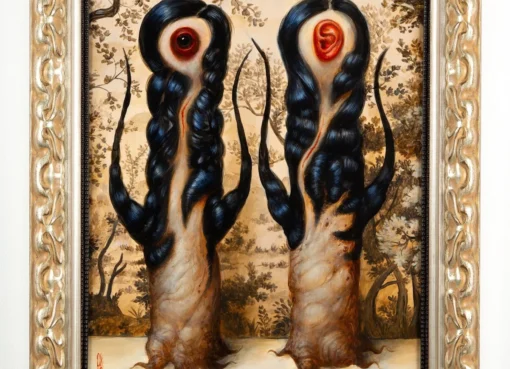
Alfred De Angelo has established himself as a prominent figure in the modern surrealist movement. His paintings are characterized by a remarkable technical expertise that allows him to render the impossible with startling clarity. Unlike some forms of surrealism that lean toward the grotesque or the jarringly nonsensical, De Angelo’s work is rooted in a "provocative beauty." It lures the viewer in through aesthetic pleasure before confronting them with the complexities of the subconscious.
The primary objective of De Angelo’s work is to disrupt "well-worn patterns of thought." By presenting images that are both familiar in their sensuality and alien in their composition, he forces a cognitive shift. The viewer is invited to press against the limits of their own understanding. In this space, De Angelo grants his audience "permission" to experience a triad of emotions: amazement, confusion, and delight.
His visual world is not merely a collection of random images; it is a carefully delineated "private vocabulary." This vocabulary consists of recurring motifs and symbols that attempt to translate localized, subjective experiences into a medium that can be shared and contemplated by others.
Chronology: A Foundation of Academic Excellence
The evolution of Alfred De Angelo’s style is deeply rooted in his rigorous academic background. His journey through some of the United States’ most prestigious art institutions provided the technical foundation necessary to execute his complex surrealist visions.
The Formative Years: Massachusetts College of Art (BFA)
De Angelo began his formal training at the Massachusetts College of Art and Design (MassArt) in Boston. As the only publicly funded independent college of art and design in the country, MassArt has a long-standing reputation for fostering both technical skill and social consciousness in its students. During his Bachelor of Fine Arts (BFA) program, De Angelo would have been immersed in the fundamentals of composition, color theory, and anatomy—skills that are evident in the "fluency and expertise" noted by critics of his later work. It was here that the seeds of his "private vocabulary" were likely sown, as he began to move beyond representational art toward a more interpretive style.

Mastering the Craft: Rhode Island School of Design (MFA)
Following his undergraduate success, De Angelo pursued a Master of Fine Arts (MFA) at the Rhode Island School of Design (RISD). Consistently ranked among the top art and design schools globally, RISD is known for its intense, studio-based curriculum and its emphasis on critical thinking. Obtaining an MFA from RISD is a mark of significant achievement in the art world, signifying that the artist has not only mastered their medium but has also developed a cohesive and significant philosophical approach to their work.
At RISD, De Angelo likely refined his surrealist approach, moving away from the purely "outward appearances" of objects and toward the "essential mystery" he describes in his artist’s statement. This period of his life was crucial in developing the "sensual world" that now defines his portfolio.
Supporting Data: The Mechanics of the De Angelo Style
To understand the impact of De Angelo’s work, one must analyze the specific elements that contribute to his "compelling visual world." Several key data points and stylistic hallmarks define his contribution to contemporary surrealism:
Technical Fluency
Critics frequently point to De Angelo’s "remarkable fluency." This refers to his ability to blend colors and shapes in a way that feels organic, even when the subject matter is dreamlike or impossible. This level of skill is what prevents his work from being dismissed as mere "fantasy art," elevating it instead to the realm of high-fine art.
The Psychological Threshold
De Angelo’s paintings act as psychological "doorways." According to his own philosophy, our experiences are usually localized—meaning they are tied to a specific time and place. De Angelo uses his art to strip away these local markers, leaving behind the "essential mystery." This process allows viewers from vastly different backgrounds to find common ground in the confusion and delight his work evokes.
Contrast with Modern Trends
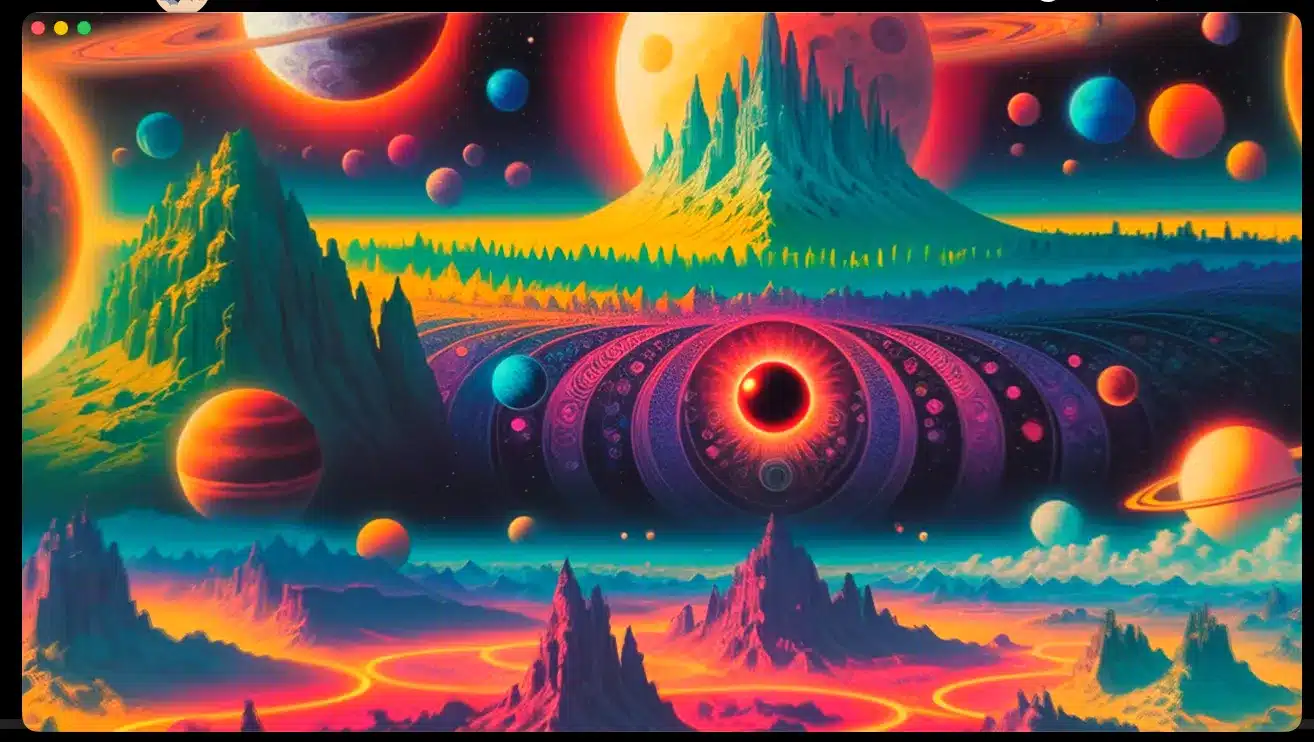
In an era where "Surrealism You Can Hold" (such as the puppetry of Big Nazo) and AI-driven platforms (like Infinidream.ai) are expanding the definition of the surreal, De Angelo remains committed to the canvas. While AI art relies on algorithms to generate "dream-like" images, De Angelo’s work is a product of human subjectivity. This distinction is vital; his paintings are not random iterations but are deliberate attempts to embody the "essential mystery of existence."
Official Responses: The Artist’s Statement and Philosophy
Alfred De Angelo provides a clear window into his creative process through his official artist’s statement. His words serve as a manifesto for his approach to surrealism and a guide for how he intends his work to be received.

"Our experiences in life are usually localized and subjective, creating a series of impressions on a personal scale. I am continually developing a private vocabulary of images with which I attempt to express different aspects of these experiences."
This statement highlights De Angelo’s focus on the subjective nature of reality. He acknowledges that everyone sees the world through a personal lens, but he uses his "private vocabulary" to build a bridge between his lens and the viewer’s.
"With my surrealist paintings I try to look ‘through’ outward appearances and somehow embody the essential mystery of existence."
Here, De Angelo aligns himself with the classic surrealist tradition of "looking through" the surface. Much like the pioneers of the movement—André Breton, Salvador Dalí, and René Magritte—De Angelo is interested in what lies beneath the conscious mind. However, his focus on "provocative beauty" suggests a more inviting, less confrontational approach than some of his predecessors. He seeks to embody mystery rather than just shock the viewer.
Implications: The Future of Surrealism in a Digital Age
The work of Alfred De Angelo carries significant implications for the future of the surrealist movement and the broader art market. As we move further into the 21st century, the role of the traditional painter is being re-evaluated.
The Preservation of Subjectivity
One of the most profound implications of De Angelo’s work is the preservation of human subjectivity. In a world where AI can generate "surreal" images in seconds, the value of an artist who spends years developing a "private vocabulary" increases. De Angelo’s work reminds us that true surrealism is not just about "weird" imagery; it is about the distillation of human experience and the search for meaning in the mysterious.
Cognitive Flexibility
By luring viewers out of "well-worn patterns of thought," De Angelo’s art performs a vital social and psychological function. It encourages cognitive flexibility—the ability to hold contradictory thoughts (confusion and delight) simultaneously. This is an essential skill in an increasingly complex and polarized world.
The Bridge Between Tradition and Innovation
While De Angelo uses traditional techniques, his work remains highly relevant to modern audiences. By focusing on "sensual beauty," he makes surrealism accessible without sacrificing its intellectual depth. He proves that the "essential mystery of existence" is a timeless theme that does not require digital intervention to be powerful.
Conclusion: A Visionary of the Essential Mystery
Alfred De Angelo is more than a painter; he is a cartographer of the subconscious. Through his education at MassArt and RISD, he gained the tools to translate his internal world onto the canvas with a fluency that is rare in contemporary art. His "private vocabulary" of images serves as a universal language that speaks to the amazement, confusion, and delight inherent in the human condition.
As he continues to explore the "sensual world of provocative beauty," De Angelo ensures that surrealism remains a vital, living tradition. For those who seek to look "through" the outward appearances of their daily lives, his paintings offer not just a view, but a doorway into the essential mystery of existence.
For more information on the artist and to view his portfolio, visit artistpainter.ws.