The Architect of Dreams: Exploring the Surreal Digital Cosmos of Fran Rodriguez
By Art & Culture Desk

In the modern digital landscape, where imagery is often consumed at a breakneck pace, the work of Spanish artist Fran Rodriguez—known professionally by the evocative pseudonym "lacabezaenlasnubes"—serves as a necessary visual pause. His work does not merely ask to be seen; it demands to be inhabited. Rodriguez has emerged as a titan of contemporary digital surrealism, a visionary whose canvases bridge the gap between the tangible greenery of the Spanish coast and the infinite, silent vacuum of deep space.

As the digital art world continues to grapple with questions of authenticity and depth, Rodriguez offers a definitive answer through a body of work that is as technically precise as it is philosophically profound. His portfolio is a testament to the idea that the "head in the clouds" is not a state of distraction, but a destination for the enlightened mind.

1. Main Facts: The Identity of "Lacabezaenlasnubes"
Fran Rodriguez is more than a digital illustrator; he is a world-builder. Born in Torrelavega, Cantabria, in Northern Spain, his early environment provided a stark contrast to the cosmic themes he would eventually champion. Cantabria, known for its rugged coastlines and lush, emerald landscapes, instilled in him a reverence for nature that remains the bedrock of his surrealist compositions.

Rodriguez operates under the moniker lacabezaenlasnubes, which translates from Spanish to "head in the clouds." This title is both a self-deprecating nod to a restless imagination and a mission statement. His work is characterized by three primary pillars:

- Surreal Landscapes: The seamless merging of terrestrial nature with fantastical, otherworldly architecture.
- Cosmic Psychedelia: A vibrant, often neon-tinged exploration of space, featuring recurring motifs of astronauts, planets, and celestial portals.
- Digital Intricacy: A mastery of modern software that allows for hyper-realistic textures to be applied to impossible scenarios, creating a "verifiable reality" within a dreamscape.
Through his collaborations with platforms like Big Wall Decor and a robust presence on social media, Rodriguez has democratized surrealism, moving it from the hushed halls of elite galleries into the living spaces of a global audience.

2. Chronology: From the Cantabrian Coast to the Digital Frontier
The artistic evolution of Fran Rodriguez is a journey of geographic and internal migration. To understand the "head in the clouds," one must first look at where his feet were planted.

The Formative Years in Northern Spain
Growing up in Torrelavega, Rodriguez was surrounded by the visceral beauty of Northern Spain. This period was marked by an early fascination with the pioneers of surrealism—Salvador Dalí and René Magritte—whose influences are still visible in his penchant for juxtaposing everyday objects with the extraordinary. However, it was the 1960s and 70s psychedelic movement that provided the "color palette" for his soul. He found a resonance between the natural beauty of Cantabria and the abstract potential of psychedelic art.

The Madrid and Barcelona Transition
Seeking to refine his technical prowess, Rodriguez moved to Madrid, a city that offered him a more rigorous engagement with the contemporary art scene. It was here that he began to fully embrace digital tools, realizing that the computer was not a barrier to creativity but a limitless extension of it.

His eventual move to Barcelona marked a significant shift in his career. The vibrant, Mediterranean energy of the city, coupled with its rich architectural history (the influence of Gaudí’s organic surrealism cannot be ignored), helped Rodriguez solidify his signature style. In Barcelona, the "lacabezaenlasnubes" brand was born, transitioning from a personal hobby into a globally recognized aesthetic.

3. Supporting Data: The Stylistic Pillars of Rodriguez’s Work
Analysis of Rodriguez’s portfolio reveals a consistent methodology in how he constructs his visions. His success is not accidental; it is the result of a deliberate blending of specific thematic elements.

The Integration of Nature and Fantasy
Rodriguez’s landscapes often begin with a familiar terrestrial base—a cornfield, a desert dune, or a mountain range. He then introduces a "disruptor." In the piece Space Swing, a simple girl on a swing is not suspended from a tree but is floating high above the Earth’s atmosphere. This juxtaposition forces the viewer to reconcile the comfort of the familiar with the awe of the infinite.

The Astronaut as the Everyman
A recurring figure in Rodriguez’s work is the lone astronaut. This figure serves as a surrogate for the viewer—a wanderer in a vast, often indifferent universe. Whether the astronaut is floating through the ancient arches of the Pantheon in Rome or standing amidst a field of giant floating spheres, the figure represents the human quest for meaning.

Chromatic Intensity and Psychedelic Influence
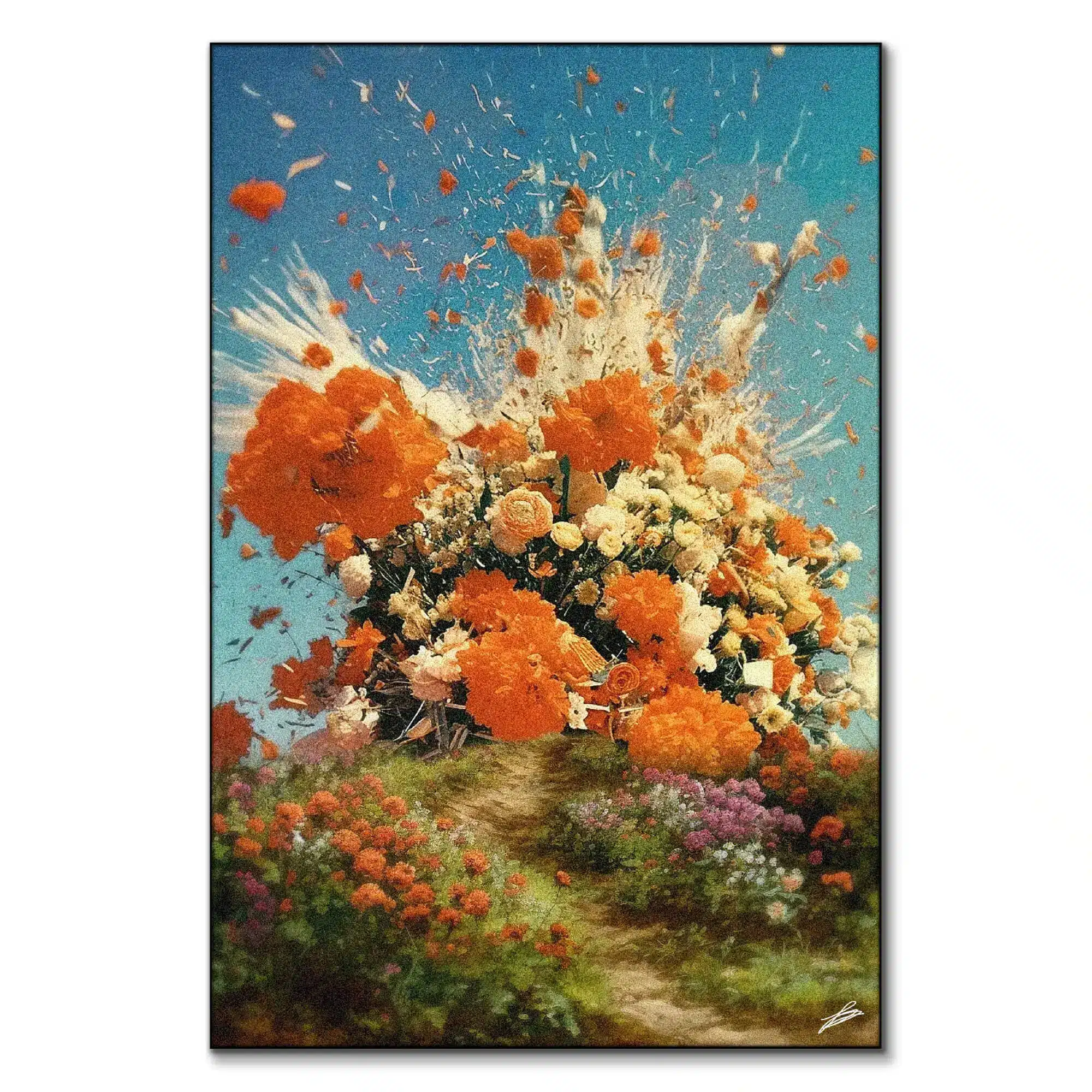
Unlike the muted tones of traditional 20th-century surrealism, Rodriguez utilizes a high-saturation palette. His use of vibrant oranges, deep cosmic blues, and electric pinks evokes a sense of "wonder" rather than "dread." This is a key differentiator; while surrealism often explores the "uncanny" or the disturbing, Rodriguez explores the "sublime."

4. The Digital Metamorphosis: Technical Mastery
In a journalistic assessment of Rodriguez’s impact, one must credit his technical facility. Digital art is often criticized for a perceived lack of "soul" or "texture," but Rodriguez bypasses these pitfalls through meticulous craftsmanship.

Cutting-Edge Tools
Rodriguez leverages advanced digital manipulation and 3D rendering tools to ensure that his light sources are consistent and his textures are palpable. When he depicts a "Cosmic Space Bridge," the metallic sheen of the cars and the asphalt of the road look authentic, which makes the fact that they are driving into a starry nebula all the more jarring and effective.

The Collage Aesthetic
Many of his works function as "surreal collages." By taking elements from vintage photography—such as people in 1950s attire—and placing them in futuristic space stations, he creates a temporal dissonance. This technique suggests that the human experience remains unchanged, even as our environments shift from the terrestrial to the galactic.

5. The Artist’s Manifesto: The "Tip of the Iceberg" Philosophy
In rare insights into his creative process, Rodriguez has articulated a philosophy that serves as the "official stance" of his brand. He posits that the visible world—the one we navigate during our waking hours—is merely a fraction of a much larger, hidden reality.

"What we perceive through our senses," Rodriguez has noted, "is only a small part of a vast, unseen universe." He describes our conscious reality as the "tip of an iceberg" breaking the surface of a deep, dark ocean of the subconscious.

Art as a Portal
For Rodriguez, each canvas is not a finished product but a doorway. He views his role as a "mediator" between the two worlds. His art serves as a tantalizing glimpse into what lies beneath the surface. This belief system elevates his work from mere "pretty pictures" to philosophical inquiries. When he depicts a man looking at a giant reflection of himself in a distant field, he isn’t just showing a cool visual; he is questioning the nature of self-perception and the boundaries of the individual.

6. Implications: The Future of Surrealism in a Digital Age
The rise of Fran Rodriguez has significant implications for the broader art market and the evolution of the surrealist movement.

Accessibility and the "Big Wall" Trend
Traditionally, surrealist art was reserved for galleries or small-format prints. Rodriguez, through his partnership with Big Wall Decor, has pioneered the "oversized" digital art movement. By making his work available in large formats, he allows his "portals" to physically dominate a room, effectively turning a domestic wall into a window to another dimension. This shift indicates a growing consumer desire for immersive art that offers an escape from the mundane.

The Influence on the "AI Art" Dialogue
As Artificial Intelligence begins to generate surrealist imagery, the work of human artists like Rodriguez becomes even more vital. His work possesses a narrative intentionality and a specific emotional "warmth" that algorithms currently struggle to replicate. The "lacabezaenlasnubes" aesthetic—human, nostalgic, and cosmic—serves as a benchmark for what human-led digital creativity can achieve.

Cultural Connectivity
Rodriguez’s ability to connect with a global audience through platforms like Instagram and Facebook suggests that his themes are universal. The "restless spirit" he describes—the desire to explore from the "icy wilderness of Alaska to unexplored terrains of distant planets"—is a fundamental human trait. His art provides a visual language for that shared human longing.

Conclusion: Keeping Our Heads in the Clouds
Fran Rodriguez remains a sentinel at the crossroads of reality and imagination. His journey from the verdant hills of Northern Spain to the cutting edge of digital art in Barcelona reflects a broader human trajectory: the move from the local to the universal.

As he continues to explore the depths of the subconscious, Rodriguez challenges his audience to reconsider their place in the universe. He proves that being "head in the clouds" is not a sign of being lost, but a sign of having found a better way to see. In the meticulous details of an astronaut in a cornfield or a cosmic bridge to the stars, we find a reminder that reality is only as limited as our imagination allows it to be.

For those looking to join Rodriguez on this journey, his work remains a constant invitation to look up, look deeper, and—above all—keep dreaming.

How to Experience the Vision:
Fran Rodriguez’s work is currently available through Big Wall Decor, Society6, and Curioos. Fans and collectors can follow his ongoing explorations on Instagram (@lacabezaenlasnubes), where he continues to redefine the boundaries of the digital canvas.