The Architect of Essential Mystery: Exploring the Surrealist World of Alfred De Angelo
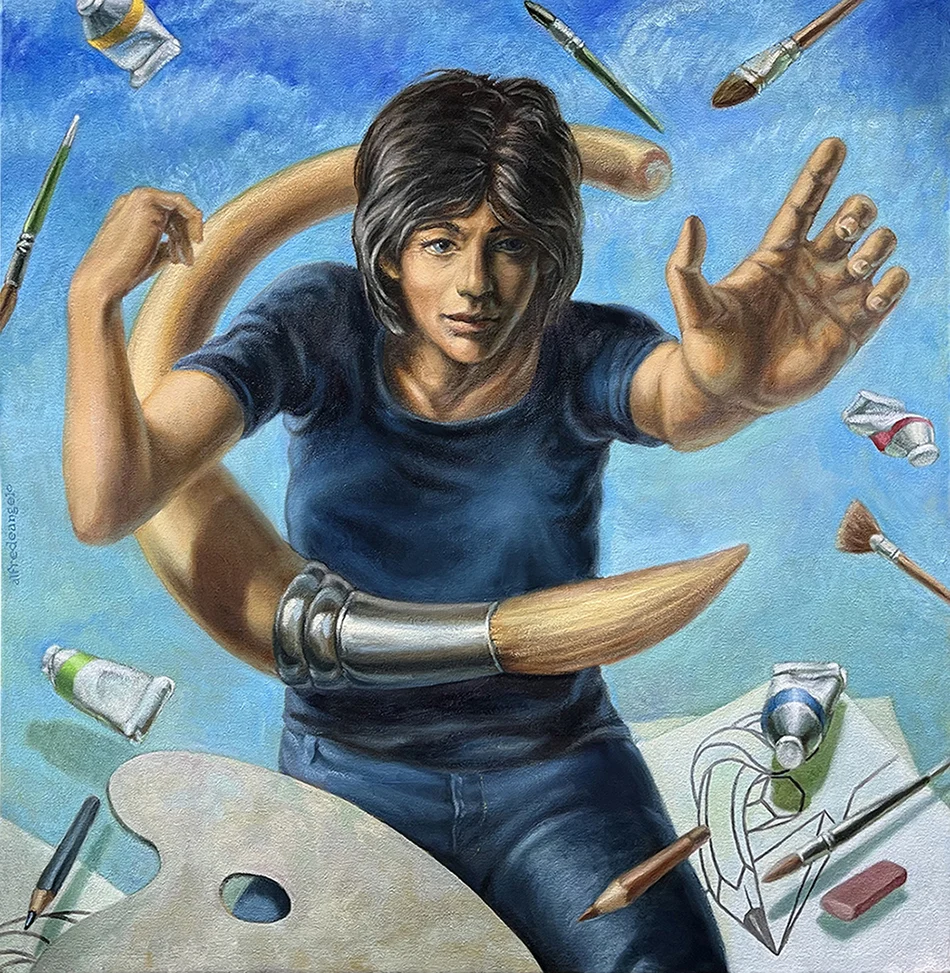
In the contemporary landscape of fine arts, where the digital and the analog frequently collide, the work of Alfred De Angelo stands as a testament to the enduring power of the painted image. A master of surrealist inquiry, De Angelo does not merely create paintings; he constructs "doorways" into realms that challenge the boundaries of human perception. His work, characterized by a rare synthesis of technical fluency and provocative beauty, invites viewers to step away from the mundane and into a space where the subconscious takes precedence over the logical.
Main Facts: The Aesthetic Philosophy of Alfred De Angelo
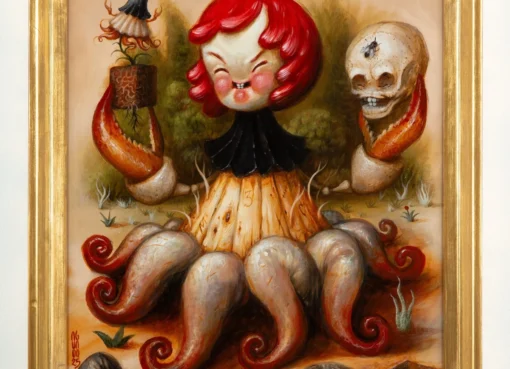
Alfred De Angelo is a painter whose work is defined by its ability to transport the observer into a "sensual world of provocative beauty." Unlike many contemporary artists who lean toward the abstract or the purely conceptual, De Angelo utilizes a highly refined, realistic technique to depict the unreal. His images are delineated with a level of expertise that suggests a deep reverence for the craft of painting, yet their subject matter remains firmly rooted in the tradition of Surrealism—a movement dedicated to resolving the previously contradictory conditions of dream and reality.
The core of De Angelo’s appeal lies in the emotional duality of his work. As critics have noted, his paintings possess the unique ability to "beguile or bewilder," yet they never fail to leave a lasting impression. By luring the viewer out of their "well-worn patterns of thought," De Angelo facilitates a psychological transgression. He grants the viewer permission to experience a spectrum of conflicting emotions—amazement, confusion, and delight—simultaneously. This cognitive dissonance is not a byproduct of his work but rather its primary objective.
Chronology: The Academic Foundation and Artistic Evolution
To understand the sophistication of De Angelo’s visual language, one must look toward his rigorous academic background. His career is underpinned by a formal education at some of the most prestigious art institutions in the United States, providing him with the technical "fluency" that allows his surrealist visions to feel tangibly real.
The Formative Years: Massachusetts College of Art (BFA)
De Angelo began his formal journey at the Massachusetts College of Art (MassArt) in Boston. As the only publicly funded independent college of art and design in the country, MassArt has a long-standing reputation for fostering both technical skill and social consciousness. It was here that De Angelo likely honed the fundamental skills of draftsmanship and composition that serve as the backbone of his current work. His time at MassArt provided the "vocabulary" of classical art, which he would later deconstruct and reassemble into his private surrealist lexicon.

Advanced Mastery: Rhode Island School of Design (MFA)
Seeking to push his practice into the realm of high-level conceptualization, De Angelo pursued his Master of Fine Arts at the Rhode Island School of Design (RISD). Consistently ranked among the top art schools globally, RISD is known for its intense, studio-based curriculum and its emphasis on the "essential mystery" of the creative process.
At RISD, De Angelo transitioned from a student of technique to a philosopher of the canvas. The transition from BFA to MFA represents a shift from learning how to paint to deciding what must be painted to address the complexities of the human condition. This academic pedigree is evident in the "remarkable fluency" mentioned by observers; his work lacks the tentative nature of the amateur, replacing it with the confident hand of a scholar-artist.
Supporting Data: Stylistic Analysis and Visual Vocabulary
De Angelo’s work is often categorized by its "provocative beauty," a term that suggests a tension between aesthetic pleasure and intellectual discomfort. To achieve this, the artist employs several key stylistic strategies:
- Delineated Expertise: Every element in a De Angelo painting is rendered with crystalline clarity. This precision is a hallmark of "Veristic Surrealism" (similar to the styles of Salvador Dalí or René Magritte), where the reality of the objects depicted makes the impossibility of the scene even more jarring.
- The Private Vocabulary: De Angelo explicitly mentions developing a "private vocabulary of images." This implies that the symbols in his work—whether they be architectural fragments, biological forms, or atmospheric anomalies—are not universal clichés but are deeply personal icons that represent specific aspects of his subjective experience.
- Sensual Immersion: His use of color and light is designed to be "sensual," appealing to the viewer’s physical senses. This creates a "lure," drawing the observer into the frame before the "bewildering" nature of the content can trigger a defensive intellectual response.
In the context of the broader art world, De Angelo’s work serves as a human-centric counterpoint to the rise of generative art. While tools like "Infinidream AI" (recently introduced to turn idle displays into living AI paintings) offer endless variations of imagery, they often lack the "localized and subjective" intent that De Angelo brings to his canvas. His work argues that the "essential mystery of existence" can only be truly embodied through the deliberate, manual effort of a human artist attempting to translate their own consciousness.
Official Responses: The Artist’s Statement and Philosophical Intent
In his official Artist’s Statement, De Angelo provides a rare glimpse into the "why" behind his provocative imagery. He posits that human experience is inherently "localized and subjective," creating a fragmented series of impressions.
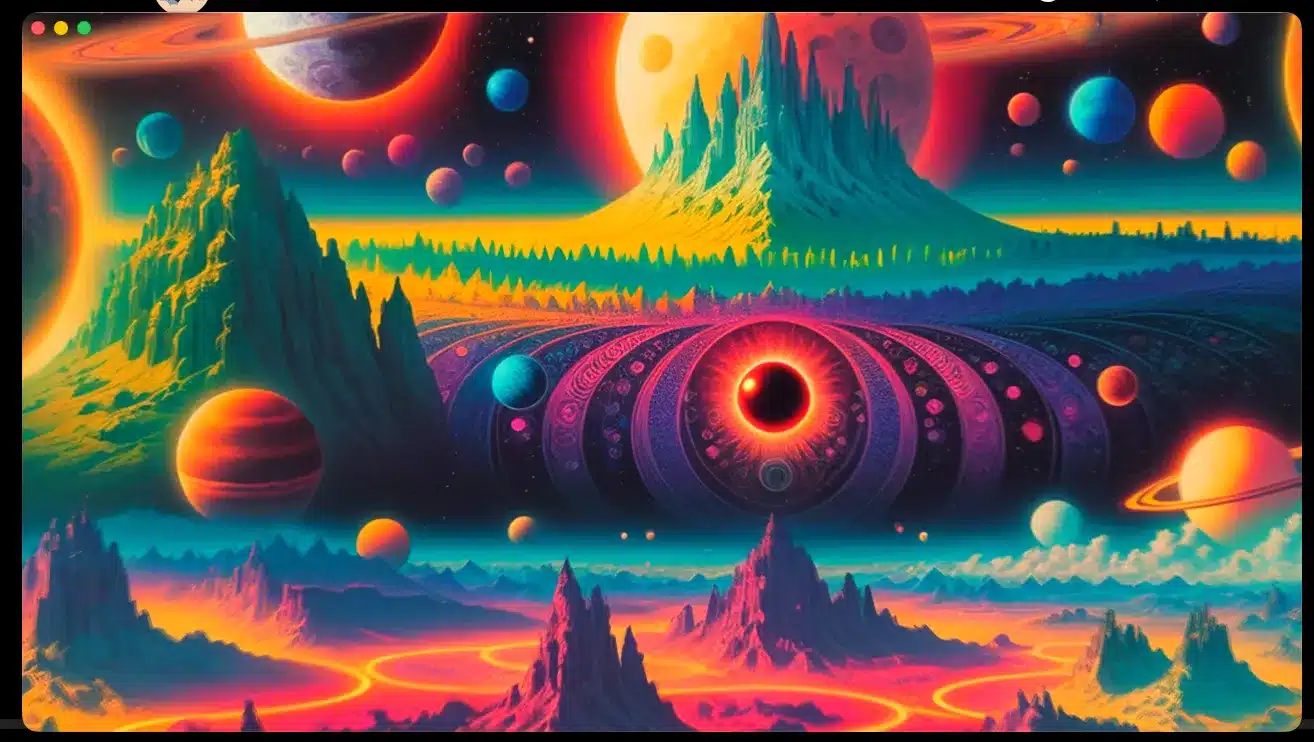
“I am continually developing a private vocabulary of images with which I attempt to express different aspects of these experiences,” De Angelo states. “With my surrealist paintings, I try to look ‘through’ outward appearances and somehow embody the essential mystery of existence.”
This statement reveals that De Angelo views Surrealism not as a fantasy, but as a deeper form of realism. By looking "through" appearances, he suggests that the physical world is merely a veil. His role as an artist is to pierce that veil. This alignment with the metaphysical puts him in conversation with other modern surrealists like Christian Quintin, who paints "what you remember feeling," and Jacob Holster, who explores "human terrain" through painterly aesthetics.
Critics and galleries have responded to this intent by highlighting the "compelling visual world" De Angelo creates. The consensus among art historians is that De Angelo succeeds where many surrealists fail: he maintains a balance between the personal and the universal. While his vocabulary is "private," the emotions it evokes—the "amazement and confusion"—are universal human responses to the unknown.
Implications: The Role of Surrealism in the 21st Century
The work of Alfred De Angelo has significant implications for the future of traditional painting. In an era dominated by "hyper-realistic renders and glossy digital imagery" (as seen in the work of Jacob Holster and various AI platforms), De Angelo’s commitment to the "remarkable fluency" of physical media is a political and aesthetic statement.
The Rejection of the Mundane
By "luring the viewer out of their well-worn patterns of thought," De Angelo’s work serves as a form of cognitive therapy. In a society increasingly governed by algorithms and predictable data streams, his "bewildering" paintings force the brain to engage in active interpretation. This suggests that Surrealism is more relevant today than it was in the 1920s; it serves as a necessary disruptor of the "automated" life.

The Transcendence of Subjectivity
De Angelo’s focus on the "essential mystery of existence" addresses a growing cultural hunger for depth. As digital media becomes more ephemeral, the "doorways" provided by his paintings offer a sense of permanence. His work implies that true art is not just about visual stimulation but about "embodying" a truth that cannot be expressed in words.
A Legacy of Inquiry
As De Angelo continues to develop his private vocabulary, his legacy will likely be defined by his ability to bridge the gap between the academic and the avant-garde. His BFA and MFA credentials provide the authority, but his "sensual and provocative" visions provide the soul.
In conclusion, Alfred De Angelo is more than a painter; he is a cartographer of the subconscious. His work reminds us that while we may live in a world of localized facts and subjective impressions, there is a grander, essential mystery waiting to be explored by those brave enough to step through the doorways he provides. Whether through his website (artistpainter.ws) or in the quiet halls of a gallery, his paintings remain as compelling reminders that the most beautiful things in life are often those that we cannot fully understand, yet cannot look away from.