The Convergence of Titans: Analyzing the Potential Unification of Tesla and SpaceX
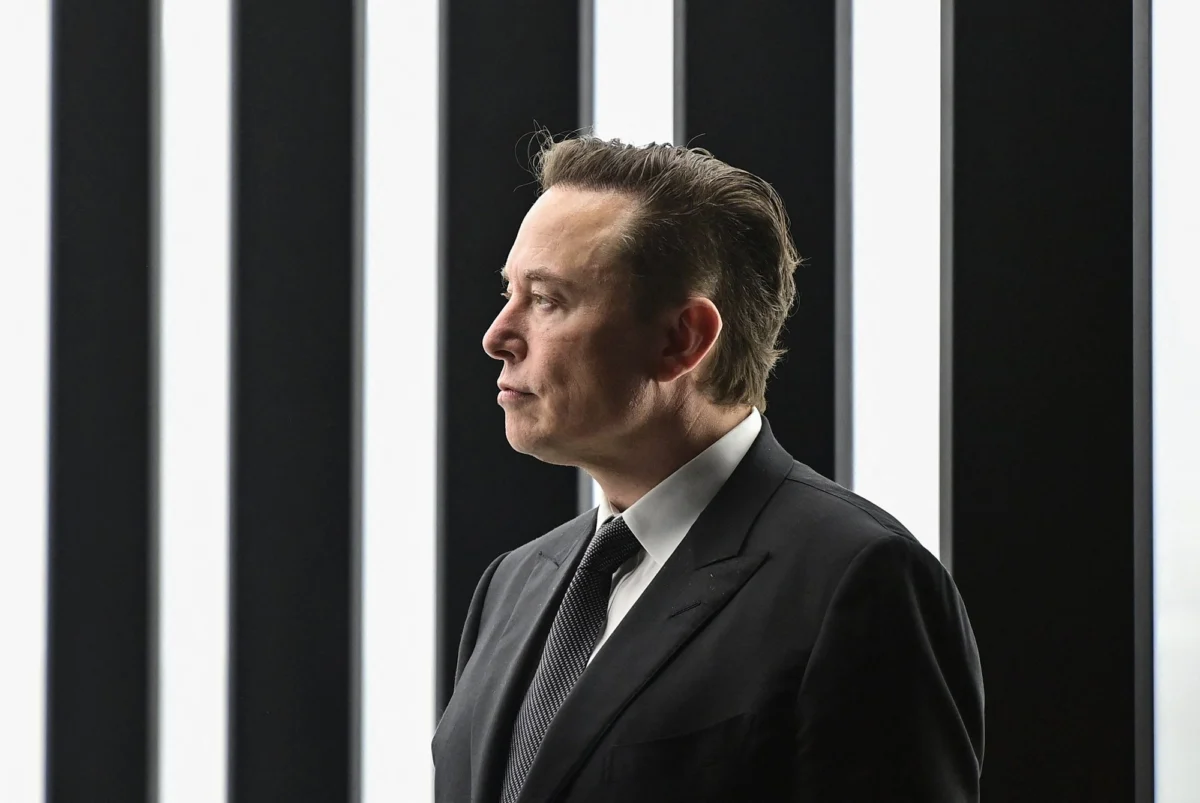
In the landscape of modern industry, few figures loom as large as Elon Musk, and few entities are as disruptive as his twin crown jewels: Tesla Inc. and SpaceX. For over a decade, the notion of these two giants merging into a single, all-encompassing "everything company" has been relegated to the realm of speculative business blogs and enthusiast forums. However, the narrative shifted significantly following a recent high-profile interview with Gwynne Shotwell, the President and Chief Operating Officer of SpaceX.
Shotwell’s comments have reignited a global conversation about the structural future of Musk’s empire, suggesting that the integration of the world’s leading electric vehicle (EV) manufacturer and the world’s dominant private aerospace firm is no longer a matter of "if," but "how" and "when."
Main Facts: A New Chapter in the Musk Narrative
The catalyst for this renewed speculation was a CNBC interview in which Gwynne Shotwell was asked directly about the possibility of a closer corporate relationship between Tesla and SpaceX. Shotwell, widely regarded as the operational "glue" that holds SpaceX together while Musk focuses on high-level engineering and vision, did not dismiss the idea. Instead, she offered a pragmatic perspective: a merger could streamline operations and "make life a little easier" for Elon Musk.
Key facts surrounding the current state of these companies include:
- Operational Synergy: Tesla and SpaceX already share substantial intellectual property, particularly in materials science (aluminum alloys), software engineering, and large-scale manufacturing techniques.
- The AI Nexus: Both companies are pivoting toward artificial intelligence. Tesla is developing the Optimus humanoid robot and Full Self-Driving (FSD) software, while SpaceX utilizes AI for autonomous rocket landings and Starlink satellite constellation management.
- Infrastructure Integration: SpaceX’s Starlink is increasingly being viewed as a critical component for Tesla’s future autonomous fleet, providing the global high-bandwidth connectivity required for real-time navigation and data processing.
- Corporate Restructuring Trends: Musk has already begun consolidating his influence through "X Corp" and "xAI," suggesting a preference for a unified ecosystem of technologies.
Chronology: The Evolution of a Shared Vision
To understand why a merger is being discussed now, one must look at the parallel trajectories of both companies over the last twenty years.
2002–2008: The Foundations of Survival
SpaceX was founded in 2002, followed by Musk’s heavy investment in Tesla in 2004. During the 2008 financial crisis, both companies nearly collapsed. Musk famously split his remaining capital between them to keep both afloat. This shared near-death experience forged a cultural bond between the two organizations that persists today.

2012–2018: Cross-Pollination Begins
As SpaceX began successfully landing Falcon 9 rockets and Tesla ramped up Model S production, the companies began sharing talent. High-level engineers frequently moved between Hawthorne (SpaceX HQ) and Palo Alto (then Tesla HQ). In 2018, the ultimate marketing crossover occurred when a SpaceX Falcon Heavy launched Musk’s personal Tesla Roadster into a heliocentric orbit—a symbolic gesture that hinted at the unified brand identity to come.
2020–2023: The Rise of the Ecosystem
The launch of the Starlink satellite program marked a turning point. Tesla started integrating Starlink terminals at Supercharger stations, and discussions began regarding built-in Starlink connectivity for Tesla vehicles. Meanwhile, Tesla’s "Dojo" supercomputer and SpaceX’s telemetry data processing started showing remarkable similarities in their computational needs.
2024: The Shotwell Pivot
In late 2024, Shotwell’s comments provided the first "official" acknowledgment from within the C-suite that a corporate consolidation was a viable strategic path. This coincided with Musk’s increased focus on xAI, his artificial intelligence startup, which draws data and talent from both Tesla and SpaceX.
Supporting Data: The Case for Synergy
The argument for a merger is backed by significant technological and financial data points.
1. Materials Science and Manufacturing
Tesla’s "Gigapress" technology, which allows for the casting of large single-piece vehicle frames, shares its roots with the high-strength alloys developed at SpaceX for the Starship spacecraft. By merging, the companies could formalize a "Center of Excellence" for advanced metallurgy, reducing R&D costs for both.
2. The Autonomy Stack
Tesla’s FSD relies on massive amounts of video data. SpaceX’s Starlink provides the only viable path to 100% global coverage for these vehicles. Data from the Starlink network indicates a capacity to handle millions of roaming devices, a perfect match for a future fleet of Tesla "Robotaxis."

3. Financial Valuation
- Tesla (Public): Valuation fluctuates between $600 billion and $1 trillion.
- SpaceX (Private): Recent secondary market rounds value the company at approximately $210 billion.
A combined entity would create a "mega-cap" industrial titan with a valuation potentially exceeding $1.5 trillion, rivaling the likes of Apple and Microsoft but with a footprint in physical manufacturing and space infrastructure that those companies lack.
4. Human Capital
Internal data suggests a high rate of "boomerang" employees—engineers who move from Tesla to SpaceX and back. Formalizing this relationship would allow for more fluid talent allocation, placing the best minds on the most urgent problems regardless of whether they involve a car or a rocket.
Official Responses and Institutional Stance
While Shotwell’s comments have been the most explicit, other stakeholders have provided a range of reactions.
The SpaceX Perspective
Gwynne Shotwell’s stance is rooted in operational efficiency. She noted, "Elon is spread thin… anything that simplifies the governance of these entities allows him to focus on the engineering breakthroughs." Her comments suggest that SpaceX, which is currently private, might see a merger as a way to access the liquidity of public markets without a traditional IPO.
The Tesla Board and Investors
Tesla’s board has historically been supportive of Musk’s extracurricular ventures, though they face pressure from institutional investors regarding "key man risk." Some investors, like Ross Gerber of Gerber Kawasaki, have expressed concerns about Musk’s divided attention. A merger could theoretically solve this by bringing all his interests under one fiduciary umbrella.
Regulatory Hurdles
The SEC and the Department of Justice would likely scrutinize such a merger with unprecedented intensity. Concerns would include:
- Market Dominance: A monopoly on both terrestrial EVs and orbital launch services.
- Public vs. Private Friction: The complexity of folding a private giant (SpaceX) into a public company (Tesla) involves rigorous valuation audits and shareholder votes that could be contentious.
Implications: A New Industrial Paradigm
If Tesla and SpaceX were to merge, the implications for the global economy and the future of technology would be profound.

The Birth of the "X Holding Company"
The most likely outcome is the creation of a massive holding company—potentially named "X"—that owns Tesla, SpaceX, xAI, and The Boring Company. This would mirror the structure of Alphabet (Google’s parent) but with a focus on "hard" engineering and physical infrastructure.
Accelerating the Mars Mission
SpaceX’s ultimate goal is to make life multi-planetary. Tesla’s expertise in life support systems (HVAC), battery storage, and autonomous robotics (Optimus) are all essential for a Mars colony. A merger would allow Tesla’s profits to directly fund the Starship program, effectively making the "Mars dream" a corporate mandate for the world’s most valuable car company.
Disrupting Connectivity and Logistics
A unified Tesla-SpaceX could offer a closed-loop ecosystem. A Tesla owner would get their internet from Starlink, their power from Tesla Solar/Powerwall, and their transportation via a Tesla vehicle—all managed by a single AI interface (Grok/xAI). This level of vertical integration has not been seen since the era of Standard Oil or the early 20th-century "Company Towns."
Risks of Contagion
The primary risk of such a merger is financial contagion. Currently, if Tesla’s stock price craters, SpaceX remains insulated as a private entity. If they are merged, a failure in one sector (e.g., a catastrophic Starship failure or a massive Tesla recall) could drag down the entire conglomerate, creating a systemic risk for the broader market.
Conclusion: The Horizon of Possibility
Gwynne Shotwell’s refusal to rule out a Tesla-SpaceX merger marks a transition in the Musk saga. What was once dismissed as "fan fiction" is now being discussed as a strategic necessity for a leader who is increasingly focused on the intersection of AI, robotics, and space exploration.
While significant regulatory and financial barriers remain, the technological gravity pulling these two companies together is becoming irresistible. If the history of Elon Musk has taught the market anything, it is that he prefers to consolidate power and technology to move faster. As Shotwell hinted, the "eventual" unification of these two titans might be arriving much sooner than the world expects, signaling a new era where the road and the stars are managed by the same boardroom.