
The Loss of a Visionary: Marjane Satrapi, Creator of ‘Persepolis,’ Dies at 56
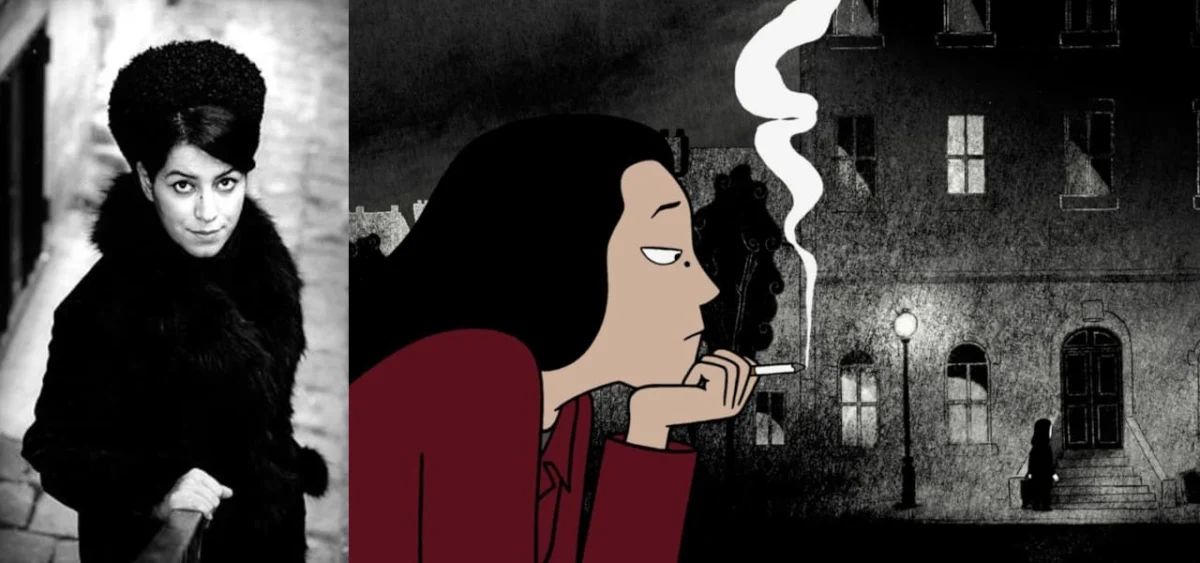
PARIS — Marjane Satrapi, the indomitable Iranian-French graphic novelist, filmmaker, and human rights advocate whose semi-autographical masterpiece Persepolis redefined the boundaries of adult animation and memoir, has passed away at the age of 56. Her death, confirmed on June 4, 2026, marks the conclusion of a career that bridged the chasm between Eastern and Western narratives, giving a singular, poignant voice to the complexities of exile, revolution, and womanhood.
In a heart-wrenching statement released to Agence France-Presse (AFP), Satrapi’s family revealed that the artist succumbed to a profound "sadness" following the loss of her husband, Mattias Ripa, a Swedish producer and screenwriter who was described as the "love of her life." Ripa passed away on April 8, 2025. Satrapi had spent her final year in relative seclusion, though she remained a vocal critic of authoritarianism until her final days.
The news of her passing has triggered a wave of mourning across the global artistic and political landscape. From the halls of the Élysée Palace to the underground art scenes in Tehran, Satrapi is being remembered as a "freedom-loving artist" whose stark, black-and-white ink strokes carried the weight of a nation’s history and a woman’s soul.
Chronology of a Revolutionary Life
Born in Rasht, Iran, in 1969, Marjane Satrapi’s early years were forged in the crucible of geopolitical upheaval. Growing up in a middle-class family with Marxist leanings, she witnessed firsthand the transition from the Pahlavi monarchy to the Islamic Revolution of 1979. These formative years, characterized by the Iran-Iraq War and the increasing restriction of personal liberties, would later serve as the foundational material for her most celebrated work.
Satrapi’s journey to becoming a global cultural icon was non-linear:
- 1983–1990: To protect her from the tightening grip of the revolutionary Guard, her parents sent her to Vienna, Austria, for her secondary education. This period of displacement and cultural isolation became the basis for the second half of the Persepolis saga.
- 1994: After a brief and difficult return to Iran, Satrapi moved to France permanently. She studied at the École supérieure des arts décoratifs in Strasbourg.
- 2000–2003: Satrapi published the four volumes of Persepolis in France. The graphic novels were an immediate sensation, praised for their "deceptively simple" visual style and their ability to humanize the Iranian experience for a Western audience.
- 2007: Co-directed with Vincent Paronnaud, the animated film adaptation of Persepolis debuted at the Cannes Film Festival. It won the Jury Prize and later earned an Academy Award nomination for Best Animated Feature.
- 2011–2020: Satrapi transitioned into live-action filmmaking with works such as Chicken with Plums (2011), the dark comedy The Voices (2014), and the Marie Curie biopic Radioactive (2019).
- 2023–2026: In her final years, Satrapi returned to her roots as a political provocateur. She became a leading voice in support of the "Woman, Life, Freedom" movement in Iran, using her platform to advocate for those facing execution by the Iranian state.
Artistic Legacy and Supporting Data
Satrapi’s impact on the medium of animation cannot be overstated. Before Persepolis, the Western market largely viewed animation as a vehicle for children’s entertainment or high-concept fantasy. Satrapi proved that the medium could handle the gravity of war, the nuance of religious repression, and the intimacy of adolescent rebellion with a sophistication that rivaled any live-action drama.
The success of Persepolis paved the way for a new era of "serious" animation. Data from the last two decades suggests a significant uptick in adult-oriented animated memoirs and documentaries following her success. Furthermore, her influence acted as a catalyst for Iranian animation on the world stage.
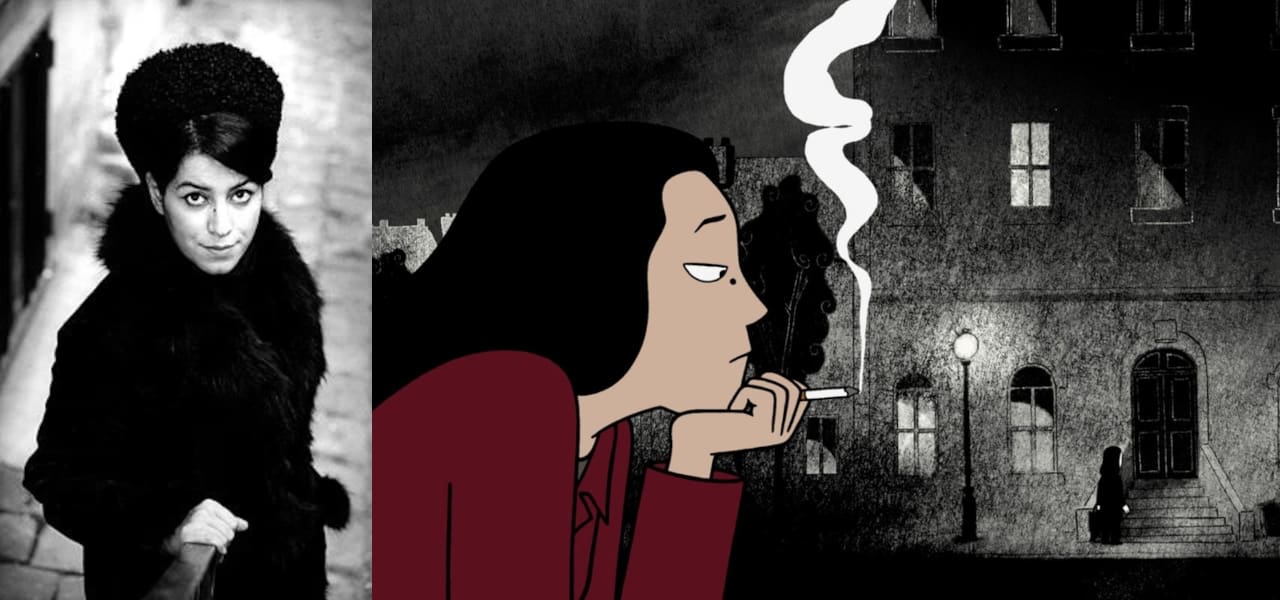
While Satrapi often worked in isolation in France, her success signaled a burgeoning golden age for Iranian animators. By 2024, the industry saw Yegane Moghaddam’s Our Uniform receive an Oscar nomination, followed by the historic 2025 Academy Award win for Hossein Molayemi and Shirin Sohani’s In the Shadow of the Cypress—the first Oscar ever awarded to an Iranian animated production. Industry analysts frequently cite Satrapi as the "matriarch" of this movement, having proved that Iranian stories, rendered through the lens of animation, possessed universal resonance.
Her visual style—characterized by high-contrast chiaroscuro and bold, expressive linework—was a deliberate choice. By stripping away color and hyper-realism, Satrapi forced the viewer to focus on the emotional truth of the characters. This aesthetic allowed Persepolis to bypass cultural barriers; the silhouettes of her characters became universal vessels for the human experience of grief, joy, and defiance.
Official Responses and Tributes
The French government, which Satrapi often criticized but which also embraced her as a cultural jewel, led the official tributes. President Emmanuel Macron issued a formal statement emphasizing her role in the French cultural canon.
"Her passing marks the loss of a leading figure in French culture and a freedom-loving artist whose work carried a universal message and earned her immense international acclaim," the statement read. Macron’s office noted that Satrapi’s life was a testament to the power of the Republic as a refuge for those fleeing tyranny.
However, Satrapi’s relationship with the French establishment remained complex until the end. In 2025, she made headlines by refusing the Légion d’Honneur, France’s highest merit. At the time, she stated: "I cannot accept this honor while France maintains a hypocritical attitude toward Iran. To honor me while shaking hands with the wealthy oligarchs who fund the oppression of my sisters in Tehran is an irony I cannot stomach."
Human rights organizations, including Amnesty International and the Center for Human Rights in Iran, also released statements. They highlighted her final public act: an open letter posted on her social media in 2024, which served as a desperate plea to halt the executions of activists Varishe Moradi and Pakhshan Azizi.
Implications: The Conscience of a Culture
The death of Marjane Satrapi leaves a significant void in the world of political art. She was more than a filmmaker; she was a "cultural ambassador" who refused the sanitization of her homeland’s history. Her life and death carry several profound implications for the future of the arts and human rights advocacy.
.png)
1. The Power of the Personal Narrative
Satrapi demonstrated that the most effective way to combat "othering" and xenophobia is through the radically honest personal memoir. By sharing her own faults, her rebellious teenage years listening to Iron Maiden in Tehran, and her struggles with depression in Europe, she made the "Iranian woman" a relatable, three-dimensional figure for millions who had only seen her through the lens of evening news reports.
2. A New Standard for Artist-Activists
Her refusal of the Légion d’Honneur and her consistent critique of Western foreign policy—even as she lived as a celebrated citizen of the West—sets a high bar for the integrity of the artist-activist. Satrapi never allowed her celebrity to be used as a tool for "artwashing" the political complexities of the Middle East.
3. The Future of Iranian Animation
Satrapi’s legacy is firmly etched into the success of the current generation of Iranian animators. Despite the threat of government intervention and limited public funding within Iran, the "Satrapi Model"—creating deeply personal, visually striking work that can be exported globally—has become the blueprint for survival and success for artists living under authoritarian regimes.
4. The Weight of Grief
Perhaps the most poignant implication of her passing is the reminder of the human cost of exile and loss. Her family’s assertion that she "died of sadness" serves as a somber postscript to a life spent fighting. It highlights the toll that a lifetime of witnessing the suffering of one’s people, combined with personal tragedy, can take on even the most resilient of spirits.
Conclusion
Marjane Satrapi once said that "the only way to be a revolutionary is to be a human being." In her life, her books, and her films, she achieved exactly that. She stripped away the veils of ideology to reveal the messy, vibrant, and often painful reality of what it means to belong to two worlds while feeling truly at home in neither.
As the animation community and the world at large say goodbye to the woman who gave a face to the Iranian Revolution, her work remains. Persepolis will continue to be taught in schools, screened in theaters, and read in secret by those seeking the courage to speak their own truth. Marjane Satrapi is gone, but the thick black lines of her legacy are indelible.



Leave a Comment