
"The Mandalorian and Grogu" Movie: A Deep Dive into Star Wars’ Unexpected, Niche Blockbuster
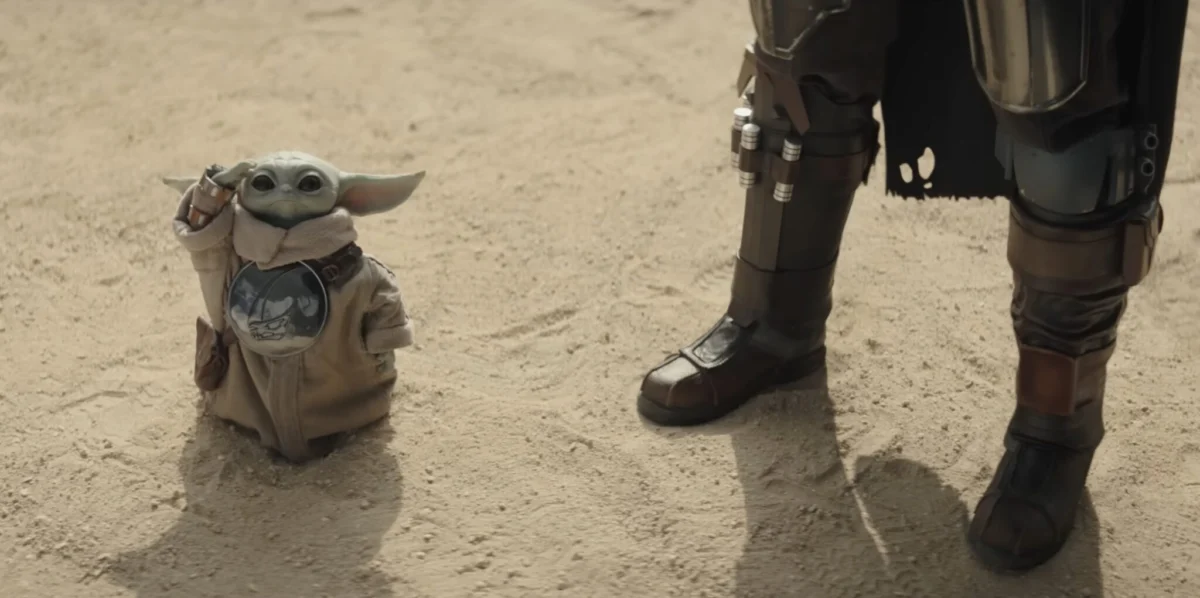
Coruscant, Galactic Republic – In an era where the Star Wars cinematic universe often grapples with its identity, The Mandalorian and Grogu arrives as a surprisingly defiant and deeply personal entry, carving out a unique space that eschews broad appeal for an unashamed embrace of niche lore and fantastical absurdity. Initially met with low expectations, born from its television origins and a perceived narrative thinness, the film, helmed by creator/director Jon Favreau with script assistance from Dave Filoni and Noah Kloor, has emerged as a vibrant, if unconventional, blockbuster.
The movie, which transports the beloved Din Djarin and his foundling Grogu to the big screen, isn’t merely an extended episode; it’s a meticulously crafted love letter to specific corners of the Star Wars galaxy, a testament to the power of imaginative storytelling that prioritizes character-driven whimsy over conventional narrative arcs. It challenges preconceived notions of what a Star Wars film should be, delivering a rich, idiosyncratic experience for those willing to venture beyond the well-trodden paths of the Skywalker Saga.
Initial Skepticism and the Unfolding Narrative
The journey to The Mandalorian and Grogu‘s release was fraught with a quiet apprehension. Many viewers, including this critic, approached the film with a degree of skepticism. The transition of a television series, known for its episodic nature and at times meandering plotlines, into a feature-length film raised questions about its ability to sustain a compelling narrative over a longer runtime. Despite the involvement of Star Wars luminaries like Dave Filoni and Noah Kloor, tasked with enriching Jon Favreau’s script, doubts lingered regarding its potential to elevate the series’ core concept beyond its small-screen constraints.
The film’s opening sequence, while immediately thrusting viewers into action, inadvertently highlighted an underlying creative tension for some long-time fans. It depicts Din Djarin and Grogu dismantling an Imperial garrison, a familiar scenario where a two-bit official exploits his position for extortion, marking another entry on the New Republic’s list of lingering Imperial diehards. While effective in showcasing the duo’s dynamic, this specific narrative beat struck a familiar chord for those steeped in Star Wars lore. The uncanny resemblance to a pivotal, emotionally charged mission from the anthology Tales of the Empire, a story traditionally associated with the legendary bounty hunter Boba Fett, triggered a familiar frustration. For dedicated fans, the recurring motif of Din Djarin seemingly inheriting or re-enacting Boba Fett’s "greatest hits" can feel like a missed opportunity for original storytelling, or worse, a dilution of established character identities.
However, this initial quibble soon faded into the background as the film’s true intentions began to unfurl. The narrative quickly introduces Sigourney Weaver in a commanding cameo as Colonel Ward, a New Republic liaison who provides Din with a new ship – strikingly similar to his old one, albeit with a fresh coat of paint – and a critical new assignment. The mission: journey to the infamous Hutt homeworld of Nal Hutta. Din is tasked with engaging Jabba the Hutt’s surviving relatives, who are concerned about their missing nephew, Rotta. Success in retrieving the young Huttlet promises invaluable intelligence on a formidable Imperial remnant leader, Janu Coin, portrayed with unsettling gravitas by Jonny Coyne, a casting choice that playfully mirrors his character’s name.
It was at this juncture that the film truly began to ignite a spark of excitement. The prospect of exploring Nal Hutta on the big screen, a planet steeped in criminal intrigue and rarely seen beyond fleeting glimpses, was tantalizing. Even more thrilling was the return of Rotta, Jabba’s son, a character last seen as an infant in the very first episode of The Clone Wars animated series, rescued by Anakin Skywalker, Obi-Wan Kenobi, and a newly commissioned Ahsoka Tano. The inclusion of Garazeb “Zeb” Orrelios, the Lasat strongman from the beloved Star Wars Rebels series, voiced once again by Steve Blum, as a prominent teammate for the mission, rather than a mere cameo, signaled a deep dive into the animated universe’s rich tapestry. This deliberate weaving of established, yet often underutilized, lore characters into the cinematic narrative hinted at a film designed for a very specific, appreciative audience.

A Niche, Yet Deeply Rewarding, Star Wars Experience
The Mandalorian and Grogu is not merely a film for any Star Wars fan; it’s an unapologetic offering for a highly specialized segment of the fanbase. It exists at a peculiar, "fever dream intersection" of distinct desires and interests. Were you a fan of The Mandalorian series? Then this film delivers what feels like one of its stronger seasons, meticulously rendered for the expansive canvas of the big screen. Did you find yourself drawn to the animated Star Wars series—The Clone Wars, Rebels, The Bad Batch—particularly their freedom to explore the "weird, grubby little corners" of the galaxy that live-action often shies away from? This movie is precisely where those sensibilities converge. Furthermore, if your heart yearns for the spirit of ’80s fantasy films, replete with intricate puppets, whimsical silliness, and moments of genuine grotesquerie, perhaps even carrying a nostalgic affection for The Ewok Adventures from childhood, then this film promises a truly exhilarating ride.
The Power of "Kid-Friendly" Storytelling
The film’s brilliance lies in its bold embrace of a storytelling philosophy often relegated to animated series: narratives aimed at children. This critical insight, frequently championed by this reviewer, bears repeating here. The inherent advantage of creating Star Wars narratives for a younger audience is the liberation from the perceived need for grim realism or adult sophistication. Children, refreshingly, do not inherently care if a story element is "weird," "goofy," "absurd," or even "embarrassing" to an adult sensibility. This freedom allows for an expansive and often bizarre creativity that enriches the universe immeasurably.
Within this framework, one can effortlessly spend hours dissecting the intricate web of Banking Clan criminal activities, exploring the geopolitical machinations of obscure species, or delving into the convoluted politics of the Hutts—and no one, least of all a child, is inclined to complain. This approach allows for expansive storytelling, such as devoting reams of narrative to the concept of using a rare alien species to craft weapons of war, all while playfully crafting a King Kong pastiche. These are the kinds of rich, imaginative tangents that many adult fans, unfortunately, seem to reject in live-action Star Wars, despite them being, frankly, the only reason to engage with this particular sandbox.
Indeed, while the critical acclaim for a series like Andor is well-deserved—a series this reviewer wholeheartedly loved for its gritty, realistic sci-fi resistance narrative—it’s crucial to acknowledge that Andor does not represent the fundamental why of Star Wars for many. The market is saturated with realistic sci-fi resistance narratives elsewhere. What remains uniquely compelling about Star Wars, and what The Mandalorian and Grogu delivers in spades, are alien planets teeming with bizarre life, robots endowed with distinct personalities, exquisitely crafted puppet friends with heartbreakingly expressive faces, and the kind of gnarly zombie resurrections born from termite people that push the boundaries of imagination. It is frankly baffling that, nearly half a century into this fictional universe’s tenure, fans still need to explicitly ask for this kind of fantastical escapism, and The Mandalorian and Grogu answers that call with enthusiastic gusto.
Immersive World-Building Details
The film’s commitment to this vibrant, slightly unhinged vision is evident in its meticulous world-building details. When Din Djarin visits Jabba’s relatives on Nal Hutta, the background hums with a decadent display of Hutt revelry—a scene that the creative team may plausibly describe as merely "eating," but which unmistakably hints at a full-blown Hutt orgy for those paying closer attention. The architecture of the Hutt palace on Nal Hutta directly mirrors Jabba’s palace on Tatooine, a subtle but significant detail that establishes a consistent aesthetic for the Hutt crime syndicate and clarifies that Jabba’s infamous abode wasn’t merely a repurposed structure, but a reflection of established Hutt design principles.
Adding to this rich tapestry are the palace’s robot guards, a fascinating collection of scavenged parts from nearly every conceivable droid type. Many prominently feature the distinctive faces of Separatist battle droids, implying a thriving, illicit market for such components and, more intriguingly, suggesting a continuous process of self-upgrading by droids that have successfully broken free from organic masters. This detail subtly expands the lore of droid sentience and autonomy within the galaxy. Furthermore, when Din is shown a picture of the missing Rotta, it is comically outdated, depicting the exact infant Huttlet rescued in The Clone Wars premiere, a clever visual callback that underscores the passage of time and the film’s deep roots in animated canon. These are the rich, narrative-enhancing details that distinguish The Mandalorian and Grogu from films that prioritize endless action sequences, proving that genuine immersion can be built from thoughtful, intricate design.

Character Spotlights
While the film’s action sequences may not be revolutionary, they serve their purpose effectively, primarily due to the exceptional work of the stunt performers. Co-leads Lateef Crowder and Brendan Wayne, who portray the Mandalorian while helmeted, continue to deliver physically demanding and incredibly precise performances, carrying the lion’s share of the film’s kinetic energy. Pedro Pascal’s physical presence, though his face remains visible for only a few precious minutes, underscores the production’s unwavering commitment to the tenets of the Death Watch cult, a narrative choice that, despite its occasional logical qualms, is admirably maintained. Complementing the visual spectacle is Ludwig Göransson’s score, which takes the familiar, beloved themes of the television series and amplifies them for big-screen dazzlement, clearly indicating the composer’s enjoyment in re-exploring and expanding upon his previous work.
Grogu: The film leverages its substantial movie budget to spectacularly showcase the full range of the Grogu puppet. His journey includes entire side quests that unfold entirely without dialogue, relying on his expressive movements and the often-hilarious slapstick comedy that ensues. A running gag involves nearly every character in the film inadvertently, or intentionally, offering the tiny foundling snacks. A particularly delightful sequence sees Grogu hitching a ride with a group of Anzellans—Babu Frick’s diminutive species—revealing that hyperspace-capable ships exist even for the galaxy’s smallest inhabitants, further expanding the imaginative scope of the universe.
Rotta: Jabba’s son, Rotta, voiced wonderfully and inexplicably by Jeremy Allen White, emerges as a surprisingly complex character. He is depicted as "super jacked" but also possesses an unexpectedly kind demeanor. His narrative arc serves to reinforce a recurring Star Wars theme: the profound importance of good parenting. Rotta’s story subtly contrasts with the fate of beings who are denied such guidance, adding an emotional depth to what could have been a mere plot device. Despite being a CGI slug, his storyline is genuinely moving, prompting the critic to ponder the unexpected emotional resonance of a character so outwardly grotesque.
Cameos and Fan Service: The film is peppered with delightful surprises and deep-cut fan service. Legendary director Martin Scorsese makes an extended cameo as a CGI food seller, delivering a performance that goes "5000% all out" in its unexpected absurdity. Din faces off against terrifying sea serpents, while Zeb gets ample opportunity to wield his iconic bo-rifle against a hail of stormtroopers, indulging in what appears to be his favorite pastime. The New Republic, for a welcome change, is portrayed as genuinely benevolent and effective. The film also delivers a satisfying comeuppance against the Hutts for their historical exploitation of imprisoned wild animals in gladiatorial combat. A send-up of the gladiator games from Thor: Ragnarok is made uniquely Star Wars when Janu Coin declares it will be a "Dejarik Match." This specific reference—a nod to the holographic chess game seen on the Millennium Falcon—serves as a potent "serotonin hit" for those who understand its significance, feeling earned and deeply satisfying rather than cheap or gratuitous.
CGI Limitations vs. Creative Ambition
While the film largely succeeds in its ambitious vision, a few minor complaints surface, primarily concerning the technical difficulties of animating certain characters in CGI. Zeb, in particular, suffers from these limitations. As a Lasat, he is canonically a large, imposing figure with distinctly non-human limbs. However, for practical reasons, likely related to accommodating human actor stand-ins, his scale appears somewhat diminished on screen. This is a minor disappointment, especially given that the advent of CGI was theoretically meant to liberate filmmakers from such physical constraints. Nevertheless, the overall satisfaction of seeing a character like Zeb play such a sizable and engaging role in a major Star Wars film, made possible by the very technology that presents these challenges, largely mitigates this critique.
Beyond the Box Office: Official Intent and Creative Vision
While The Mandalorian and Grogu doesn’t feature explicit "official responses" in the conventional journalistic sense, the film itself serves as a profound statement of creative intent from its architects: Jon Favreau, Dave Filoni, and Noah Kloor. Their collective vision clearly signals a deliberate embrace of Star Wars’ inherent capacity for the weird, the whimsical, and the deeply nostalgic. This isn’t a film designed to appeal to the lowest common denominator or to chase the latest cinematic trends; it’s a meticulously curated experience for those who cherish the franchise’s rich, often bizarre, lore.

The decision to elevate elements typically confined to animated series—like Rotta, Zeb, and the fantastical elements of Nal Hutta—to the big screen demonstrates a confidence in the depth of the Star Wars universe beyond its core trilogies. It implies a strategic understanding that different segments of the fanbase seek different experiences, and that catering to these specific desires can yield profoundly rewarding results. The creative team’s willingness to lean into the "kid-friendly" aspects, with all their inherent absurdities, is not a compromise but a strength, suggesting a conscious effort to recapture a sense of unbridled imagination that sometimes feels lost in more "mature" or "realistic" Star Wars offerings. This film is, in essence, an official affirmation of the diverse storytelling potential within the galaxy far, far away.
Implications and Future of Star Wars Storytelling
The Mandalorian and Grogu represents a significant, and potentially paradigm-shifting, entry into the Star Wars canon. Its success, particularly among its intended niche audience, has profound implications for the future of the franchise. It demonstrates that there is not only an appetite but a fervent demand for Star Wars stories that are willing to embrace the fantastical, the absurd, and the deeply referential, rather than solely pursuing gritty realism or adhering strictly to established, often creatively limiting, formulas.
This film provides a compelling model for diverse storytelling within the expansive Star Wars universe, proving that different creative approaches can successfully cater to varied fan segments without necessarily alienating others. It underscores the critical importance of embracing the "absurd" and "fantastical" elements that have always been foundational to Star Wars, offering a vital counterpoint to the growing trend of grounding sci-fi narratives in more conventional, realistic frameworks.
The reviewer’s astonishment that such a "mega-blockbuster" could take this route in 2026 highlights the rarity of this kind of cinematic experience in the current landscape. There’s a palpable concern that films of this unique ilk may become even scarcer, making The Mandalorian and Grogu a precious anomaly. For those who yearn for this particular brand of imaginative journey in their movie-going lives—a blend of deep lore, genuine humor, surprising emotional depth, and unadulterated Star Wars whimsy—the recommendation is clear: gather a friend or a child, and get to a theater as soon as possible. This is a cinematic adventure that, once experienced, may leave a lasting impression as a singular and cherished piece of the Star Wars galaxy.



Leave a Comment