
007 First Light: IO Interactive Delivers a Mature, Inventive, and Earned Take on James Bond

London, UK – May 27, 2024 – For decades, James Bond has been a cultural touchstone, a suave and sophisticated spy synonymous with high-stakes action, exotic locales, and a certain undeniable charisma. Yet, translating the iconic 007 into the interactive medium has proven a complex dance, with past attempts often struggling to capture the essence of the character beyond surface-level mimicry. Enter IO Interactive, the acclaimed developers behind the Hitman series, who with 007 First Light, have not only navigated these challenges but have crafted a narrative adventure that is stylish, inventive, and, crucially, feels genuinely earned. This is not merely a licensed game; it is a mature and nuanced exploration of James Bond, skillfully blending the espionage DNA of its inspirations into something fresh and compelling.
A New Dawn for 007: The Genesis of First Light
007 First Light, developed by IO Interactive and published by MGM Amazon Studios, arrives on the gaming scene with significant anticipation. The game promises a fresh perspective on the legendary MI6 agent, aiming to move beyond the often-trodden path of cinematic callbacks and instead forge its own identity within the established Bond universe. The initial hours of the game might raise an eyebrow, with extended sequences dedicated to explaining the origins of Bond’s iconic scar and an almost self-aware inclusion of Bond theme song references. Furthermore, a lengthy training montage, reminiscent of a spy-school origin story, could lead one to believe First Light is falling into the trap of over-explanation, a pitfall that has occasionally ensnared other major franchises.
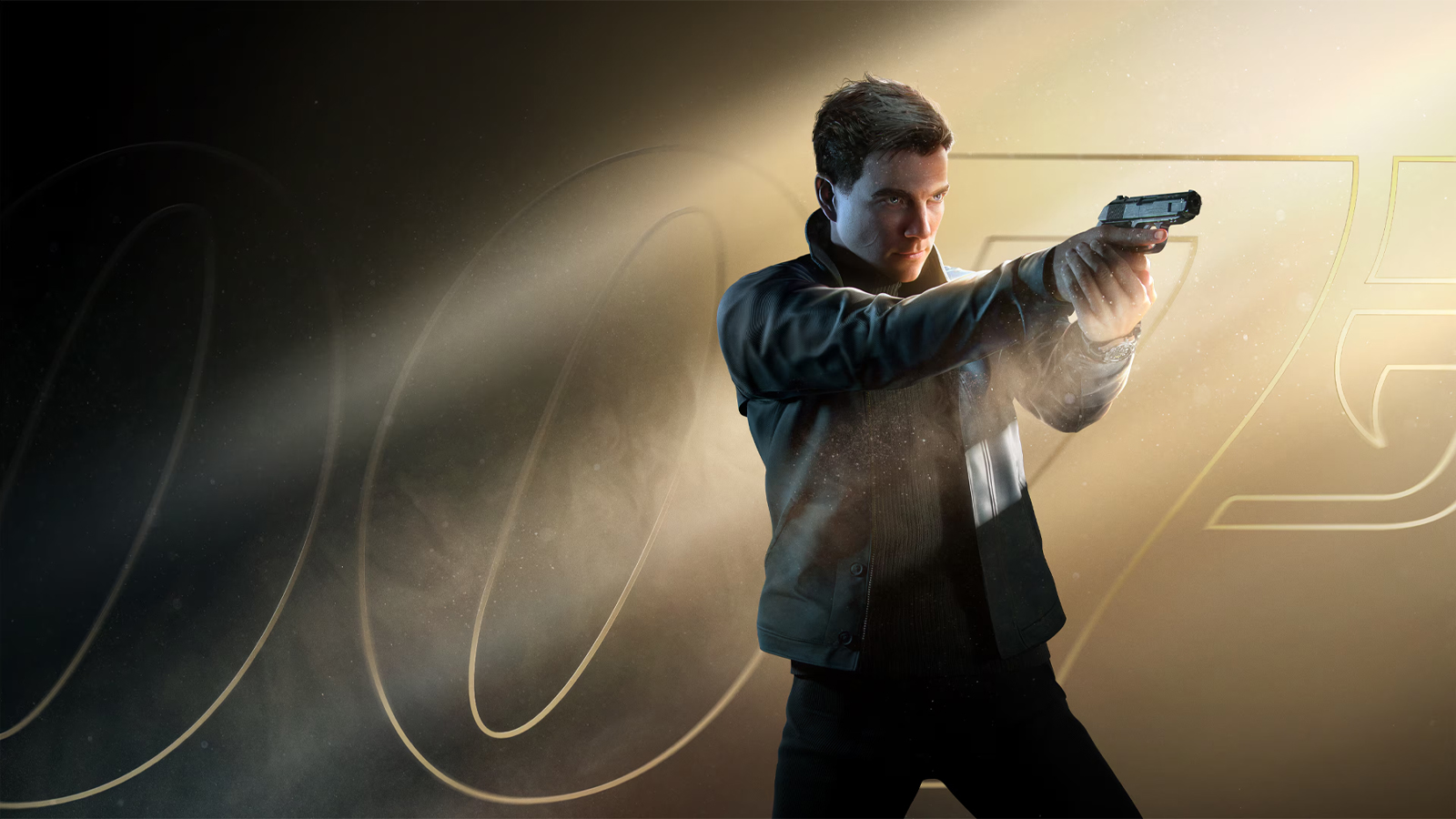
However, to judge First Light by its initial four hours would be a disservice to the masterful narrative arc that unfolds. As the game progresses, IO Interactive expertly peels back the layers of its interpretation of James Bond. The narrative skillfully pivots, transforming those seemingly extraneous explanations and self-referential moments into integral parts of the character’s development. The initial youthful swagger and almost fourth-wall-breaking winks are gradually sanded away, revealing a more complex and compelling individual. Over its approximately 18-hour story, this Bond evolves, slowly but surely, into a rendition that feels both Fleming-accurate and resonant with modern sensibilities. He becomes harder-edged, more isolated, and ultimately, more authentic. The game positions this iteration of Bond somewhere between the gritty realism of Daniel Craig and the brooding intensity of Timothy Dalton, offering a character who not only embodies the spirit of Ian Fleming’s creation but also undergoes significant growth, particularly when the narrative allows for meaningful character moments beyond mere franchise nods.

The Hitman Blueprint: Blending Stealth and Substance
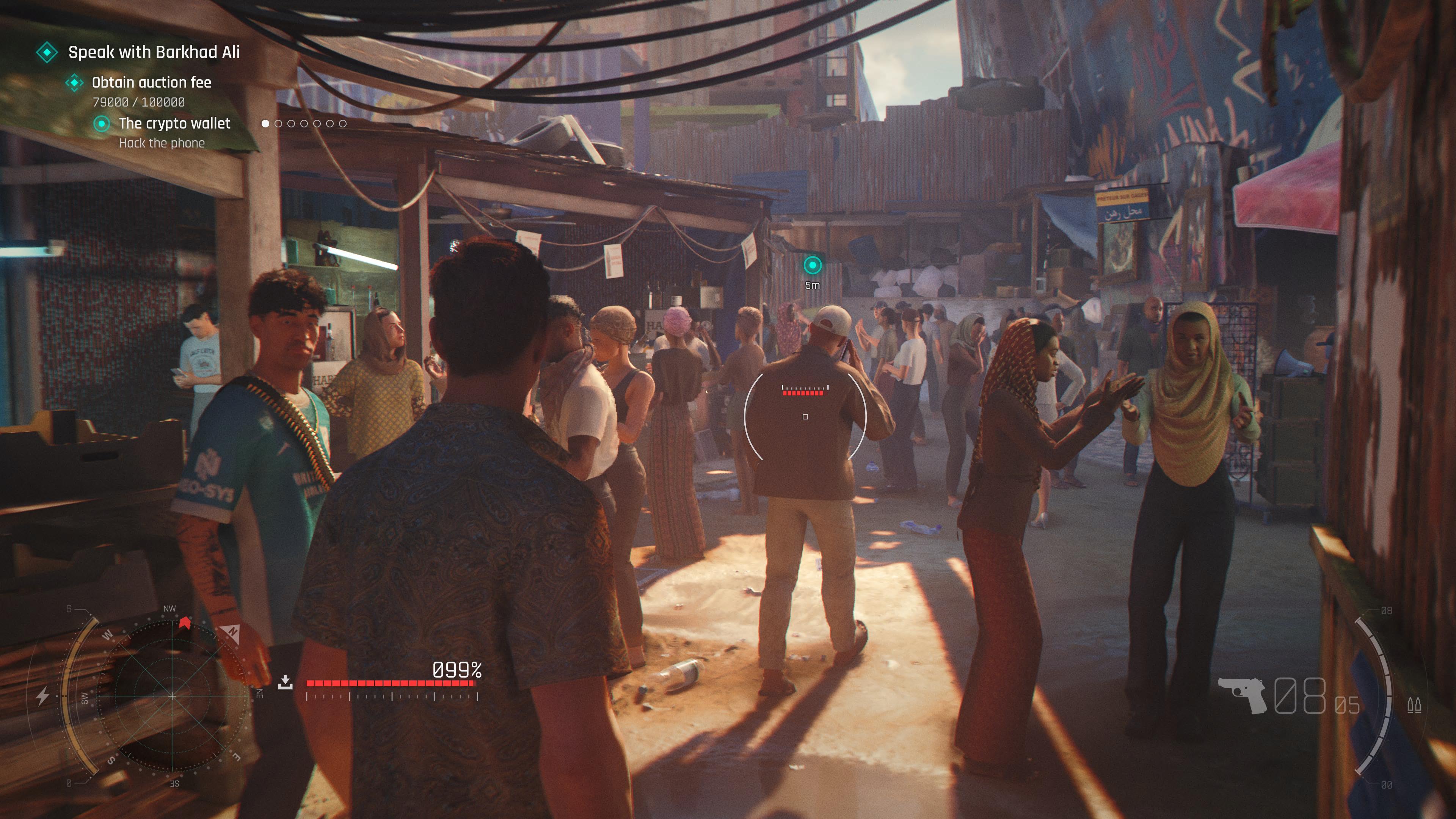
At its core, 007 First Light bears the unmistakable imprint of IO Interactive’s pedigree. The expansive, intricately designed levels, teeming with NPCs following their routines, immediately evoke the systemic gameplay that has become the studio’s hallmark. Players are encouraged to observe, learn, and exploit the environment, a familiar yet always engaging loop. However, First Light doesn’t confine this intricate design to the precise assassination puzzles of Hitman. Instead, IO Interactive has ingeniously adapted these mechanics to suit Bond’s unique skill set and personality.
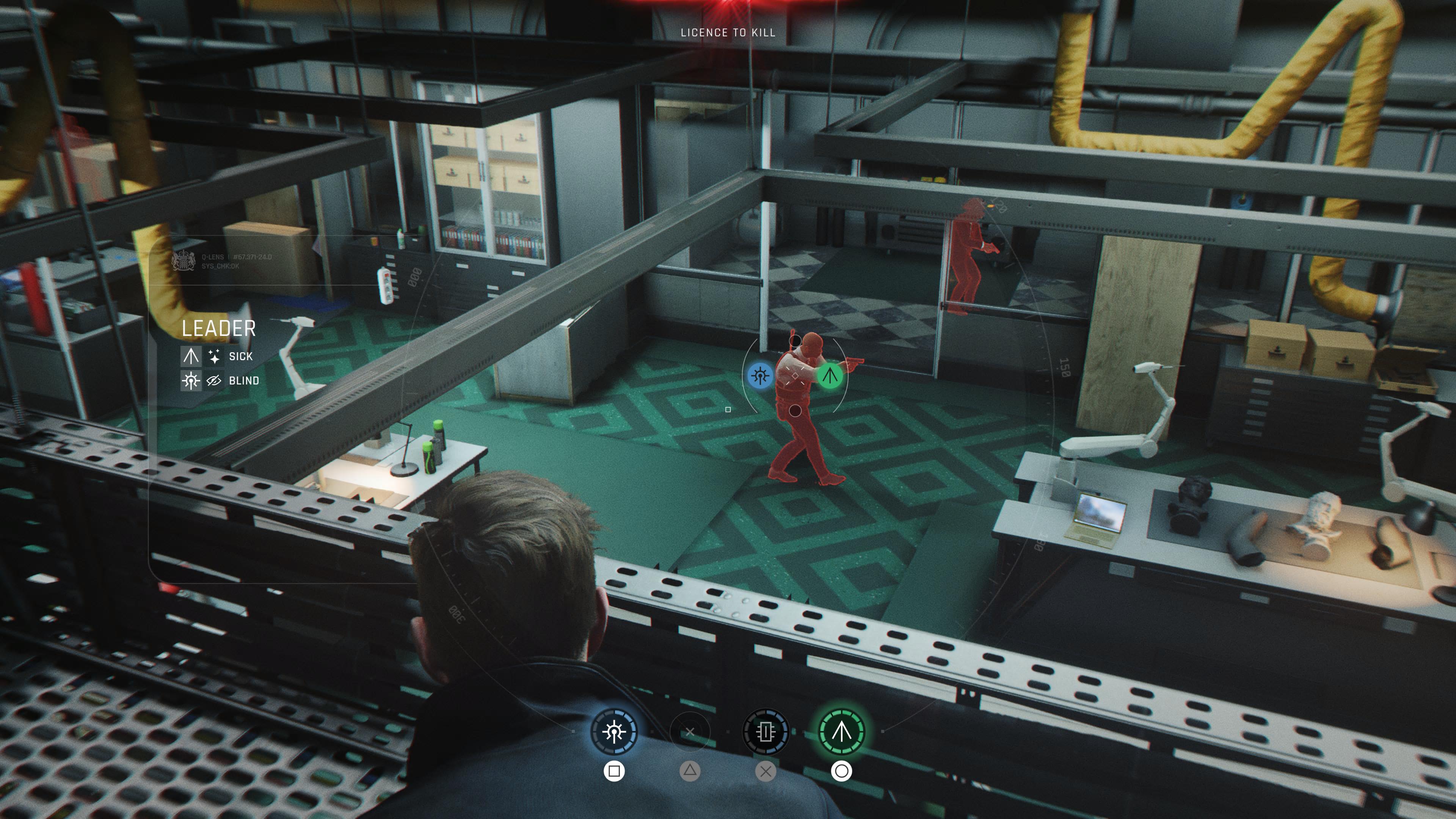
The introduction of "Q Vision" serves as a primary conduit for this adaptation. This mechanic allows players to interact with the environment in myriad ways: hacking security cameras, manipulating electrical systems, disabling traps, and even subtly influencing NPC behavior to create opportune pathways. This fluidity transforms stealth into a more dynamic and improvisational experience, where being detected doesn’t necessarily spell immediate failure. Instead, players are encouraged to think on their feet, bluffing their way past lower-level guards or talking their way back into the mission’s good graces. This approach fosters a sense of constant momentum, eschewing the rigid puzzle-solving of Hitman for a more accessible and reactive stealth experience that feels perfectly suited to Bond’s improvisational genius.
Each major mission presents a series of interconnected challenges, often revolving around gaining access to a restricted area or bypassing security. The beauty of First Light‘s design lies in the sheer variety of approaches available. Players might impersonate a late-arriving journalist to gain entry to a launch party, feign a panic attack as a scientist to create a diversion, or leverage environmental hazards to their advantage. The simple act of blending into a crowd, subtly manipulating individuals, and navigating complex spaces undetected offers a profound sense of satisfaction, a core tenet of IO’s design philosophy.
"No Time to Die" in Combat: A Fluid and Reactive Approach
Where IO Interactive has made perhaps the most significant tonal shift is in the game’s combat system. Leveraging the same environmental interaction mechanics that underpin the stealth gameplay, combat encounters in 007 First Light are designed to be improvised and fluid. The environment itself becomes a weapon, with players encouraged to strategize and exploit their surroundings. Shoving shelves onto unsuspecting enemies, bursting steam pipes to obscure vision, or utilizing vents and rafters for swift takedowns are all integral to the combat loop. This approach echoes the environmental dynamism found in the Batman: Arkham series, but with a less polished and more opportunistic execution that feels distinctly Bond.
Even when stealth fails and direct confrontation becomes unavoidable, players are not solely reliant on brute force. The Q tools remain invaluable mid-combat. A watch laser can blind an opponent, allowing Bond to disarm them and seize their weapon, instantly turning the tide. Alternatively, the environment can be weaponized with everyday objects – mugs, telephones, and office supplies become tools to daze enemies before finishing them off with a swift grapple or by, for instance, throwing them through a glass door. The hand-to-hand combat itself is a relatively simple yet effective system of counters, punches, and grapples, visually indicated by glowing cues. Its effectiveness stems not from inherent complexity, but from the highly reactive nature of the game world. Encounters often devolve into visceral brawls, with enemies being slammed into computer terminals, desks, or the very fabric of MI6’s opulent furniture. This scrappy, physical approach to combat feels raw and grounded, a far cry from overly cinematic, pre-scripted fight sequences.
Adding another layer to the combat is the "Bond Time" mechanic, a concentration mode that allows players to slow down time to execute precise shots. This can be used to target enemy legs, causing them to stumble, or to disarm them by shooting their hands. While the immediate instinct might be to go for headshots, players will discover that strategically targeting environmental hazards—such as shooting lighting rigs to bury encamped snipers—can be far more economical and effective. IO Interactive also demonstrates a knack for varying the intensity of combat sequences. Some are grand, cinematic spectacles, while others are pared-back, atmospheric struggles. A memorable quarry chase, for instance, sees an unarmed Bond relying on his mentor, John Greenway, for assistance, emphasizing the strategic use of smoke and debris to gain an advantage.
Traversal and Tone: The Uncharted Influence and the Bond Balance
Interspersed between the stealth and combat sequences are traversal sections that bear a resemblance to the more grounded moments in the Uncharted series. These climbing segments are intentionally restrained, featuring clearly defined routes marked by yellow pipes and accessible ledges. While they may lack the extreme acrobatics of some other action-adventure titles, their functional design serves a crucial purpose: providing the game with breathing room. These moments allow the narrative to breathe, for characters to interact organically, and for the meticulously crafted world to showcase its cinematic beauty.
Occasional car sequences and short driving segments also appear, but they are never the focus. Rather than attempting to be a full-fledged racing game with a tuxedo, these moments serve as palate cleansers, seamlessly integrated into the overall experience. The driving sequences, in particular, are crucial for developing the relationships between Bond and the game’s supporting cast. A desert driving sequence, for example, allows for the development of a grudging friendship between Bond and his mentor, Greenway. These moments, filled with sweeping vistas, the roar of engines, and a swelling orchestral score, are pure AAA cinematic spectacle, hinting at the character development that lies beneath the surface. They underscore IO Interactive’s ultimate aim: not just to create a technically proficient stealth-action game tied to a beloved license, but to capture the fundamental push and pull between elegance and violence that defines James Bond.
A World of Opulence and Danger: Visuals and Character Development
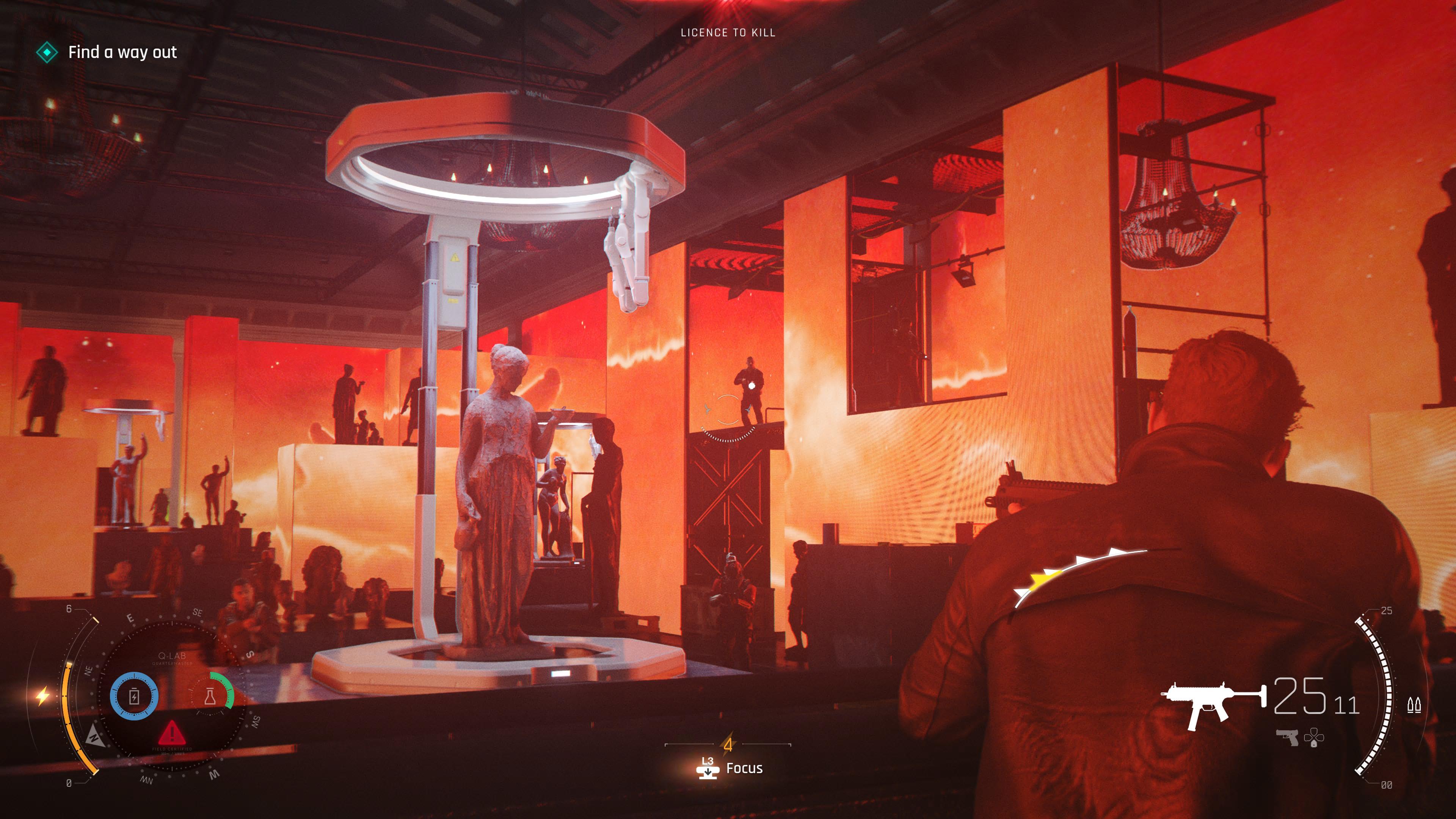
The visual presentation of 007 First Light is a masterclass in balancing excess with meticulous detail. IO Interactive’s signature modern noir aesthetic, infused with a glossy, opulent sheen, perfectly complements the contemporary interpretation of James Bond. The game traverses grand stately homes, exotic island paradises, and the hyper-technological compounds of its antagonists. The villain’s London and Arctic bases are characterized by geometrically precise elegance, featuring an abundance of reflective surfaces, marble, glass, steel, and designer lighting. Similarly, London’s nightclubs, museums, and streets are populated by systems-driven crowds, showcasing the studio’s penchant for stark artificial lighting and sterile interiors.
IO Interactive is unafraid to embrace cinematic bombast, with sequences that see the world literally torn apart in true Bond fashion. Escaping a sniper across a teetering crane, reminiscent of Casino Royale, or engaging in a destructive quarry chase, all contribute to the spectacle. Beyond the overt action, the game subtly integrates Bond’s brand affiliations, with nods to Omega watches and Jaguar Land Rover. Cameos from real-world figures, such as Lenny Kravitz portraying a flamboyant desert pirate king, add a layer of unexpected charm and humor, as he menacingly dangles Bond over a crocodile pit – a quintessentially Bondian predicament. The inclusion of the outrageous Jaguar Type 00 concept car, a real vehicle with an almost unbelievable aesthetic, further blurs the lines between reality and cinematic fantasy, a testament to the game’s embrace of Bond’s larger-than-life persona.
More Than the Sum of Its Inspirations: A Mature Bond Emerges
The narrative arc of 007 First Light is deeply intertwined with its character development. Patrick Gibson’s portrayal of Bond begins with a youthful cockiness and swagger. However, as the story progresses and Bond faces escalating challenges, his character evolves. Confidence gradually replaces bravado, and his interactions become more observational and playfully nuanced, moving beyond overt flirting. This Bond retains an analogue sensibility in a technologically saturated MI6, a contrast that forms a core element of the game’s narrative. The tech-obsessed villain serves as a dark mirror to Bond’s instinct-driven, often chaotic, approach to espionage.

The third key player in the narrative is Isola Roth, a mysterious "Bond Girl" who ebbs and flows through the events of the game. Her unpredictable nature keeps her compelling and ensures players are constantly guessing her true allegiances and motivations.
Beyond the main campaign, the "Q simulator" offers a robust post-game experience. This mode presents new, bite-sized missions designed to test players’ mastery of stealth, gadgetry, and environmental interaction. Unlocking new suits, weapons, and gadgets provides tangible rewards for success, encouraging replayability. These challenges are expertly crafted, drawing on IO’s experience in designing tight, engaging encounter maps, and they demonstrate that the core gameplay loop of First Light is compelling even when detached from its cinematic narrative. The blend of Hitman’s systemic depth and Arkham’s fluid combat truly shines in these distilled challenges.
While 007 First Light may wear its inspirations on its sleeve—Hitman’s systems, Arkham’s combat, Uncharted’s pacing—it manages to transcend them. When the credits roll and the promise of James Bond’s return is made, it’s clear that IO Interactive has woven these disparate threads into something new and unique. The game has built a version of Bond that feels earned, mature, and nuanced, a character who doesn’t need constant reminders of his iconic status.
The Verdict: A License to Thrill and Evolve
007 First Light is a triumph of licensed game development. IO Interactive has not only captured the essence of James Bond but has evolved it, delivering a stealth-action experience that understands the intricacies of espionage and the allure of cinematic spectacle. Despite the considerable baggage of expectation that comes with such a beloved franchise, IO has crafted a game that feels like the foundation for a true Bond series, rather than a fleeting experiment. The question of whether James Bond will return is now less of a question and more of an anticipation, as IO Interactive has unequivocally earned the right to take the world’s most famous spy wherever it chooses to go.
Details:
- Publisher: MGM Amazon Studios
- Developer: IO Interactive
- Release Date: May 27
- Formats: PS5 (reviewed), Nintendo Switch 2, Xbox Series X|S, PC
- Engine: Glacier Engine



Leave a Comment