
The New Golden Era of Spanish Production: Insights from the 10th Anniversary of Conecta Magaluf-Mallorca
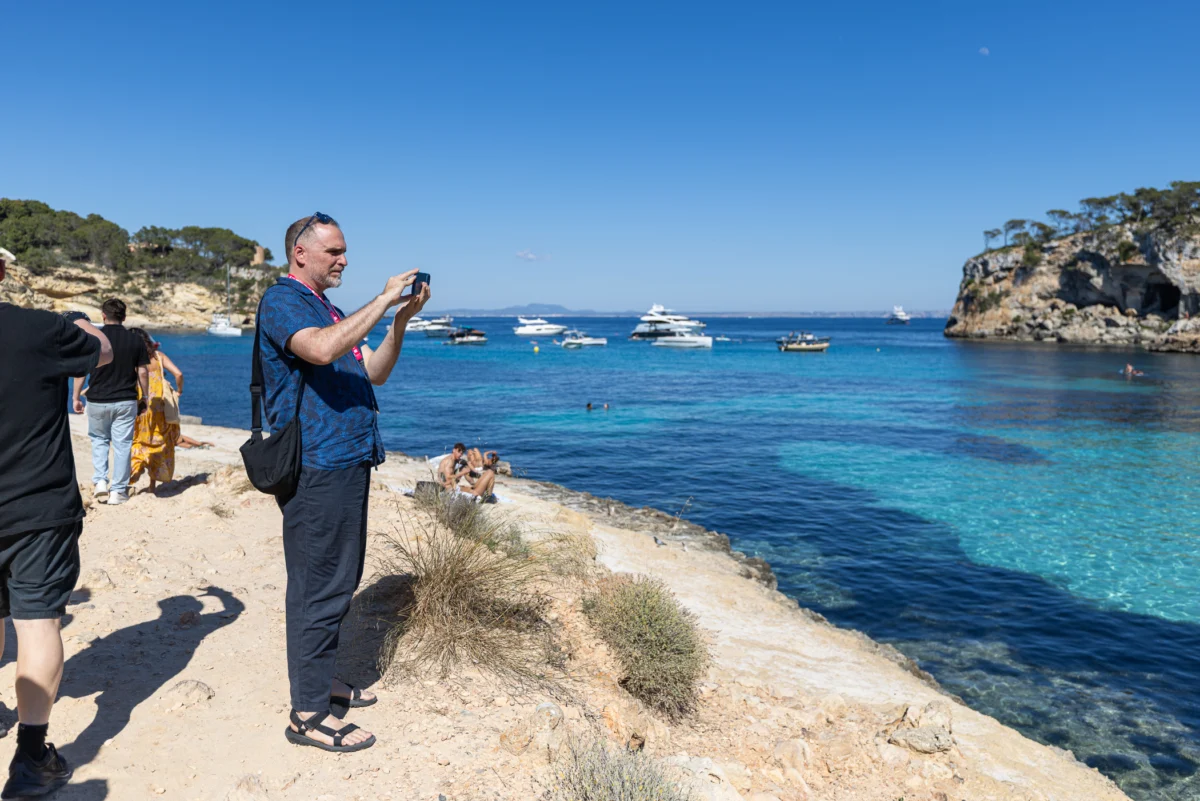
The Mediterranean backdrop of Magaluf Bay, with its characteristic turquoise waters and sweeping vistas, served as more than just a picturesque setting for the 10th-anniversary edition of Conecta. Held from May 25–28 at the Meliá Calviá Beach Hotel in Mallorca, the event marked a pivotal moment for the international television industry. Shifting to a "boutique" model, the conference brought together a concentrated powerhouse of 400 delegates to discuss the shifting sands of global streaming, the explosive growth of Spanish-language content, and the emerging technologies—from microdramas to Artificial Intelligence—reshaping the audiovisual landscape.
Main Facts: A Boutique Approach to Global Networking
The 2025 edition of Conecta Magaluf-Mallorca signaled a strategic evolution for the market. By adopting a more compact, all-in-one format, the event aimed to move away from the sprawling, often impersonal nature of larger trade shows. This year’s delegate list read like a "who’s who" of the modern media landscape, featuring high-level executives from HBO Max, Prime Video, YouTube, SkyShowtime, and Telemundo Studios. European powerhouses were also out in force, including representatives from France TV, RAI, RTVE, Atresmedia, Mediaset Italia, and Movistar Plus.
The core objective of this refined format, according to Director Géraldine Gonard, was to maximize the value of time. In an industry where "content is king" but "connection is the kingdom," the boutique model allowed for more incisive catch-ups on the state of the international TV business. The event wasn’t merely about buying and selling; it was a deep dive into the data-driven realities of 2025 and beyond.
Central to the discussions was the meteoric rise of the Spanish film and TV industry. According to the Cannes Marché du Film’s Focus report, Spain produced a staggering 426 feature films in 2025—a 30% increase over the previous year and nearly double the volume of traditional powerhouse France (228). This surge is attributed to a combination of robust national support and increasingly sophisticated regional schemes, with Mallorca itself emerging as a formidable production hub.
Chronology: Four Days of Innovation and Insight
The event opened on May 25 with an atmosphere of high-stakes analysis. The initial sessions, led by Jonathan Broughton of Plum Research, set a sobering but optimistic tone by drilling down into the metrics of global streamer performance.
By May 26, the focus shifted toward the legal and ethical frontiers of the industry. As the Spanish government approved a bill to enforce the European Union’s AI Act into national law, delegates debated the role of generative AI in creativity. This coincided with high-profile industry movements, such as director Jorge Gutiérrez’s sudden exit from Amazon’s genAI animation initiative—a move that signaled a growing "backlash" among creators.
May 27 served as the creative heart of the conference. The day was dominated by "Pitch Sessions" and a focus on the "Microdrama" phenomenon. This was also the day of the much-anticipated screening of Many People Need to Die, a Movistar Plus original that tackled millennial angst with a "withering realism" that left a lasting impression on attendees.

The conference concluded on May 28 with a retrospective and prospective panel. Analysts and journalists reflected on the last decade of globalization, noting the surprising resilience of local companies in the face of U.S. dominance. The closing ceremony, supported by the Calviá Town Council, emphasized the synergy between the audiovisual industry and sustainable tourism.
Supporting Data: The "Neo-Evergreen" and the Long Tail
One of the most significant revelations at Conecta came from Plum Research’s analysis of the "Long Tail." While industry headlines are often dominated by "first-run hits" like Squid Game, the data tells a different story. A staggering 90% of views and 75% of titles viewed on major platforms occur within the "Long Tail"—older, library content such as Star Trek, Dark, Archer, and Primal.
Broughton dubbed this phenomenon the rise of the "Neo-Evergreen." This shift is fundamentally changing the business model of SVOD (Subscription Video on Demand). In 2014, the business was 98% Direct-to-Consumer (DTC). By 2029, DTC is expected to represent only 76% of turnover, with the remaining 24% driven by Business-to-Consumer (BTC) models, primarily led by advertising.
Spain’s performance within this data set is particularly noteworthy. Despite the global breakout of Money Heist in 2018, the total hours watched of Spanish content on Netflix’s top 40 markets has actually increased by 73% since then. This suggests that Spanish content is no longer reliant on single "blockbuster" hits but has built a sustainable "long tail" of its own. Furthermore, the diversity of consumption is widening; in 2018, 35% of Spanish viewing hours came from outside traditional export markets (U.S., Brazil, Mexico, France, Argentina). By 2024, that figure had climbed to 45%.
Official Responses: Strategy, Sustainability, and Talent
The event provided a platform for officials and industry leaders to voice their strategies for the coming years. Géraldine Gonard emphasized that the new format was designed for efficiency: “Our format is focused on facilitating connections and maximizing the value of time spent together, which we believe is far more efficient for everyone.”
From a governmental perspective, Jaume Bauzá, the Balearic Islands’ Councillor for Tourism, Culture, and Sports, highlighted the role of the Sustainable Tourism Tax (ITS) in funding the event. “Investing ITS funding in Conecta exemplifies our tourist strategy,” Bauzá stated. “It supports quality and deseasonalized tourism which generates year-round returns at nil territory consumption cost.” This highlights a growing trend where film and TV production are viewed as vital components of a "green" and sustainable tourism economy.
On the talent side, the buzz was centered on Victoria Martín, the YouTube-podcast comedian whose work on Many People Need to Die was hailed as a breakthrough. Industry experts, including Caroline Servy of The Wit, noted that Spain’s recent success in comedy—citing hits like Animal and Macho Alphas—is due to their ability to "reinvent comedy to a large format sale potential" while offering a lighter way to address contemporary social concerns.

Implications: The Future of Global Storytelling
The takeaways from Conecta Magaluf-Mallorca point toward several seismic shifts in the global media landscape:
1. The Microdrama Revolution
The "Focus on Microdrama" session saw the longest queues of the entire event, and for good reason. Maria Rua Aguete of Omdia revealed that Brazil reached 24 million monthly active microdrama users in 2025, with Mexico hitting 20 million. With 75% of video consumption now occurring on smartphones, the industry is witnessing a "fundamental shift" in how entertainment is consumed. Brazilian giant Globo’s aggressive entry into this market, with 25 titles already in its catalog, suggests that microdramas are no longer a niche Chinese phenomenon but a global reality.
2. The Strain on Public Broadcasters
While the Spanish industry is booming, the report card for public broadcasters like RTVE is mixed. Spain has become the second-biggest importer of formats in the world (after the U.S.). Between 2025 and 2026, Spain launched 19 new adaptations, with RTVE leading the charge with 12. While format adaptation is cost-efficient, analysts expressed concern that a heavy reliance on imported IP might stifle original, local creativity within public institutions.
3. The Cross-Pollination of Narratives
The emergence of global platforms has led to what Manuel Martí of Cohn-Duprat described as a "cross-pollination of storytelling." The industry is seeing a merger between the plot-driven structures of Anglo storytelling and the character-driven depth of Latino narratives. This hybrid style is proving to be highly effective in creating "Neo-Evergreens" that resonate across cultural boundaries.
4. AI and the Authenticity Gap
The debate over AI remains the industry’s greatest point of friction. While the EU leads in regulation, the "authenticity gap" remains. As Jonathan Broughton noted, while data can help understand what has performed well in the past, a machine "can’t yet produce something which is authentic and credible and creative." The ongoing tension at events like Conecta and the upcoming Annecy Festival suggests that the industry is still searching for a moral and creative compass in the age of automation.
5. Mallorca as a Microcosm
Finally, the success of local titles like Mallorca Things to Do and Mallorca Confidential proves that regionalism is the new globalism. By leveraging local settings—sometimes even using them as narrative devices, such as the VR simulation in the series Idyllic—regional producers are finding that the more specific a story is to its location, the more universal its appeal becomes.
As Conecta Magaluf-Mallorca wrapped its 10th year, the message was clear: the television industry is no longer just about the next big hit. It is about building a sustainable ecosystem of "evergreen" content, embracing the mobile-first habits of the next generation, and navigating the delicate balance between technological innovation and human authenticity. Spain, and Mallorca in particular, sits at the very heart of this transformation.




Leave a Comment