The Liberator’s Legacy: Why the Dystopian Brilliance of ‘Blake’s 7’ Demands a Modern Re-evaluation
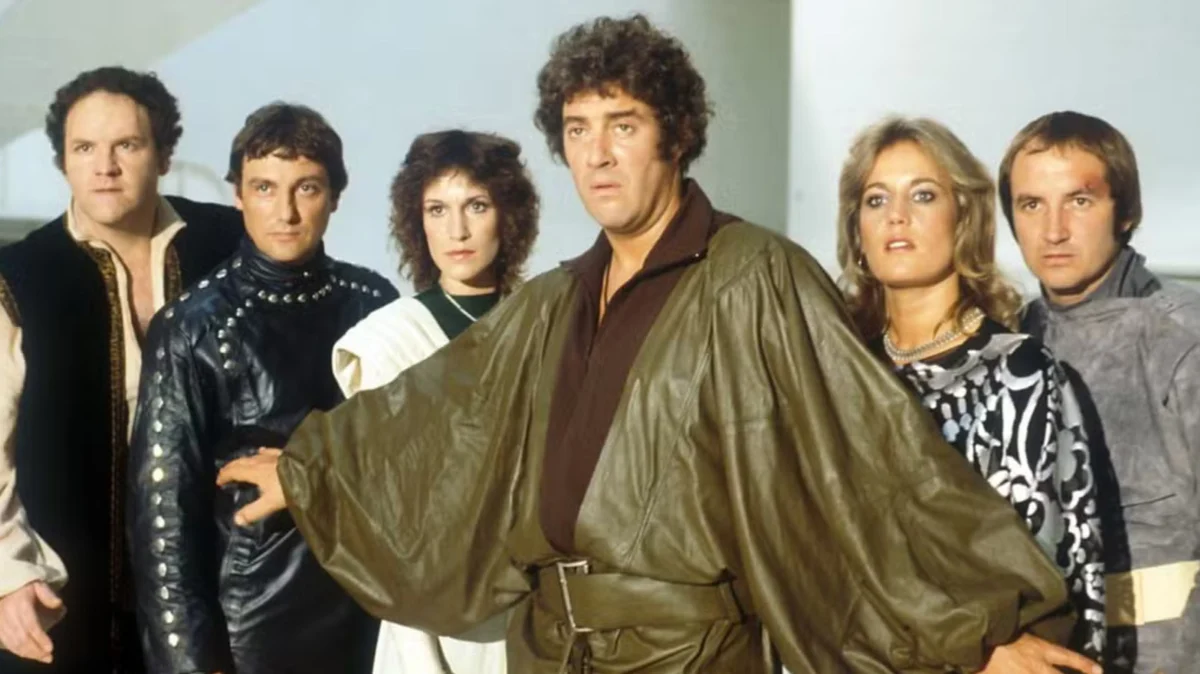
In the late 1970s, the global cultural landscape was dominated by the optimistic heroism of Star Wars and the exploratory idealism of Star Trek. Yet, in the United Kingdom, a different kind of space opera was taking root—one characterized by cynicism, moral ambiguity, and a shoestring budget that defied its grand ambitions. Blake’s 7, which aired on BBC One from 1978 to 1981, remains one of the most influential yet frequently overlooked entries in the science fiction canon.
While it may lack the polished visual effects of its American contemporaries, its narrative DNA—centered on a group of criminals and outcasts fighting a losing war against a fascist regime—can be seen in everything from Firefly to The Expanse. Today, as the series experiences a resurgence in interest via streaming platforms and reboot rumors, it is time to examine the history, impact, and enduring relevance of Roj Blake and his band of reluctant rebels.
Main Facts: The "Dirty Dozen" of Deep Space
Created by Terry Nation—the prolific writer best known for inventing the Daleks for Doctor Who—Blake’s 7 was pitched as "The Dirty Dozen in space." The series follows Roj Blake (Gareth Thomas), a political dissident in a future where the Terran Federation rules Earth and its colonies with an iron fist. The Federation is not merely a military dictatorship; it is a surveillance state that uses mass surveillance, psychological conditioning, and drug-laced food and water supplies to keep its citizenry compliant.
After being framed for a heinous crime to discredit his political influence, Blake is exiled to a prison planet. During the transport, he and a group of fellow convicts seize an abandoned, highly advanced alien spacecraft they name the Liberator. This vessel, equipped with a teleportation system and a sentient computer named Zen (voiced by Peter Tuddenham), provides the crew with the technological edge needed to strike back at the Federation.
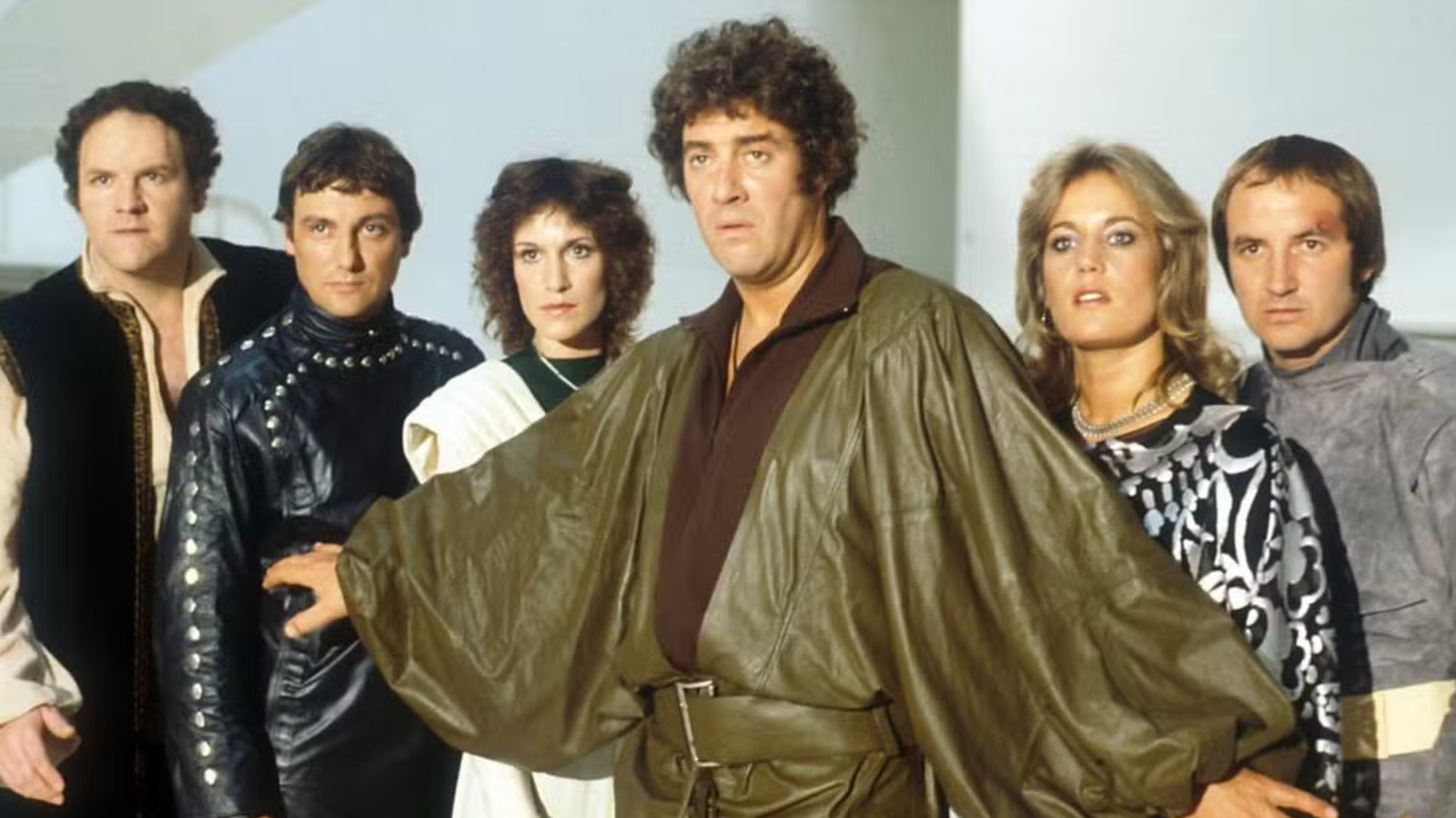
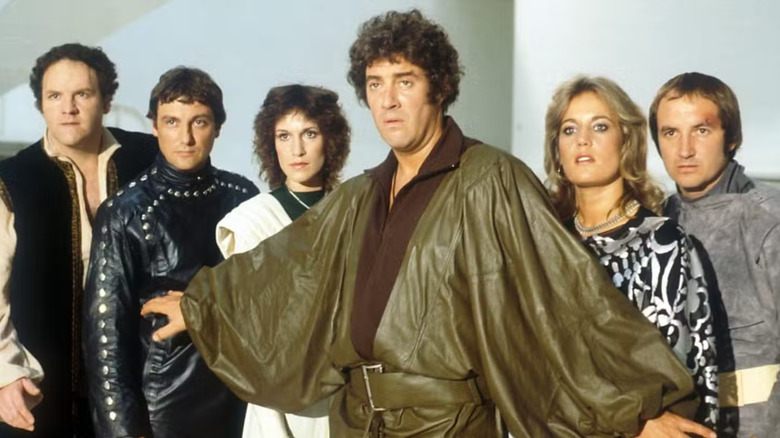
The "7" of the title refers to the ship’s complement, though the roster shifted significantly over the show’s 51-episode run. The original lineup included:
- Roj Blake (Gareth Thomas): The idealistic, if occasionally blinkered, leader.
- Jenna Stannis (Sally Knyvette): A cynical elite smuggler and expert pilot.
- Kerr Avon (Paul Darrow): A brilliant computer hacker and cold-blooded pragmatist who became the show’s breakout character.
- Vila Restal (Michael Keating): A cowardly but gifted thief.
- Olag Gan (David Jackson): A muscular convict with a "limiter" implanted in his brain to prevent violence.
- Cally (Jan Chappell): An exiled telepathic guerrilla from the planet Auron.
- Zen: The ship’s mysterious alien computer.
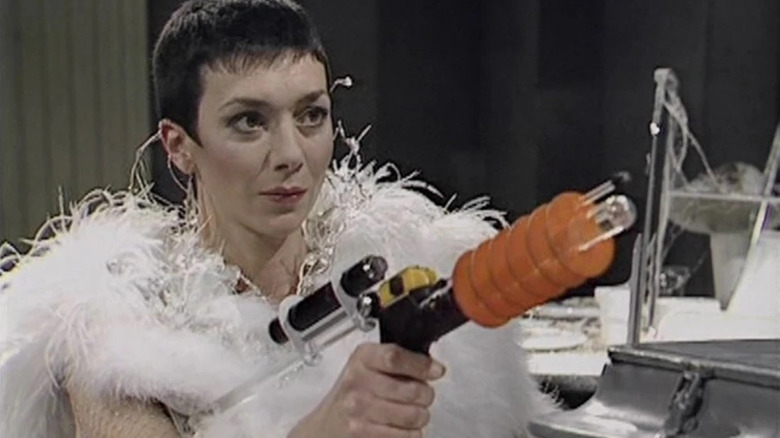
Opposing them was the Federation’s most formidable asset: Supreme Commander Servalan (Jacqueline Pearce). Elegant, ruthless, and complex, Servalan remains one of the most iconic villains in television history, subverting the "space warlock" tropes of the era with a blend of high-fashion aesthetics and cold, calculating brutality.
Chronology: Four Seasons of Declining Hope
The trajectory of Blake’s 7 is one of increasing darkness, moving from a standard "rebel vs. empire" narrative toward a nihilistic exploration of failure and betrayal.
The Nation Era (Season 1)
The first season, written entirely by Terry Nation, establishes the world-building and the core conflict. It focuses on Blake’s attempts to build a resistance movement while evading the Federation’s pursuit. The tone is gritty, emphasizing the "low-life" status of the protagonists. Unlike the disciplined officers of Star Trek, the crew of the Liberator are often at each other’s throats, bound only by their shared need for survival.
The Power Shift (Seasons 2 and 3)
As the series progressed, the dynamic shifted. Gareth Thomas, wanting to return to theater work, eventually left the series, leading to the ascension of Kerr Avon as the de facto lead. This changed the show’s fundamental philosophy. While Blake fought for a cause, Avon fought for himself. Under Avon’s leadership, the mission became less about revolution and more about survival in an increasingly hostile galaxy. The loss of the Liberator at the end of Season 3 marked a turning point, stripping the heroes of their technological superiority.
The Scorpio Era and the Final End (Season 4)
The final season saw the crew operating from a hidden base on the planet Xenon, using a smaller, less capable ship called the Scorpio. The production budget was famously strained, yet the writing remained sharp. The series culminated in the 1981 finale, "Blake," which is widely regarded as one of the most shocking and bleakest endings in television history. Without spoiling the specifics for new viewers, the finale dismantled the "heroic" tropes of the genre, leaving an indelible mark on the psyche of British sci-fi fans.
Supporting Data: Production Challenges and Cult Success
The legacy of Blake’s 7 is inseparable from its production context. Produced by the BBC during a period of industrial unrest and budgetary constraints, the show often relied on "quarry-vision"—filming alien worlds in local English stone quarries—and recycled sets.
However, the "cheap" aesthetic belied impressive viewership numbers. At its peak, the show pulled in approximately 10 million viewers per episode in the UK. This success was driven not by special effects, but by the scripts. Script editor Chris Boucher (who also wrote for Doctor Who) infused the show with a cynical, hard-boiled dialogue that appealed to older audiences.
Data from fan conventions and home media sales indicates that the show’s popularity was not merely a localized British phenomenon. Through international syndication, it gained a devoted following in Australia, Canada, and eventually the United States. The show’s longevity is further evidenced by a massive library of licensed audio dramas produced by Big Finish Productions, featuring many of the original cast members reprising their roles decades later.
Official Responses and Critical Reception: "The Sweeney in Space"
At the time of its release, mainstream critics were often dismissive. The Guardian famously quoted a review describing the show as a "mix of olde-worlde space jargon, ray guns, Western-style goodies and baddies, and punch-ups straight out of The Sweeney."
However, retrospective analysis has been far more kind. Modern critics point to the show’s willingness to engage with complex political themes—such as the ethics of terrorism vs. freedom fighting—as a precursor to the "Prestige TV" era.
Paul Darrow, who played Avon, often remarked in interviews that the show succeeded because it didn’t talk down to its audience. "We weren’t the knights in shining armor," Darrow once noted. "We were the people you’d move away from in a pub." This grit was a deliberate choice by Terry Nation, who wanted to move away from the "fire-hydrant-like" simplicity of his earlier creations like the Daleks and create a world where morality was a luxury few could afford.
The BBC’s official stance on the show has been one of quiet respect mixed with hesitation. While they have maintained the property through DVD and Blu-ray releases, a full-scale television revival has remained in "development hell" for over two decades.
Implications: The Enduring Influence on Modern Sci-Fi
The implications of Blake’s 7 on the current media landscape are profound. The show pioneered the "ensemble of outcasts" trope that would later define Joss Whedon’s Firefly. Malcolm Reynolds is, in many ways, a spiritual successor to Roj Blake—a man driven by a lost cause—while the cynical, self-serving Jayne Cobb mirrors the pragmatism of Kerr Avon.
Furthermore, the show’s depiction of a "totalitarianism of convenience"—where the public accepts fascism in exchange for stability and comfort—feels more relevant in the 2020s than it did in the 1970s. The Federation’s use of psychological manipulation and drug-induced apathy prefigured modern discussions regarding social media algorithms and "surveillance capitalism."
The Future of the Franchise
The most recent development in the Blake’s 7 saga involves Peter Hoar, the acclaimed director of The Last of Us and It’s a Sin. Reports from early 2024 suggest that Hoar is spearheading a reboot of the series. Unlike previous failed attempts by the Syfy channel and Sky, Hoar’s involvement brings a level of prestige that suggests a modern Blake’s 7 could finally match its narrative ambition with a contemporary budget.
For now, the original series remains a "must-watch" for any serious student of science fiction. It serves as a reminder that great storytelling does not require a billion-dollar budget—it requires the courage to be bleak, the wit to be cynical, and the imagination to look at the stars and see not just wonder, but the potential for tyranny. Whether the Liberator flies again or remains a relic of the 20th century, its influence on the genre is permanent.