
Angela Liu’s "Magical Girl Eater" Dissects Nostalgia and Corporate Greed in a Genre-Bending Masterpiece
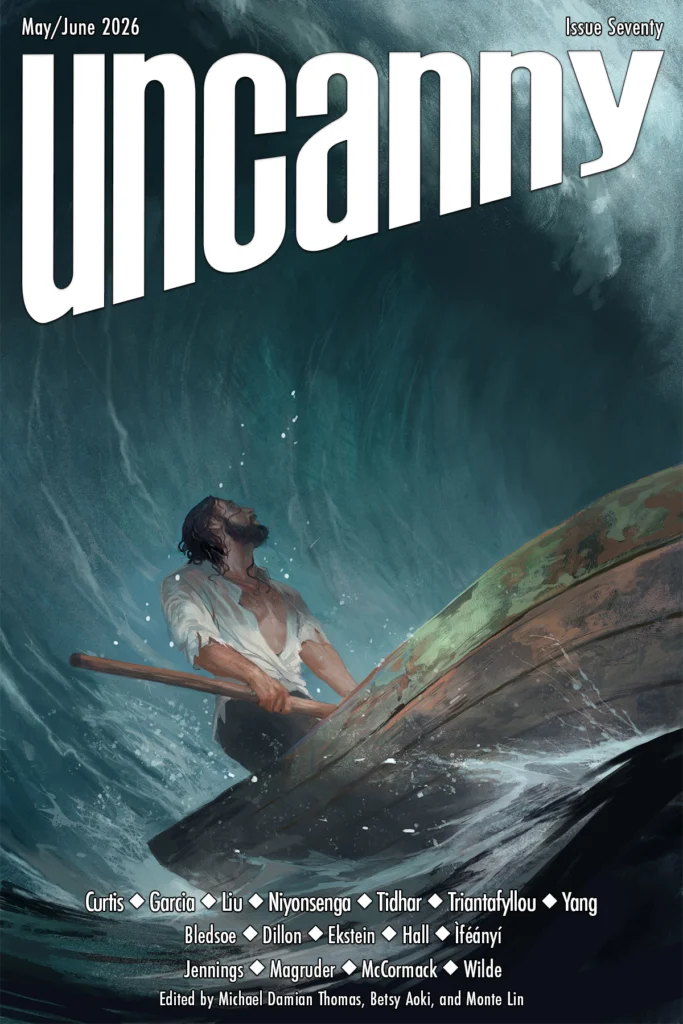
New York, NY & Tokyo, Japan – [Current Date] – In an increasingly commodified world, where cherished childhood memories are often repackaged and sold back to consumers, Chinese-American writer and poet Angela Liu stands out as a critical voice, dissecting these phenomena through the lens of speculative fiction. Her latest work, "Magical Girl Eater," published in Uncanny Magazine, offers a stark and compelling examination of the intersection between corporate interests and nostalgic fandom, earning accolades and sparking conversations among readers and critics alike. Liu, a three-time Nebula Award and 2025 Astounding Award finalist, whose work has also garnered nominations for the Hugo, Locus, Ignyte, and Rhysling Awards, brings her unique perspective—forged from a background in mixed reality research at Japan’s Keio University and a deep commitment to exploring intergenerational trauma and the "weird"—to this timely narrative.
A Grim Take on Fandom and Capitalism
"Magical Girl Eater" is Liu’s sixth story to grace the pages of Uncanny Magazine, a testament to her consistent quality and provocative storytelling. Described by the publication as a "grim take on the intersection of corporate interests and nostalgic fandom," the story swiftly plunges readers into a fast-paced narrative that interrogates the hidden costs of fame and the relentless pressures of public scrutiny. Liu’s ability to infuse speculative elements with sharp social commentary has established her as a significant voice in contemporary genre literature, with her stories and poems appearing in prestigious outlets such as Clarkesworld, Strange Horizons, and Lightspeed. Her multidisciplinary background, blending technology research with literary exploration, allows her to craft narratives that are both imaginative and deeply resonant with modern anxieties.
The Genesis of a Grim Fairy Tale: A Chronology of Inspiration
The conceptual bedrock of "Magical Girl Eater" was laid long before its publication, rooted in Liu’s personal observations and a burgeoning sense of disquiet regarding the resurgence of beloved childhood franchises. The impetus for the story emerged as Liu witnessed a flood of new Sailor Moon merchandise entering the market—from high-end luxury bags and meticulously crafted makeup compacts to premium-boxed replicas of toys from her own youth.
From Childhood Desires to Capitalist Critiques
Liu recounts a profound internal conflict stemming from this wave of nostalgia. On one hand, she recognized the irrationality of desiring expensive items that, in her childhood, would have cost a mere fraction of their current price. Yet, a powerful, almost primal longing pulled her towards these goods, appealing to deep-seated emotional and material desires cultivated during her formative years. "Growing up, who didn’t want to be one of the Sailor Scouts, with their own planet name?" she muses, articulating a universal yearning for the magic and empowerment embodied by these characters. The adult realization that she could now afford what was once unattainable as a child highlighted a stark shift in the market’s target demographic and the inherent commodification of longing.
This personal revelation quickly crystallized into a potent thematic core: the commoditization of nostalgia. Liu resolved to explore typical magical girl tropes—the heroic battles, the vibrant costumes, the unwavering belief in justice—through an unflinching capitalist lens. Questions began to form: Who would be the "villain mastermind" in such a corporate-driven narrative? What would their costumes and weapons signify in a world dictated by profit? Who would constitute their fan base, and how would "justice" itself be redefined when money entered the equation?
Further deepening her inquiry, Liu, a lifelong reader of fanfiction, became fascinated by the "what happens after the original story ends" premise. She pondered the real-world implications if characters like Sailor Moon and her friends existed among us, facing not just intergalactic threats but the relentless glare of celebrity, merchandising deals, and corporate partnerships. How would their public perception shift under such pressures? The answers, Liu discovered as she wrote, were unsettling. Even the most innocent scenarios, once infused with corporate stakeholders, "easily got dark," revealing a chilling truth about the corrupting influence of commercialism on purity and idealism.
Supporting Data: The Commercialization of Fandom and Replaceability
Liu’s creative process for "Magical Girl Eater" was underpinned by extensive research into contemporary trends in popular culture, particularly the evolution of beloved franchises and the market forces shaping them. Her findings underscored the very themes she sought to critique, revealing a landscape where authenticity often yields to profitability.
The High Price of Nostalgia
Her research began with a deep dive into new products, collaborations, and remakes of popular series from the 1990s and early 2000s. She meticulously analyzed which new iterations resonated with her and which left a "bad taste," a subjective barometer that informed her objective critique. A significant observation was the widespread movement towards "live-action" versions of popular cartoons and anime over the past decade. This trend, while offering new interpretations, frequently brought with it the contentious issue of "whitewashing." Liu cites egregious examples such as the live-action adaptations of Death Note and Ghost in the Shell, which sparked widespread outrage over the casting of white actors in traditionally Asian roles. This phenomenon prompted her to consider the concept of "replaceability"—what elements of an original story or character are considered "vital" versus "nonvital" by creators and corporations seeking to maximize appeal or inject "new life" into a franchise. The idea that the person inside a superhero costume could be less important than the costume itself, or that characters could be replaced simply for market revitalization, became the "emotional backbone" of her story.
Moreover, Liu was struck by the escalating expense of magical girl merchandise, noting a distinct shift in target demographics. While merchandising has always been integral to magical girl series, the sheer cost of some items and their explicit targeting of older, affluent generations—rather than children—was revelatory. She points to astonishing examples: Sailor Moon x Jimmy Choo shoes, a Luna-P bag exceeding $10,000, Sailor Moon-themed bedroom furniture sets costing over $3,000, and even wedding rings from renowned brands. This luxury market, capitalizing on adult disposable income and deep-seated nostalgia, starkly contrasts with the affordable toys of yesteryear.
Parallel to this, Liu observed the rise of "capitalism-driven cosplay." Traditionally, cosplay involved hours, even months, of meticulous crafting by fans. Now, mass-produced, character-accurate costumes are readily available online, delivered within days. This commercialization extends to high-fashion collaborations, where fans can purchase "cosplay-inspired clothing" from real fashion brands, dropping hundreds of dollars for a "uniform" jacket. This trend, where "anyone can be a magical girl!" through mere purchase rather than creative endeavor, directly inspired a poignant line in her story, highlighting the erosion of authentic fan engagement by market forces.
Deeper Themes in Liu’s Expanding Universe
Beyond the immediate critique of commodified fandom, Liu’s work consistently delves into profound philosophical and psychological territories, revealing an artist deeply engaged with the human condition.
Memory, perhaps, is the most pervasive theme across her extensive body of short stories. Liu is fascinated by the multifaceted ways memories operate—how they shape identities, trap individuals in the past, or, conversely, offer pathways to salvation. She views memories as universally precious, irrespective of socioeconomic status, connecting individuals across time and space. Yet, she also acknowledges their perilous potential as tools for manipulation, not only of others but also of oneself. The chilling prospect of altering someone’s memories, thereby fundamentally changing who they are, is an idea that both "fascinates and terrifies" her, forming a powerful undercurrent in many of her narratives.
Transformation is another recurring motif, often explored through the compelling archetype of the monster. Liu confesses a particular affinity for monsters, frequently writing about the diverse journeys through which individuals either become monstrous or embark on quests to save them. Her debut published story, "Ppaka," famously centers on a character who believes himself to be a frog, while "Another Girl Under the Iron Bell" explores a demon who may once have been human. This narrative format—starting with the monstrous and working backward to unravel its origins—is a signature style, allowing her to probe the complexities of identity, change, and empathy.
Finally, a more intimate, almost subconscious element found in all of Liu’s stories is food. She reveals that when she encounters a creative block, she instinctively writes a food scene to navigate the impasse. This practice is rooted in her family’s cultural tradition: "That’s how we solve problems in my family—talking about it over food." Food scenes in her work thus serve not merely as descriptive embellishments but as conduits for character interaction, emotional expression, and problem-solving, grounding her speculative narratives in relatable human experience.
Official Responses and Critical Acclaim
Angela Liu’s burgeoning career is marked by significant critical recognition, underscoring the impact and quality of her contributions to speculative fiction. Her consistent presence on major award ballots serves as a robust "official response" from the literary community to her talent and vision.
Industry Recognition and Personal Reflections
Being a three-time Nebula Award finalist and a 2025 Astounding Award finalist, alongside nominations for the Hugo, Locus, Ignyte, and Rhysling Awards, places Liu among the most celebrated and promising voices in contemporary speculative literature. These accolades are not merely honors but a testament to her unique narrative style and thematic depth, validating her artistic choices and her ability to resonate with both peers and a broad readership. Uncanny Magazine‘s decision to feature "Magical Girl Eater" and describe it as a "grim take" further solidifies her reputation for tackling complex, often uncomfortable truths within genre frameworks.
Beyond professional acclaim, Liu offers a deeply personal reflection on identity and the playful side of her imagination. When asked to choose a "corny Magical Girl name" for herself, she reveals a choice rooted in her childhood: "Angela the Ultimate Hair." This name harks back to her parents’ affectionate nickname for her, "Maomao," which literally translates to "hair hair" in Chinese. While she initially felt awkward introducing herself with a baby name to relatives and coworkers in China, often eliciting sympathetic or amused reactions, she now recognizes it as a "kind of gift." The name, she realized, almost invariably disarmed people, fostering a sense of relaxation and connection. This anecdote beautifully illustrates how personal history and cultural nuances subtly inform her creative spirit, even in the most whimsical of scenarios.
Implications for the Future of Fandom and Storytelling
Angela Liu’s work, particularly "Magical Girl Eater," carries significant implications for how audiences and creators engage with nostalgia, corporate influence, and the very nature of storytelling in an increasingly commercialized world. Her incisive critiques challenge readers to look beyond the glittering veneer of revived franchises and question the true cost of commodified memories.
The Enduring Power of Flash Fiction and Future Endeavors
Liu’s advocacy for flash fiction further illuminates her commitment to innovative storytelling. She views flash as an invaluable form for experimentation, a "real sandbox for playing with ideas, language, and format where every line matters." For a busy individual like herself, a mother and caretaker, flash fiction offers the perfect solution—a powerful literary experience accessible in "small pockets of time." Her curated list of favorite flash fiction pieces, including works by Sam Rebelein, Richard Siken, Rachael K. Jones, Avi Burton, Seán Padraic Birnie, Jessica Luke Garcia, Spencer Nitkey, Binh Do, and Chris Scott, not only provides recommendations but also implicitly defines her aesthetic preferences for concise, impactful narratives that push boundaries. She actively seeks out such works in prominent genre magazines like Lightspeed, Nightmare, and Uncanny, as well as flash-dedicated platforms like Small Wonders and hex.
Looking ahead, Liu is embarking on a significant new chapter in her writing career. As a participant in this year’s Clarion West Novel Writing cohort, she is dedicating the coming months to the intensive process of completing her first novel. This venture represents a natural progression for an author whose short stories consistently demonstrate the depth and thematic complexity often associated with longer-form narratives. Her established themes of memory, transformation, and the intricate dance between individual experience and societal forces are ripe for exploration within the expansive canvas of a novel.
Angela Liu’s trajectory as a writer points towards a future where speculative fiction continues to evolve as a vital tool for social commentary and introspective exploration. Her unique blend of cultural insight, technological understanding, and literary prowess positions her as a leading voice shaping the discourse around fandom, identity, and the enduring power of stories in a rapidly changing world. As she delves into her debut novel, readers can anticipate further groundbreaking work that challenges perceptions and enriches the landscape of contemporary literature.
© 2026 Uncanny Magazine



Leave a Comment