The Acoustic Compromise: Why the Audiophile Community Remains Skeptical of Soundbars
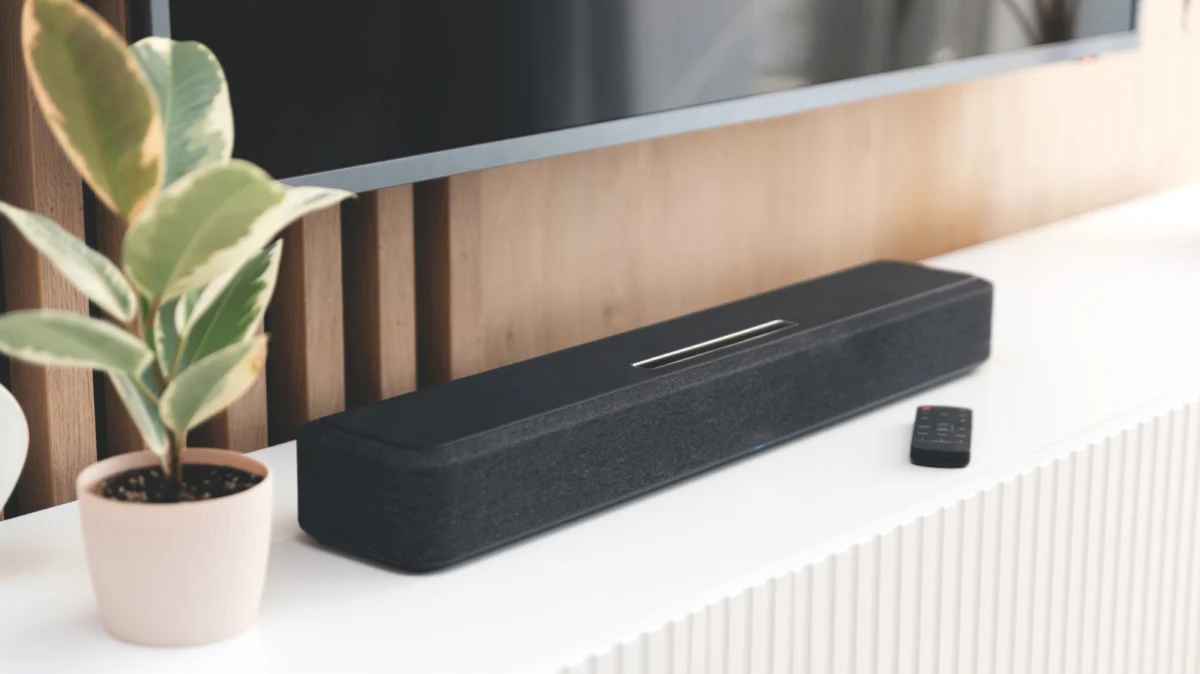
In the modern era of home entertainment, the television has undergone a radical transformation. As screens have become thinner, sharper, and more expansive, the internal hardware required to produce high-quality audio has been systematically squeezed out. This "thinness race" created a vacuum in the market, leading to the meteoric rise of the soundbar—a sleek, plug-and-play solution designed to sit unobtrusively beneath a display.
However, while the general consumer has embraced the soundbar for its convenience and aesthetic minimalism, a vocal segment of the high-fidelity community—audiophiles—remains staunchly opposed to the technology. The tension between the convenience of "lifestyle audio" and the rigorous demands of "high-fidelity reproduction" highlights a fundamental divide in how we consume media.
Main Facts: The Core of the Contention
The debate surrounding soundbars is not merely a matter of elitism; it is rooted in the laws of physics and the economics of audio engineering. To understand why audiophiles often discourage the purchase of soundbars, one must look at three primary factors:
- Physical Limitations: High-quality sound requires the movement of air. Soundbars, by design, use small drivers housed in shallow cabinets, which inherently limits their frequency response and dynamic range.
- Stereo Separation and Imaging: A soundbar confines all speakers to a single chassis, usually no more than 40 to 50 inches wide. This prevents the creation of a wide, immersive "soundstage" that separate speakers, placed several feet apart, can easily achieve.
- The "All-in-One" Trap: Soundbars are closed systems. Unlike traditional setups where a user can upgrade a receiver, a DAC (Digital-to-Analog Converter), or individual speakers, a soundbar is a "disposable" technology. When one part fails or becomes obsolete, the entire unit usually requires replacement.
Chronology: From Hi-Fi Stacks to the Minimalist Bar
To understand the current state of the market, we must look at the evolution of home audio over the last four decades.
The Golden Age of Components (1970s–1990s)
During this era, home audio was synonymous with "the stack." A dedicated listening room or a substantial portion of the living room was occupied by a receiver, a turntable or CD player, and two large floor-standing speakers. Audio quality was the priority, and the size of the equipment was a badge of honor.
The Rise of the "Thin-TV" Problem (Early 2000s)
The transition from CRT (Cathode Ray Tube) televisions to Plasma and LCD panels changed everything. As TVs became thin enough to mount on walls, the bulky speakers of the past became aesthetic eyesores. Simultaneously, the speakers inside the TVs became smaller and downward-firing, resulting in tinny, muffled dialogue.
The Birth of the Soundbar (2000s–Present)
The first modern soundbars, such as the Altec Lansing Ada106 or the Yamaha Digital Sound Projector, aimed to solve the "thin-TV" problem. They offered a compromise: better sound than the TV, but with a footprint that matched the new, slim aesthetic. Over the last decade, brands like Sonos, Bose, and Samsung have refined this concept, adding wireless subwoofers and "virtual" surround sound using Digital Signal Processing (DSP).
Supporting Data: The Physics of Sound vs. Marketing Claims
The primary reason audiophiles remain unimpressed by even high-end soundbars involves the technical reality of acoustic reproduction.
Driver Size and Frequency Response
Most soundbars utilize "full-range" drivers that are often only 2 to 3 inches in diameter. In contrast, a standard bookshelf speaker typically features a 5- or 6-inch woofer and a dedicated 1-inch tweeter.
- The Midrange Hole: Because soundbar drivers are small, they struggle to produce lower-midrange frequencies. To compensate, the included subwoofers are often tasked with playing frequencies as high as 150Hz or 200Hz. This makes the bass "localizable," meaning you can hear exactly where the subwoofer is sitting, which destroys the illusion of a seamless sound field.
- Cabinet Volume: Bass response is a function of cabinet volume. A soundbar’s slim profile offers very little internal air space, leading to a "thin" sound that lacks the visceral impact of traditional cabinets.
The Illusion of Surround Sound
Modern soundbars frequently market "Dolby Atmos" or "7.1.4 Channel" capabilities. They achieve this through "beamforming" or "up-firing" drivers that bounce sound off the ceiling and walls to the listener.
- The Room Dependency: This technology is highly dependent on room geometry. If you have vaulted ceilings, open-concept floor plans, or heavy curtains, the "surround" effect often collapses.
- Computational Audio vs. Reality: Audiophiles argue that "virtual" surround sound is an artificial approximation that introduces phase distortion and artifacts, particularly noticeable when listening to high-resolution music.
Official Responses and Market Context
The audio industry is well aware of this divide. Manufacturers have responded by creating "Audiophile-Grade" soundbars, such as the Sennheiser AMBEO or the Devialet Dione. These units often cost upwards of $2,000 to $3,000.
In promotional materials, companies like Sennheiser claim their advanced calibration software can "replicate a 7.1.4 studio experience from a single device." While these flagship products significantly outperform budget bars, the audiophile community remains skeptical of the value proposition.

A common counter-argument found in enthusiast forums like r/audiophile is the "Value-to-Performance Ratio." A $2,500 soundbar will almost always be outperformed by a $1,500 pair of passive speakers and a $500 integrated amplifier. The remaining $500 could be spent on acoustic room treatment or a high-quality DAC, resulting in a system that not only sounds better but will last for decades.
Implications for the Consumer: Choosing the Right Path
The choice between a soundbar and a component system ultimately depends on the user’s lifestyle and primary use case.
When a Soundbar Makes Sense
- Space Constraints: In small apartments or bedrooms where floor space is at a premium, a soundbar is often the only viable option.
- Simplicity: For users who find the idea of wiring an A/V receiver and running speaker cables across a room daunting, the "one-cable" HDMI ARC/eARC solution of a soundbar is an undeniable benefit.
- Dialogue Clarity: For casual TV watching—news, sports, and sitcoms—a soundbar’s DSP is often tuned specifically to enhance human speech, making it more effective than some high-end stereo systems that aren’t properly calibrated for center-channel duties.
When a Component System is Mandatory
- Music Enthusiasts: For those who listen to FLAC files, vinyl, or high-res streaming services (Tidal/Qobuz), a soundbar is a bottleneck. Music is recorded in stereo; it requires two distinct points of origin to create "imaging," where instruments sound like they are placed in a physical space.
- Longevity and Sustainability: A receiver-based system is modular. If HDMI standards change (e.g., the jump from 4K to 8K), you only need to replace the receiver, not the speakers. Soundbars, being integrated units, contribute more significantly to electronic waste.
- The "Home Theater" Experience: For a true cinematic experience, there is no substitute for physical "rear" speakers. While some soundbars offer wireless rears, they often lack the power and timber-matching of a dedicated 5.1 or 7.1 system.
Conclusion: The Middle Ground
The "hatred" some audiophiles feel for soundbars is less about the product itself and more about the marketing that suggests a plastic bar can replace a high-fidelity system. As digital signal processing continues to improve, the gap between these two worlds may shrink, but it will never fully close.
For the average consumer, a soundbar is a massive upgrade over built-in TV speakers and a perfectly reasonable purchase. But for those who view listening as an activity in itself—rather than just background noise for a visual medium—the traditional speaker setup remains the gold standard. Before investing $1,000 in a flagship soundbar, the prudent consumer should at least audition a pair of quality bookshelf speakers; they might find that the "unwieldy cables" are a small price to pay for a world of acoustic detail they never knew they were missing.