
The Siege of Mafeking: A Symbol of British Resolve in the Second Boer War
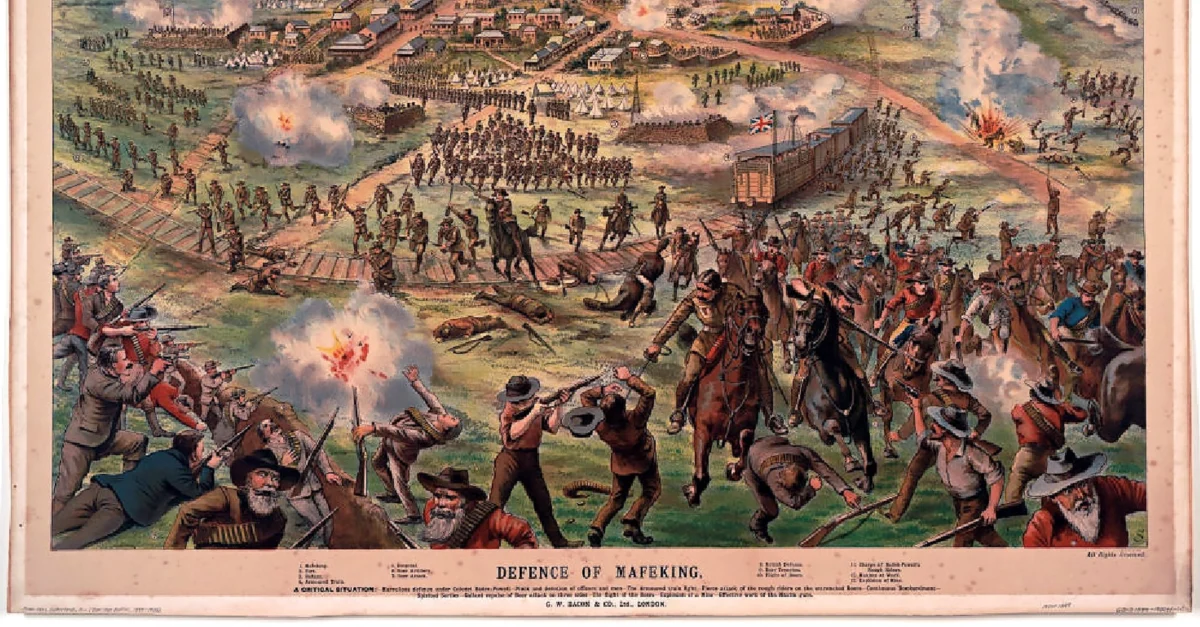
MAFEKING, South Africa – In a conflict marked by stark contrasts and brutal realities, the 217-day Siege of Mafeking stands as one of the most enduring symbols of British resilience during the Second Anglo-Boer War (1899-1902). From October 1899 to May 1900, a vastly outnumbered British garrison, led by the resourceful Lieutenant-Colonel Robert Baden-Powell, defied an entrenched Boer force, captivating the British public and forging a legend that would resonate far beyond the battlefields of Southern Africa. This strategic outpost, though minor in the grand scheme of the war, achieved an emotional significance that deeply impacted British morale and public perception, culminating in celebrations so fervent they coined a new term: "mafficking."
The siege, a crucible of improvisation, racial inequality, and desperate heroism, pitted approximately 8,000 Boer commandos against fewer than 2,000 armed defenders, including British regulars, colonial volunteers, and controversially, armed local African populations. Its eventual relief on May 17, 1900, was hailed in Britain as a pivotal turning point, bolstering national pride amidst a series of earlier setbacks. Baden-Powell, the architect of Mafeking’s improbable defense, emerged from the siege as a national hero, his experiences here laying the groundwork for the global phenomenon that would become the Boy Scouts Movement.
The Genesis of Conflict: Causes of the Second Anglo-Boer War
The Second Anglo-Boer War, also known as the South Africa War, was a complex struggle rooted in the competing imperial ambitions of Britain and the fiercely independent spirit of the Boers—descendants of Dutch and other European settlers. The primary drivers of the conflict were manifold, encompassing land, valuable natural resources, and political sovereignty.
At the heart of the dispute lay the immense mineral wealth of the region. The discovery of diamonds in Kimberley and vast gold reserves in the Witwatersrand transformed Southern Africa into a geopolitical hotspot. Both the British Empire and the Boer Republics of Transvaal (South African Republic) and the Orange Free State coveted control over these lucrative resources, viewing them as essential for economic prosperity and regional dominance.
Adding to the tension was the discriminatory treatment of uitlanders (foreigners), predominantly British settlers, who flocked to the Boer republics in search of fortune. Despite paying taxes, these uitlanders were largely denied voting rights and political representation, fueling British accusations of oppression and calls for intervention. Mutual suspicion reached a boiling point with the ill-fated Jameson Raid of 1895, an unofficial British-backed attempt to incite an uprising in the Transvaal. Although it failed spectacularly, the raid solidified Boer distrust, prompting the Transvaal government to significantly arm itself with foreign weapons and forge alliances, notably with Germany. This German involvement deeply alarmed Britain, threatening its perceived hegemony in Southern Africa and providing a further pretext for conflict.
The seeds of the Second Boer War were also sown in the unresolved grievances of the First Anglo-Boer War (1880-81), which the Boers had won, securing their independence. That earlier conflict, characterized by skirmishes, was a precursor to the far larger scale and unprecedented savagery that would define the second encounter, escalating from a regional dispute into a full-blown imperial war.
Mafeking’s Strategic Importance on the Southern African Frontier
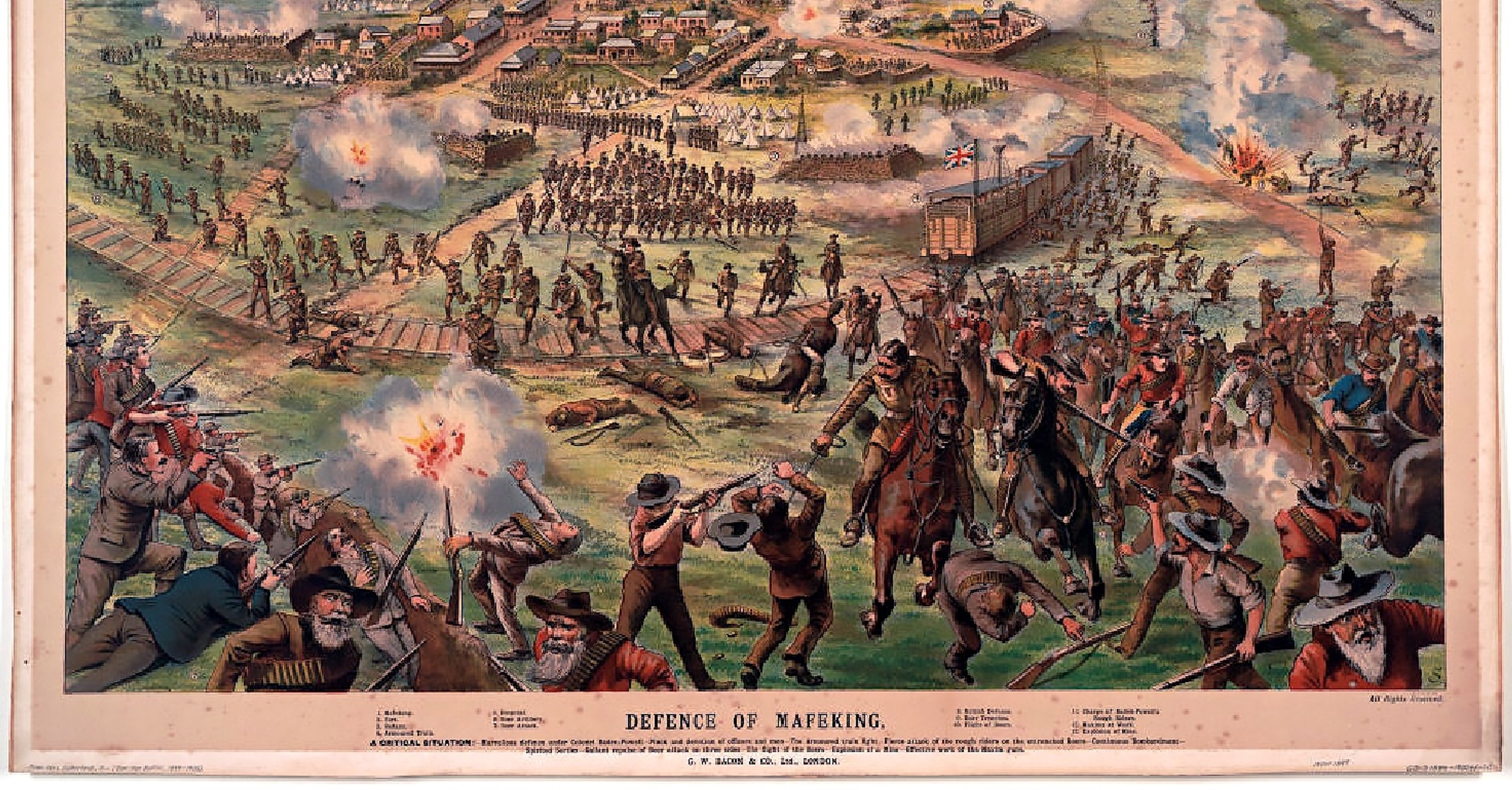
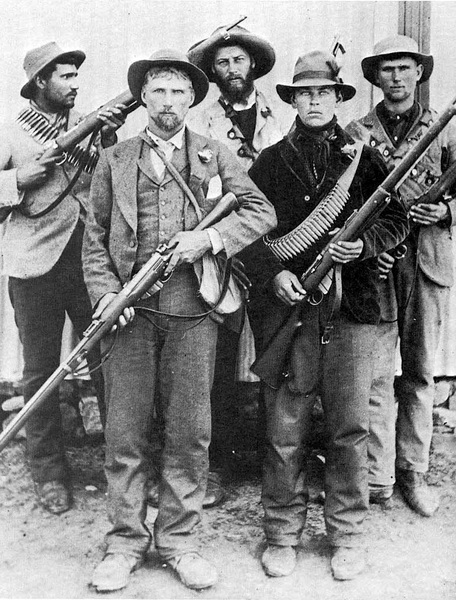
In the initial phases of the Second Boer War, Boer cavalry, organized into highly effective "commandos," demonstrated remarkable prowess against the inadequately prepared British forces. Though lacking formal military training, the Boers were skilled marksmen, intimately familiar with the rugged terrain, which they used to their considerable advantage. Recognizing the gravity of the situation, the British government rapidly dispatched substantial reinforcements, augmenting the existing colonial troops from Australia, New Zealand, and Canada. The British-led forces quickly swelled from 25,000 to a formidable 250,000 men, eventually enabling them to seize major Boer urban centers such as Pretoria, Bloemfontein, and Johannesburg.
Amidst this broader strategic landscape, Mafeking, meaning "place of stones" in the local Tswana language, assumed disproportionate significance. Located in Cape Colony, near the border between British Bechuanaland and the Transvaal Republic, and just miles from the formidable Kalahari Desert, it was one of three major British garrisons—alongside Ladysmith and Kimberley—that the Boers opted to besiege.
Mafeking’s strategic value was multifaceted. It controlled a vital road to the north, acting as a crucial gateway into British territories. Furthermore, it served as the largest goods depot on the essential rail line connecting Kimberley to Bulawayo, making it a logistical choke point. As the administrative center of British Bechuanaland (modern-day Botswana), its capture would have been a significant blow to British authority in the region. Adding to its symbolic weight, Mafeking was the departure point for the ill-fated Jameson Raid, further embedding it in the historical narrative of Anglo-Boer tensions. Its capture would not only offer strategic advantage but also psychological triumph for the Boers.
Chronology of the Siege: A Daily Struggle for Survival
The siege of Mafeking commenced on October 14, 1899, with a Boer force, estimated between 6,000 and 8,000 men, under the command of General Piet Cronjé, encircling the town. Facing this formidable threat was a British garrison of approximately 1,000 regular soldiers, augmented by some 700 European volunteers, all led by Lieutenant-Colonel Robert Baden-Powell.
A. The Defenders and Controversial Alliances:
Baden-Powell’s defense was characterized by improvisation and, at times, controversy. He sought and received invaluable assistance from local African populations, particularly the Tswana, whose lands fell under Mafeking’s jurisdiction and who harbored a deep-seated rivalry with the Boers. Tswana Chief Simon Makodi articulated this animosity, noting it stemmed from "because of the land. They wanted to make the blacks slaves and make us work for them. They fought for our land and the money that was being found in this land." This resentment was shrewdly harnessed by Baden-Powell, who, defying standard British policy against arming Black Africans, formed a Tswana regiment known as the ‘Black Watch.’ So contentious was this decision that Baden-Powell later publicly denied its existence. He also armed a small contingent of Black Africans from Cape Colony and employed local Black African miners to dig extensive trenches, bolstering the town’s perimeter and protecting the adjoining native settlement.
General Cronjé’s reaction to armed Black Africans was swift and indignant, sending a note to Baden-Powell condemning it as "an enormous act of wickedness" and demanding their immediate disarmament. This outrage, however, was tinged with hypocrisy, as Cronjé himself had armed approximately 300 Rapulana Africans to aid his siege efforts.
B. Artillery Duels and Civilian Hardship:
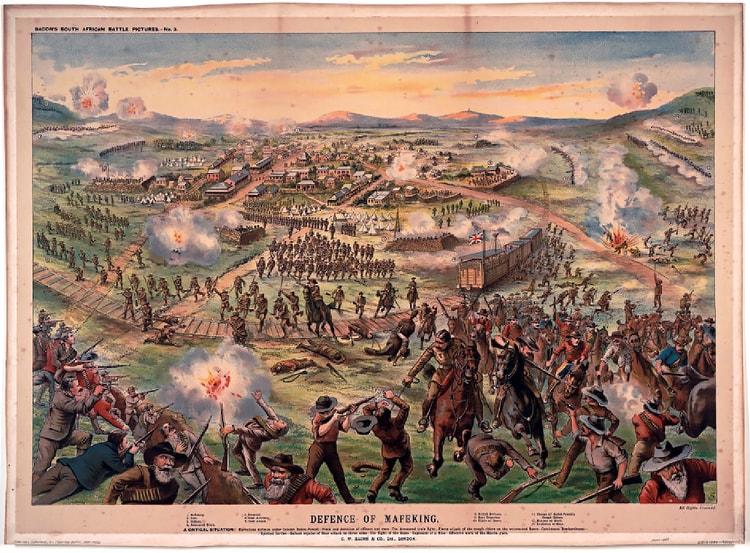
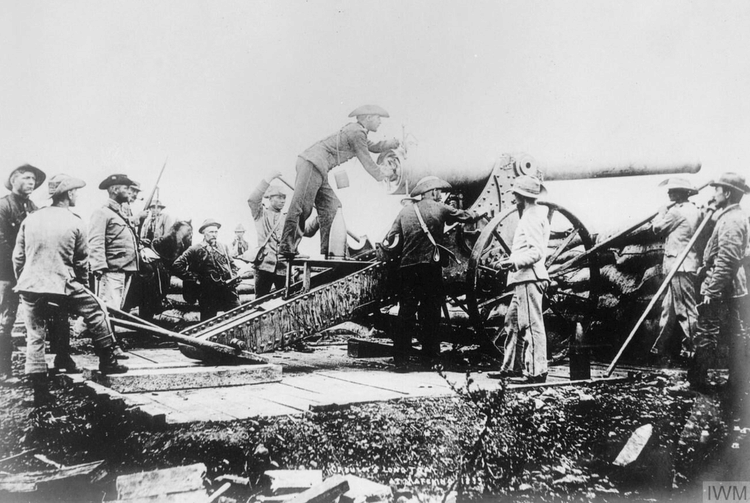
The defenders of Mafeking possessed several artillery pieces, including improvised cannons and repurposed naval guns, the most notable being ‘Wolf,’ though its breach eventually exploded. Their arsenal was, however, significantly depleted by the Boers’ interception of an armored supply train at Kraaipan, which had been destined for Mafeking. The Boers, in contrast, had an abundance of artillery, including a massive 94-pounder nicknamed ‘Long Tom,’ which required 16 oxen to move and was used to devastating effect. Unlike the siege of Ladysmith, Mafeking was subjected to regular and relentless bombardment. The Boers displayed a ruthless disregard for civilian life; the very first bombardment destroyed both the hospital and the convent. While white inhabitants were provided with materials to construct primitive bomb shelters, these vital protections were explicitly denied to Black residents, highlighting the profound racial inequalities endemic to the era.
C. Life Under Siege and Baden-Powell’s Resourcefulness:
As the siege dragged on, food became a critical issue. Baden-Powell’s approach to rationing starkly exposed the racial hierarchies of the time. Rations for Black Africans were cut first, reducing their sustenance to little more than thinned-out soup, for which they were still obliged to pay, as the soup kitchen operated for profit. Any Black Africans caught stealing food faced severe punishment, including flogging or even execution. Many were driven to eating locusts to survive, yet starvation still claimed numerous lives. In contrast, white residents received more substantial fare, including horse meat and porridge.
Despite the grim circumstances, Baden-Powell displayed remarkable ingenuity to maintain morale and deceive the besiegers. He created a makeshift searchlight from a biscuit tin, instructing a runner to move it between various positions at night, creating the illusion of multiple searchlights and deterring potential Boer night attacks. Another ruse involved placing stakes among the defenses and having defenders conspicuously step over non-existent barbed wire, convincing Boer spies within the town that the perimeter was heavily wired. Furthermore, wooden crates, some containing dynamite, were strategically placed around the town’s perimeter; a few were detonated periodically to reinforce the impression that all crates were dangerous, serving as a psychological deterrent.
A unique aspect of the siege was the agreement between both sides for an artillery truce on Sundays. This weekly ceasefire offered the beleaguered residents of Mafeking a brief respite, allowing for cricket matches and concerts, a stark contrast to the deadly bombardments that immediately resumed once the truce concluded.
D. Forced Expulsion and Lingering Gaps:
As food supplies dwindled critically, Baden-Powell made the controversial decision to effectively force 2,000 Black Africans to leave Mafeking. These individuals were presented with a stark choice: remain and face certain starvation, or attempt to run the gauntlet of the Boer lines to reach a British supply depot. Small groups did try to escape, but many were captured, abused, or even shot by the Boers. However, as the siege wore on, the Boers gradually reduced their besieging force, creating exploitable gaps that offered a slim chance of survival for those compelled to leave by Baden-Powell.
E. The Relief and Aftermath:
While Mafeking bravely held out, significant British reinforcements were steadily arriving by sea at the Cape. A flying relief column, comprising approximately 1,150 men under the command of Colonel Bryan Mahon, was dispatched to break the siege. After an arduous eleven-day journey, the column’s imminent arrival spurred the Boers to a final, desperate assault on May 12. This last push, though managing to set fire to a portion of the town, ultimately failed. The Boer force, diminished and demoralized, was too small for the task, and the defenders fought with renewed courage.
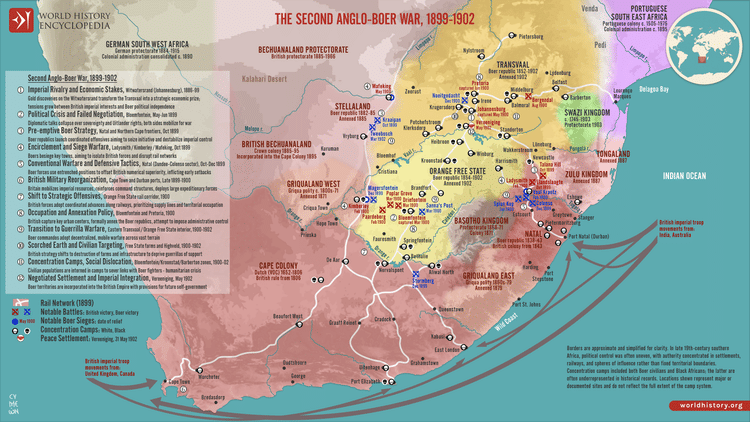
Mafeking was finally relieved on May 17, 1900, after an arduous 217 days.
Supporting Data: The Human and Social Cost
The Siege of Mafeking was a microcosm of the larger Boer War, exposing both the brutal realities of colonial warfare and the deep-seated racial prejudices of the era. While specific casualty figures for the entire siege are difficult to ascertain definitively for all groups, the experiences of the Black African population underscore the immense human cost. Starvation, disease, and the constant threat of bombardment claimed numerous lives among those denied adequate food, shelter, and medical care. The forced expulsion of 2,000 Black Africans into hostile territory highlights a calculated dehumanization, where their lives were deemed expendable in the interest of preserving the white garrison.
Economically, the siege brought all normal commerce to a halt. Mafeking, once a vital trading post, became a battleground, its infrastructure damaged, and its role as a goods depot disrupted for months. The cost of maintaining the siege for the Boers, and the extensive relief effort for the British, represented a significant diversion of resources from the broader war effort.
Militarily, Baden-Powell’s innovative, if ethically dubious, tactics provided valuable lessons in resourcefulness and psychological warfare under siege conditions. However, the Boer strategic error of committing large forces to fixed sieges, rather than exploiting their initial advantage in mobile guerrilla warfare, would prove costly in the long run.
Official Responses and Public Euphoria: The "Mafficking" Phenomenon
News of Mafeking’s relief reached Britain on May 18, triggering an unprecedented wave of public celebration. In cities like London, Birmingham, and Edinburgh, "staid citizens…were to be seen parading the streets, shouting patriotic songs with the full force of their lungs, dancing, jumping, screaming in a delirium of unrestrained joy." This extraordinary outpouring of nationalistic fervor, dubbed "mafficking," was a direct response to months of bad news from the front, including a series of embarrassing defeats and negative international press coverage. The siege had, as one historian noted, "achieved an emotional importance out of all proportion to its strategic significance," serving as a much-needed morale booster for a public weary of war.
Robert Baden-Powell was instantly transformed into a national hero. His image was projected in newsreels across British cinemas, where he consistently received standing ovations. His innovative defense, bravery, and leadership were lauded, cementing his legendary status. This public adoration would later provide the platform for his groundbreaking work in founding the Boy Scouts Movement, drawing directly from the principles of resourcefulness, resilience, and leadership honed during the siege.
From the Boer perspective, General Cronjé’s initial outrage over armed Black Africans, despite his own use of them, underscores the racial hypocrisy prevalent on both sides. Their strategic miscalculation in committing to prolonged sieges, rather than maintaining their highly effective mobile tactics, ultimately allowed Britain time to bring in overwhelming reinforcements, turning the tide of the war.
Internationally, the Second Boer War drew considerable attention. While some nations, like Germany, subtly supported the Boers, the protracted and often brutal nature of the conflict, particularly the later British scorched-earth tactics and the use of concentration camps, drew widespread condemnation and highlighted the darker side of imperial expansion.
Implications: Legacy and Lasting Impact
The Siege of Mafeking, while an emotional high point for Britain, was not a strategic turning point in the war itself. The Boers’ decision to besiege British towns like Mafeking, Ladysmith, and Kimberley was a critical strategic error, diverting their mobile forces and allowing the British invaluable time to deploy massive reinforcements. By March 1900, the largest Boer army group had surrendered at Paardeberg, and Pretoria was abandoned in early June. Thereafter, the Boers were forced to adopt guerrilla warfare tactics, which the British countered with increasingly controversial scorched-earth policies and the internment of civilians in concentration camps.
The Second Boer War eventually concluded in May 1902 with the Treaty of Vereeniging. Britain emerged victorious, annexing the Transvaal and the Orange Free State. In a broader imperial consolidation, these territories, along with the Cape Colony, Natal, and several former African kingdoms, were unified in 1910 to form the Union of South Africa, a self-governing dominion within the British Empire. This new political entity would, for decades, grapple with the profound racial and ethnic divisions exacerbated by the war.
Baden-Powell’s legacy, however, transcended the battlefield. The principles of self-reliance, observation, tracking, and leadership he developed and honed during the siege of Mafeking became foundational to the Boy Scouts Movement, which he established in 1908. His experience managing a diverse group under extreme pressure, fostering ingenuity, and promoting camaraderie, albeit within a racially stratified context, directly informed the ethos of a movement that would globally empower millions of young people.
The siege also laid bare the deep-seated racial tensions and inequalities that would continue to define South Africa’s history for the next century. The discriminatory treatment of Black Africans, their forced expulsion, and their denial of basic protections during the siege were stark precursors to the institutionalized segregation and oppression that would later characterize apartheid.
In conclusion, the Siege of Mafeking remains a complex historical event. While it undoubtedly showcased British resolve and propelled Robert Baden-Powell to international fame, it also serves as a stark reminder of the brutal realities of colonial warfare, the ethical compromises made under duress, and the enduring racial injustices that shaped the destiny of Southern Africa.



Leave a Comment