
Enlil: The Unquestioned Sovereign of the Mesopotamian Pantheon
Introduction: The Apex of the Mesopotamian Pantheon
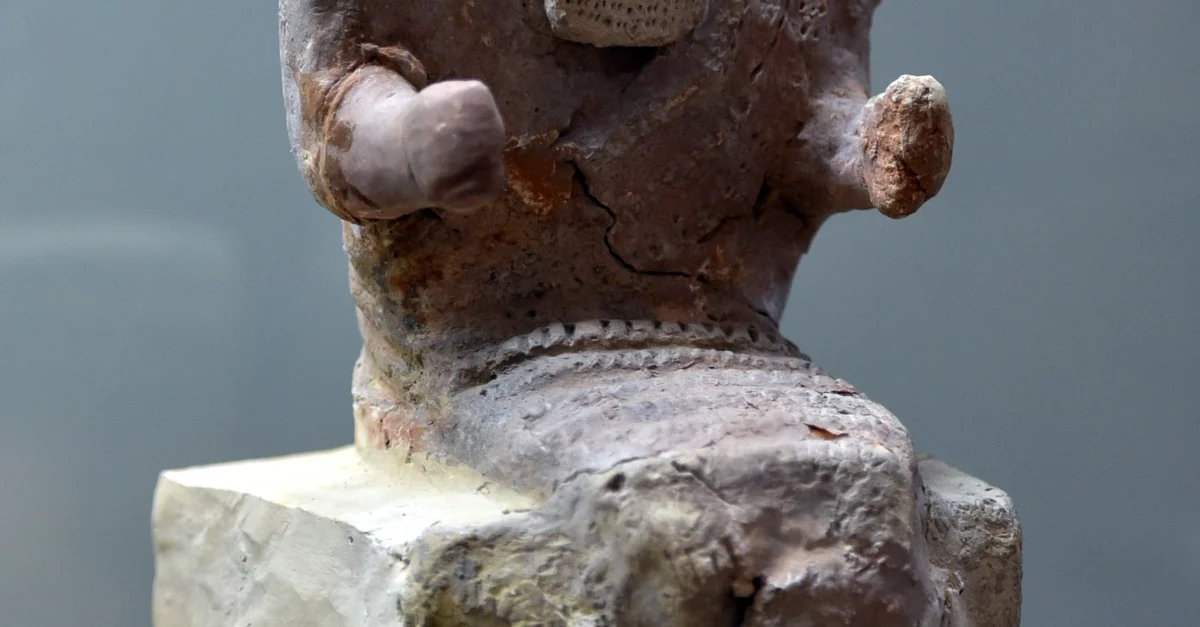
In the vast and intricate tapestry of ancient Mesopotamian mythology, few deities commanded the awe and reverence bestowed upon Enlil. Known also as Ellil and Nunamnir, this Sumerian god initially held dominion over the air, but his influence quickly transcended his elemental domain. He ascended to become the undisputed King of the Gods, a figure whose authority rivaled and, at times, eclipsed even that of his celestial father, Anu. Enlil’s narratives permeate significant Mesopotamian texts, portraying him as the preeminent deity, second only in lineage to Anu, yet often the primary executor of divine will and cosmic order.
His profound significance stems from his pivotal role in the Mesopotamian pantheon, particularly as a member of the supreme triad alongside Anu, the god of the heavens, and Enki, the god of wisdom and fresh water. This triumvirate collectively governed the fundamental aspects of existence—be it the heavens, earth, and underworld, or alternately, the entire universe, the sky and atmosphere, and the terrestrial realm. As the keeper of the Tablets of Destiny, sacred artifacts containing the immutable fates of both gods and humanity, Enlil was perceived as an unstoppable force, a divine sovereign whose decrees were beyond question or appeal. His prominence reflects the profound spiritual and cultural underpinnings of Sumerian, Akkadian, Babylonian, and Assyrian civilizations, where his worship endured for millennia, shaping the worldview of countless generations.
The Divine Architect of Order: Enlil’s Core Identity
Lord of the Air and King of the Gods
While his name, "Lord of Air," might suggest a deity confined to atmospheric phenomena, Enlil’s actual portfolio was far more expansive, encompassing the very fabric of cosmic governance. He was the vital breath of the universe, a force that brought both life-giving winds and destructive storms. Unlike other elemental gods, Enlil embodied the supreme executive power of the divine realm. His position within the pantheon was unique; he alone possessed direct access to Anu, the distant and often quiescent god of the highest heavens. This direct line to the ultimate cosmic authority imbued Enlil with an unparalleled prestige and influence, even if the precise nature of Anu’s oversight remained somewhat ambiguous in the myths. Enlil’s decisions often appeared final, irrespective of Anu’s explicit consent, suggesting a practical sovereignty that made him the de facto ruler of the gods.
His epithets further underscore his elevated status. He was revered as "Father of the Black-headed People," a direct reference to the Sumerians themselves, implying a paternal relationship with humanity. In other inscriptions, he is hailed as "Father of the Gods," a title that, despite conflicting creation myths (some attributing creation to Enki, or to primordial deities like Apsu and Tiamat, or Anshar and Kishar), firmly establishes his seniority and generative power within the divine hierarchy. Scholar Stephen Bertman succinctly captures Enlil’s operational authority with a modern analogy: "If Anu was the heavenly chairman of the board, Enlil was the heavenly corporation’s CEO, or chief executive officer." This analogy aptly conveys his active, decision-making role, distinguishing him from Anu’s more distant, foundational authority.
The Sacred City of Nippur: Enlil’s Earthly Seat
The spiritual heart of Enlil’s worship was the ancient city of Nippur, home to his magnificent temple-ziggurat, the E-kur, famously known as "the Mountain House." Described in hymns like Enlil in the E-Kur as "glistening" and splendid, the E-kur was not merely a temple but a cosmic axis, believed to connect heaven and earth. Nippur itself was more than a regional cult center; it was a pan-Mesopotamian holy city, revered across various empires and eras. Even as political power shifted between cities like Ur, Akkad, and Babylon, Nippur maintained its religious neutrality and paramount spiritual importance, primarily due to Enlil’s enduring veneration.
The temple complex at Nippur served as a vital hub for the community, a center for economic activity, judicial proceedings, and religious ceremonies. While modern congregational services were absent, individuals brought offerings and supplications, seeking Enlil’s favor or expressing gratitude. The god’s cult statue, residing within the inner sanctum, was meticulously cared for by the high priest, the sole mortal permitted to enter the deity’s direct presence. This restricted access amplified Enlil’s mystique and power, ensuring that his image remained awe-inspiring and untouchable to the common worshipper, whose interactions with the divine were typically through domestic rituals or public festivals. The grandeur of Nippur and its E-kur temple reinforced Enlil’s supreme authority, projecting his celestial power onto the earthly realm.
A Shifting Divinity: Enlil Through the Ages
Early Dynastic Reverence to Akkadian Supremacy
The worship of Enlil boasts an exceptionally long and dynamic history, tracing its origins back to the Early Dynastic Period I (circa 2900-2750/2700 BCE) at Nippur. His cult was firmly established and flourished throughout the subsequent Early Dynastic periods, solidifying his position as a central figure in Sumerian religion. With the rise of the Akkadian Empire (2350/2334 – 2154 BCE) under Sargon the Great, Enlil’s importance was not diminished but rather amplified, as Akkadian rulers shrewdly integrated Sumerian deities into their imperial pantheon to legitimize their rule. Enlil became a symbol of universal authority, his power invoked by kings seeking to assert dominance over a unified Mesopotamia.
This period saw the proliferation of his worship beyond Nippur, with temples and shrines dedicated to him appearing in major cities like Kish, Lagash, and later Babylon. Enlil’s epithet Nunamnir, meaning "He Who is Respected," perfectly encapsulated the reverence he commanded from the earliest Sumerians through the Akkadians and into the subsequent Babylonian and Assyrian eras. For thousands of years, he was counted among the Seven Divine Powers—Anu, Enki, Enlil, Inanna, Nanna, Ninhursag, Utu-Shamash—a testament to his consistent and profound influence on Mesopotamian religious thought and political ideology. His enduring presence through such a vast historical span speaks volumes about his adaptability and fundamental resonance with the people’s understanding of divine authority.
Family and Filiations: A Web of Contradictions
Enlil’s divine family tree presents a fascinating, albeit often contradictory, picture. He was consistently identified as the son of Anu, the sky god. His primary consort was Ninlil (also known as Sud), with whom he fathered several prominent deities. Their most famous offspring was Nanna/Sin, the moon-god, who in turn fathered Utu-Shamash, the sun-god. Other children attributed to Enlil and Ninlil include Ishkur/Adad, the weather god, and Inanna/Ishtar, the goddess of love, war, and fertility.
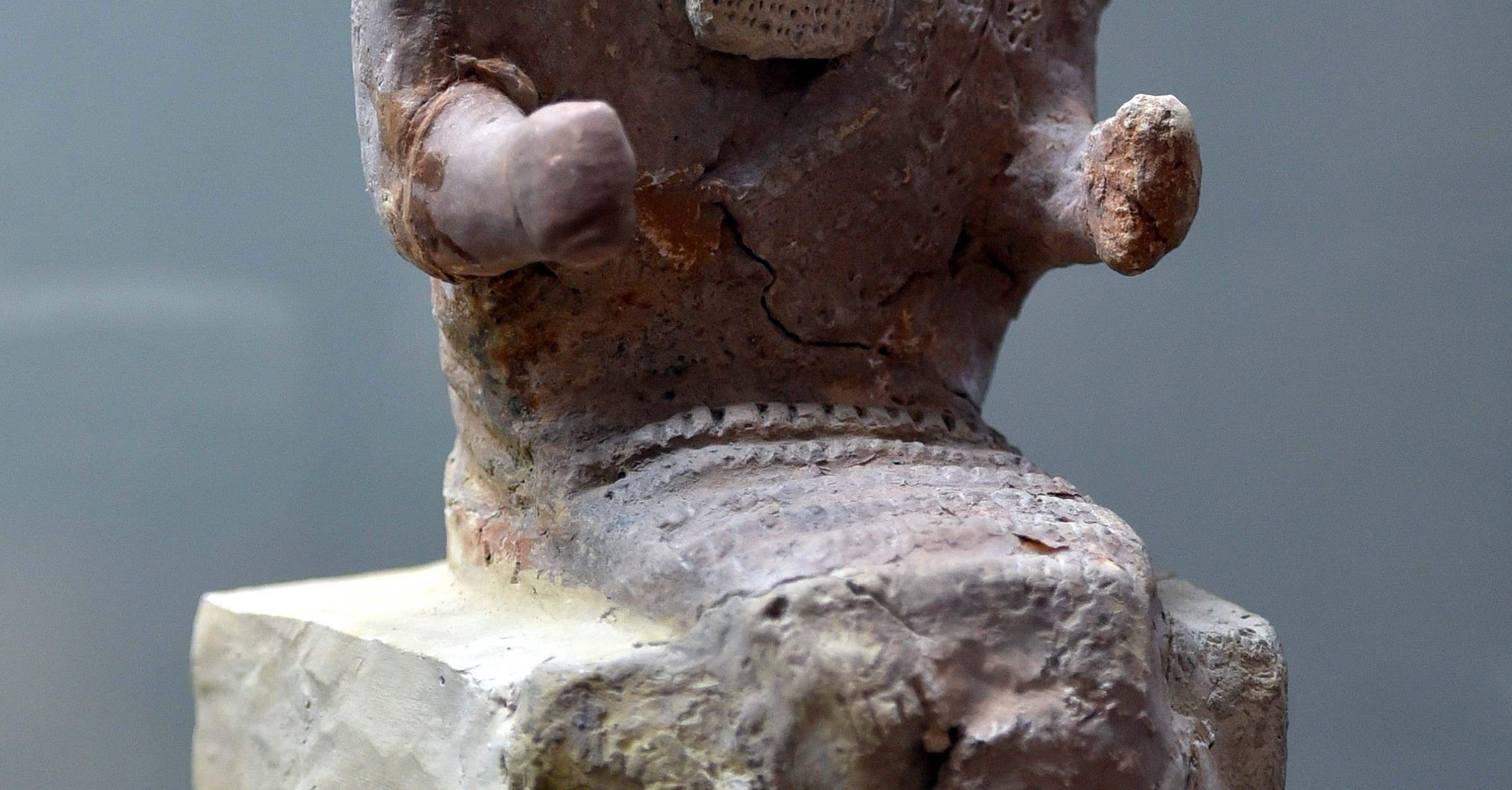
However, the fluidity of Mesopotamian mythology, shaped by millennia of evolving cultures, regional variations, and political shifts, led to numerous inconsistencies. Inanna, for instance, is frequently depicted as a daughter of Enki in some traditions, while others firmly place her as Enlil’s child. Similarly, the parentage of gods like Nergal (god of the underworld and war), Ninazu (god of healing), and Enbilulu (god of canals) is attributed to Enlil and Ninlil in the Enlil and Ninlil myth, yet these same deities often have different parents in other texts (e.g., Ninazu as the son of Gula). Even Enki, the god of wisdom, is sometimes confusingly presented as Enlil’s twin brother in some genealogies, while also being the father of Enlil’s "daughter" Inanna, and having a father (Enlil) who is described as being born of Enki and Ninki in other accounts.
These "seeming contradictions" are not errors but rather reflections of Mesopotamia’s complex cultural history. As different city-states and empires rose to prominence, they adopted, adapted, and sometimes entirely rewrote existing myths to suit their own theological or political agendas. Scribes, who were central to the preservation and dissemination of these narratives, often tailored tales to reflect local beliefs, elevate patron deities, or integrate new philosophical understandings. This dynamic process of mythological evolution ensures that Enlil’s family, much like his broader narrative, remains a vibrant, multifaceted testament to the rich and ever-changing religious landscape of ancient Mesopotamia.
Myths of Power and Judgment: Enlil’s Narrative Arc
The Seduction of Ninlil and the Birth of Deities
One of the earliest and most intriguing myths involving Enlil is Enlil and Ninlil, a tale set in a primordial Nippur, a divine urban center existing before the creation of humanity. In this narrative, Enlil is portrayed not as the supreme authority but as a youthful, impetuous god. Ninlil, a beautiful young goddess, is drawn to Enlil, despite her mother Nisaba’s (goddess of writing and scribe of the gods) warnings against the dangers of losing her virginity by bathing in the river. Disregarding this counsel, Ninlil encounters Enlil, who seduces her. From this union, the revered moon-god Nanna is conceived. Following this transgression, Enlil is compelled to seek Ninlil’s hand in marriage from Nisaba, attempting to rectify his actions within the framework of divine law.
However, the narrative takes a darker turn. Enlil is subsequently arrested by the other gods for ritual impurity and exiled to the underworld. The reasons for this judgment appear distinct from the seduction of Ninlil, highlighting a stricter adherence to divine codes in other contexts. Ninlil, pregnant with Nanna, follows him into exile. As Enlil navigates the underworld, he encounters various gatekeepers and important figures. In a series of cunning deceptions, he disguises himself as each of these individuals. When Ninlil approaches, asking for Enlil’s whereabouts, he, in his disguise, refuses to reveal his true identity but offers himself to her. Each time, Ninlil, desperate for information and reunion, consents to his advances. Through these disguised encounters, they conceive three more deities: Nergal, god of war and the underworld; Ninazu, associated with healing; and Enbilulu, god of canals.
This myth is often interpreted as a celebration of fertility and the life-giving forces of the earth. The defiant union of Enlil and Ninlil, even in exile, symbolizes an unstoppable creative power. It also marks a significant transformation in Enlil’s character. The young, rebellious god who initially transgresses divine law later becomes the very embodiment of that law, wielding its power and enforcing its judgments without question in subsequent myths. This duality underscores the dynamic nature of Mesopotamian deities, whose personalities and roles could evolve significantly across different narratives and historical periods.
The Anzu Bird and the Tablets of Destiny
In contrast to his youthful transgression, the Babylonian Myth of Anzu (early 2nd millennium BCE) presents Enlil as the established supreme god, the rightful possessor of the Tablets of Destiny. These sacred objects were more than mere records; they were the very essence of cosmic authority, legitimizing the rule of the supreme deity and containing the unalterable destinies of gods and mortals alike. To hold the Tablets was to command the universe.
The myth recounts a grave crisis in the divine realm. The Anzu bird (also known as the Zu bird), a monstrous creature symbolizing storm and tempest, harbored a deep envy for Enlil’s power. Driven by ambition, Anzu plotted to seize the Tablets and usurp Enlil’s dominion. His opportunity arose one morning when Enlil, in a moment of vulnerability, removed his crown and set down the Tablets while washing his face. Anzu swiftly snatched the Tablets and fled to the mountains, plunging the cosmos into chaos. With the Tablets of Destiny gone, the established order unravelled; the fates were no longer secure, and the very mechanisms of heaven and earth ceased to function correctly.
Anu, the ultimate patriarch, appealed to the other gods for a champion to retrieve the stolen Tablets, but fear of Anzu’s power rendered them hesitant. The cosmic equilibrium hung precariously. Depending on the version of the myth, different heroes emerge: in some Sumerian texts, it is Lugalbanda; in others, the warrior-god Ninurta (often Enlil’s son) or the rising Babylonian deity Marduk (Enki’s son) takes on the mantle. Regardless of the champion, Enlil is consistently portrayed as the legitimate, albeit temporarily dispossessed, king of the gods, fully supported by Anu and whose authority is ultimately restored. This myth powerfully reinforces Enlil’s role as the indispensable pillar of cosmic order and the ultimate arbiter of fate, whose loss would lead to universal dissolution.
The Atrahasis: Divine Frustration and the Great Flood
Perhaps one of the most poignant and revealing myths involving Enlil is The Atrahasis (circa 17th century BCE), which explores the creation and near-destruction of humanity. The narrative begins with the elder gods living a life of leisure, while the younger, lesser deities are burdened with the arduous task of maintaining the universe, digging canals and shaping the earth. Weary and discontent, the younger gods rebel. Enki, ever the wise and innovative one, proposes a solution: create a new, lesser being to perform the laborious tasks. The god We-llu (or Ilawela) volunteers for sacrifice, his flesh, blood, and intelligence kneaded into clay by the mother goddess Ninhursag to create 14 human beings—seven male and seven female.
Initially, humanity fulfills its purpose, diligently working the land and offering worship and sacrifices to the gods. However, their fertility proves to be their undoing. Humans multiply exponentially, their burgeoning populations creating an unbearable cacophony that disturbs the gods’ divine rest. Enlil, who had sanctioned their creation, becomes increasingly agitated by the incessant noise. His patience exhausted, he decides to reduce humanity’s numbers, sending a series of calamities: a drought, a pestilence, and a devastating famine. Each time, however, Enki, feeling a paternal responsibility for his creation, secretly intervenes, whispering guidance to the sage Atrahasis on how to avert disaster. Humanity recovers and continues to multiply, much to Enlil’s growing frustration and bewilderment.
Convinced that his attempts to control humanity are futile, Enlil ultimately decrees their total annihilation via a Great Flood. Despite Enki’s vehement disagreement, Enlil’s decree, once issued, cannot be overturned. Enki, however, finds a way to circumvent the absolute decree without directly defying Enlil. He travels to Earth and whispers to Atrahasis, instructing him to build an ark and load two of every kind of animal, along with his family, to preserve life. The flood ensues, obliterating all life on Earth.
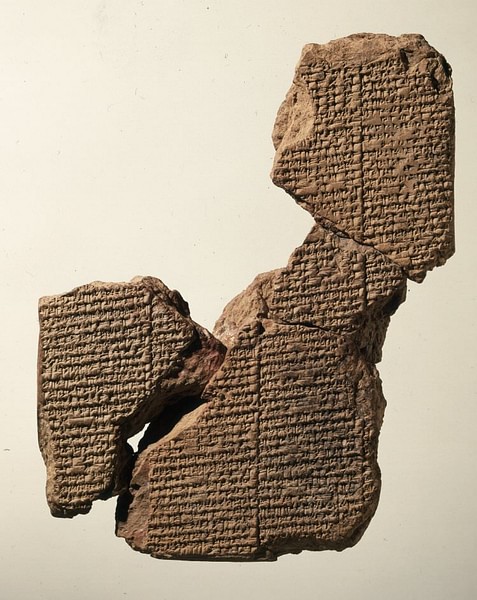
The aftermath sees the gods, particularly Enlil, consumed by remorse and hunger, as their human providers of sustenance are gone. When Atrahasis emerges from the ark and offers a sacrifice, its sweet aroma ascends to the heavens. Enlil, furious that a human has survived his decree, confronts Enki. Enki explains his actions and invites the gods to partake in the sacrifice. During the meal, Enki proposes a new plan: create a modified humanity, subject to infertility, shorter lifespans, and daily threats to their existence, thus ensuring they would not overwhelm the divine realm again. Enlil, chastened by his impulsive decision and the subsequent chaos, agrees. This myth solidifies Enlil’s role as the supreme arbiter of humanity’s fate, highlighting his immense power and the profound implications of his divine judgments. While Enki conceived humanity, Enlil’s consent was paramount, making him the ultimate "great father of men and women" who determined the very conditions of human existence.
Assimilation and Enduring Legacy: Enlil’s Transformation
The Rise of Marduk: A New Divine Order
Enlil’s reign as the supreme deity began to shift dramatically during the reign of Hammurabi of Babylon (1792-1750 BCE). With the political ascendancy of Babylon and the establishment of a vast empire, the city’s patron deity, Marduk, began to rise in prominence. Marduk, the son of Enki, became the central figure in a new, politically motivated theology. The epic Enuma Elish was crafted or re-edited to elevate Marduk, portraying him as the heroic vanquisher of the primordial chaos monster Tiamat, the creator of human beings and the earth, and the establisher of law and agriculture.
In this new divine order, the most important qualities and functions of Enlil (and indeed, some of Enki’s) were systematically absorbed into Marduk. Marduk became the new "King of the Gods," not only for the Babylonians but, through a later syncretism, also for the Assyrians, where he was often equated with their national god, Assur. This assimilation was a sophisticated act of religious and political engineering, legitimizing Babylonian supremacy by placing their god at the apex of the pantheon, drawing upon the established reverence for Enlil’s authority. While Enlil’s direct worship at Nippur continued for a time, his preeminence began to wane as Marduk’s star ascended.
Echoes in Eternity: Enlil’s Lingering Influence
Even after his formal assimilation into Marduk, Enlil’s power and influence did not vanish overnight. For centuries, he continued to be honored in shrines across Mesopotamia, and even in Babylon, it was understood that Enlil and Anu had willingly conferred their power and blessings upon Marduk. This narrative ensured a smooth transition and maintained continuity with older traditions, preventing a complete rejection of the revered elder gods.
During the Neo-Assyrian Empire (circa 912-612 BCE), when deities like Assur, Marduk, and Nabu held supreme sway, Enlil’s memory was still potent. As scholar Adam Stone notes, "Enlil’s power was clearly remembered for even [these gods] were referred to as the ‘Assyrian Enlil’ or the ‘Enlil of the gods’." This adoption of Enlil’s epithet for later supreme deities highlights the enduring symbolic power of his name and the archetype of supreme authority he represented. His name became synonymous with the highest divine power, a benchmark against which later gods were measured.
However, with the catastrophic fall of the Assyrian Empire in 612 BCE, many gods associated with Assyrian rule suffered a harsh fate. Enlil’s statues were destroyed, and his temples sacked, symbolizing a deliberate erasure of the old order. Gods who had successfully transcended their specific association with Assyrian or even Babylonian rule, like Marduk (who had by then absorbed so many attributes he was almost universally understood), managed to live on. In transferring Enlil’s qualities to Marduk, Enlil, in a sense, survived under that new name, his essence preserved within the newer divine sovereign. But as a distinct entity, Enlil’s veneration gradually declined. By circa 141 BCE, with the waning of Marduk’s own cult under subsequent empires, Enlil as a remembered, separate deity was largely forgotten, his once-unquestioned sovereignty now a powerful echo in the annals of ancient history.
Conclusion: The Unforgettable Sovereign of Sumer
Enlil stands as a towering figure in the annals of Mesopotamian mythology, a deity whose journey from elemental air god to the King of the Gods reflects the dynamic and evolving religious landscape of the ancient Near East. His story is one of immense power, moral complexity, and enduring significance. From his role as the formidable keeper of the Tablets of Destiny, arbitrating the fates of gods and mortals, to his moments of youthful transgression and subsequent remorse in the face of human suffering, Enlil embodied the multifaceted nature of divine authority.
His central worship at Nippur, a spiritual beacon across millennia, underscored his pan-Mesopotamian importance, transcending political boundaries and cultural shifts. The contradictions within his myths and family tree are not weaknesses but rather rich tapestries woven by generations of scribes and diverse cultures, each adapting his narrative to their own understanding of the cosmos. Though eventually assimilated into the rising cult of Marduk, Enlil’s legacy was so profound that his name became an enduring epithet for supreme power, echoing through the titles of subsequent supreme deities. His eventual fading from direct worship marks not a failure, but a transformation, his essence absorbed into the fabric of later religious thought, cementing his place as an unforgettable sovereign whose decrees shaped the world and whose presence defined the divine order of ancient Mesopotamia.


Leave a Comment