
Warhammer: The Old World Awaits Pivotal June 2026 FAQ: Community Hopes for Sweeping Changes
The Old World, Games Workshop’s highly anticipated return to the classic fantasy battle setting, is poised for a significant rules update. As June 2026 draws to a close, the community eagerly awaits a new official FAQ (Frequently Asked Questions) and errata document, hoping it will address a raft of lingering issues that have shaped – and in some cases, hampered – the game’s evolving meta. Following a less impactful January update, and with the core rulebooks mysteriously absent from the official Games Workshop website, anticipation is at an all-time high for what many believe could be a transformative set of changes.
Since its triumphant re-launch, Warhammer: The Old World has captured the imaginations of veteran players and newcomers alike, offering a nostalgic yet refined take on mass-battle fantasy wargaming. However, like any complex ruleset, it has encountered its share of ambiguities, balance disparities, and design quirks that necessitate ongoing refinement. The upcoming June 2026 FAQ is not just another routine update; it represents a critical juncture for the game’s competitive health and overall player satisfaction.
Chronology of Refinements in The Old World
The journey of Warhammer: The Old World since its re-introduction has been marked by a series of iterative improvements and necessary adjustments, reflecting Games Workshop’s commitment to nurturing this beloved setting. Understanding this trajectory is key to appreciating the current weight of community expectation.
The Foundations: Launch and Initial Reactions
Warhammer: The Old World launched to considerable fanfare, resurrecting a dormant setting and rekindling the passion for rank-and-file fantasy battles. Initial reactions were overwhelmingly positive, with players praising the faithful adherence to the game’s roots while introducing modern sensibilities. However, as thousands of games were played across tables worldwide, the inevitable nuances and potential exploits within the comprehensive ruleset began to surface. Early discussions revolved around unit efficiencies, army compositions, and the interactions of various special rules, laying the groundwork for future official interventions.

The June 2025 ‘1.5 Update’: A Precedent for Change
The first major milestone in The Old World’s post-launch development was the June 2025 ‘1.5 update’. This was not merely an FAQ but a more substantial overhaul, widely recognized for introducing significant quality-of-life improvements and balance adjustments. Crucially, this update provided buffs to various infantry types, such as ‘Press of Battle’ and ‘Massed Infantry’, and the generalized ‘Parry’ rule for regular and heavy infantry. These changes revitalized many core units and set a precedent for Games Workshop’s willingness to make meaningful, systemic adjustments to the game. It demonstrated that the design team was actively listening and prepared to evolve the ruleset to ensure a dynamic and engaging play experience. The community widely lauded the 1.5 update as a positive step, showcasing the potential for The Old World to mature into a truly balanced and enjoyable game.
The January 2026 FAQ: A Missed Opportunity?
Following the success of the 1.5 update, the January 2026 FAQ was met with considerable anticipation. Many players hoped it would build upon the previous momentum, tackling some of the emergent meta-defining issues and cleaning up remaining rules ambiguities. However, for a significant portion of the community, this update proved to be a "let down." While it did address some specific points, it was perceived as being too light on major balance changes and failed to resolve several high-profile rules conflicts that had become sources of frustration. The January FAQ felt more like a minor correction than a comprehensive rebalancing, leaving many core issues unaddressed and setting the stage for the current heightened expectations for the June update.
The Looming June 2026 Update: High Stakes for the Meta
The current buzz surrounding the June 2026 FAQ is unprecedented since the 1.5 update. Fueling this speculation are several key indicators. Firstly, the consistent update schedule suggests an FAQ is imminent. Secondly, community sentiment points to a widespread belief that this will be a "pretty big" update, a feeling amplified by the recent, conspicuous absence of the core rulebooks from the official Games Workshop website. This particular detail has led to fervent speculation: is it merely a temporary stock issue, or does it signal a substantial enough revision to warrant removing the current versions in anticipation of an entirely new print run incorporating extensive errata? Regardless, the cumulative effect of these factors is a widespread hope that this update will finally tackle some of The Old World’s most contentious and meta-warping rules.
Supporting Data and Community Insights
The community’s wishlist for the June 2026 FAQ is extensive, focusing on specific rules interactions, underperforming unit types, and dominant strategies that have skewed the game’s balance. These are not minor quibbles but systemic issues that significantly impact competitive play and overall player enjoyment.

The ‘Parry’ Conundrum: A Case Study in Rules Ambiguity
One of the most persistent, albeit seemingly minor, frustrations revolves around the "Parry" rule. The 1.5 FAQ introduced a core rule called "Parry" for all regular and heavy infantry equipped with a hand weapon and shield, granting them a +1 to their armour save, capped at 3+. This was a clear and beneficial enhancement. However, certain Wood Elf units, detailed in their Arcane Journal, possess a distinctly similar yet subtly different rule also named "Parry." This Wood Elf version allows the bonus when fighting with a hand weapon and shield or an Asrai spear and shield, and notably, it does not specify a 3+ save cap.
The crux of the issue lies in the identical naming convention despite divergent mechanics. Players are left wondering: can these two distinct rules, sharing the same name but belonging to different categories (core vs. unique special rule), stack? If a Wood Elf unit meets the conditions for both, do they gain a +2 save bonus? While logically, it seems unlikely they were intended to stack, the rules-as-written create ambiguity. This type of rules interaction, though specific, highlights a broader need for clarity in special rule naming conventions and categorization to prevent frustrating "gotcha" moments in gameplay and ensure consistent interpretation. A definitive ruling on whether rules with identical names but different descriptions can stack, or if one overrides the other, is desperately needed.
The Plight of Monstrous Infantry: Underperforming and Overlooked
Among the most critically discussed unit types, Monstrous Infantry often bears the unfortunate label of being the "worst unit type in the game." These imposing models, such as Ogres or various beastmen, suffer from a debilitating combination of drawbacks. They share the slow, plodding characteristics of standard infantry, making them susceptible to being outmaneuvered and charged, yet their high points cost means fielding them in sufficient numbers to create a robust combat block is often inefficient. Consequently, they rarely contribute significant "static combat resolution" – the unwavering combat strength provided by sheer numbers.
To compound their woes, Monstrous Infantry were largely excluded from the systemic buffs introduced in the 1.5 update, such as ‘Press of Battle’ or the general ‘Parry’ rule, which significantly enhanced other infantry types. This omission has left them in a tactical no-man’s-land, often too expensive for their battlefield impact and lacking the defensive resilience or offensive punch to justify their inclusion over more agile or numerous alternatives. The result is a pronounced lack of diversity in army lists, with Monstrous Infantry rarely seeing play. The community hopes for a substantial buff, perhaps an exclusive special rule or a cost reduction, to make these iconic units viable and add much-needed variety to army compositions.

The Dominance of Flight: An "Oppressive" Mechanic
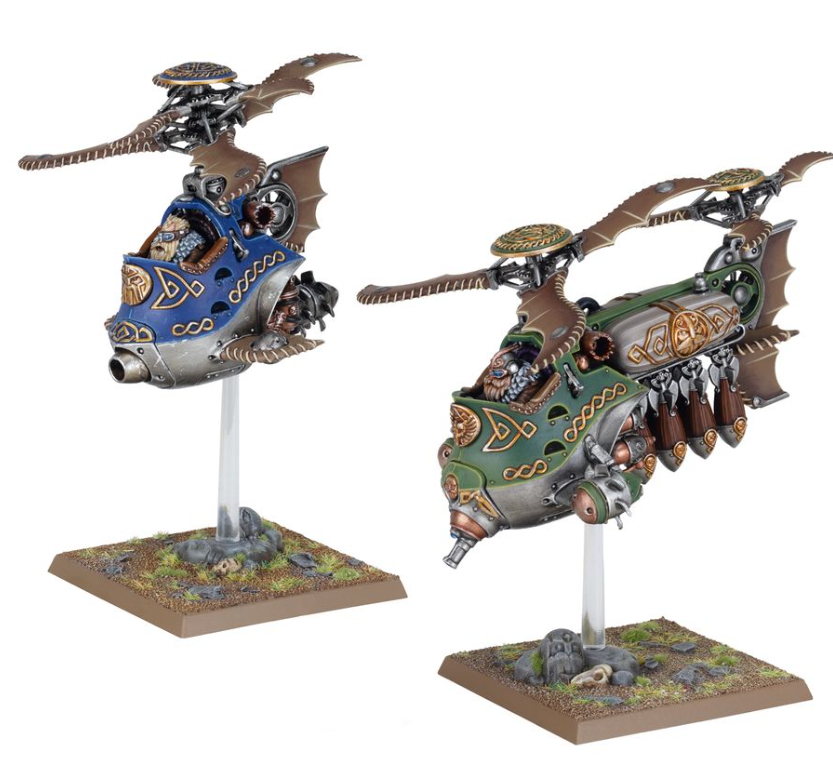
The ‘Fly’ special rule is another point of significant contention, widely regarded as one of the most powerful and, at times, "oppressive" mechanics in The Old World. Units with ‘Fly’ enjoy unparalleled mobility, allowing them to ignore terrain, reposition rapidly, and strike vulnerable flanks with ease. This superior movement often translates into dominant objective control, the ability to pick advantageous engagements, and a consistent threat projection across the battlefield that other units simply cannot match.
While the original article acknowledges previous discussions on the rule’s power, the community’s desire for a nerf has only grown. Simply put, ‘Fly’ units are perceived as being too efficient for their cost and tactical flexibility. Potential solutions suggested by players include limiting their numbers in Match Play rules, adjusting their movement rates, or imposing specific restrictions on their charges or interactions with certain terrain types. A targeted nerf is seen as essential to curb the current dominance of ‘Fly’ units and restore a healthier balance to tactical options.
Skirmishers: A Need for Clarity in the Shadows
Skirmisher units, with their unique movement and formation rules, are intended to provide flexible, disruptive elements to an army. However, the current rules governing Skirmishers have proven to be a persistent source of confusion and unresolved questions. Despite previous passes, players still encounter ambiguities regarding their movement through terrain, their interactions with other unit types, and the precise conditions under which they gain or lose their special benefits.
This lack of comprehensive clarity often leads to disputes during games and a general reluctance among some players to utilize Skirmishers effectively due to the uncertainty. While a complete overhaul might be beyond the scope of an FAQ, the community is united in its desire for a thorough cleanup pass. Clearer definitions, illustrative examples, and definitive answers to outstanding questions would significantly improve the playability of these units and reduce friction at the tabletop.
The Imperative for Balance: Reshaping the Meta
The January FAQ was notable for its sparsity of significant balance changes, a trend that has characterized most updates to date. The community widely hopes that the June 2026 FAQ will break this pattern, introducing a series of robust adjustments to address key imbalances across the supported armies. Several units currently stand out as being overtly powerful, warping the competitive meta around their strengths.
Units like the Shugengan Lord (Cathay), Cathay Cannons, and Gigantic Chaos Spawn are frequently cited as needing a "hit" – a points increase, a stat reduction, or a tweak to their special rules – to bring them in line with other options. Shugengan Lords, for instance, are known for their potent magical output and resilience, while Cathay Cannons often deliver disproportionate damage for their cost. Gigantic Chaos Spawn can be incredibly resilient and difficult to remove, often anchoring powerful builds. Similarly, Slayers (Dwarfen Holds), while iconic, are often seen as too efficient at their role, capable of punching above their weight.
Conversely, many units and even entire armies are in desperate need of boosts to make them more competitive. This isn’t just about nerfing the strong; it’s equally about empowering the weak to foster a more diverse and vibrant meta. A major shake-up is desired, one that makes less oppressive choices available, allowing a wider array of units to finally "see the light of day" and provide players with more varied and strategic list-building options.
Addressing Low Linear Obstacles (LLO) and Their Abusive Synergies: A Core Mechanic Under Scrutiny
Perhaps the most significant and meta-warping issue currently facing The Old World revolves around the rules for Low Linear Obstacles (LLOs) and, more critically, rules that simulate their presence. At their core, the rules for defending an LLO are ambiguous. Questions persist regarding how much of a unit must be behind it to gain the defensive bonus, how combat interactions occur (e.g., whether units are truly in base-to-base contact, impacting impact hits and stomps), and the exact number of attacks granted to the defender. This inherent vagueness makes LLOs difficult to adjudicate and often leads to inconsistent play.
However, the problem escalates dramatically with special rules that make a unit "count as being behind a defended LLO" without a physical obstacle present. "Earthen Ramparts" and "Dig In!" are the primary culprits. When these abilities are active, especially when facing a frontal charge, the prevailing interpretation (often supported by vague FAQ entries) is that the attacking unit only gets a single attack and loses all impact hits and stomps. This effectively renders powerful charging units impotent, creating an almost impenetrable defensive screen.
This interaction has become incredibly powerful, leading to "meta-warping" builds centered entirely on leveraging these abilities. The success or failure of activating and maintaining these effects can single-handedly determine the outcome of many games, making them feel less about skillful generalship and more about exploiting a specific rules synergy. The community urgently calls for a comprehensive revision of both the core LLO rules and the specific abilities that simulate them, aiming to prevent such dominant and restrictive strategies from dictating the entire competitive landscape.
Official Silence and Community Speculation
In the lead-up to any significant rules update, Games Workshop typically maintains a tight-lipped approach, rarely pre-announcing specific changes or even confirming the exact date of an FAQ release. This pattern of official silence, while standard for the company, further fuels community speculation and heightens the sense of anticipation.
Games Workshop’s Approach to Errata and FAQs
Games Workshop’s strategy for rules errata and FAQs generally involves collecting feedback over several months, then releasing a consolidated document. This approach, while ensuring thoroughness, often means that pressing issues can persist for extended periods before official resolution. The community’s reliance on these infrequent but crucial updates underscores the importance of each release in maintaining game balance and clarity. The silence leading up to the June 2026 FAQ is no exception, with players dissecting every subtle hint and discussing every potential change in forums and social media.

The Missing Rulebooks: A Telling Omission?
The most compelling piece of "supporting data" for the magnitude of the upcoming FAQ is the recent, and prolonged, absence of The Old World core rulebooks from the official Games Workshop website. While minor errata might warrant a digital update, a comprehensive physical rulebook removal often precedes a significant revision or even a new printing incorporating extensive changes directly into the text. This has led to fervent speculation: is GW preparing a 2.0 edition of the core rules, or simply a heavily revised 1.0 rulebook that integrates all FAQs and errata to date? Whatever the reason, it strongly suggests that the June 2026 update will be far more substantial than previous minor corrections, potentially affecting large swathes of the game’s mechanics and points values.
The Developers’ Dilemma: Balancing Speed and Precision
The developers at Games Workshop face a significant challenge: responding swiftly to community feedback and emergent meta issues, while also ensuring that any changes are thoroughly playtested and don’t inadvertently create new, unforeseen problems. This delicate balancing act often dictates the pace and scope of FAQs. The community understands this complexity but also recognizes that the health of a competitive game relies on consistent, effective adjustments. The hope is that the time since the January FAQ has allowed for comprehensive analysis and robust solutions for the issues highlighted.
Implications for The Old World’s Future
The forthcoming June 2026 FAQ carries immense implications for the long-term health and vibrancy of Warhammer: The Old World. Its impact will ripple through the competitive scene, influence casual play, and ultimately shape player engagement.
Restoring Competitive Integrity
A well-executed FAQ addressing the current imbalances – by reining in dominant units and boosting underperformers – will be crucial for restoring competitive integrity. A diverse and dynamic meta, where multiple strategies and army compositions can thrive, is the hallmark of a healthy competitive game. If the FAQ succeeds, tournaments will become more varied, less predictable, and ultimately, more engaging for participants and spectators alike. It will encourage players to explore a wider range of units and tactics, moving away from "solved" lists.

Enhancing Player Experience and Engagement
Beyond the competitive sphere, clear, consistent rules are fundamental to a positive player experience. Reducing ambiguity around rules like ‘Parry’ and ‘Skirmishers’ minimizes disputes at the tabletop, allowing players to focus on the strategic depth of the game rather than on rules interpretation. Addressing frustratingly powerful synergies like those involving LLOs will also prevent games from feeling one-sided or predetermined by specific list choices. An improved, fairer playing field will foster greater player engagement and satisfaction, encouraging more people to pick up their armies and wage war in the Old World.
The Longevity of the Game: A Crucial Juncture
Warhammer: The Old World represents a monumental return for a beloved game system. Its longevity, particularly after such a long hiatus, depends significantly on ongoing support that demonstrates Games Workshop’s commitment to its evolution. A substantial, well-received FAQ at this juncture will signal that the game is actively being refined and nurtured. Conversely, another "light" update that fails to address core community concerns could lead to disillusionment, potentially causing players to drift away. This FAQ is a crucial juncture, determining whether The Old World continues its upward trajectory or begins to stagnate.
Shaping Future Releases
The decisions made in this FAQ will also inevitably influence the design of future army releases and special rules. By understanding what mechanics prove problematic or overly dominant, the design team can learn valuable lessons that inform subsequent unit designs, army books, and even potential future editions. It’s a feedback loop that helps ensure the game grows in a balanced and enjoyable direction.
In conclusion, the Warhammer: The Old World community stands on the precipice of a potentially game-changing update. The hopes are high for a comprehensive FAQ that addresses long-standing rules ambiguities, rebalances the meta, and breathes new life into underperforming units. Should Games Workshop deliver on these expectations, the June 2026 FAQ could well be remembered as a pivotal moment in the ongoing saga of The Old World, solidifying its place as a vibrant and enduring fantasy wargame for years to come.


Leave a Comment