
Dungeons & Dragons Unveils Dual Visions for the 2024 Player’s Handbook: A Strategic Embrace of Diverse Playstyles
Introduction
Dungeons & Dragons, the venerable tabletop roleplaying game that has captivated imaginations for half a century, is on the cusp of a significant new chapter. As Wizards of the Coast prepares to launch the highly anticipated 2024 Player’s Handbook – a cornerstone of its "One D&D" initiative to refine and evolve the game – the unveiling of its cover art has become a focal point of community discussion. In a move that speaks volumes about the game’s evolving identity and its diverse player base, two distinct covers have been revealed: a dynamic, action-packed standard edition and a surprisingly serene, introspective alternate edition. These dual artistic interpretations offer not just aesthetic choices for players but a strategic glimpse into how Wizards of the Coast intends to position D&D for its next generation.
The initial revelation last week showcased the standard cover, a vibrant tableau of classic D&D heroes locked in battle, reinforcing the game’s long-standing association with epic combat and high adventure. However, hot on its heels came the unveiling of the alternate cover, a strikingly different depiction that emphasizes camaraderie, exploration, and the quieter moments of adventuring life. This article delves into the details of both covers, explores the historical context of D&D’s iconic artwork, analyzes the strategic implications of this dual release, and considers what these artistic choices signify for the future of the world’s most popular tabletop RPG.
The Standard Bearer: A Call to Arms and Adventure
The first artwork to grace the public eye for the 2024 Player’s Handbook is a powerful illustration by Tyler Jacobsen, immediately recognizable for its traditional Dungeons & Dragons flair. This standard cover features a quintessential party of adventurers, poised for battle against a horde of classic D&D foes: Kobolds. The composition is a masterclass in dynamic action, drawing the viewer’s eye across a scene bristling with energy and impending conflict.
Front and center, several legendary characters from D&D’s rich lore are depicted, offering a nod to the game’s storied past. Strongheart the Knight, a paragon of chivalry and martial prowess, stands resolute, shield raised, embodying the frontline defender. Beside him, Elkhorn the Dwarf Warrior, a symbol of resilience and strength, readies for the fray, his axes gleaming. Further into the composition, Yolande the Elven Queen likely orchestrates the magical or ranged assault, representing the arcane and fey elements of the D&D universe. These characters, deeply embedded in the annals of D&D history, serve as a bridge between past editions and the evolving future, reassuring long-time fans that the essence of the game remains intact.
Behind this heroic vanguard, a magnificent golden dragon stands guard, its presence radiating both power and benevolence. This inclusion is significant, as golden dragons are typically depicted as good-aligned creatures in D&D lore, often serving as allies or wise mentors rather than adversaries. Their presence suggests that the party is not merely fighting for survival but possibly on a quest sanctioned or aided by powerful forces of good, or perhaps even protecting the benevolent dragon itself. The entire scene pulsates with the anticipation of combat, emphasizing the "dungeons" and "dragons" elements that have defined the game for decades. The art unequivocally champions the action-adventure facet of D&D, a primary draw for many players and a key component of its public image. Tyler Jacobsen’s style, often characterized by its vibrant colors and dramatic compositions, perfectly captures this heroic ethos, setting a clear expectation for epic tales of daring feats and monster slaying.
A Serene Sojourn: The Alternate Vision of Camaraderie and Discovery
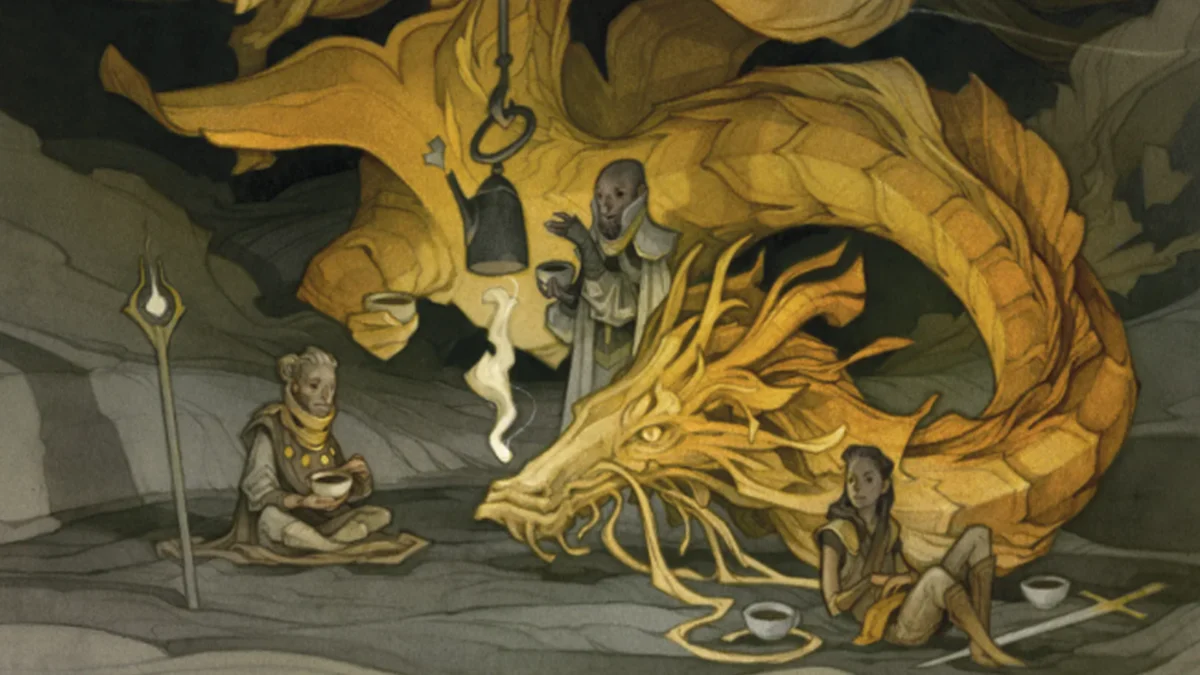
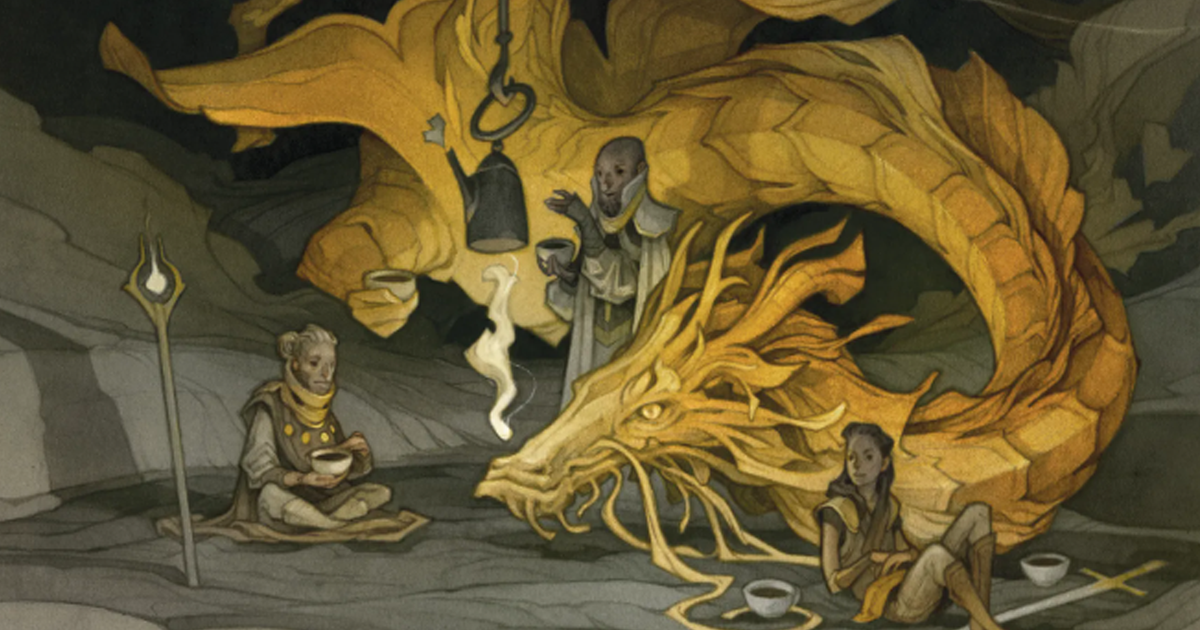
In stark contrast to the standard edition’s martial might, the alternate cover for the 2024 Player’s Handbook, illustrated by the acclaimed Wylie Beckert, presents a remarkably different vision of adventuring life. This artwork, which was quickly revealed after the standard cover (as reported by Polygon), targets collectors and players who appreciate a more nuanced, perhaps even whimsical, take on their fantasy escapades.
Beckert’s illustration depicts a classic D&D party – a wizard, a cleric, a fighter, and a rogue – gathered around a humble pot of tea within the cozy confines of a cave. The scene exudes an unexpected sense of domesticity and camaraderie, a stark departure from the typical battle formations. The golden dragon, a recurring motif from the standard cover, makes an appearance here as well, but in a remarkably different role. Instead of a stoic guardian, this dragon is an active participant in the tea party, delicately grasping a normal-sized teacup in one massive paw, its scales glinting in the cave’s soft light. Adding to the charm, the party’s rogue is precariously perched on the dragon’s body, perhaps sharing a secret or simply enjoying the elevated view.
This alternate cover speaks to the less-heralded, yet equally vital, aspects of D&D: the moments of downtime, the quiet camaraderie between adventurers, the exploration of mysterious locales, and the unexpected friendships formed along the way. It champions the "roleplaying" over the "game," highlighting character interaction, storytelling, and world immersion. Wylie Beckert, known for her distinctive, often surreal and richly detailed style, previously lent her artistic talents to the alternate cover of Dungeon & Dragons: Tasha’s Cauldron of Everything. Her work consistently offers a unique perspective, often imbued with a sense of wonder and narrative depth that transcends mere action. For players who gravitate towards character development, intricate plots, and the social dynamics of a adventuring party, Beckert’s cover offers a more reflective and perhaps more personally resonant visual identity for the Player’s Handbook.
A New Era: The 2024 Core Rulebooks Initiative
The release of the 2024 Player’s Handbook is not an isolated event but a critical component of Wizards of the Coast’s broader strategy to update and refine Dungeons & Dragons. Initially dubbed "One D&D" during its developmental phase, this initiative aims to create an evolved, yet fully backward-compatible, version of the game’s 5th Edition ruleset. The goal is to incorporate years of player feedback, streamline certain mechanics, and introduce new options, all while ensuring that existing 5th Edition adventures and supplements remain fully playable.
The Player’s Handbook is traditionally the first and most crucial of the core rulebooks to be released in any new edition or major revision. It contains the fundamental rules for character creation, combat, exploration, and magic, making it the essential entry point for new players and a foundational text for veterans. The significance of its cover art, therefore, cannot be overstated. It is the visual ambassador for the new iteration of D&D, the first impression that sets the tone and invites players into the game world. By presenting two such contrasting covers, Wizards of the Coast is making a deliberate statement about the multifaceted nature of D&D and its appeal to a wide spectrum of fantasy enthusiasts. This strategic move aligns with the broader goal of the 2024 update: to be more inclusive, more flexible, and more reflective of the diverse ways people engage with the game.
The Legacy of D&D Covers: A Visual History
The cover art of the Dungeons & Dragons Player’s Handbook has always been more than just a decorative wrapper; it is a declaration of intent, a visual manifesto for each edition’s unique identity. From the rudimentary, but iconic, monochrome illustrations of the game’s earliest iterations to the full-color, cinematic scenes of later editions, these covers tell a story of artistic evolution and shifting thematic priorities.
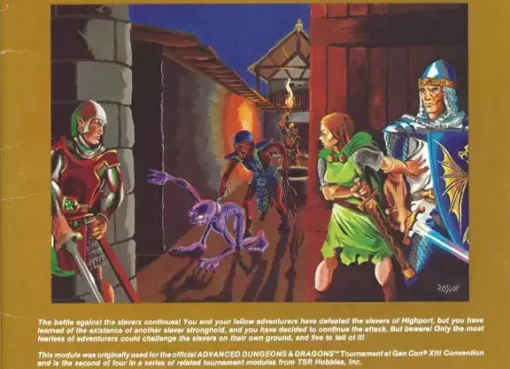
The original D&D "White Box" sets of the mid-1970s featured minimalist designs, often abstract or relying on simple iconography, reflecting the game’s nascent stage. With the advent of Advanced Dungeons & Dragons (AD&D) in the late 70s, artists like David A. Trampier (for the original Player’s Handbook) and Jeff Easley (who became synonymous with AD&D 2nd Edition) began to define a distinct visual language for the game. Trampier’s famous "Wizard with Orb" cover for the 1st Edition AD&D Player’s Handbook, while not depicting a full party, set a tone of mystery and arcane power. Easley’s numerous covers for 2nd Edition often featured heroic figures in dramatic poses, fighting monstrous threats, firmly establishing the game’s fantasy combat roots.
As D&D transitioned into its 3rd and 3.5 Editions in the early 2000s, the art style became more polished and digitally enhanced, with artists like Henry Higginbotham and Todd Lockwood creating covers that emphasized epic scale and detailed realism. The 4th Edition (2008) saw a shift towards a more stylized, almost video game-esque aesthetic, with covers by Wayne Reynolds that conveyed high-octane action and a strong emphasis on tactical combat. Finally, the 5th Edition Player’s Handbook (2014), with its iconic cover by Tyler Jacobson (the same artist as the 2024 standard cover), presented a diverse party facing a red dragon, a clear return to classic D&D iconography while embracing modern artistic sensibilities.
Each of these covers not only encapsulated the visual style of its era but also subtly communicated the core mechanics and philosophical underpinnings of its respective edition. The trend has consistently been towards showcasing heroism, danger, and the fantastical elements of the game. The introduction of an alternate cover for the 2024 edition, particularly one that diverges so significantly in theme, marks a new chapter in this visual history. It suggests a conscious effort to broaden the artistic representation of D&D, acknowledging that the game is more than just combat, and that its appeal lies in a multitude of experiences.
The Allure of the Alternate: A Collector’s and Player’s Perspective
The practice of releasing alternate covers for books, especially in the realm of genre fiction, comics, and now increasingly tabletop roleplaying games, serves multiple purposes. For Dungeons & Dragons, these alternate versions are primarily designed to cater to two distinct segments of its audience: collectors and players with specific aesthetic preferences.
For collectors, alternate covers represent a premium item, often featuring unique artwork that stands apart from the mass-market standard. These editions frequently become sought-after pieces, appreciating in value over time and allowing enthusiasts to express their dedication to the game through unique possessions. The fact that the alternate cover for the 2024 Player’s Handbook will be available exclusively at local game stores for an initial period further enhances its collectible appeal, creating a sense of scarcity and urgency for those who desire it. This strategy also provides a valuable boost to independent retailers, fostering community engagement and rewarding loyalty.
Beyond collectibility, alternate covers address the diverse aesthetic tastes within the vast D&D community. Not every player is drawn solely to epic battles and heroic clashes. Many find joy in the quieter moments of roleplaying: the intricate social interactions, the meticulous exploration of ancient ruins, the heartwarming camaraderie around a campfire, or the strategic planning sessions before a delve. Wylie Beckert’s tea party cover directly appeals to this demographic, offering a visual representation that resonates more deeply with their preferred style of play. It validates the idea that D&D is not a monolithic experience but a rich tapestry of possibilities. By providing two distinct artistic interpretations, Wizards of the Coast acknowledges and celebrates this breadth of engagement, allowing players to choose the cover that best reflects their personal connection to the game. It underscores that the "outside aesthetics" can indeed be as important as the "content" inside for many, as the cover is the gateway to the imaginary worlds within.
Wizards of the Coast’s Strategic Play
The decision by Wizards of the Coast to release two thematically divergent covers for such a pivotal product as the 2024 Player’s Handbook is a calculated strategic move, reflecting a sophisticated understanding of their market and the evolution of the D&D brand.
Firstly, it’s a clear demonstration of their commitment to appealing to a broader player base. D&D’s growth in recent years has brought in millions of new players, many of whom may not fit the traditional mold of a combat-focused dungeon crawler. The rise of actual-play streams like Critical Role and Dimension 20 has highlighted the rich narrative, character-driven, and collaborative storytelling aspects of the game. The alternate cover, with its emphasis on camaraderie and peaceful moments, directly speaks to this segment, showcasing that D&D is as much about shared stories and interpersonal dynamics as it is about slaying monsters.
Secondly, this dual approach allows WotC to celebrate the multiple facets of D&D’s identity simultaneously. The standard cover firmly anchors the game in its heroic fantasy, action-adventure roots, reassuring long-time fans and appealing to those who love the thrill of combat. The alternate cover expands this definition, validating the equally important, yet often visually underrepresented, elements of roleplaying, exploration, and social interaction. It’s an acknowledgement that "D&D" means different things to different people, and both interpretations are equally valid and cherished.
Thirdly, from a commercial standpoint, the strategy is designed to drive sales and engage the community. Alternate covers, especially those with limited initial distribution through local game stores, create buzz, generate excitement, and encourage early purchases. The staggered release schedule – alternate cover on September 3rd via local game stores, followed by the standard cover and wider release on September 17th – is a savvy move. It provides a distinct incentive for players to support their local game stores, strengthening a vital part of the D&D ecosystem, while also ensuring a robust wider launch. This tiered release can effectively create two distinct sales surges, maximizing visibility and revenue for the new edition.
Finally, this strategy reinforces Wizards of the Coast’s dedication to responsive design and player feedback. The "One D&D" initiative has been characterized by an extensive public playtest period, gathering vast amounts of community input. By offering diverse artistic interpretations, WotC signals that they are listening to the varied preferences of their audience, from those who crave epic battles to those who seek contemplative narratives. It positions D&D as a dynamic, evolving game that respects its legacy while embracing its future.
Release Rollout: A Phased Approach to Engagement
The rollout strategy for the 2024 Player’s Handbook is carefully orchestrated to maximize impact and engagement, particularly by leveraging the critical role of local game stores within the D&D community. The decision to implement a phased release schedule is a testament to Wizards of the Coast’s understanding of market dynamics and community building.

The journey begins on September 3rd, when the alternate version of the new D&D Player’s Handbook will become exclusively available at local game stores. This early access period serves several strategic purposes. For local game stores, it’s a significant boon, providing them with a unique product that can draw customers through their doors ahead of the broader market release. This exclusivity fosters customer loyalty, encourages pre-orders, and positions these stores as vital hubs for the D&D community, where enthusiasts can gather, discuss, and celebrate the new edition. For players, it creates an exciting opportunity to be among the first to own the new Player’s Handbook, particularly the distinct alternate cover, which holds a special appeal for collectors and those who prefer its unique artistic vision. This initial wave of sales is likely to be fueled by the most dedicated fans and collectors, generating significant buzz and word-of-mouth ahead of the wider launch.
Following this initial exclusive period, the standard edition of the Player’s Handbook, alongside the wider availability of both versions, will commence on September 17th. This second phase marks the official global launch of the 2024 Player’s Handbook across all retail channels, including major online retailers, bookstores, and any game stores that did not participate in the early access program. By staggering the release, Wizards of the Coast ensures that the product maintains a prolonged presence in the news cycle and in public consciousness. It allows for a controlled build-up of anticipation, with the early release creating a "soft launch" feedback loop before the full-scale rollout. This phased approach is a sophisticated method of managing product launch, appealing to different segments of the market at optimal times, and ultimately strengthening the Dungeons & Dragons brand and its ecosystem.
Implications for the D&D Community and Beyond
The dual cover strategy for the 2024 Player’s Handbook carries significant implications, not only for the D&D community but also for the broader tabletop gaming industry and the evolving perception of roleplaying games.
Firstly, it’s a powerful statement about D&D’s evolving identity. By presenting two such contrasting visual narratives, Wizards of the Coast is consciously broadening the definition of what Dungeons & Dragons represents. It moves beyond the singular image of combat-heavy dungeon crawling to embrace the rich tapestry of experiences the game offers, including social interaction, exploration, problem-solving, and character-driven storytelling. This diversification of imagery can help attract new players who might have previously felt alienated by a perceived overemphasis on combat.
Secondly, the move could fuel community discussions and debates about the "true" essence of D&D. While many will appreciate the choice, some purists might argue for one cover’s superiority or question the need for a softer, more introspective image. These discussions, however, are often beneficial, generating engagement and allowing players to articulate their personal connections to the game, ultimately strengthening community bonds.
Thirdly, for the tabletop gaming industry, this strategy could set a precedent. As TTRPGs continue to grow in popularity and diversify their player bases, other publishers might adopt similar multi-cover approaches to cater to varied aesthetic preferences and highlight different aspects of their games. This could lead to a more visually rich and thematically diverse landscape for TTRPG products.
Finally, the emphasis on local game stores for the alternate cover’s early release underscores Wizards of the Coast’s continued commitment to brick-and-mortar retail. In an increasingly digital world, supporting these physical spaces is crucial for fostering local gaming communities, which are the lifeblood of tabletop RPGs. This reinforces the idea that D&D is not just a game, but a shared social experience that thrives in communal settings. The 2024 Player’s Handbook, with its dual covers, therefore stands as a symbol of D&D’s past, present, and multifaceted future – a game that is as much about epic battles as it is about sharing a cup of tea with friends, human and draconic alike, in the quiet depths of a cave.
Conclusion
The unveiling of the standard and alternate covers for the 2024 Dungeons & Dragons Player’s Handbook is far more than a simple artistic reveal; it is a strategic declaration from Wizards of the Coast regarding the future direction and inclusive vision of the world’s most beloved tabletop roleplaying game. The standard cover, a dynamic tableau of classic heroes battling iconic foes under the watchful eye of a golden dragon, firmly roots the game in its legacy of epic adventure and heroic combat. It is a powerful affirmation for long-time players and those drawn to the thrill of high fantasy action.
Conversely, the alternate cover, a serene and whimsical scene of adventurers sharing tea with a friendly golden dragon in a cave, offers a striking counter-narrative. This illustration champions the quieter, more introspective, and deeply collaborative aspects of D&D: the camaraderie, the shared moments of discovery, and the rich tapestry of roleplaying that extends beyond the battlefield. By presenting these two distinct artistic visions, Wizards of the Coast is making a clear statement: Dungeons & Dragons is a game of boundless possibilities, capable of encompassing both heroic clashes and heartfelt connections.
This dual approach, coupled with a phased release strategy that prioritizes local game stores, showcases a sophisticated understanding of D&D’s diverse player base and the evolving TTRPG market. It acknowledges that the game’s enduring appeal lies not in a single playstyle, but in its ability to adapt and resonate with a multitude of imaginations. As the D&D community eagerly anticipates the September 2024 release of this foundational rulebook, these covers serve as potent visual ambassadors, inviting players old and new to embark on their next grand adventure, whether it involves drawing steel against monstrous hordes or simply sharing a cup of tea with a very large, scaly friend. The 2024 Player’s Handbook promises not just updated rules, but a renewed invitation to explore the many dimensions of fantasy roleplaying that D&D so uniquely offers.


Leave a Comment