
Unmasking the Urban Unseen: Donald A. Wollheim’s "Mimic" and the Enduring Horror of Hidden Threats
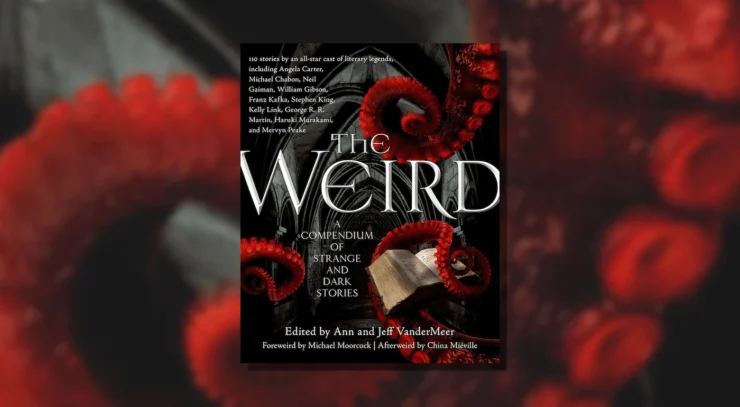
New York, NY – In the bustling, ostensibly ordered world of a mid-20th century metropolis, a chilling narrative quietly unfolded in the pages of Astonishing Stories. First published in December 1942, Donald A. Wollheim’s short story, "Mimic," delves into the unsettling possibility that humanity, despite its self-proclaimed dominion, may share its urban landscapes with unseen, unimagined horrors. The tale, a staple in anthologies like The Weird: A Compendium of Strange and Dark Stories, edited by Ann and Jeff VanderMeer, not only delivers a potent dose of cosmic horror but also serves as a poignant reflection on human hubris, the anxieties of the era, and the ever-present fear of the "other."
Wollheim’s narrative peels back the veneer of ordinary life to reveal a grotesque secret festering in plain sight, challenging our perceptions of nature, evolution, and what it truly means to be human. Through the eyes of an unnamed museum curator’s assistant, the story explores themes of camouflage and mimicry, ultimately positing a terrifying, insectoid species that has evolved to perfectly blend into the most dominant "herd" on Earth: mankind itself. More than just a monster story, "Mimic" resonates with a deeper unease, particularly when viewed through the lens of its historical context, a world grappling with unprecedented global conflict and widespread xenophobia.
Main Facts: A City’s Hidden Secret Revealed
Donald A. Wollheim’s "Mimic" presents a disturbing premise: an intelligent, insectoid lifeform capable of flawlessly imitating a human being, living undetected within a densely populated urban environment. The story’s unnamed narrator, a museum assistant specializing in insects, introduces the concept of nature’s mastery of disguise, from moths mimicking wasps to beetles integrating into army ant columns. This scientific preamble sets the stage for the revelation that such mimicry could extend to humanity, the "greatest hunter of them all."
The central figure of the narrative is a reclusive tenant known only as "Black-Cloak," an individual whose peculiar habits — wearing an ankle-length black cloak and wide-brimmed hat, avoiding eye contact, especially with women, and communicating only through gestures — mark them as an eccentric outsider in a grimy tenement. Black-Cloak’s existence is one of quiet, unremarkable routine until a violent incident shatters the facade. Upon investigation, Black-Cloak is found dead, and their true form is horrifyingly revealed: an insectoid creature with a beetle-like wing sheath, six legs, and a face devoid of human features.
Further compounding the horror, a metal box found in the room is discovered to be a nest, from which dozens of small, human-mimicking offspring escape, taking flight on gauzy wings. The story concludes with the narrator’s chilling observation of another, even more monstrous, mimetic predator: a "red brick chimney" transforming into a bat-winged entity, pursuing the newly hatched creatures. This final image suggests a vast, hidden ecology of disguised horrors, coexisting with humanity, utterly unknown and terrifyingly complex.
Chronology of the Unveiling: From Hubris to Horror
The narrative of "Mimic" unfolds with a meticulous build-up, slowly chipping away at the reader’s complacency before delivering its shocking climax.
The Preamble of Pride and Ignorance
Wollheim opens "Mimic" with a philosophical reflection on human arrogance. The narrator, a self-aware observer of the natural world, muses on mankind’s limited understanding of the planet, noting that "half the planet remained undiscovered less than five hundred years ago." He highlights the infancy of scientific disciplines like atomics, emphasizing that countless "truths lurk unimagined" and are capable of "shocking us to the bone" upon discovery. This serves as a vital thematic overture, setting the stage for a revelation that will shatter human certitude.
Nature’s Deceptive Art: The Narrator’s Expertise
Our narrator’s professional life as a museum curator’s assistant, engaged in the "mounting beetles and classifying exhibits of stuffed animals and preserved plants," provides him with a unique perspective. He observes nature’s "strange fondness for camouflage and mimicry," citing examples such as soft-bodied moths impersonating armored wasps and beetles infiltrating army ant columns. These examples underscore a fundamental law of survival: lesser species adopt the guise of the dominant or dangerous. The logical extension of this principle, he posits, is the chilling thought that if man is "the greatest hunter of them all," then "inferior creatures" might "walk among us, hidden in plain view."
The Enigmatic Black-Cloak: A Shadow in the Tenement
The story then shifts to a specific recollection from the narrator’s youth: a mysterious neighbor residing in a "grimy tenement." This individual, always shrouded in an ankle-length black cloak and a wide-brimmed hat pulled low, maintained a rigid routine, appearing only twice daily for the elevated train. Described as looking like "a creature from some weird story out of the old lands," Black-Cloak was an object of fleeting curiosity, then dismissive indifference, for the neighborhood. They paid attention to nobody, save for women, whose presence would cause Black-Cloak to close their "wide, watery blue eyes" until they passed, an inexplicable ritual that hints at the creature’s true nature. Interactions were minimal, often reduced to silent pointing at Antonio’s grocery, further cementing their status as an uncommunicative recluse.
The Metallic Disturbance and the Unveiling
Only one notable event punctuated Black-Cloak’s long, strange tenancy: the dragging of "sheets of metal" into their room, followed by days of "banging." This brief period of unusual activity eventually ceased, and life reverted to its peculiar norm. Years later, the narrator, now an adult, finds himself serendipitously nearby when the janitor of Black-Cloak’s building frantically shouts for help, reporting "thuds and screaming" from the reclusive tenant’s room.
The narrator and a policeman force entry into the silent, unfurnished room, which is littered with torn papers and garbage. The only piece of furniture is a four-foot-square metal box, secured with ropes and screws, its lid sealed with a waxy substance. Black-Cloak lies dead on the floor, still cloaked, though their hat has fallen away. It is upon examining the body that the horrific truth begins to emerge.
The Corpse’s Deception and the Nest’s Awakening
The would-be rescuers are "gradually—horribly—becoming aware of its wrongness." Black-Cloak’s eyes remain open, staring, while the "eyebrows were mere lines in the flesh of a face with no nose—mottled skin only presented as a nose if unscrutinized." It possesses no teeth, and the "coat" is revealed to be a "huge black wing sheath, like a beetle." Beneath, a thorax with "six insectile legs" and a "hole oozing watery liquid" replaces a human torso, while a crumpled abdomen evokes "a wasp after egg-laying."
The janitor flees, "gibbering" in terror. The policeman, despite his shock, is persuaded by the narrator to help break the seal on the metal box. Upon lifting the lid, "noxious vapor" pours forth, accompanied by dozens of two- or three-inch-long creatures. These entities, described as "little men in black suits, with expressionless faces and watery blue eyes," fly out on "gauzy beetle wings," streaming out the open window. The narrator watches their "exodus," contemplating the audacity of a creature that could disguise itself as "the supreme animal himself—man." Bones, possibly human, are discovered at the bottom of the nest box, though left largely unexamined.
Retrospection and the Ultimate Revelation
In retrospect, the narrator deduces that Black-Cloak was female, the metal box her nest, and the departing throng her offspring. He speculates that her avoidance of women stemmed either from their greater perceptiveness of men’s behavior or from "instinctive feminine jealousy" of potential competitors. However, the true horror for the narrator lies not in the insectoid mimicry, but in a final, even more profound deception he alone witnesses. Staring into the dawn sky after the fliers, he sees what appeared to be a "red brick chimney" on a lower building suddenly open "two white eyes," unfurl "great bat-wings," and "peel away" from the real chimney to pursue Black-Cloak’s young. This final image suggests a complex, layered reality of mimetic predators, where even the seemingly inanimate can harbor monstrous life.
Supporting Data: Thematic Depths and Societal Echoes
"Mimic" is far more than a simple monster story; it is a rich tapestry woven with scientific curiosity, social commentary, and existential dread. The story’s effectiveness is amplified by its clever use of supporting concepts and its unwitting reflection of the anxieties prevalent during its publication.
The Science of Deception: Mimicry and Camouflage
The narrator’s background as a museum assistant provides a credible framework for the central theme of biological mimicry. He expertly details various forms of animal deception, from Batesian mimicry (a harmless species imitating a harmful one, like soft-bodied moths as armored wasps) to aggressive mimicry (a predator luring prey by resembling something harmless or attractive, exemplified by the Spider-tailed Horned Viper). This real-world grounding makes the leap to human mimicry by an insectoid creature disturbingly plausible. The idea that a species might "free-ride on the work of busier ants" or find safety among "army ant columns" provides a biological justification for Black-Cloak’s urban existence, suggesting a form of commensalism or even anthropophily, where the creature benefits from human society without necessarily harming it (though the human bones in the nest box hint at a darker truth).
Human Hubris and the Anxiety of the Apex Predator
Ruthanna Emrys’ commentary highlights humanity’s peculiar position as "top predators—the army ants of the larger world," coupled with an inherent "anxiousness." Unlike species that evolve without predators, humanity, as an adaptable scavenger and predator, is "forever aware that something bigger or sharper or smarter might come along any minute." This anxiety fuels our fascination with "b-movie giant insects/tomatoes/amorphous blobs" and, more profoundly, the fear of "predators passing as our own." "Mimic" taps into this primal dread, not just of a physical threat, but of the existential challenge to our assumed place at the apex of the food chain and the hierarchy of intelligence. The story suggests that our perceived invincibility is merely an illusion, easily shattered by a species whose evolutionary path has led to perfect, insidious infiltration.
The Socio-Political Undercurrents of 1942: Xenophobia and Dehumanization
The publication of "Mimic" in 1942 is crucial to understanding its deeper implications. As Ruthanna Emrys keenly observes, this was New York "only a little after Lovecraft’s time there—and no less prone to xenophobia." The United States had recently entered World War II, a period marked by intense nationalistic fervor and the tragic internment of Japanese-Americans. The story’s central idea—that "some supposed people are actually insects"—carries a chilling resonance with the dehumanizing rhetoric often employed during wartime and in periods of social unrest.
Anne M. Marble’s critique of the narrator’s "Anglo-European-centric remark that the Americas were discovered less than five hundred years ago" further underscores the story’s implicit commentary on ethnocentrism and the dangers of a narrow worldview. The fear of the "other," of unseen enemies disguised among the populace, was a palpable anxiety of the time. Wollheim’s narrative, whether intentionally or not, taps into this collective paranoia, exploring how easily such fears could be weaponized. The question arises: is the story "in favor of identifying the ‘real’ inhuman threats," or does it implicitly warn against "the dangers of looking for them," especially when such a search can lead to the dehumanization of actual human beings?
Gendered Perceptions and Narrative Bias
Both commentators critically examine the narrator’s sexist explanations for Black-Cloak’s behavior. The narrator’s theories—that women observe men more closely, or that Black-Cloak experienced "instinctive feminine jealousy"—are dismissed as "A Lot" and "not a good way to avoid scrutiny." This highlights a significant narrative bias within the story, typical of its era, where a male narrator projects conventional gender roles onto an alien species. This critique not only points out the story’s dated aspects but also emphasizes how easily human prejudices can color our understanding of the unknown, potentially blinding us to the true nature of a threat.
Beyond the Insect: Mimetic Predators of Economy and Power
Ruthanna Emrys introduces a fascinating, meta-textual layer of "supporting data" with her "head-canon" about "bills" (money) as the most dangerous mimetic predators in the story. This imaginative interpretation extends the concept of mimicry beyond biology into socio-economic structures. If these "bills" have a "symbiotic relationship with the cape-men," infiltrating the economy and "fasten[ing] onto the richest and most greedy humans," then they become a different kind of parasitic mimic. This idea, evolving to "cordyceps-like" influence on CEOs and ultimately manifesting as "crypto," transforms the story’s core theme into a contemporary allegory for systemic exploitation and the unseen forces that manipulate human society for profit. It expands the definition of "mimicry" to include ideological or economic systems that appear beneficial but are, in fact, predatory.
Official Responses: Silence, Terror, and Unanswered Questions
In "Mimic," the "official response" to the horrific discovery is notably absent, underscoring the story’s focus on individual horror and the unsettling notion that such events might occur without broader societal recognition or intervention.
The Immediate Aftermath: Panic and Prayer
The immediate "official response" is one of raw, uncontained human emotion. Upon the revelation of Black-Cloak’s true, insectoid form, the janitor flees the scene, "gibbering" in sheer terror. This visceral reaction speaks to the primal shock of encountering something utterly alien that has masqueraded as human. The policeman, representing a more structured authority, initially reacts with prayer, a desperate plea for order in the face of chaos. His subsequent, albeit reluctant, assistance in opening the nest box is less a measure of official duty and more a testament to the narrator’s persuasive urgency. These reactions highlight the breakdown of conventional responses when confronted with a reality that defies all known categories.
The Absence of Institutional Inquiry
Crucially, the story provides no indication of a wider official investigation. There are no reports of scientific teams descending upon the tenement, no quarantines, no widespread panic, and no public announcements. The discovery of the insectoid Black-Cloak and her offspring remains a localized, personal horror witnessed by only a few. The "bones at the bottom of the box, maybe human," are not rigorously identified, nor is their presence pursued. This lack of institutional response is a cornerstone of cosmic horror, where the horrors are often too vast, too alien, or too subtle for human institutions to comprehend or contain. It reinforces the idea that humanity is not in control, and that terrifying truths can remain hidden even after they are briefly glimpsed. The incident simply dissolves back into the anonymity of urban life, leaving only the narrator with his indelible, unsettling knowledge.
Contrasting with Hypothetical Real-World Scenarios
Had "Mimic" occurred in a reality where such an event could be widely acknowledged, the official response would undoubtedly be dramatically different. One could imagine immediate containment protocols, scientific analysis of the creature’s biology and mimicry mechanisms, efforts to track the escaped offspring, and intense public debate about the nature of life and the security of human identity. Military involvement might ensue to neutralize what would be perceived as an existential threat. The complete absence of such a response in Wollheim’s story suggests a world either too ignorant to recognize the profound implications of the event or one where such isolated horrors are simply swallowed by the vastness and indifference of the city, becoming merely another untold tragedy. The story’s power lies in its portrayal of horror as an intimately experienced, rather than publicly addressed, phenomenon.
Implications: Enduring Fears and the Unseen World
"Mimic" leaves a lingering impression, its implications stretching beyond the confines of its narrative to touch upon enduring human fears and philosophical questions about reality itself.
The Enduring Relevance of Hidden Threats
The central premise of "Mimic"—that monstrous, alien lifeforms could live undetected among us—taps into a deep-seated human paranoia. In an increasingly complex and interconnected world, the fear of hidden enemies, both literal and metaphorical, remains potent. The story’s urban setting amplifies this, suggesting that even in the most densely populated and seemingly controlled environments, vast, unseen ecologies of the bizarre can thrive. This resonates with modern anxieties about infiltration, identity theft, and the erosion of trust, where what appears to be familiar can harbor something fundamentally alien or hostile. The tale’s power lies in making the familiar uncanny, transforming the ordinary street into a potential hunting ground for the unknown.
Wollheim’s Place in Cosmic Horror and Lovecraftiana
"Mimic" firmly establishes Donald A. Wollheim within the tradition of cosmic horror, a genre popularized by H.P. Lovecraft. Like Lovecraft’s best works, "Mimic" explores themes of human insignificance, the vastness of an indifferent or hostile universe, and the unsettling idea that our reality is merely a thin layer over unimaginable truths. The story’s gradual unveiling of the Black-Cloak’s true nature, culminating in the revelation of a wider, even more disturbing mimetic ecosystem (the "chimney creature"), perfectly captures the Lovecraftian sense of an underlying reality that would drive humans to madness if fully comprehended. The narrator’s ultimate state of "knowing too much" and "seeing that which he cannot unsee" is a classic trope of the genre, highlighting the psychological toll of confronting cosmic truths.
The Philosophical Weight of Dehumanization
Beyond the monstrous, "Mimic" inadvertently serves as a stark reminder of the dangers of dehumanization. The ease with which the neighborhood ignores Black-Cloak, and the narrator’s own detached, quasi-scientific observations, reflect a societal tendency to categorize and dismiss the "other." The story, set against the backdrop of World War II, when entire populations were being dehumanized for political ends, takes on a chilling metaphorical dimension. The narrative forces us to confront whether our fear of the "inhuman" might inadvertently mirror or justify the dehumanization of actual human beings. The question of who defines "human" and what criteria are used for exclusion remains a relevant and sensitive topic.
The Broader Unseen Ecology
The final, tantalizing glimpse of the "chimney creature" transforming into a bat-winged predator expands the story’s implications dramatically. It suggests that Black-Cloak was not an isolated anomaly but merely one species within a vast, hidden ecology of mimetic organisms. This implies a world far more complex and dangerous than humanity perceives, where even our architectural structures might be living, predatory entities. This layered deception elevates the horror from a single monstrous discovery to the terrifying realization of a pervasive, ancient, and utterly alien biosphere coexisting with us, constantly evolving its disguises, and perpetually beyond our full comprehension. The implications are not just of a monster in the closet, but of a monstrous reality lurking in every shadow, every inanimate object, and every seemingly ordinary corner of our world.
Ultimately, "Mimic" is a masterclass in psychological and cosmic horror, forcing readers to question the solidity of their reality and the assumed safety of their urban environments. It remains a powerful and disquieting narrative, prompting us to consider not only what might be lurking in plain sight, but also the human capacity for both scientific curiosity and dangerous prejudice in the face of the profoundly unknown.


Leave a Comment