
Lexispell: The Roguelike Word Game That’s Casting a Spell with Its Strategic Depths
In the ever-evolving landscape of video games, innovation often sparks imitation. The recent surge in popularity of titles like Vampire Survivors, Buckshot Roulette, and Lethal Company has predictably led to a proliferation of games inspired by their core mechanics. Even the meteoric rise of deck-building roguelike Balatro has spawned numerous derivatives, some navigating the complexities of gambling with nuance, others more overtly celebrating its allure. Now, a new contender emerges, offering a fresh twist on the roguelike formula: Lexispell, a word game that swaps the thrill of chance for the intellectual rigor of vocabulary.
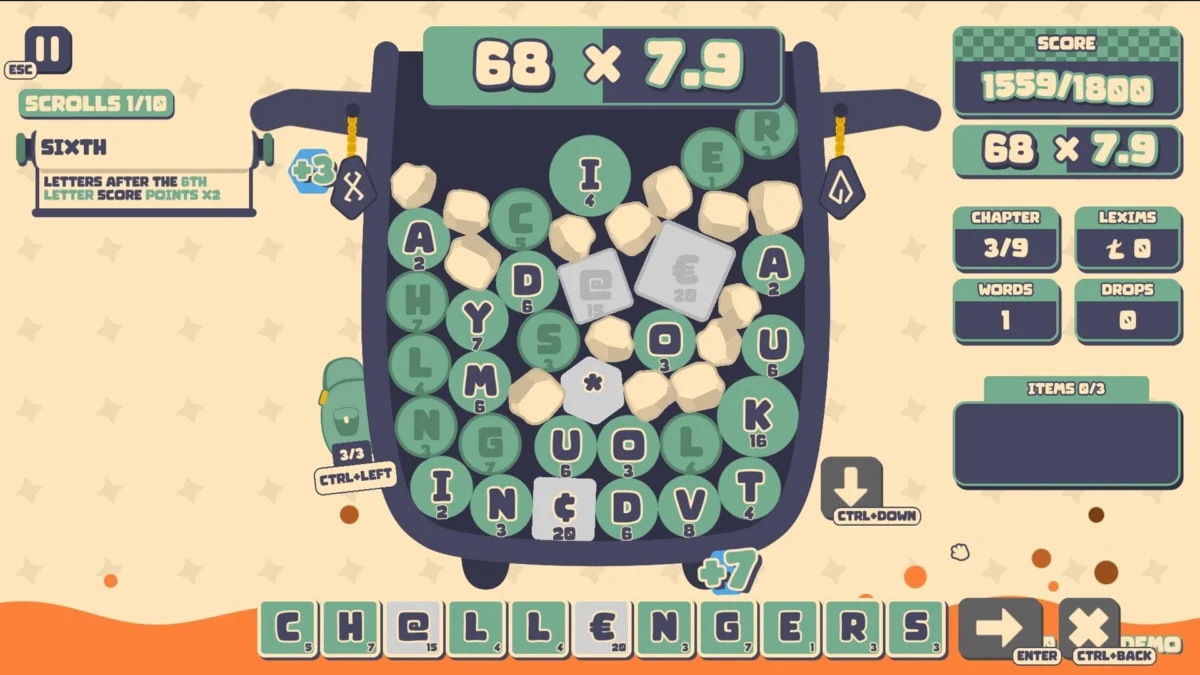
Lexispell presents a unique blend of roguelike progression, physics-based gameplay, and the fundamental art of spelling. While its name might not possess the immediate phonetic appeal one might expect from a game centered on words, the true enchantment lies within its intricate spelling mechanics. Players are cast in the role of a witch, tasked with filling their cauldron with letters. This process bears a resemblance to the popular puzzle game Suika Game, where falling elements must be strategically combined. In Lexispell, each letter possesses a point value, influenced by its rarity. More uncommon letters are worth more, and identical letters can fuse when placed adjacently, creating opportunities for strategic stacking.
The core gameplay loop involves spelling words from the letters collected in the cauldron. Upon successfully forming a word, its total point value is tallied, and a multiplier is increased based on the number of letters used in that word. This multiplier is crucial, amplifying the score generated by subsequent words. As players progress through rounds, they are presented with opportunities to purchase "scrolls." These scrolls function similarly to the Joker cards in Balatro, each bestowing a unique bonus or modifier that can drastically alter gameplay and enhance scoring potential.
One intriguing scroll, for instance, grants an additional five points for every letter that remains visually identical when flipped horizontally. Another offers a significant boost of 15 points to the multiplier if a player manages to spell an "anadrome" – a word that, when spelled backward, forms a different, valid word. These scrolls introduce a layer of strategic depth, encouraging players to consider not just the immediate word-building opportunities but also long-term synergies and bonus maximization.
However, it is in its pacing and inherent challenge that Lexispell truly distinguishes itself. Compared to the rapid-fire action of many roguelike titles, Lexispell demands a more deliberate and thoughtful approach. Players will find themselves spending considerable time meticulously searching for the longest and most advantageous words they can construct from the available letters. This cerebral demand, coupled with the pressure of limited time or turns, can be surprisingly taxing. The game’s developer, in a moment of candid reflection, famously declared that Lexispell is, in essence, "the Dark Souls of Wordle." This hyperbolic yet insightful comparison highlights the game’s capacity to challenge players intellectually and strategically, demanding a level of perseverance and problem-solving that might be unexpected from a word game. While the developer humorously states they won’t "die on this hill," the sentiment resonates with the game’s underlying difficulty and the satisfaction derived from overcoming its linguistic puzzles.
The Genesis of a Wordy Roguelike: A Chronology of Development and Inspiration
The journey of Lexispell from concept to its current Steam release is a testament to the enduring appeal of novel game mechanics and the iterative nature of game development. While specific dates for early development stages are not publicly available, the game’s emergence can be contextualized within the broader trend of "game-as-a-service" and the rise of indie titles that leverage existing popular genres with unique twists.
The inspiration drawn from Balatro is evident. Balatro‘s success, achieved through its innovative blend of poker mechanics and roguelike progression, has undoubtedly opened doors for developers exploring similar fusion concepts. The "Joker" system in Balatro, where cards provide passive bonuses that accumulate and synergize, is directly mirrored in Lexispell‘s "scrolls." This borrowing of a successful structural element allows Lexispell to build upon a proven framework, focusing its innovation on the core word-game mechanics and the physics-based cauldron system.
The influence of Suika Game is also palpable. The visual metaphor of filling a container with falling objects, and the subsequent need to strategically arrange and combine them, is a direct parallel. Suika Game‘s simple yet addictive gameplay loop, where players aim to prevent overflow by merging identical items, provides a familiar starting point for players. Lexispell takes this familiar mechanic and imbues it with a deeper layer of complexity through the introduction of letter values, rarities, and the ultimate goal of word formation.
The game’s developer, MrEliptik, has a history of creative game design, often venturing into niche genres and experimental mechanics. This willingness to explore less trodden paths likely contributed to the unique conceptualization of Lexispell. The "Dark Souls of Wordle" statement, while perhaps a playful exaggeration, underscores a development philosophy that prioritizes challenging and rewarding gameplay experiences, even within seemingly simple genres.
Unpacking the Mechanics: A Deeper Dive into Lexispell’s Gameplay
At its heart, Lexispell is a roguelike word game, but its mechanics extend far beyond simple letter arrangement. The game introduces a physics engine that governs the behavior of falling letters within the cauldron. This means that letters don’t simply stack in a neat grid; they can tumble, bounce, and settle in dynamic ways, adding an element of unpredictability to the collection process. This physics-based element adds a layer of emergent gameplay, where the arrangement of letters is not entirely under the player’s direct control, requiring adaptation and quick thinking.
Letter Rarity and Point Values: Each letter in Lexispell is assigned a point value, which is directly influenced by its rarity. Common letters like ‘E’ or ‘A’ will have lower point values, while less frequent letters such as ‘Q’, ‘Z’, or ‘X’ will be worth significantly more. This incentivizes players to seek out and utilize these higher-value letters whenever possible.
Letter Fusion: A key mechanic is the ability for identical letters to fuse when they land adjacent to each other. This fusion process not only consolidates letters but also often results in a more powerful or higher-value letter, or sometimes triggers a special event. This encourages strategic placement and stacking of letters to create beneficial fusions.
Word Scoring and Multiplier: The core objective of each round is to spell words using the letters collected in the cauldron. When a word is successfully spelled, its total point value is calculated. Crucially, the game awards a multiplier based on the number of letters in the spelled word. A longer word yields a higher multiplier, which is then applied to the scores of subsequent words spelled within that round. This creates a snowball effect, where successful long words can dramatically increase a player’s score potential.
Scrolls: The Strategic Catalysts: Upon completing a round, players are presented with a shop where they can purchase "scrolls." These scrolls are the primary progression system and the source of much of the game’s strategic depth. Each scroll offers a unique passive bonus or modifier that can influence various aspects of gameplay, such as:
- Letter Value Enhancements: Scrolls that might increase the base point value of certain letters or letter types.
- Multiplier Boosts: Bonuses that directly increase the score multiplier, either permanently or under specific conditions.
- Special Word Bonuses: Rewards for spelling specific types of words, like anadromes, palindromes, or words of a certain length.
- Physics Manipulations: Scrolls that could influence how letters fall, stack, or fuse.
- Rarity Adjustments: Scrolls that might increase the chance of rarer letters appearing or affect the rarity of fused letters.
The strategic selection and acquisition of scrolls are paramount to success. Players must adapt their playstyle based on the scrolls they acquire, aiming to create powerful synergies that maximize their scoring potential and survivability. The procedural generation of scrolls in each run ensures that no two playthroughs are exactly alike, providing significant replayability.
The "Dark Souls of Wordle" Analogy: The developer’s comparison to Dark Souls stems from the game’s inherent difficulty and the demanding nature of its puzzles. Unlike the relatively straightforward word challenges of Wordle, Lexispell requires players to:
- Think Critically under Pressure: The need to find optimal words from a limited and dynamically changing set of letters, while also considering scroll bonuses and potential fusions, creates significant mental pressure.
- Adapt to Unpredictability: The physics engine adds an element of randomness that players must learn to manage and exploit.
- Master Long-Term Strategy: Success is not just about spelling any word, but about spelling the best word at the right time, considering how it contributes to long-term scoring and scroll activation.
- Embrace Trial and Error: Players will inevitably make suboptimal choices and experience challenging runs. The roguelike nature encourages learning from these failures and improving strategies for future attempts.
Supporting Data: The Rise of the Word Game and Roguelike Fusion
The success of Lexispell can be viewed within a broader context of the gaming industry’s trends. The word game genre, long a staple of casual gaming, has seen a resurgence in popularity, amplified by digital platforms and social media.
- Wordle’s Phenomenal Success: The global phenomenon of Wordle in late 2021 and early 2022 demonstrated a massive appetite for accessible, yet engaging, word-based puzzles. This surge in interest has paved the way for more complex and innovative word games to find an audience.
- Indie Game Innovation: The independent game development scene has consistently been a hotbed for genre fusion and experimental mechanics. Titles like Hades, Slay the Spire, and Cult of the Lamb have shown that combining established genres with unique themes and mechanics can lead to critical and commercial success. Lexispell‘s fusion of roguelike progression with word puzzling fits this trend perfectly.
- The Appeal of Roguelikes: The roguelike genre, characterized by procedural generation, permadeath (or persistent progression), and high replayability, continues to be a dominant force in the indie space. Players are drawn to the challenge, the sense of discovery, and the satisfaction of mastering complex systems. Lexispell leverages these core roguelike elements to create a compelling and addictive experience.
- Balatro’s Influence: The immense popularity of Balatro has not only inspired clones but has also validated the concept of blending seemingly disparate genres. Its success has shown that players are open to games that take familiar mechanics and reimagine them in novel ways, especially when combined with strategic depth and rewarding progression.
While specific sales figures for Lexispell are not readily available, its presence on Steam and the buzz surrounding its unique gameplay suggest a positive reception within its target audience. The game’s developer has clearly tapped into a niche where intellectual challenge meets engaging gameplay loops, a formula that has proven successful for many indie titles.
Official Responses and Developer Insights
Direct official responses from a game’s developer, especially for an indie title like Lexispell, often come in the form of developer logs, social media posts, and interviews. MrEliptik, the creator of Lexispell, has shared insights into the game’s design philosophy, often highlighting the blend of challenging gameplay with word-based mechanics.
The now-famous "Dark Souls of Wordle" comment, while a humorous exaggeration, likely reflects a genuine intention to create a game that is more demanding and strategically rich than a typical casual word game. This statement serves as a form of "unofficial response," setting player expectations for a challenging but ultimately rewarding experience.
Developer updates on platforms like Steam often detail bug fixes, balance adjustments, and the addition of new content, such as additional scrolls or game modes. These updates demonstrate an ongoing commitment to refining the player experience and responding to community feedback. The iterative nature of roguelike development means that the game is constantly evolving, with the developer actively shaping its trajectory based on player engagement and data.
The game’s presence on Steam also allows for direct player feedback through reviews and forum discussions. This feedback loop is invaluable for indie developers, providing insights into what aspects of the game are resonating with players and where improvements might be needed. The developer’s responsiveness to this feedback is a key factor in the long-term success and community building around a game.
Implications and the Future of Word-Based Roguelikes
The emergence of Lexispell has several significant implications for the gaming landscape, particularly within the word game and roguelike genres:
- Broadening the Appeal of Word Games: By infusing word puzzling with the strategic depth and addictive progression of roguelikes, Lexispell demonstrates that word games can offer more than just casual entertainment. They can be complex, challenging, and deeply engaging experiences that appeal to a broader spectrum of gamers.
- Encouraging Genre Fusion: The success of Lexispell, following in the footsteps of titles like Balatro, reinforces the viability of creative genre fusions. Developers are likely to be emboldened to experiment with combining established gameplay loops in novel and unexpected ways.
- The "Dark Souls" Effect on Other Genres: The developer’s bold comparison to Dark Souls highlights a trend where challenging gameplay mechanics are being applied to genres not traditionally associated with high difficulty. This can lead to a more diverse and intellectually stimulating gaming environment.
- Potential for a New Subgenre: Lexispell could be seen as a pioneer in a nascent subgenre of "intellectual roguelikes" or "strategic word roguelikes." If successful, it could inspire a wave of similar titles that focus on cognitive challenges within a roguelike framework.
- The Power of Smart Mechanics: The game’s core mechanics – letter rarity, fusion, strategic scroll acquisition, and the physics engine – are not overly complex individually, but their interplay creates a rich and emergent gameplay experience. This emphasizes the importance of well-designed core mechanics in creating compelling games.
Looking ahead, the future of games like Lexispell appears bright. As players continue to seek out novel and challenging experiences, games that offer a unique blend of familiar elements and innovative twists are likely to find a dedicated audience. The success of Lexispell could pave the way for more developers to explore the untapped potential of word games as a foundation for deeper, more strategic roguelike adventures. The notion of a "Dark Souls of Wordle" might seem whimsical, but in the hands of a skilled developer like MrEliptik, it has the potential to redefine what players expect from their word-based gaming experiences, proving that even the simplest words can hide profound strategic depths.



Leave a Comment