Croakwood: A New Breed of Townbuilder Where Serenity Reigns Supreme
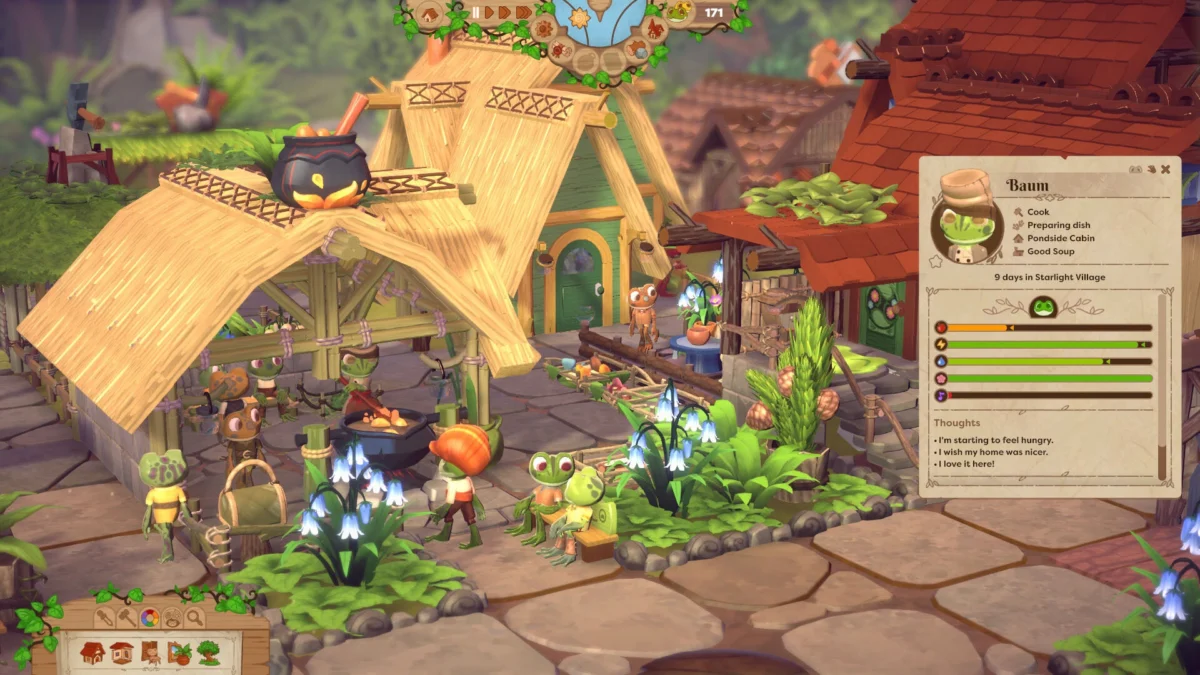
In a landscape often dominated by conflict and high-stakes resource management, a new contender emerges, promising a refreshingly tranquil approach to the town-building genre. Croakwood, the latest project from the acclaimed developers behind Parkitect, is poised to redefine player expectations with its focus on peaceful development, intricate customization, and the charming simplicity of amphibian life.
The Genesis of a Peaceful Metropolis
The inspiration for Croakwood, as shared by developer Texel Raptor, stems from a desire to recapture the engaging economic simulation found in beloved classics like The Settlers and Anno, while deliberately shedding the often-stressful element of combat and conflict. "I loved the part in these games where you build up the economy, but I really hated that these games always ended in some sort of conflict," explains Sebastian Mayer, co-founder and programmer at Texel Raptor. "It always ends in destruction, and that was annoying to me because I just wanted to keep the economy going." This core sentiment has shaped Croakwood into a game where the satisfaction of growth and creation takes center stage, unburdened by the looming threat of external aggression or internal collapse.
Garrett Randell, studio co-founder and artist, elaborates on the initial vision. "After various forays into different genres, the idea they kept coming back to was a townbuilder. In those early days the project had nothing to do with frogs, the team just knew two things: we wanted to do something with a fantasy beauty to it and experiment with what a townbuilder is." This initial broad stroke of "fantasy beauty" eventually led to the whimsical world of Croakwood, a place where tiny, industrious frogs tend to their burgeoning community.
A Deliberate Departure from Stressful Simulations
The town-building genre, while offering immense satisfaction in planning and expansion, often carries an inherent pressure. Games like Anno 1800, which the article’s author cites as a personal source of comfort during stressful times, demand meticulous attention to complex supply chains and constant vigilance against potential threats. The author finds solace in the focused problem-solving required to optimize production and ensure citizen happiness, a state of "Zen" where the outside world fades away.
Texel Raptor, however, aims to achieve a similar state of immersive engagement without the accompanying anxiety. "For me and the rest of the team, none of us like being time-pressured or forced into stressful situations," Randell states. "For an economy game, that sounds strange, but the key to Croakwood is that you can take it at your own pace. Anno puts you in that Zen, where you’re thinking about all of the moving pieces and you’re really focused [on] solving all these problems. That exists in Croakwood, it’s just we don’t force you to deal with it in a time-sensitive manner."
This fundamental difference in approach means that while Croakwood will feature intricate economic systems and the need to satisfy villager demands, the consequences of mismanagement are significantly softened. Instead of facing outright rebellion or the complete collapse of your civilization, a struggling Croakwood will see villagers express their displeasure through "nagging," and some may even choose to relocate. "Your villagers are going to nag you a bit more, and some might leave," Randell explains, "but your town will never outright collapse." This measured approach ensures that players can explore the intricacies of their town’s economy without the fear of catastrophic failure.
The Art of Amphibian Architecture: Customization as the Core
A significant pillar of Croakwood’s design philosophy is its emphasis on deep customization, particularly in the creation of homes. This aspect evolved considerably from early prototypes, where building was a more rudimentary affair of selecting pre-designed structures. "That was really boring," Mayer admits. The breakthrough came when the team integrated the sophisticated building system from their previous title, Parkitect. This fusion proved to be the missing ingredient, and the entire game’s design now revolves around this enhanced capability.
In Croakwood, potential frog residents don’t just occupy generic dwellings; they express specific needs and preferences. These requests can range from the practical, such as the desired size of a plot or the number of windows, to more nuanced desires. "They will make requests like, ‘I really want to have more plants in my house. Can you help me?’ stuff like that," Mayer reveals. This level of detail transforms the act of building from mere construction into a personalized service, fostering a stronger connection between the player and their virtual inhabitants.

The drive to fulfill these unique housing requests becomes the primary purpose for developing and expanding the town’s economy. Players will need to research and acquire the necessary goods, foods, and furniture to cater to their amphibian citizens’ tastes. This necessitates the establishment and expansion of various trades and production lines, ensuring a steady supply of resources to keep everyone content and prevent them from seeking greener pastures – or perhaps, lusher lily pads – in neighboring settlements.
The recent gameplay trailer for Croakwood vividly showcases the extensive control players will have over individual home customization. This depth is intended to be the driving force behind the game’s later stages, offering a sustained and engaging experience for players who find joy in meticulous design and the satisfaction of meeting specific needs. For those who, like the author, find pleasure in both complex economic management and the act of redecorating, Croakwood promises an unparalleled level of creative fulfillment.
A World Designed for Deliberate Pace
The deliberate exclusion of combat and high-pressure mechanics from Croakwood does not equate to a lack of stakes. The developers acknowledge that maintaining player engagement without these traditional drivers presents a unique challenge. "Early on it was difficult to figure out the game design," Mayer notes. "Once you take away the pressure from the conflict, you have to fill that with other stuff."
This "other stuff" is precisely where Croakwood’s charm and depth lie. While comparing it to games like Anno, the distinction isn’t in complexity, but in the pressure applied. Unlike games where players are in a race against competing nations or face the immediate threat of their populace revolting, Croakwood’s challenges are more subtle and player-driven. The game will present opportunities for optimization and problem-solving, but the urgency to address them will be dictated by the player’s own pace.

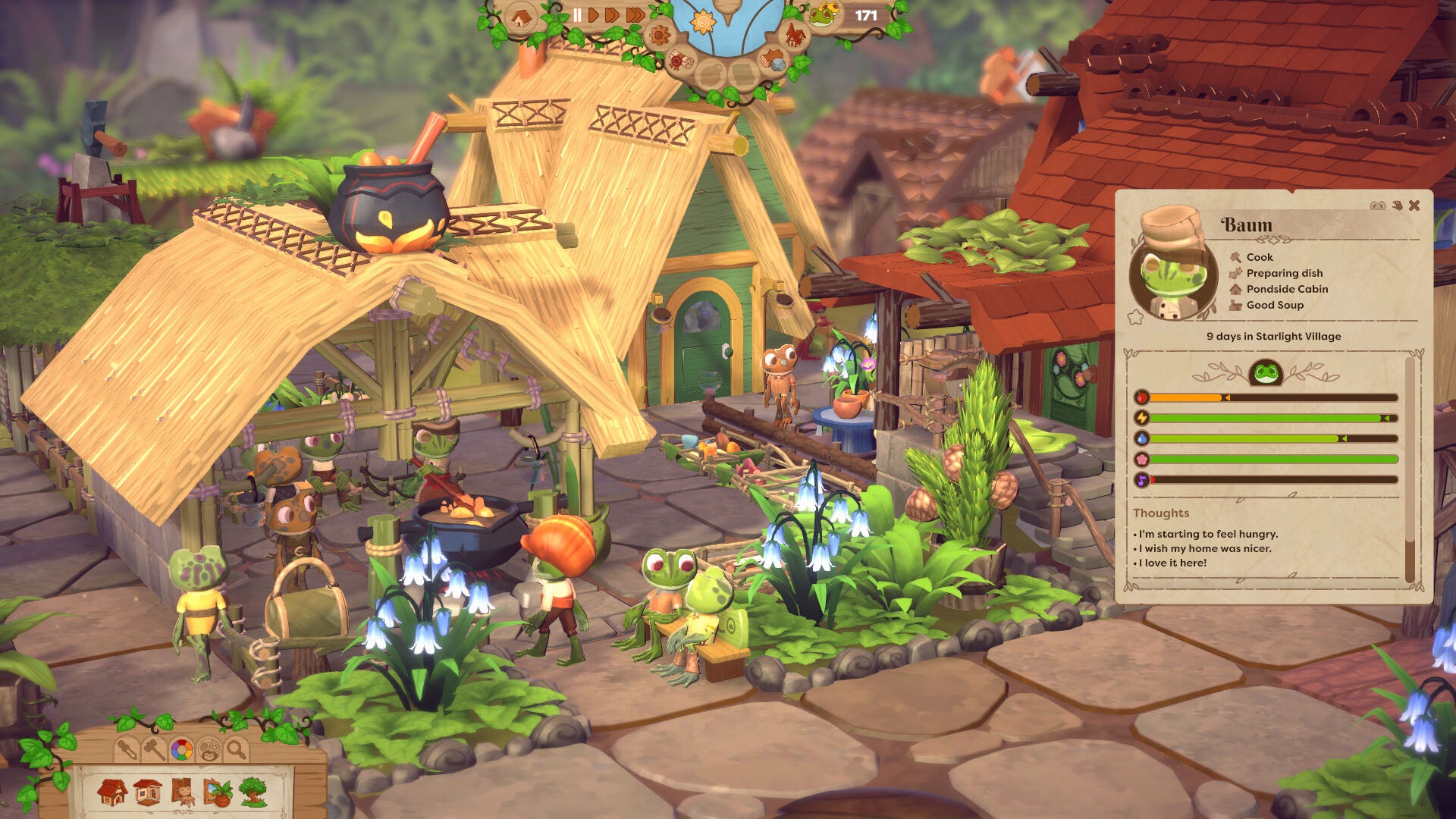
The visual cues of a struggling town in Croakwood are designed to be informative rather than punitive. Frogs in construction hats might be seen waiting for deliveries, or fishmongers might express frustration with empty baskets. These scenarios serve as prompts for the player to address logistical or production bottlenecks, but they do not trigger an immediate crisis. This allows players to experiment with different solutions and refine their town’s operations without the constant fear of irreversible consequences.
The developers draw a parallel to other non-combative townbuilders, such as Whiskerwood, a game where players manage a mouse community. While Whiskerwood does not feature combat, it imposes more severe penalties for economic miscalculations, such as insufficient firewood or food leading to mice freezing or starving. Croakwood, by contrast, opts for a gentler approach to failure, ensuring that the primary focus remains on creative building and economic simulation.
The Aesthetic Appeal: A Frogtastic Fantasy
The visual design of Croakwood is a crucial element contributing to its serene atmosphere. The game is set in a lush, verdant environment, nestled beneath the canopy of leaves and trees surrounding a tranquil pond. The diminutive size of the frog inhabitants, only a few centimeters tall, adds to the sense of a hidden, idyllic world. This aesthetic choice reinforces the idea of a peaceful, natural setting where the community thrives in harmony with its surroundings.
The imagery released so far showcases a vibrant and detailed world, with tiny frogs engaged in various tasks, from carrying goods between production facilities to tending to their homes. The art style appears to be charming and inviting, with a focus on organic shapes and natural textures. This visual richness is intended to draw players into the world and foster a sense of wonder and delight.

The transition from early concepts to the current vision highlights the developers’ commitment to creating an experience that is not only mechanically sound but also aesthetically captivating. The "fantasy beauty" that Texel Raptor initially sought has been expertly realized in the charming world of Croakwood, where every detail, from the smallest frog’s attire to the largest tree’s foliage, contributes to an overall sense of tranquil immersion.
Looking Ahead: Early Access and Player Expectations
Croakwood is slated for an early access release later this year. This approach allows the developers to continue refining the game based on player feedback, ensuring that the final product meets the high standards set by their previous work. The developers are keenly aware that building a compelling townbuilder without traditional conflict requires careful attention to emergent gameplay and player-driven goals.
The emphasis on customizable homes and the intricate economic systems are designed to provide a deep and long-lasting experience. As players progress, they will uncover new goods, technologies, and building options, further expanding the possibilities for their frog communities. The goal is to create a game that offers both immediate satisfaction through creative building and long-term engagement through the continuous challenge of optimizing and expanding their thriving amphibian metropolises.
For players seeking a break from the high-octane pressures of modern gaming, Croakwood offers a refreshing alternative. It is a testament to the idea that town-building can be an exercise in creativity and peaceful development, a chance to cultivate a miniature world where the greatest challenge lies in satisfying the unique desires of its charming, green inhabitants. The promise of Croakwood is a serene escape, a chance to get lost in the delightful hustle and bustle of a frog town where tranquility reigns supreme.