Vatican’s AI Encyclical: A Nuanced Call for Human Dignity in the Digital Age

Vatican City – In a landmark address that has sent ripples through both theological and technological circles, Pope Leo XIV has issued a comprehensive encyclical, Magnifica Humanitas, a 42,000-word document delving into the profound implications of Artificial Intelligence for humanity. This pastoral letter, the Pope’s first since his election, offers a nuanced critique of AI, emphasizing the preservation of human dignity, the imperative for transparency, and the critical need for human oversight in an increasingly automated world.
The encyclical, released recently, applies Catholic social teaching to the complex landscape of AI, advocating for a re-evaluation of its integration into society. Rather than decrying the technology itself, Pope Leo XIV identifies the true threats as technocratic ideologies, transhumanism, and post-humanism, which he argues risk devaluing human life and eroding essential moral principles.
The Core Tenets of Magnifica Humanitas
At its heart, Magnifica Humanitas is a profound exploration of how AI intersects with fundamental human values. The document urges a global commitment to "disarmament" – not in the traditional military sense, but in the context of relinquishing unchecked autonomous decision-making to machines, particularly in lethal applications. Transparency in AI development and deployment is presented as a non-negotiable requirement, ensuring that the creation and use of these powerful tools are not shrouded in secrecy.
Central to the encyclical is the concept of "human oversight." Pope Leo XIV stresses that while AI can be a powerful tool, it must always remain subservient to human conscience, judgment, and moral responsibility. The document explicitly warns against the delegation of critical decision-making to algorithms, particularly in areas that impact human worth and societal structures.
A Pope of Science and Faith
Pope Leo XIV, an American and a mathematician by training, has surprised many with the depth of his technical understanding and the sophisticated argumentation presented in Magnifica Humanitas. His approach, far from being anti-technology, embraces AI as a potentially valuable tool, provided its development and application are guided by ethical considerations rooted in human dignity.
"Most of the encyclical wasn’t actually about AI, even though that’s all anyone is talking about," noted Thomas, a commentator and contributor to the discussion surrounding the encyclical. "He hits a lot of topics, many of them economic, that AI has affected or influenced." This broader scope highlights the Pope’s holistic view, recognizing that AI’s impact extends beyond mere technological advancement to touch upon economic structures, social interactions, and the very definition of human value.
The encyclical’s release has been met with particular interest from authors and creators. The document provides clear guidance on how Catholic authors can ethically engage with AI tools for drafting, editing, research, and marketing, emphasizing the paramount importance of retaining human judgment and moral responsibility.
Chronology of a Landmark Document
The journey to Magnifica Humanitas reflects a growing awareness within the Vatican of AI’s pervasive influence. While specific dates for the drafting process remain private, the encyclical’s release marks a pivotal moment in the Church’s engagement with advanced technology.
- Papal Election: The election of Pope Leo XIV, a mathematician, signaled a potential focus on complex, data-driven issues facing the modern world.
- Encyclical Drafting: The extensive 42,000-word length suggests a lengthy and thorough consultation and writing process, likely involving a team of theologians, ethicists, and AI experts.
- Release of Magnifica Humanitas: The encyclical is formally published, making its teachings accessible to the global Catholic Church and beyond.
- Public Discourse: The document immediately sparks widespread discussion, with commentators and scholars dissecting its pronouncements on AI, ethics, and the future of humanity.
Supporting Data and Ethical Frameworks
The encyclical’s arguments are grounded in long-standing Catholic social teaching, drawing parallels to historical papal pronouncements on issues like industrialization and economic inequality. Pope Leo XIV’s critique of GDP, for instance, echoes concerns about metrics that can devalue human contributions, particularly those of mothers, by focusing solely on quantifiable economic output.
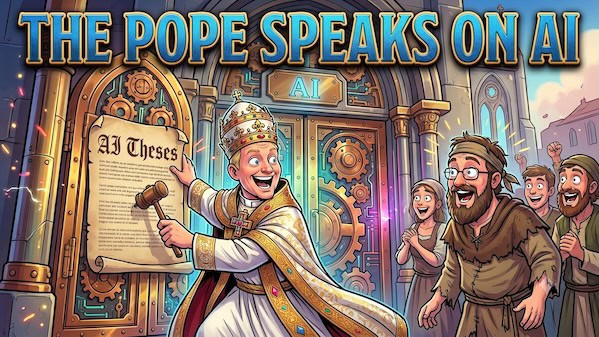
"His critique was that gross domestic product is a dehumanizing force," Thomas observed. "As a metric, GDP has been harmful to Western civilization, and it’s a core reason the birth rate has collapsed, because we don’t capture the value that mothers produce in gross domestic product." This highlights the encyclical’s commitment to recognizing the intrinsic worth of all human endeavors, not just those that contribute to market growth.
Furthermore, the Pope explicitly rejects Gnostic ideologies, which often posit a dualistic view of spirit and matter, valuing the spiritual over the physical. This is a direct counterpoint to transhumanist aspirations that seek to transcend human limitations through technological augmentation, such as uploading consciousness into machines. The encyclical reaffirms the Christian belief in the redemption of the flesh and the resurrection of the body, positioning Jesus Christ, the "Word made flesh," as the sole path to salvation, not technological advancement.
Official Responses and Interpretations
The Vatican’s official release of Magnifica Humanitas was accompanied by pronouncements from various Vatican departments, underscoring the significance of the document. While direct quotes from other high-ranking Vatican officials are not detailed in the provided text, the encyclical itself serves as the primary official response.
The interpretation of the encyclical’s stance on AI use by Catholic authors has been particularly illuminating. The consensus, as articulated by Thomas and further detailed in the document’s citations, is that AI is permissible as a tool, provided human conscience and moral judgment remain firmly in control.
- Editing and Drafting: Catholic authors can use AI for grammar, style, and initial drafting, but the final editorial decisions and moral discernment must rest with the author.
- Research: AI can serve as a research assistant, but the author must exercise personal judgment and spiritual reflection.
- Publishing Decisions: Literary agents and publishers are cautioned against allowing AI to make autonomous accept-or-reject decisions for submissions. Human oversight and accountability are paramount, as AI lacks compassion and mercy.
- Creative Work: The encyclical generally permits AI use for creative endeavors like plot development, cover concepts, and marketing copy, as long as the human creator maintains ultimate control and ethical responsibility.
Implications for the Future
The Magnifica Humanitas encyclical carries significant implications for the ongoing global conversation about AI. By providing a well-reasoned, ethically grounded framework, Pope Leo XIV’s message offers a counter-narrative to both unchecked technological optimism and outright technophobia.
The encyclical’s emphasis on "disarmament" of autonomous lethal weapons is particularly timely, as nations grapple with the development of AI-powered military technology. The Pope’s call for human moral judgment to remain at the forefront of such decisions is a crucial ethical imperative.
Moreover, the critique of technocratic leadership and surveillance, drawing parallels to the practices of the Chinese Communist Party, highlights the encyclical’s concern for the potential for AI to be used as a tool of oppression. The call for transparency and accountability in AI development and deployment by corporations and governments is a powerful message to the global community.
Ultimately, Magnifica Humanitas serves as a beacon, guiding humanity toward a future where technology serves human flourishing, rather than diminishing it. It is a call to embrace the potential of AI with wisdom, caution, and an unwavering commitment to the inherent dignity of every human being. As Pope Leo XIV concludes, "Technology, the silicon-made word, will not save humanity. Jesus, the Word made flesh, is our only path to salvation." This profound statement encapsulates the encyclical’s core message: that human values and spiritual truth must always guide our technological pursuits.