The Billion-User Void: Why Indie Hits are Seeing Zero Sales on the Microsoft Store
The digital games industry is often characterized by its "long tail"—the idea that even niche titles can find a sustainable audience across a global marketplace. However, a startling revelation from independent developer Martin Nerurkar has cast a harsh light on the efficacy of one of the world’s largest software ecosystems. Despite the Windows operating system boasting over 1.4 billion monthly active users, Nerurkar revealed that his critically acclaimed title, Nowhere Prophet, failed to sell a single copy on the Microsoft Store over a multi-year period.
This phenomenon raises significant questions about the viability of Microsoft’s integrated storefront and the widening chasm between operating system reach and retail conversion. While Steam remains the undisputed titan of PC gaming, the total absence of sales on a native OS platform suggests a systemic failure in how Microsoft connects its massive user base with independent content.
Main Facts: The "Zero Sale" Revelation
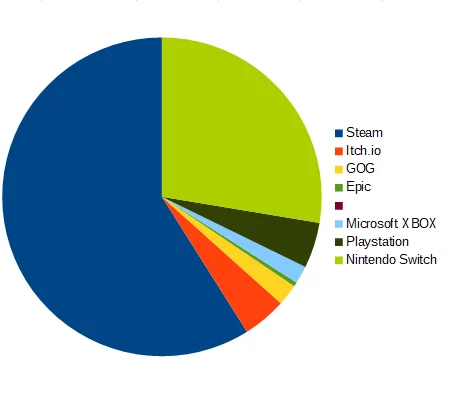
In August 2022, Martin Nerurkar, the founder of Sharkbomb Studios and creator of the "dustpunk" deck-builder Nowhere Prophet, shared a platform-wise revenue breakdown of his game’s performance. While the game had successfully carved out a profitable niche on platforms like Steam and the Nintendo Switch, one platform was conspicuously absent from the data: the Microsoft Store.
When questioned by followers regarding the omission, Nerurkar’s response was blunt: "And if you’re wondering why the Microsoft Store isn’t on this graph, that’s because we haven’t made a single sale there in this entire time."
The weight of this statement is amplified by the scale of the game’s overall success. Nerurkar estimated that Nowhere Prophet had moved approximately 20,000 units across all other platforms. For a game to sell tens of thousands of copies on third-party storefronts while failing to move a single unit on the operating system’s built-in shop is an anomaly that defies traditional retail logic.
Nicholas Lovell, a veteran games industry analyst and founder of Gamesbrief, noted that this "poor showing" by Microsoft highlights a profound identity crisis within the Windows ecosystem. The Microsoft Store, despite being pre-installed on nearly every PC sold globally, appears to be a "ghost town" for premium indie software.
Chronology: The Journey of Nowhere Prophet
To understand how a game ends up with zero sales on a major platform, one must look at the timeline of its release and the evolving landscape of Microsoft’s gaming strategy.
2019: Launch and Critical Acclaim
Nowhere Prophet launched in July 2019. As a unique blend of roguelike progression and tactical card combat, it was well-received by critics and found a dedicated audience on Steam. During this period, the indie "gold rush" on the Nintendo Switch was also in full swing, and the game eventually migrated to consoles to capitalize on the portability factor.
2020–2021: The Expansion to Xbox and Game Pass
Like many indie developers, Nerurkar sought to maximize his reach by bringing the game to the Xbox ecosystem. This often involves a dual release on the Xbox console store and the Windows-based Microsoft Store. Crucially, Nowhere Prophet was also included in Xbox Game Pass, Microsoft’s "all-you-can-eat" subscription service.
August 2022: The Data Disclosure
Three years after its initial launch, Nerurkar reviewed the lifetime sales data. While the game had seen healthy engagement through Game Pass (which pays developers through licensing fees or engagement metrics rather than per-unit sales), the "buy-to-own" version of the game on the Microsoft Store had remained untouched. This led to the viral tweet that sparked a wider industry debate about the relevance of the Windows Storefront for independent creators.
Supporting Data: Reach vs. Conversion
The disparity between Microsoft’s potential reach and its actual retail performance is staggering when viewed through the lens of industry statistics.
The 1.4 Billion User Paradox
According to Microsoft’s own "By the Numbers" reports, Windows 10 and 11 power over 1.4 billion monthly active devices. In any other retail context, a "footfall" of 1.4 billion would guarantee at least some level of accidental or curiosity-driven discovery. However, the Microsoft Store suffers from what analysts call "utility friction." Users typically open the Microsoft Store to update system drivers or download essential utilities like Calculator or Notepad, not to browse for premium entertainment.
Platform Breakdown Comparison
While Nerurkar did not provide exact percentages for every platform, typical indie sales distributions in the early 2020s followed a predictable pattern:
- Steam: 60% – 80% of PC sales.
- Nintendo Switch: Often rivaling Steam for "portable-friendly" indie titles.
- PlayStation/Xbox Consoles: 10% – 20%.
- Epic Games Store/GOG: 1% – 5%.
- Microsoft Store (PC): Negligible to 0%.
The "Zero Sale" figure is particularly damning when compared to the Epic Games Store or GOG.com. Despite having a fraction of the "installed base" of Windows, these platforms often generate thousands of sales for indie titles because their users are specifically looking for games.

The Identity Crisis: Why the Microsoft Store Fails
Industry analysts, including Nicholas Lovell, point to a fundamental confusion in the Microsoft Store’s value proposition. The storefront is currently attempting to serve two masters, and as a result, it serves neither effectively.
1. The App Store vs. The Retail Store
The Microsoft Store was originally designed to mimic the success of the Apple App Store, focusing on "Universal Windows Platform" (UWP) apps that were safe, sandboxed, and touch-friendly. However, PC gamers demand high-performance Win32 applications with modding capabilities and deep file access—things the original Microsoft Store actively discouraged.
2. The Discovery Deficit
Steam’s discovery algorithm is world-class, showing users games based on their play history and niche interests. In contrast, the Microsoft Store’s interface is often cluttered with productivity software, free-to-play mobile ports (like Candy Crush), and pre-installed bloatware. For a premium indie game like Nowhere Prophet, which costs $20–$25, the environment feels "cheap," making users hesitant to spend significant money.
3. Technical Friction
For years, the Microsoft Store was notorious for technical issues. Downloads would frequently hang, file structures were encrypted and inaccessible, and the store itself was prone to crashing. While Microsoft has made strides in improving the "Xbox App" on PC to separate gaming from the main store, the legacy of a "broken" experience persists in the minds of consumers.
Official Responses and the "Game Pass" Pivot
While Microsoft has not commented specifically on the Nowhere Prophet case, their corporate strategy over the last five years provides a silent answer: they have largely abandoned the "per-unit sale" model for PC gaming in favor of Xbox Game Pass.
The Subscription Cannibalization
It is highly probable that the existence of Game Pass is the primary reason for the zero-sale figure. If a user sees Nowhere Prophet on a Microsoft platform, they are likely seeing it within the Game Pass library. If they can play it for "free" as part of their $10/month subscription, there is zero incentive to purchase the standalone version for $24.99 on the same platform.
Microsoft’s official stance has always been that Game Pass increases sales by encouraging players to try genres they otherwise wouldn’t. However, developers like Nerurkar are seeing the opposite on the Windows Storefront: the subscription service isn’t just the preferred way to play; it is the only way users interact with the platform.
The Shift to the Xbox App
Recognizing the failure of the integrated Windows Store, Microsoft has shifted its gaming focus to the "Xbox App for PC." This separate interface strips away the productivity apps and focuses entirely on the Game Pass library and social features. While this has improved the user experience, it further sidelines the traditional "store" aspect of the ecosystem.
Implications for the Indie Development Community
The revelation that a successful game can sell zero copies on a major OS store has several long-term implications for the gaming industry.
The "Steam-Only" Reality
For many indie developers, the cost of porting a game to the Microsoft Store (dealing with specific certification requirements and API integrations) may no longer be justifiable. If the return on investment (ROI) is literally zero, developers may begin to bypass the Windows Store entirely, focusing their limited resources on Steam, Epic, and consoles.
The Danger of De-platforming
If Microsoft continues to fail as a retailer, the PC market risks becoming a monopoly. While Steam is generally well-regarded by developers, a healthy ecosystem requires competition. If the "native" store of the operating system cannot compete, it leaves the entire industry vulnerable to the whims of a single private entity (Valve).
The Value of Game Pass vs. Ownership
Nerurkar’s experience highlights a growing trend: the "death" of digital ownership on certain platforms. On the Microsoft Store, games are becoming "content" for a service rather than "products" for a shelf. For developers, this means their financial stability becomes tied to their ability to negotiate recurring deals with Microsoft, rather than building a long-term "long tail" of direct sales.
Conclusion: A Billion Users, Zero Customers
The case of Nowhere Prophet serves as a cautionary tale for the digital age. It proves that reach does not equal revenue and that a billion-user ecosystem is worthless if the storefront lacks trust, identity, and a functional user experience.
As Nicholas Lovell concluded, the Microsoft Store’s failure is a "poor showing" for a company with such vast resources. Until Microsoft can decide whether its store is a home for $60 AAA blockbusters, essential system utilities, or a subscription-only library, it will continue to be a void where even successful indie games go to be ignored. For developers like Martin Nerurkar, the lesson is clear: in the world of PC gaming, Windows may be the house, but Steam is still the only place where people go to shop.