The Return of a Visionary: Nicholas Lovell’s Resilience and New Creative Chapter in Indie Development
LONDON — Nicholas Lovell, the influential founder of Gamesbrief and a prominent voice in the business of digital media, has officially announced his return to the gaming industry spotlight following a prolonged and debilitating battle with Long Covid. In a poignant update that blends personal vulnerability with entrepreneurial ambition, Lovell revealed his new role at Spilt Milk Studios and the launch of a Kickstarter campaign for their latest project, Trash Goblin.
The announcement marks a significant pivot for Lovell, who for over a decade has been regarded as one of the industry’s foremost strategists on monetization and free-to-play mechanics. His transition from an analytical consultant to a hands-on developer comes at a time of shifting tides within the indie gaming ecosystem, where "cozy games" and community-driven funding are increasingly defining the market.
A Chronology of Crisis and Recovery: The Long Road Back
The narrative of Lovell’s absence is one of sudden disruption and a grueling recovery process. In May 2022, Lovell contracted Covid-19, an event that would eventually sideline one of the industry’s most prolific writers and consultants. While many recovered within weeks, Lovell became part of a significant demographic suffering from Post-Acute Sequelae of SARS-CoV-2 (PASC), commonly known as Long Covid.
By January 2023, the severity of the condition had reached its nadir. Lovell describes a period of profound physical and cognitive impairment where the simplest of daily tasks—showering and eating—constituted the entirety of his functional capacity. The remainder of his time was consumed by chronic fatigue and "brain fog," a neurological symptom that strips away the ability to concentrate, synthesize information, or engage in creative problem-solving.
“I’ve been very quiet at Gamesbrief for a while,” Lovell noted in his recent communication, shedding light on the silent struggle that many in the creative sectors have faced during the pandemic era. He estimates his current health at approximately 40% of his pre-illness baseline. Despite this, the period of forced isolation provided a rare opportunity for existential reflection, leading to the decision to move away from the purely theoretical side of the business and toward the tangible creation of games.
The Strategic Shift: From Gamesbrief to Spilt Milk Studios
For years, Nicholas Lovell has been synonymous with Gamesbrief, a platform dedicated to the business strategy of gaming. As the author of seminal works such as How to Publish a Game and The Curve, Lovell’s influence on how developers view "whales," "freemium" models, and digital relationship-building is well-documented.
However, his return signifies a partnership with Andrew Smith, the founder of Spilt Milk Studios. This collaboration represents a "meeting of the minds" between a seasoned strategist and an established independent studio known for its creative agility. Spilt Milk Studios has a history of developing titles that challenge traditional genre boundaries, and the addition of Lovell’s strategic oversight—even in a part-time capacity as he manages his recovery—is expected to provide the studio with a unique competitive edge in a crowded marketplace.
The partnership is not merely a professional alliance but a tactical move to bring a high-concept indie title to fruition during a period of volatility for small-to-mid-sized developers.
Trash Goblin: Navigating the Rising Tide of the ‘Cozy Game’ Genre
The centerpiece of Lovell’s return is Trash Goblin, a title that aligns with the burgeoning "cozy game" trend. In contrast to the high-adrenaline, competitive landscapes of mainstream AAA titles, Trash Goblin focuses on "wholesome" gameplay.
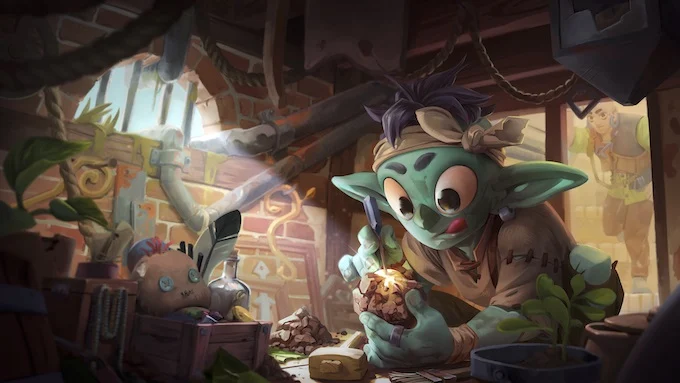
The game is described as a shopkeeping simulator set within a fantasy world. Players take on the role of a goblin who discovers discarded trinkets, which they must then clean, upcycle, and sell. The mechanics emphasize the satisfaction of restoration—a digital manifestation of the "ASMR" and "satisfying" video trends that have dominated social media platforms like TikTok and YouTube.
Key Features of Trash Goblin Include:
- Tactile Restoration: Players use various tools to scrub, polish, and repair items, turning "trash" into treasure.
- Upcycling Mechanics: A creative system that allows players to combine or modify items to increase their value and appeal to specific fantasy customers.
- Wholesome Narrative: A focus on community, sustainability, and the gentle pace of life in a fantasy ecosystem, devoid of combat-centric stressors.
The "cozy" genre has seen a meteoric rise since the success of titles like Animal Crossing: New Horizons and Stardew Valley. Market data suggests that there is a massive, underserved audience looking for "low-stakes" gaming experiences that prioritize mental well-being and creative expression over reflex-based challenges.

Crowdfunding Dynamics: The Kickstarter Launch and Immediate Momentum
To bring Trash Goblin to market, Lovell and Spilt Milk Studios turned to Kickstarter, a move that serves as both a funding mechanism and a community-building tool. The campaign launched to immediate success, surpassing the £10,000 milestone within its first 24 hours.
This rapid funding is indicative of several factors:
- The Lovell Effect: Lovell’s long-standing reputation in the industry has garnered a level of trust that few indie developers enjoy.
- Genre Appeal: The "cozy" aesthetic has a dedicated and vocal fanbase on Kickstarter, often referred to as "Wholesome Games" enthusiasts.
- Transparency: By being open about his health struggles, Lovell has fostered a human connection with his audience, transforming the campaign into a "welcome back" celebration as much as a business venture.
As of early December 2023, the campaign continues to gain traction. The funds are earmarked for expanding the game’s item library, refining the restoration mechanics, and ensuring the game reaches a level of polish necessary for a successful multi-platform release.
Supporting Data: The Economic Reality of Indie Development in 2024
The decision to use Kickstarter is a calculated one. According to recent industry reports, venture capital and traditional publishing deals for indie games have become increasingly difficult to secure due to high interest rates and a post-pandemic market correction.
Data from the crowdfunding sector shows that "Games" remains the most successful category on Kickstarter, but the bar for entry has risen. Successful campaigns now require more than just a concept; they require a "vertical slice" of gameplay and a proven track record from the development team. By reaching 100% of their initial modest goal so quickly, Trash Goblin has signaled to potential platform holders (like Nintendo or Valve) that there is a verified "proof of concept" and an existing fanbase ready to purchase the final product.
Official Responses and Industry Implications
While Lovell’s update was personal, the industry response has been one of overwhelming support. Peers from across the UK development scene have lauded his transparency regarding Long Covid, a condition that many fear remains stigmatized in high-pressure tech environments.
The implications of Lovell’s return and his new project are twofold:
1. The "Humanization" of Game Development: Lovell’s admission that he is working at 40% capacity challenges the industry’s "crunch culture." It suggests a new model where veteran talent can contribute meaningfully while prioritizing health—a "slow development" movement that mirrors the "slow food" or "slow journalism" trends.
2. The Shift from Strategy to Execution: For years, Lovell told the industry how to make games profitable. With Trash Goblin, he is putting his theories to the ultimate test. If the game succeeds, it will validate his long-held beliefs about "The Curve"—the idea that a small number of super-fans (the "whales" of the cozy world) can sustain a creative project if the relationship between developer and player is nurtured correctly.
Conclusion: A New Chapter for Gamesbrief and Beyond
As Nicholas Lovell returns to his bed for much-needed rest, the gaming world watches with interest. The success of the Trash Goblin Kickstarter is a testament to the enduring power of community and the resilience of one of the industry’s most respected thinkers.
For the readers of Gamesbrief, Lovell’s journey from the depths of chronic illness back to the forefront of game design is more than just a personal triumph; it is a case study in adaptation. Whether Trash Goblin becomes the next indie breakout hit remains to be seen, but its initial reception suggests that the industry is more than ready for the "wholesome" revolution—and for the return of Nicholas Lovell.
The Kickstarter for Trash Goblin remains live, with the team looking toward 2024 as a pivotal year for development and a hopeful continued recovery for its co-creator.
About Nicholas Lovell:
Nicholas Lovell is the founder of Gamesbrief and a world-renowned consultant on the games industry. He has authored several books, including "The Curve" (Penguin), which explores how to make money in a world where content is often free. His work focuses on the intersection of creativity, technology, and sustainable business models.