Resilience in La Rochelle: Sunny Side of the Doc 37th Edition Charts a New Course Amidst Industry Turbulence
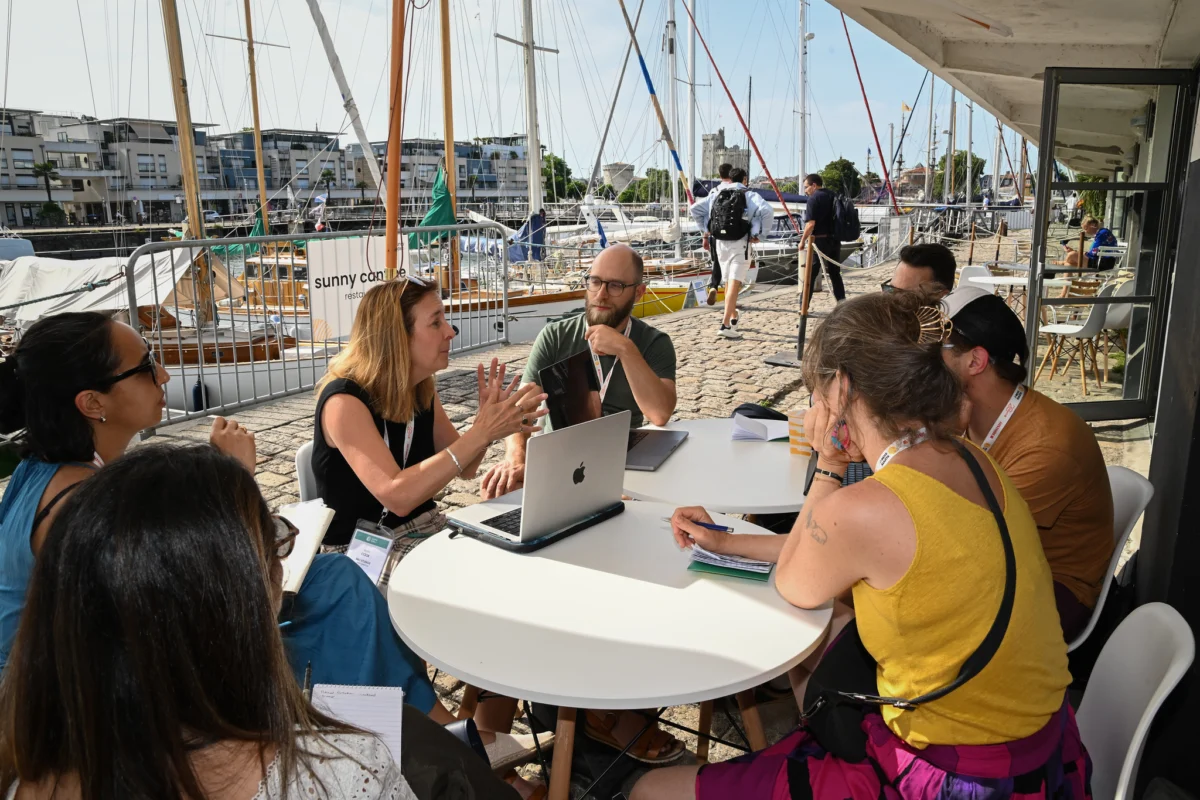
The global documentary industry is currently navigating one of its most precarious periods in decades, characterized by shifting viewer habits, the erosion of traditional funding models, and a fragmented digital landscape. Against this backdrop of uncertainty, the 37th edition of Sunny Side of the Doc (SSD)—the world’s premier documentary marketplace—is set to return to the coastal city of La Rochelle, France, from June 22 to 24.
This year’s event is more than just a trade fair; it is a testament to institutional resilience. Having narrowly avoided a potential hiatus due to severe "budgetary headwinds," the market has been revitalized through a strategic infusion of capital and a radical rethinking of its structural DNA. Under the banner of "The Right Move," the 2024 edition promises a streamlined, high-impact environment designed to help filmmakers and distributors navigate the transition from a linear-first to a digital-first global ecosystem.
Main Facts: A Miraculous Return to the Charente-Maritime
The survival of Sunny Side of the Doc 2024 was by no means guaranteed. Earlier this year, the organization faced significant financial challenges that threatened the continuity of the event. However, a critical intervention by France’s Centre National du Cinéma et de l’image animée (CNC) provided the necessary funding to secure the market’s future.
With the financial foundation stabilized, SSD entered into a groundbreaking alliance with Documentary Campus, a leading professional training initiative. This partnership has been instrumental in reshaping the event into a focused B2B milieu where the distinction between traditional linear broadcasting and emerging digital platforms is increasingly blurred.
Despite a truncated preparation window of only five months, the organizers have managed to curate a marketplace that expects to host approximately 2,000 professionals from 60 different countries. This includes a heavy-hitting delegation of over 200 decision-makers, ranging from traditional broadcasters like the BBC and TV 2 Denmark to streaming giants and major international distributors.
The core objective this year is clarity. In an era of "hyper-distribution," where content is scattered across countless platforms, SSD aims to provide a centralized hub where creators can find trustworthy partners and sustainable financing.
Chronology: From Crisis to Rebirth
The journey to the 37th edition has been a race against time, marked by several key milestones:
- The Financial Crisis (Early 2024): Facing a shortfall in traditional sponsorship and rising operational costs, the future of the La Rochelle event was called into question. The documentary industry, which relies on SSD for co-production deals, expressed significant concern over the potential loss of this vital hub.
- The CNC Rescue and Documentary Campus Alliance: In a swift move, the CNC stepped in with fresh funding, recognizing SSD as a strategic asset for the French and international film sectors. Simultaneously, the merger of interests with Documentary Campus allowed for a more "lean" operational model focused on high-level professional training and matching.
- The Five-Month Sprint: Between January and June, the management team, led by Managing Director Aurélie Reman, overhauled the program. They moved away from a "growth-at-all-costs" model to a "streamlined" approach, prioritizing quality of engagement over sheer volume.
- The Digital Pivot: The theme "The Right Move" was officially adopted, signaling a shift in focus toward digital-first strategies and the integration of non-theatrical documentary content.
- June 22–24: The market opens its doors in La Rochelle, featuring three entirely new sections designed to facilitate immediate business transactions and long-term networking.
Supporting Data: A Global Hub by the Numbers
The scale of Sunny Side of the Doc remains impressive, even in its more "streamlined" iteration. The data underscores the market’s role as a global crossroads for factual content:

- Attendance: 2,000 professionals expected from 60 countries.
- Decision-Makers: Over 200 commissioners, buyers, and co-financiers.
- Latin American Growth: A significant surge in delegates from Latin America, with Brazil leading as the largest regional group, highlighting the growing importance of South American co-productions.
- New Professional Segments: For the first time, IP professionals from the book industry have been invited to participate, exploring the bridge between literary non-fiction and documentary screen adaptations.
- Major Players in Attendance:
- Lauren Billingsley (National Geographic Channels, U.S.)
- Damian O’Hara (Paramount)
- Carolyn Payne (National Geographic Europe & U.K.)
- Simone Theilmann (RTL Television)
- Troels Branth Pedersen (TV 2 Denmark)
- Lina Matta (MBC Group)
- Manuel Villanueva (TVUNAM)
To facilitate business among these players, SSD has introduced three new pillars:
- Meet & Match: A dedicated space developed with Documentary Campus to pair producers with specific decision-makers.
- Copro Hub: A forum focused on the mechanics of international co-production, featuring daily case studies moderated by Pauline Mazenod of Windrose.
- Distributor Track: A specialized stream for buyers featuring "Speed Dating" sessions and "Meet the Buyers" panels.
Official Responses: Voices from the Frontlines
The leadership of SSD and its keynote speakers have been vocal about the necessity of this year’s structural changes.
Aurélie Reman, Managing Director of Sunny Side of the Doc, emphasized the social and industrial importance of factual content in a "post-truth" era. "It’s probably a moment in time and in history when there is a strong need and appeal for trustworthy content—truth-telling, verified, cross-checked factual content," Reman stated. She further noted that the industry must view itself as a "global ecosystem" rather than a collection of isolated territories, stressing that "we need to rethink and rebuild the funding models together."
Reman also clarified the market’s specific niche, noting that SSD is pivoting away from theatrical cinema to focus on TV, digital, and streaming. "This highlights another key aspect of Sunny Side… we are not primarily addressing theatrical or cinema audiences."
Helle Faber, the Oscar-winning producer behind Mr. Nobody Against Putin, will deliver a session focusing on the evolution of financing. Her perspective is that producers must adapt to "evolving financing structures and shifting global partnerships" if they are to survive the current market contraction.
Ben Zand, CEO of Zandland, will open the event by addressing the "fragmented media environment." His keynote is expected to challenge creators to think about "sustained audience connection" in a world where attention is the most valuable and elusive currency.
Further industry critique will come from Patricia Boutinard Rouelle (Nilaya Productions) and Emmanuelle Guilbart (SEDPA), who are slated to discuss the "erosion of rights value" and the mounting pressure of maintaining creative integrity in a market "increasingly shaped by algorithms."
Implications: The Future of the Factual Industry
The 37th edition of Sunny Side of the Doc serves as a bellwether for several broader trends that will define the documentary landscape for the next decade.

1. The Decline of the Linear Monolith
The central role of public broadcasters is evolving. While Reman acknowledges they remain "central when it comes to funding original, new, and fresh content," the reality is that their budgets are under siege. The "hyper-distribution" model means that a documentary can no longer rely on a single domestic broadcast to recoup costs. Producers must now think about international "travelability" from the development stage.
2. The Algorithmic Challenge
As streaming platforms become the primary destination for documentaries, the "algorithm" is replacing the "commissioning editor" as the gatekeeper of what gets seen. This shift has massive implications for the types of stories that get told. SSD’s focus on "The Right Move" is an attempt to give producers the tools to maintain commercial sustainability without sacrificing the "truth-telling" essence of the genre.
3. IP Cross-Pollination
The inclusion of the book industry marks a significant strategic shift. As original development becomes more expensive and risky, "proven" IP from the literary world offers a safer bet for broadcasters and streamers. This trend suggests a future where documentary producers act more like IP managers, navigating multiple formats and platforms.
4. A More Equitable Global Ecosystem
The strong presence of Brazil and Latin America at this year’s SSD suggests a decentralization of the documentary market. As traditional Western markets tighten their belts, the "Global South" is emerging as both a source of compelling narratives and a partner in co-production, provided the industry can build the necessary B2B infrastructure to support these alliances.
5. Sustainability through Streamlining
The fact that SSD was able to mount a world-class event in just five months with a reduced budget offers a lesson to the filmmakers it serves. The era of bloated budgets and inefficient production cycles is ending. The "new" Sunny Side of the Doc is leaner, more digital-savvy, and intensely focused on the bottom line—qualities that the documentary filmmakers of tomorrow will need to survive.
In conclusion, the 37th Sunny Side of the Doc is not merely a return to form; it is a necessary evolution. By embracing the digital shift, fostering international co-productions, and integrating new forms of IP, the market in La Rochelle is positioning itself to remain the vital heart of the global documentary industry for years to come.