Blender’s Video Editing Renaissance: From Painful Past to Promising Future in Version 5.2
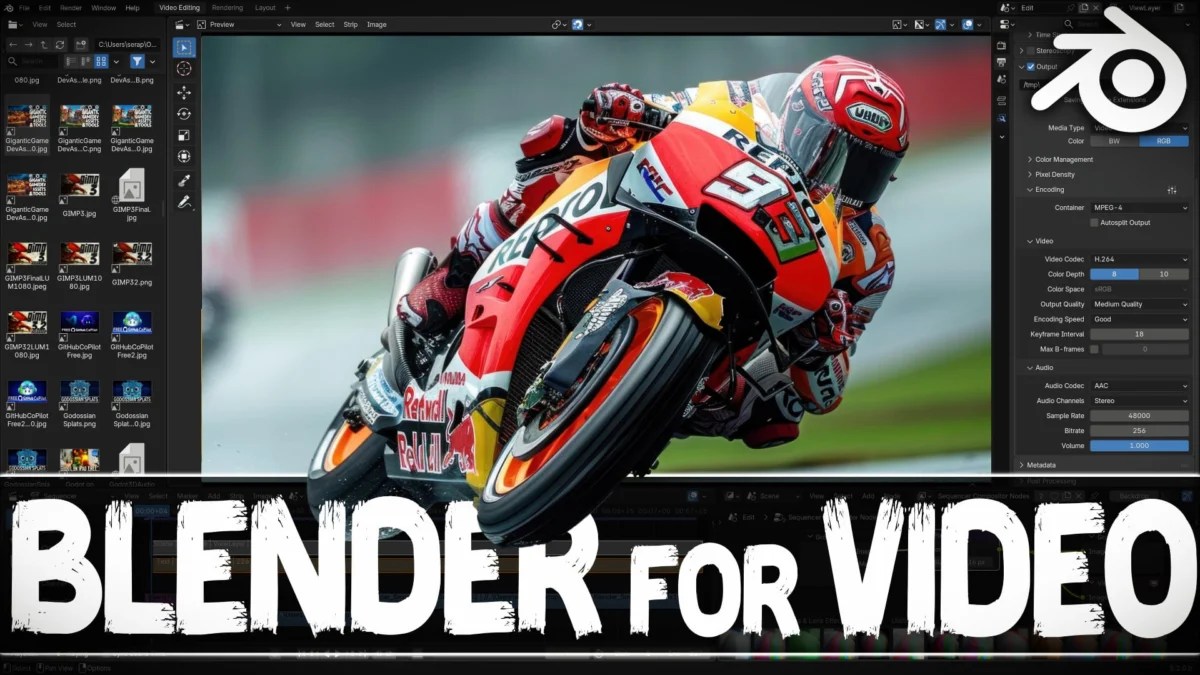
For nearly a decade and a half, Blender’s video editing capabilities have languished in the shadow of its renowned 3D modeling and animation prowess. While the open-source powerhouse has consistently evolved, its Non-Linear Editor (NLE) has historically been a less-than-ideal tool for serious video editing, often described as "painful" compared to dedicated professional software. However, with the anticipated release of Blender 5.2, this narrative is poised for a dramatic reversal. A significant overhaul, packed with new features and substantial improvements, is set to redefine Blender’s role in the video production workflow, transforming it from a niche tool into a more robust and user-friendly NLE.
This article delves into the evolution of Blender’s video editor, charting its journey from its rudimentary beginnings to the promising advancements showcased in the upcoming 5.2 release. We will explore the key features that are set to revolutionize the editing experience, examine the historical context of these changes, and consider the broader implications for both Blender users and the wider video editing landscape.
H2: A Troubled History: The Evolution of Blender’s Video Editor
Blender’s foray into video editing began with its integration as a functional, albeit basic, NLE. As early as Blender 2.6, users could experiment with cutting, splicing, and assembling video clips. However, the experience was often characterized by a steep learning curve, a less-than-intuitive user interface for editing tasks, and a lack of advanced features found in industry-standard software like Adobe Premiere Pro, Final Cut Pro, or DaVinci Resolve.
The core issue was that video editing was not Blender’s primary focus. Its development was heavily geared towards its powerful 3D creation suite, leaving the VSE (Video Sequence Editor) as a secondary component. This meant that while it offered a free and accessible alternative, it often fell short in terms of workflow efficiency, real-time playback performance, and the depth of editing tools available. For many, the prospect of using Blender for anything beyond simple cuts or basic assembly was met with apprehension.
Over the years, incremental updates brought minor enhancements, but a fundamental reimagining of the VSE remained elusive. Users continued to express a desire for a more streamlined and powerful editing experience, a sentiment echoed in numerous online forums and community discussions. The perception of Blender as a "jack of all trades, master of none" in the video editing domain persisted.
H2: The Dawn of a New Era: Blender 5.2 and the VSE Renaissance
The upcoming Blender 5.2 release marks a significant turning point, signaling a dedicated effort to elevate the Video Sequence Editor to a new level of functionality and usability. This isn’t merely a cosmetic update; it represents a fundamental reimagining of the editing workflow, incorporating features that address long-standing user requests and introduce capabilities that bring Blender closer to parity with dedicated NLEs.
The core philosophy behind these changes appears to be a focus on improving both the technical performance and the user experience of the VSE. Developers have been actively working on optimizing playback, enhancing the responsiveness of the interface, and introducing tools that streamline common editing tasks. This commitment to the VSE’s development is a welcome development for a user base that has long advocated for its improvement.
H3: Key Features Revolutionizing the Editing Experience
Blender 5.2 is poised to introduce a suite of new features and enhancements that promise to transform the video editing experience. While a comprehensive list will be available upon the official release, early insights and beta testing reveal several standout improvements:
- Enhanced Playback Performance and Stability: One of the most persistent criticisms of the VSE has been its often-laggy playback, especially with complex timelines or high-resolution footage. Blender 5.2 aims to address this with significant optimizations to the playback engine. This includes improved caching mechanisms, more efficient decoding of video codecs, and better utilization of system resources. The goal is to provide a smoother, more responsive scrubbing and playback experience, crucial for efficient editing.
- Streamlined Workflow and User Interface Improvements: The user interface of the VSE has historically been a point of contention. Blender 5.2 is expected to bring a more intuitive layout, clearer iconography, and improved navigation. This could involve a more organized arrangement of panels, better integration with other Blender workspaces, and more context-sensitive menus. The aim is to reduce the learning curve and make common editing operations more accessible.
- Advanced Editing Tools: Beyond basic cuts and transitions, Blender 5.2 is rumored to include more sophisticated editing tools. This might encompass enhanced audio editing capabilities, improved color grading integration (building upon Blender’s already powerful color management system), more robust support for multiple video and audio tracks, and potentially new ways to manage and organize assets within the editor. The addition of features like more intuitive keyframing for effects and transitions could also be on the cards.
- Improved Compositing and Effects Integration: Blender’s strength lies in its integrated nature. Blender 5.2 is expected to further leverage this by offering tighter integration between the VSE and the powerful compositing nodes. This could allow for more seamless application of complex visual effects, motion graphics, and post-production adjustments directly within the editing timeline, without the need for constant switching between workspaces.
- Enhanced Proxy Workflow: For users working with high-resolution footage or on less powerful hardware, a robust proxy workflow is essential. Blender 5.2 is likely to introduce improvements in how proxies are generated, managed, and utilized, ensuring that editing remains fluid even when working with demanding source material.
- Expanded Codec and Format Support: As video formats and codecs continue to evolve, it’s crucial for NLEs to keep pace. Blender 5.2 is expected to broaden its support for a wider range of video and audio codecs, ensuring compatibility with more source materials and export options.
H2: Chronology of Change: A Long Road to Improvement
The journey to Blender 5.2’s improved video editor is a testament to the persistent efforts of the Blender community and developers. Tracing this evolution reveals a gradual but determined path towards a more capable NLE:
- Early Days (Pre-2.6): Blender’s initial forays into video editing were rudimentary, primarily focused on basic sequencing and simple cuts. The VSE was largely an afterthought, with development efforts concentrated on its 3D capabilities.
- Blender 2.6 Era: As highlighted in the initial article, Blender 2.6 marked a period where the VSE was more formally recognized and documented as a video editor. While it offered basic functionality, the user experience and feature set were still significantly behind dedicated NLEs. The sentiment of it being "painful" to edit in was prevalent.
- Iterative Improvements (2.7x – 3.x): Following 2.6, subsequent releases saw incremental improvements. These often focused on bug fixes, minor UI tweaks, and the addition of a few new features. However, these updates were not enough to fundamentally shift the perception of the VSE as a professional-grade editing tool.
- Growing Community Demand: Throughout these years, the Blender community consistently voiced its desire for a more robust VSE. Feature requests, forum discussions, and community-driven patches indicated a strong underlying demand for improved video editing capabilities within the Blender ecosystem.
- Increased Focus and Development (4.x onwards): In more recent years, there has been a discernible increase in the focus on the VSE within Blender’s development roadmap. This has led to more dedicated development cycles and a more strategic approach to enhancing its functionality.
- The Leap to Blender 5.2: The upcoming 5.2 release represents a culmination of these ongoing efforts and a significant leap forward. It is not just another incremental update but a comprehensive overhaul designed to address core limitations and introduce capabilities that bring the VSE into more direct competition with established NLEs.
H2: Supporting Data and Community Feedback
While specific performance benchmarks and detailed technical specifications for Blender 5.2’s VSE will be fully revealed upon its release, the anecdotal evidence and community sentiment leading up to it are overwhelmingly positive. Developers have been actively engaging with the community, sharing progress updates, and soliciting feedback on proposed features.
The beta testing phase has been crucial in gathering real-world usage data. Early testers have consistently reported significant improvements in playback smoothness, interface responsiveness, and the usability of new tools. This feedback loop between developers and users is a cornerstone of Blender’s open-source development model and has been instrumental in shaping the direction of the VSE’s enhancements.
The widespread anticipation for Blender 5.2, particularly among creators who have historically used Blender for 3D but relied on other software for editing, is a strong indicator of its potential impact. Social media channels, forums, and dedicated Blender communities are abuzz with discussions about the VSE’s upcoming capabilities, signaling a renewed interest and excitement for its video editing potential.
H2: Official Statements and Developer Intent
The commitment to improving Blender’s video editing capabilities has been evident in official statements from the Blender Foundation and key development team members. While direct quotes are often part of release announcements, the underlying intent is clear: to make the VSE a more viable and attractive option for a wider range of video production workflows.
Developers have emphasized their goal of creating an NLE that is not only feature-rich but also deeply integrated with Blender’s other powerful tools. This means that users can seamlessly transition between 3D modeling, animation, rendering, compositing, and now, a significantly enhanced video editing experience, all within a single, unified software package.
The focus on user experience and workflow efficiency suggests a deliberate effort to address the historical pain points of the VSE. This indicates a strategic decision to invest resources into making Blender a more comprehensive creative suite, acknowledging that video editing is an integral part of many modern content creation pipelines.
H2: Implications for the Creative Landscape
The transformation of Blender’s video editor has far-reaching implications for creators, educators, and the broader software industry:
- Democratization of Professional Editing: Blender has always been a champion of accessibility, offering a powerful suite of tools for free. The enhancement of its video editor further democratizes professional-level video editing, making it accessible to students, independent filmmakers, hobbyists, and small studios who may not have the budget for expensive commercial NLEs.
- Streamlined All-in-One Workflows: For users already invested in Blender for 3D work, the improved VSE means they can now potentially complete their entire production pipeline within a single application. This eliminates the need for costly software licenses, reduces file transfer overhead, and fosters a more cohesive and efficient workflow. Imagine creating 3D assets, animating them, rendering them, and then editing them into a final video, all without leaving Blender.
- Increased Competition and Innovation: The emergence of a more capable Blender VSE will inevitably put pressure on commercial NLE developers to innovate and potentially reconsider their pricing models. This heightened competition can lead to better features, improved performance, and more competitive pricing across the board, benefiting all users.
- Educational Opportunities: With a more user-friendly and powerful video editor, Blender becomes an even more attractive tool for educational institutions. Students can learn the fundamentals of video editing alongside 3D animation and other creative disciplines, gaining a comprehensive skillset that is highly valuable in today’s media-driven world.
- A More Integrated Creative Ecosystem: The continued development of the VSE reinforces Blender’s position as a truly integrated creative ecosystem. It signals a commitment to supporting the entire content creation process, from initial concept to final delivery, within one robust and versatile platform.
In conclusion, the advancements in Blender 5.2’s video editing capabilities represent a significant milestone. After years of being a secondary, albeit functional, component, the VSE is poised for a renaissance. With a focus on performance, usability, and a robust feature set, Blender is not just offering another video editor; it’s offering a compelling, integrated solution that could redefine how many creators approach their video production workflows. The journey from "painful" to promising has been long, but with Blender 5.2, the future of video editing within this open-source powerhouse looks brighter than ever.