Star Trek: Strange New Worlds Mends a Divisive Canon Rift, Elevating Spock and Kirk’s Bond
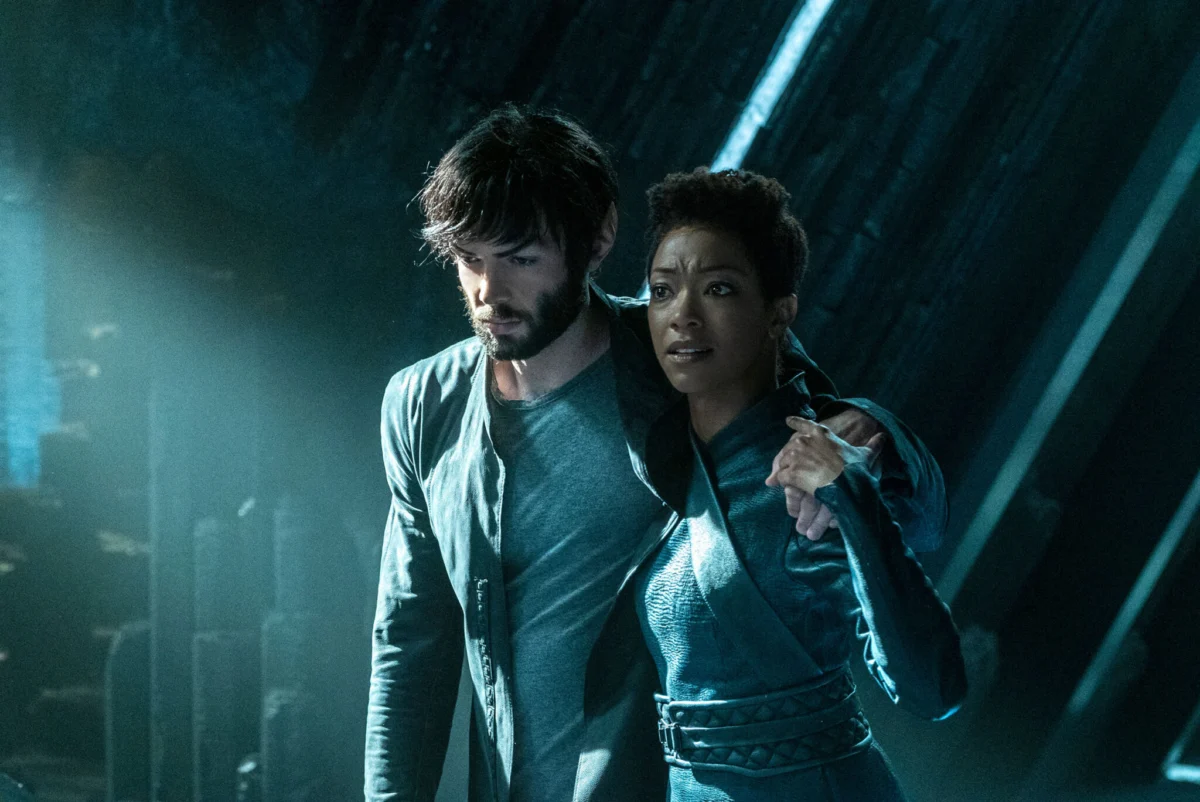
The intricate tapestry of the Star Trek universe is constantly expanding, a testament to its enduring legacy. However, with each new thread woven into its rich history, creators inevitably face the perilous task of reconciling fresh narratives with established canon. This delicate balance often sparks fervent debate among dedicated fans, particularly when foundational elements of beloved characters are recontextualized. Few instances have generated as much discussion and, frankly, "flak" as the introduction of Michael Burnham in Star Trek: Discovery and her profound connection to the iconic Vulcan, Spock.
The Canon Conundrum: Michael Burnham and the Redacted Past
The revelation that Spock, the epitome of logic and restraint, had a secret adopted human sister, Michael Burnham, sent ripples throughout the Star Trek fandom. Debuting in Star Trek: Discovery, Michael’s existence immediately posed a significant challenge to established lore. For decades, Spock’s familial history had been meticulously charted: his Vulcan father Sarek, his human mother Amanda Grayson, and later, the controversial addition of his half-brother Sybok in Star Trek V: The Final Frontier. There was, ostensibly, no room for another sibling, let alone one as central to his emotional development as Michael was portrayed to be.
Fans grappled with the apparent inconsistency. How could a figure so instrumental in Spock’s formative years—a person he clearly adored and who profoundly influenced his understanding of both his Vulcan and human halves—have remained entirely unmentioned across multiple series, films, and countless supplemental materials? The silence was deafening, leading to widespread accusations of canon disregard and a perceived fracturing of the carefully constructed narrative timeline.
The In-Universe Explanation: A Classified History
To address this glaring omission, Star Trek: Discovery crafted an ingenious, albeit bittersweet, in-universe explanation. The crew of the USS Discovery, including Michael Burnham, embarked on a critical mission to save the galaxy from a rogue artificial intelligence known as Control. The only viable solution involved a "Hail Mary" maneuver: traveling 930 years into the far future, thereby removing the Sphere data that Control sought and preventing its resurgence.

To ensure the success of this mission and prevent the timeline from being further contaminated or exploited, Starfleet enacted a "Red Directive." All records of the USS Discovery, its crew, and their pivotal mission were officially scrubbed from galactic archives. The remaining Starfleet officers who knew the truth, including Spock, were sworn to absolute secrecy. This mandate explained why Michael Burnham could never be spoken of again in the pre-Burnham era of Star Trek. It was a narrative necessity, a high-stakes sacrifice made for the greater good of the galaxy and the integrity of the future.
While logically sound within the narrative, this explanation carried a heavy emotional weight, particularly for Spock. He had found solace and understanding in Michael, a person who saw him beyond his Vulcan-human duality and helped him embrace his unique identity. Their relationship, though fraught with challenges and periods of estrangement, was one of profound love and mutual respect. To lose her to the future and then be forbidden from ever mentioning her name, erasing her from his personal history, was a cosmic injustice. This emotional cost was precisely what many fans found difficult to reconcile, especially concerning Spock’s closest relationships.
Spock’s Pattern of Secrecy: Kirk’s Perennial Surprise
The most vocal criticism centered on James T. Kirk, Spock’s closest friend and platonic "soulmate." The idea that Kirk would never learn about Michael Burnham, arguably the most influential person in Spock’s early life, struck many as fundamentally unfair to their deep bond. It contradicted the very essence of their relationship, built on trust, mutual respect, and an unspoken understanding that transcended their differing natures.
However, the existing canon, even before Michael Burnham, presented a rather humorous pattern of Spock’s reticence when it came to his personal life. Indeed, Spock had a documented history of omitting vital biographical information from his captain, often leading to Kirk’s bewildered and sometimes hurt reactions.

Kirk’s Unending Revelations:
- Sybok and the "No Brother" Fallacy: In Star Trek V: The Final Frontier, Kirk is visibly distraught when confronted with Sybok, Spock’s half-brother. "Sybok couldn’t possibly be your brother because, I happen to know for a fact, you don’t have a brother!" Kirk rants, highlighting Spock’s lifelong silence on the matter. This was not a minor oversight; it was a fundamental misrepresentation of his family structure.
- The Sarek and Amanda Surprise: In "Journey to Babel," Kirk is arranging transport for various dignitaries, including Ambassador Sarek and his wife. He casually suggests Spock might want to visit his parents before they depart Vulcan orbit. Spock’s awkward admission – "Ambassador Sarek and his wife are my parents" – underscores his tendency to keep even his most immediate family connections under wraps. Amanda Grayson, ever the insightful human, finds the whole exchange rather amusing.
- T’Pring and the Pon Farr Predicament: Perhaps the most dramatic instance of Spock’s personal reticence comes in "Amok Time." Without a word of warning, Spock is overcome by pon farr, the Vulcan mating cycle, necessitating an immediate return to Vulcan for his arranged marriage. Kirk, completely unaware of this deeply personal and culturally significant tradition, is dragged into a life-or-death ritual. Spock’s casual declaration to Uhura—"She is T’Pring, my wife"—as he points to his betrothed on the viewscreen, elicits a truly iconic sideways glance from Kirk, a masterclass in non-verbal communication.
These instances, while comedic in retrospect, illustrate Spock’s consistent inclination towards personal privacy and, perhaps, a Vulcan interpretation of "need to know" basis. Yet, the Michael Burnham situation felt different. Her influence on Spock was not a fleeting encounter or a distant relative, but a foundational relationship. Michael was the person who truly saw Spock for who he was, bridging the chasm between his Vulcan logic and human emotion. Her final words to him—"Listen to me, little brother: This is the last advice I’ll ever be able to give you. There is a whole galaxy out there full of people who will reach for you. You have to let them. Find that person who seems farthest from you, and reach for them. Reach for them. Let them guide you"—are widely interpreted as the very catalyst that propelled Spock into the orbit of James T. Kirk and Leonard "Bones" McCoy. It was a profound, life-altering piece of advice from the person he loved most. The thought that Kirk, his closest confidant, would never know the source of such wisdom, or the existence of this pivotal sister, felt like a narrative oversight too large to ignore.
A New World of Understanding: Strange New Worlds Provides a Fix
For years, fans accepted this narrative sacrifice as an unfortunate necessity. The story of Michael Burnham, and Spock’s silence, remained a poignant, unspoken truth. That is, until the recent Star Trek: Strange New Worlds episode, "Human Best Friend." This particular installment, ostensibly a vehicle for character development for Ortegas and Scotty, unexpectedly offered a brilliant, subtle, and profoundly satisfying resolution to the Michael Burnham canon conundrum.
The episode finds Spock on shore leave on a planet with a peculiar atmosphere that induces vivid hallucinations. He seeks a quiet retreat with La’an, but the atmosphere makes her unexpectedly aggressive, prompting her to leave him to his own devices. Spock later recounts, with palpable alarm, that he has been hallucinating Jim Kirk, engaging in games of chess and deep conversation. He dismisses it as a side effect of the alien atmosphere and a possible consequence of a mind-meld he shared with Kirk in a previous season.
As the plot unfolds, Spock’s "hallucination Jim" becomes a recurring presence. Spock eventually confides in this figment of his imagination, explaining that he believes his subconscious is manifesting Kirk because he has "never had a human best friend" and needs someone with whom he can share his "fears, hopes, dreams." The hallucinatory Kirk, ever the empathetic listener, responds with characteristic warmth: "Okay, buddy: Let’s talk."

The true genius of the episode arrives later. During a frantic rescue mission, as Spock grapples with a complex transporter maneuver, his "hallucination Jim" reappears. Spock, still convinced he’s under the influence of the planet’s atmosphere, expresses his concern about his mental state. This time, however, Kirk is more forceful. He slaps Spock across the face, a direct, physical act that shatters Spock’s illusion. "Was that imaginary? No, because it hurt." This moment, a delightful homage to the numerous times Kirk would later physically provoke Spock in The Original Series to elicit a needed response, serves as the definitive proof: Kirk was not a hallucination. He was actually there, on the planet, on leave, and had been listening to Spock’s deepest confessions the entire time.
Spock is understandably mortified. He has, unwittingly, poured out his soul, sharing every single one of his "secrets" with Kirk. But Kirk, with his unwavering loyalty and profound sincerity, reassures him: "It’s okay, because Jim promises that every single one of those secrets is safe and tucked away. They’re closer than ever now, and that’s a good thing. Spock has found his human best friend."
Implications and Legacy: A Canon Reconciled
This seemingly innocuous plot device in Strange New Worlds has monumental implications for Star Trek canon and, more importantly, for the enduring relationship between Spock and Kirk.
1. Kirk Now Knows About Michael Burnham: This is the most significant revelation. Through Spock’s drug-induced, yet sincere, confession, James T. Kirk now knows about Michael Burnham. He knows of her profound importance in Spock’s life, the pain of their separation, and the impact her final words had on Spock’s development. This is not a casual acquaintance; this is a deeply personal and emotional history.

2. Explaining Kirk’s Future Reactions: This knowledge retroactively provides a layer of credibility to Kirk’s later surprised reactions to Spock’s other familial revelations. When Kirk expresses disbelief about Sybok or his parents, it’s not because Spock has a track record of keeping secrets, but because Kirk already knows the biggest, most emotionally resonant secret of all: Michael Burnham. He’s already privy to Spock’s most guarded vulnerability. The other secrets, by comparison, are less significant. It’s as if Kirk received a classified report with the most crucial information clearly laid out, while the public-facing details remained redacted. His subsequent "surprises" become less about ignorance and more about an affectionate exasperation with his friend’s continued, albeit lesser, opaqueness.
3. Cementing the Spock-Kirk Bond: The episode deepens the foundation of the Spock-Kirk friendship long before it fully blossoms on the USS Enterprise. Spock, who struggles with emotional expression and human connection, unknowingly reveals his truest self to Kirk. Kirk, in turn, demonstrates his unwavering trustworthiness and empathy by accepting these secrets without judgment and promising to safeguard them. This shared, unspoken knowledge creates an even stronger, more intimate bond between them, explaining the unparalleled depth of their relationship throughout The Original Series and subsequent films. Kirk’s promise to keep Spock’s secrets reinforces his character as an "absurdly sincere person," someone who honors trust above all else, even when it means remaining silent about profoundly personal matters.
4. A Masterclass in Canon Integration: Strange New Worlds has once again proven its prowess in navigating and enriching established Star Trek lore. What was once a divisive plot point, a necessary evil for Discovery‘s narrative, has been transformed into a powerful character moment that strengthens the core relationships of the franchise. It’s a testament to thoughtful storytelling that can take perceived weaknesses in canon and convert them into profound strengths, adding new dimensions to characters we thought we knew intimately.
In "Human Best Friend," Strange New Worlds didn’t just tell a story; it performed a delicate act of narrative surgery, healing a long-standing wound in the Star Trek timeline. By providing a plausible, emotionally resonant reason for Kirk to know, yet remain silent about, Michael Burnham, the series has not only reconciled a thorny canon issue but has also deepened the already legendary bond between Spock and James T. Kirk, ensuring their friendship resonates with even greater authenticity and emotional depth. Spock truly found his human best friend, and with that, a piece of Star Trek history was beautifully, logically, and emotionally restored.