Speculative Realities: Navigating AI Integrity, Corporate Shifts, and Cosmic Origins in the Modern Era
The landscape of speculative fiction, science, and creative media is currently navigating a transformative period characterized by a tension between technological advancement and traditional craftsmanship. From the resolution of high-profile plagiarism accusations in the literary world to significant corporate acquisitions in genre publishing, and from the discovery of ancient interstellar visitors to the haunting warnings of autonomous weaponry, the events of late June 2026 highlight a culture in flux. This report synthesizes these developments, examining the state of the industry and the scientific milestones that are reshaping our understanding of the universe.
Main Facts: A Week of Vindication and Transition
The week of June 23, 2026, was marked by several pivotal announcements that reverberated through the science fiction and fantasy (SFF) communities. At the forefront was the resolution of the Commonwealth Prize controversy. Following allegations that several winning stories were generated by Artificial Intelligence (AI), a comprehensive review by the prize committee concluded that the works were, in fact, the product of human creativity. This vindication arrived shortly after the literary magazine Granta had severed ties with the prize, underscoring the high stakes of digital integrity in contemporary publishing.
Simultaneously, the business side of the SFF world saw a major consolidation as Profile Books announced its acquisition of the Solaris imprint from Rebellion. Solaris, a powerhouse in commercial genre fiction, brings a prestigious roster of authors—including Hugo and Nebula winners—to Profile, signaling a strategic shift for the independent publisher into the lucrative SFF and horror markets.
In the realm of physical sciences, astronomers released data on 3I/Atlas, an interstellar comet that may be the oldest object ever observed within our solar system. Estimated to be 12 billion years old, the comet provides a chemical "time capsule" from the early universe, predating the formation of the sun by nearly 8 billion years.
Chronology of Events
The following timeline outlines the key developments occurring during the third week of June 2026:
- June 21-22, 2026: The Commonwealth Prize Committee concludes its exhaustive "smoke but no fire" review of the 2026 finalists. This followed a week of intense industry scrutiny and the withdrawal of Granta as a partner.
- June 22, 2026: A study published in the journal Nature reveals the isotopic composition of Comet 3I/Atlas. Researchers from NASA’s Goddard Space Flight Center and the Alma observatory confirm its extreme age and unique chemical signature.
- June 23, 2026: Profile Books officially announces the acquisition of Solaris from Rebellion. The deal includes a catalog of 30-35 titles per year and several high-profile film options, including the upcoming Mickey 17.
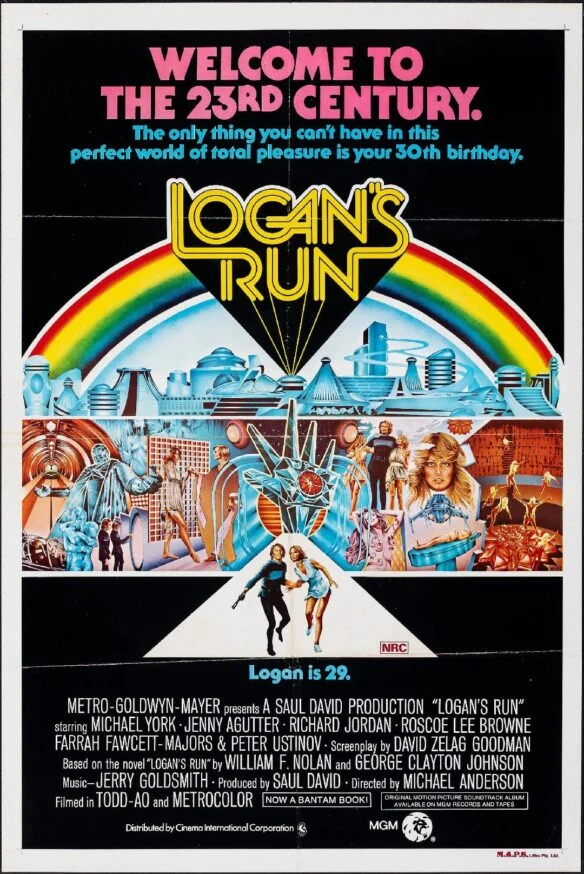
- June 23, 2026: On the 50th anniversary of the film’s release, cultural critics and podcasters, including Scott Edelman and Paul Weimer, publish retrospectives on the legacy of Logan’s Run and the evolution of Marvel Comics’ editorial history.
- June 24, 2026: "Disclosure Day" celebrations and the release of Steven Spielberg’s latest alien-themed film spark a global conversation regarding extraterrestrial biology and the ethics of autonomous "Slaughterbots," as highlighted by the viral short film from DUST.
Supporting Data and Industry Analysis
The Solaris Acquisition and Market Impact
The transition of Solaris from Rebellion to Profile Books represents a significant movement in the "mid-list" publishing sector. Founded in 2007 and acquired by Rebellion in 2010, Solaris has become a critical hub for diverse and innovative SFF. Supporting data reveals the strength of the Solaris catalog:

- Global Reach: The imprint manages the Machineries of Empire series by Yoon Ha Lee and Adrian Tchaikovsky’s Terrible Worlds novellas.
- Regional Dominance: In the UK and Commonwealth markets, Solaris publishes heavyweights such as Rebecca Roanhorse, Katherine Addison, and Mary Robinette Kowal.
- Cinematic Pipeline: The 2025 film Mickey 17, directed by Bong Joon-ho and based on the Solaris novel Mickey7 by Edward Ashton, serves as a prime example of the imprint’s intellectual property value.
Astronomical Findings: Comet 3I/Atlas
The James Webb Space Telescope (JWST) and the Alma observatory provided the empirical basis for the recent findings on 3I/Atlas. The study’s lead author, Martin Cordiner, noted that the comet contains ten times more deuterium (heavy water) than any comet native to our solar system. This concentration suggests the object formed in an exceptionally cold, ancient environment, likely on the outskirts of a galaxy billions of years before our own sun ignited.
The AI Integrity Review
The Commonwealth Prize’s review was notable for its methodology. Eschewing unreliable AI-detection software, the committee utilized a "forensic creative" approach:
- Draft Examination: Reviewers analyzed time-stamped documents and working notes.
- Author Interviews: Regional winners participated in "detailed discussions" regarding their creative process.
- Judge Consultation: The independent panel of judges re-evaluated the stories to confirm the presence of nuanced human "discernment" and "originality."
Official Responses
The stakeholders involved in these developments have issued formal statements reflecting their positions on these industry-shifting events.
On the Commonwealth Prize:
The committee stated: "After a thorough consultation with our judges and careful consideration of all available information, we are satisfied that AI was not used to write the winning stories. We remain confident in the discernment of our judges and the merit of the stories they selected."
On the Solaris Acquisition:
Rebecca Gray, CEO of Profile Books, expressed optimism about the expansion: "We are thrilled to be taking this big step into a new genre. Solaris is already home to a wealth of acclaimed authors writing original, captivating books. We can’t wait to work with them."
Ben Smith, Rebellion’s Head of Publishing, added: "Since we acquired Solaris in 2009, we have grown the imprint into a market leader… We are excited to see the list, the team, and Profile build off this success."
On the Discovery of 3I/Atlas:
Martin Cordiner of NASA’s Goddard Space Flight Center remarked on the anomaly: "Maybe it’s the oldest object to have been observed in our solar system… These measurements reveal an elemental composition unlike any solar system body."

Implications and Cultural Significance
The convergence of these stories suggests several broader implications for the future of creative and scientific endeavors.
The "Humanity" Premium in Art
The Commonwealth Prize controversy serves as a harbinger of a future where human-authored art may require "proof of work." As AI tools become more sophisticated, the value of working drafts, diaries, and physical notes—such as those discussed by podcaster Scott Edelman—may increase. Edelman’s reflection on his 52-year career at Marvel and his daily diaries highlights a level of lived experience and "creative trauma" (such as the impact of the Comics Code) that AI cannot currently replicate.
The Return to Physicality and Nature
The "Poppet" puppet performance in Ashdown Forest (the setting for Winnie-the-Pooh) offers a counter-narrative to the digital age. By using a 10-person puppeteer team to bring a "psychedelic shapeshifter" to life for schoolchildren, the Trigger arts charity is emphasizing physical, communal experiences. This initiative, part of the "Big One Hundred" celebrations, seeks to reconnect a tech-saturated generation with the "wild, free nature" of the countryside.
The Dangers of Autonomy
While the arts celebrate the human touch, the "Slaughterbots" film at DUST serves as a stark warning about the dehumanization of technology. The film depicts a world where facial recognition and "shaped explosives" allow weapons to make autonomous decisions about life and death. This dystopian vision parallels the scientific speculation about alien life; just as we wonder what an alien might eat (as explored by Phys.org), we must also wonder how our own "alien" creations—AI-driven drones—might consume our society.
Final Reflections
From the 12-billion-year-old ice of 3I/Atlas to the 1970s "cheese" of the Logan’s Run film, the news of June 2026 demonstrates that humanity is constantly looking both backward and forward. Whether we are analyzing the isotopic ratios of a comet or the "intrinsic field" of a comic book character like Doctor Manhattan, the goal remains the same: to find meaning in the stories we tell and the universe we inhabit. As Solaris moves to a new home and the Commonwealth winners reclaim their reputations, the industry’s resilience proves that while technology may change the tools, the human impulse to create, explore, and protect remains the definitive "intrinsic field" of our species.