Unearthing Ancient India’s Radical Materialism: The Enigma of Charvaka

NEW DELHI, India – In the intellectual ferment of ancient India, a philosophical school emerged around 600 BCE that dared to defy the prevailing spiritual currents, championing a radical form of materialism, empiricism, and hedonism. Known as Charvaka, and sometimes Lokayata or Brhaspatya, this audacious system rejected the supernatural, divine authority, and the promise of an afterlife, instead advocating for a life lived fully in the present, grounded in sensory experience and the pursuit of pleasure. While its original texts are lost to history, its provocative ideas, primarily known through the refutations of its adversaries, reveal a surprisingly modern philosophical outlook that challenged the very foundations of ancient Indian society and, in doing so, laid groundwork for later scientific inquiry.
A Philosophy Ahead of Its Time
Charvaka represents a profound departure from the dominant spiritual and ascetic traditions that characterized ancient India. At its core, Charvaka posited that perceivable matter is the only reality. Concepts such as the soul, gods, supernatural entities, and other planes of existence were dismissed as mere fictions, imaginative constructs lacking any empirical basis. This uncompromising materialism led Charvaka to a radical rejection of all religious authority, sacred scriptures, and established rituals. For Charvaka, truth could only be established through direct sensory perception, rendering inference and testimony – common sources of knowledge in other schools – inherently unreliable. The essential tenets of this philosophy, as reconstructed from hostile sources, included:
- Empiricism as the Sole Epistemology: Knowledge is derived exclusively from direct perception by the senses.
- Rejection of Supernaturalism: No gods, no soul, no afterlife, no cosmic order beyond the observable.
- Materialism as Ontology: The universe and consciousness arise from the combination of basic material elements (earth, water, fire, air).
- Hedonism as Ethics: The ultimate goal of life is to maximize pleasure and minimize pain in this world, as there is no other.
- Critique of Religious Authority: Priests and scriptures are seen as instruments of control, perpetuating superstitions for personal gain.
This bold vision, though never achieving widespread dominance, exerted a significant, albeit often uncredited, influence on the intellectual landscape of its era, even contributing to the nascent development of what would later be recognized as the scientific method.
The Elusive Origins and Nomenclature
The very name "Charvaka" is steeped in scholarly debate. Some interpretations suggest it refers to the act of "chewing," symbolizing the philosophy’s emphasis on enjoying life through eating and drinking. Others contend it was the name of the founder, or perhaps a prominent disciple of an earlier reformer named Brhaspati. The system is also widely known as Lokayata, meaning "philosophy of the people" or "that which is common in the world," a term that some scholars interpret as a derogatory label implying a lack of intellectual sophistication, akin to "popular opinion." Another appellation, Brhaspatya, directly links it to Brhaspati, who is widely considered its intellectual progenitor.
The precise authorship and evolution of Charvaka thought remain clouded by history. Brhaspati, not to be confused with the revered Vedic sage of the Dharma Shastra, is often credited with its initial formulation. However, the foundational text, the Brhaspati Sutra, is regrettably lost or destroyed. Consequently, all extant knowledge of Charvaka comes from secondary sources – predominantly Hindu, Jain, and Buddhist texts – written by philosophical opponents. These works invariably present Charvaka’s beliefs through the lens of refutation, often caricaturing or simplifying its arguments to facilitate their dismantling. This critical absence of original Charvakan writings necessitates a cautious and discerning approach to understanding its true scope and nuances, as any claims, even those presented in contemporary analyses, must be viewed with a degree of critical skepticism.
Challenging the Sacred: Charvaka’s Confrontation with Vedic Orthodoxy
Charvaka did not emerge in an intellectual vacuum; it was a direct, polemical response to the dominant religious and philosophical framework of ancient India, particularly the Vedic tradition. To fully grasp Charvaka’s radicalism, one must understand the spiritual landscape it sought to dismantle.
The Prevailing Vedic Landscape
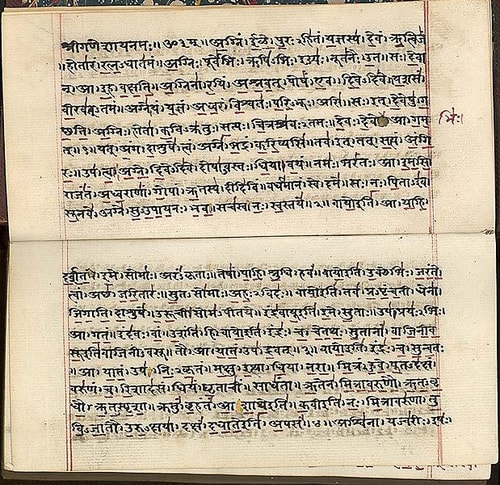
During the Vedic Period (circa 1500 to 500 BCE), India’s spiritual life was governed by the Vedas – the Rig Veda, Sama Veda, Yajur Veda, and Atharva Veda. These texts, whose name veda means "knowledge," were considered Shruti ("what is heard") by orthodox Hindus. They were believed to be eternal truths, cosmic vibrations "heard" by ancient sages in deep meditative states and passed down orally before being committed to writing. The Vedas formed the bedrock of Brahmanism, a sophisticated religious and philosophical movement that posited a universe operating according to rita, an inherent cosmic order. This order, it was argued, necessitated an incomprehensibly vast "rule-maker" – Brahman, the ultimate reality, the creator and essence of the universe.
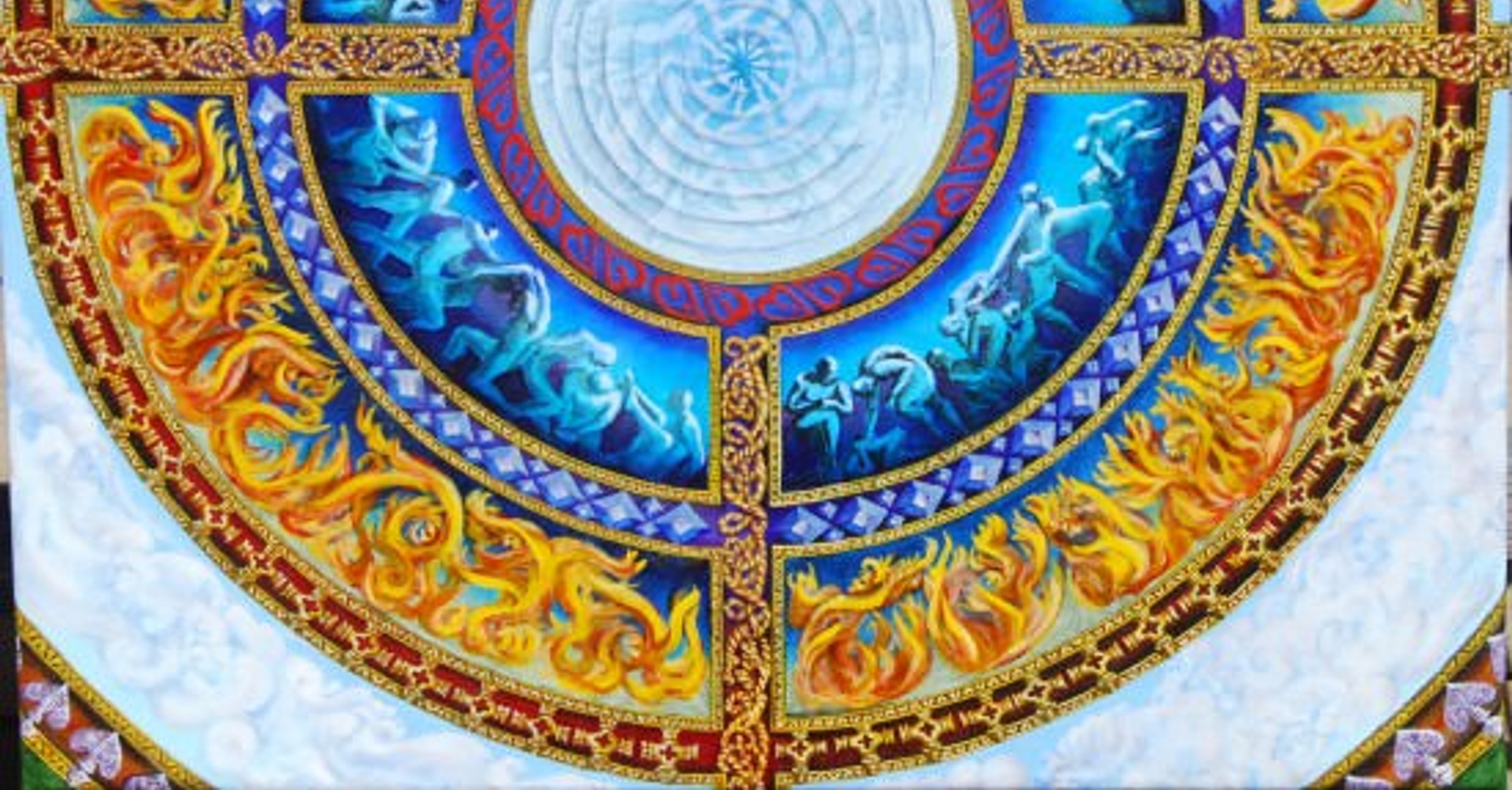
Brahman, being beyond mortal comprehension, was believed to have a spark within each individual, the atman (soul). The ultimate purpose of human life, according to Brahmanism, was to realize the union of the atman with Brahman, thereby achieving liberation (moksha) from the endless cycle of rebirth and death (samsara). This liberation was attained by performing one’s duty (dharma) in accordance with right action (karma). Adherence to this path promised spiritual growth and eventual freedom, while deviation incurred suffering in this life and subsequent incarnations. The priestly class, or Brahmins, played a pivotal role in this system, chanting the Vedas in Sanskrit – a language largely unintelligible to the common populace – and interpreting the divine will, thus maintaining their social and spiritual authority.
Philosophical schools were broadly categorized into astika ("there exists"), those that accepted the Vedas as authoritative and believed in concepts like atman and Brahman, and nastika ("there does not exist"), those that rejected Vedic authority. While Jainism and Buddhism also fell under the nastika umbrella, Charvaka stood apart for its extreme and unwavering materialism, presenting a worldview that offered no spiritual paths or transcendent goals.
A Scathing Critique of Priesthood and Faith
It was against this backdrop of pervasive religious authority and intricate theological systems that Charvaka, spearheaded by Brhaspati, launched its intellectual assault. Brhaspati, according to later commentaries, perceived the Vedic system as a grand deception, a "superstitious nonsense" that people were coerced into accepting as incontrovertible truth. He questioned the very premise of priestly power, arguing that the Brahmins’ claims of divine knowledge were unprovable and served primarily to enrich themselves at the expense of the masses.
The elaborate rituals, sacrifices, penances, and gifts demanded by the priests, Charvaka contended, were not pathways to spiritual salvation but rather ingenious mechanisms for the upper-class clergy to accumulate wealth and maintain social control. Why, Brhaspati might have mused, would rational individuals adhere to rules and proscriptions based on texts they couldn’t understand, interpreted by a class clearly benefiting from their obedience?
While the precise historical motivations of Brhaspati remain speculative, the philosophical implications are clear: Charvaka emerged as a voice of dissent, proclaiming that life’s true purpose was not spiritual transcendence or adherence to divine mandates, but the uninhibited enjoyment of the present. In a world seemingly devoid of divine governance or a guaranteed afterlife, the only rational course was to maximize pleasure in the here and now, unburdened by fear of otherworldly retribution. This radical shift from a divinely ordained, karmic universe to a purely material, self-directed existence represented a profound challenge to the established social, religious, and economic order.
The Pillars of Perception: Charvaka’s Epistemology and Ethics
Charvaka’s philosophy was not merely a negation of existing beliefs; it offered a coherent, albeit stark, alternative framework for understanding reality and guiding human conduct.
Direct Perception: The Sole Arbiter of Truth
Charvaka’s primary and most foundational objection to the Vedic vision was its reliance on faith and unprovable claims. The priests asserted ultimate truths, promising prosperity in this life and bliss after death, all based on a spiritual authority that could not be empirically verified. For Charvaka, this was an unacceptable basis for belief. This skepticism led to its central epistemological tenet: only direct perception, that which can be observed and recognized by the senses, can establish truth. Anything that cannot be perceived or recognized by the senses simply does not exist.
This stance stood in stark contrast to other schools, including Jainism and Buddhism, which, while also nastika (non-Vedic), accepted other pramanas (sources of knowledge) beyond direct perception, such as inference and testimony. Charvaka, however, rejected these outright. Inference, they argued, was inherently fallible. The classic example used to illustrate this point is observing smoke emanating from a building and inferring the presence of fire. While often true, this inference is not infallible; the "smoke" could be dust stirred up from a fireplace, or a mist, deceptively appearing as smoke. Since truth, for Charvaka, demanded absolute certainty, an inference that could be wrong was an insufficient basis for knowledge. Similarly, testimony, which relies on another’s perception and inference, was deemed equally unreliable. If an observer wrongly inferred fire from what was actually dust, their testimony would perpetuate that error.
Beyond Karma: Hedonism as Life’s Purpose
This radical epistemology directly informed Charvaka’s ethical system. If only the perceivable exists, and there is no soul, no afterlife, and no divine tally of deeds, then traditional moral laws, karmic debts, and spiritual duties are rendered meaningless. For Charvaka, the pursuit of sensual enjoyment was the ultimate and only rational purpose of life. Suffering was simply the absence or privation of pleasure, and the solution was to seek pleasure actively.
There was no "duty" owed to anyone or anything beyond one’s self. The elaborate ethical systems propagated by religious authorities were seen as mere fables, clever tools designed by the powerful to control the weak, deny them pleasure, and burden them with guilt, all while enriching the few. Anticipating the utilitarian philosophies of Jeremy Bentham and John Stuart Mill by centuries, Charvaka essentially posited that "good" behavior was that which produced the greatest pleasure for the individual, and "evil" was simply the absence of that pleasure or the presence of pain. The inability to pursue individual pleasure could lead to acts deemed "crimes" by society, but even the authorities administering punishment were merely seeking to maintain their own pleasure (e.g., social order) at the expense of those who challenged it.
Discarding Cosmology and Complex Epistemology
Charvaka’s pragmatic approach extended to other philosophical domains. Cosmology, the study of the origin and structure of the universe, was deemed a futile pursuit. There was no need to speculate on how the universe came into being, as such knowledge could never be verified through direct perception, nor could it enrich one’s life in any tangible way. Observation clearly showed that nature regenerated and reproduced itself according to natural laws; thus, it was logical to conclude that the cosmos, however it originated, developed similarly. The intricate epistemological debates prevalent in other schools about how one knows were equally dismissed. If one holds a large stone, the truth of holding a large stone is self-evident through direct perception; further inquiry into the mechanism of that knowledge was a waste of intellectual effort.
Official Responses and Historical Reception
The emergence of Charvaka, with its stark materialism and rejection of cherished beliefs, undoubtedly provoked strong reactions from the established religious and philosophical institutions of ancient India. While no direct "official responses" from Charvakan proponents exist due to the loss of their texts, the very nature and content of the hostile secondary sources serve as a powerful testament to the alarm and condemnation it generated.
The Nastika Spectrum: Charvaka vs. Jainism and Buddhism
Within the nastika schools that rejected Vedic authority, Charvaka occupied a unique and extreme position. Jainism and Buddhism, though heterodox, still offered spiritual paths, ethical frameworks, and concepts of liberation from suffering, albeit different from Brahmanism. Jainism, for instance, emphasized non-hurting and meditative self-realization to escape karmic bondage. Buddhism offered the Eightfold Path as a cure for suffering, analyzing its causes and advocating for a path to enlightenment.
Charvaka, in stark contrast, offered no such spiritual solace. It dismissed karmic bondage as an illusion, suffering as merely the absence of pleasure, and liberation as a meaningless concept. This made Charvaka not just a rival philosophy, but an existential threat to the very fabric of spiritual aspiration that permeated ancient Indian thought. Its complete materialism left no room for the spiritual quest, placing it far outside the continuum of even other non-orthodox systems.
Undermining Authority: The Threat to the Status Quo
Charvaka’s message was inherently disruptive. By denying the existence of gods, an afterlife, and karmic retribution, it directly undermined the authority of the priestly class and the socio-religious hierarchy they upheld. The Brahmins’ power was predicated on their unique access to divine knowledge and their role as intermediaries between humans and the divine. Charvaka stripped them of this legitimacy, portraying them as self-serving manipulators.
Furthermore, Charvaka’s radical hedonism threatened social stability. If there were no divine laws, no moral consequences beyond immediate pleasure or pain, and no ultimate meaning to life or security after death, then what incentive was there for virtuous conduct, self-sacrifice, or adherence to societal norms? The philosophy’s claim that death was an absolute end for both the virtuous and the wicked, with no promise of reward or punishment, was undoubtedly unsettling news for a populace deeply invested in the promise of a blissful afterlife for the worthy. It removed the fundamental hope and fear that often serve as cornerstones of social order in religious societies.
The term Lokayata, often translated as "philosophy of the people," ironically came to be used in a derogatory sense, implying a philosophy lacking intellectual depth, focused solely on the mundane and materialistic, and thus unworthy of serious consideration by the "informed" elite. This linguistic shift reflects the intellectual establishment’s attempt to delegitimize Charvaka, portraying it as a base and unrefined worldview.
The Challenge of the Lost Texts
The fact that Charvaka is primarily known through the critiques of its opponents presents a significant challenge to historians and philosophers. These secondary sources, by their very nature, are biased; they often simplify, exaggerate, or misrepresent Charvaka’s arguments to make them easier to refute. It is plausible that the original Charvakan thinkers developed more nuanced arguments, perhaps even acknowledging certain practical constraints on hedonism or societal considerations, which are now lost to us. This reliance on hostile accounts means that our understanding of Charvaka is, to a certain extent, a reconstruction based on what its enemies found most objectionable or easiest to dismantle. This historical circumstance underscores the importance of critical interpretation and the ongoing scholarly effort to piece together the true legacy of this enigmatic school.
Echoes Across Continents: Charvaka’s Enduring Legacy
Despite its eventual disappearance as a dominant school of thought, Charvaka’s profound insights and radical propositions left an indelible, albeit often indirect, mark on intellectual history, both within India and potentially as a fascinating precursor to Western philosophical traditions.
Precursors to Western Thought
One of the most striking aspects of Charvaka is its remarkable resonance with philosophical movements that emerged centuries later in the West, seemingly independently. Its atheism and skepticism towards religious control find parallels in the Athenian politician Critias (c. 460-403 BCE), who argued that religion was a human invention designed to control society. The unapologetic hedonism of Charvaka strongly echoes the philosophy of Aristippus of Cyrene (c. 435-356 BCE), who advocated for living in the moment and maximizing sensual pleasure, a view also shared by the Chinese hedonist Yang Zhu (c. 440-360 BCE).
Most famously, Charvaka’s emphasis on pleasure as the ultimate good brings to mind Epicurus (341-270 BCE). While Epicurus’s "enlightened hedonism" emphasized moderation and the absence of pain (ataraxia) over unrestrained sensual indulgence, the core principle of pleasure as the guiding force of life remains a common thread. These ancient Greek thinkers, in turn, laid the groundwork for later empiricist and utilitarian philosophies. The Scottish empiricist David Hume (1711-1776), for example, famously argued that without prior instruction, one would find no evidence of God’s existence in the world – a sentiment deeply aligned with Charvaka’s empiricism. The utilitarianism of Jeremy Bentham (1748-1832) and John Stuart Mill (1806-1873), with its focus on "the greatest good for the greatest number" (interpreted by Charvaka as pleasure), also shares conceptual similarities. Even elements of 20th-century existentialism, particularly Jean-Paul Sartre’s (1905-1980) emphasis on radical freedom, individual responsibility, and the creation of one’s own meaning in an indifferent universe, echo Charvaka’s rejection of pre-ordained purpose and divine guidance. While direct influence is unlikely, these parallels highlight Charvaka’s astonishing prescience and its capacity to anticipate fundamental questions of human existence and knowledge.

A Catalyst for Scientific Inquiry in India
Within India, Charvaka’s most enduring, albeit often unacknowledged, contribution was its role in fostering an intellectual environment conducive to the development of scientific thought. By insisting on direct observation, empirical verification, and a skeptical attitude towards unproven claims, Charvaka inherently promoted a methodology strikingly similar to the scientific method. It encouraged individuals to question, to test, and to base conclusions on what could be seen and experienced, rather than on faith or tradition.
Scholar P. Ram Manohar notes that Charvaka "exerted a powerful influence and helped to achieve a balance between the spiritual and material worldviews." This influence is discernible in the way later Indian thinkers approached practical aspects of life. Maladies and injuries, prosperity and misfortune, began to be understood more as naturally occurring phenomena rather than solely as divine punishments or rewards for moral behavior. This shift in perspective allowed for a more rational, observational approach to medicine, economics, and statecraft. The development of sophisticated texts like the Dharma Shastras (treatises on law and duty) and the Arthashastra (a treatise on statecraft, economic policy, and military strategy) benefited from this intellectual climate, incorporating a recognition of the material world’s realities and the importance of observable consequences, even if their ultimate frameworks remained rooted in other philosophical systems. Charvaka’s materialism, even in modified forms, provided a crucial counterweight, preventing an exclusive focus on the spiritual and ensuring that empirical observation retained its value.
The Fade into Obscurity
Despite its intellectual vigor and its foundational contributions, Charvaka ultimately faded from prominence, largely disappearing by the 12th century CE. While it was referred to as Lokayata – "the people’s philosophy" – there is no evidence that it was ever widely adopted or became a predominant school of thought. Its radical denial of an afterlife, divine meaning, and ultimate cosmic justice likely proved too stark for the general populace, who found solace and hope in the more optimistic visions offered by Hinduism, Jainism, and Buddhism. These systems, with their promises of spiritual liberation, karmic justice, and a meaningful existence beyond the present life, offered a powerful emotional and psychological appeal that Charvaka’s austere materialism could not match.
Moreover, the absence of original Charvakan texts meant that its ideas were primarily propagated and debated through the interpretations and refutations of its opponents. This undoubtedly hindered its ability to maintain a coherent and consistent philosophical tradition, making it vulnerable to misrepresentation and eventual marginalization.
Conclusion
Charvaka stands as a testament to the remarkable diversity and intellectual courage of ancient Indian philosophy. Emerging as a defiant voice against the dominant spiritual paradigms, it championed a radical materialism that prioritized direct perception, the pursuit of pleasure, and a profound skepticism towards religious authority. Its insights, though largely known through the criticisms of its adversaries, reveal a philosophy far ahead of its time, anticipating key tenets of Western empiricism, utilitarianism, and existentialism.
While it never achieved widespread acceptance and eventually receded into historical obscurity, Charvaka’s influence on the intellectual landscape of India was undeniable. By fostering a spirit of empirical inquiry and challenging unquestioned dogma, it played a crucial, albeit often uncredited, role in stimulating scientific thought and ensuring that a balanced perspective between the spiritual and material realms could flourish. Charvaka’s legacy is a powerful reminder that even in ancient times, there were thinkers who dared to envision a world governed by observable reality, a life lived fully in the present, and a truth grounded in the undeniable evidence of the senses.