"Arms & Armor": A Deep Dive into Bastion Press’s Iconic D20 System Supplement
Originally Published: March 13th, 2002
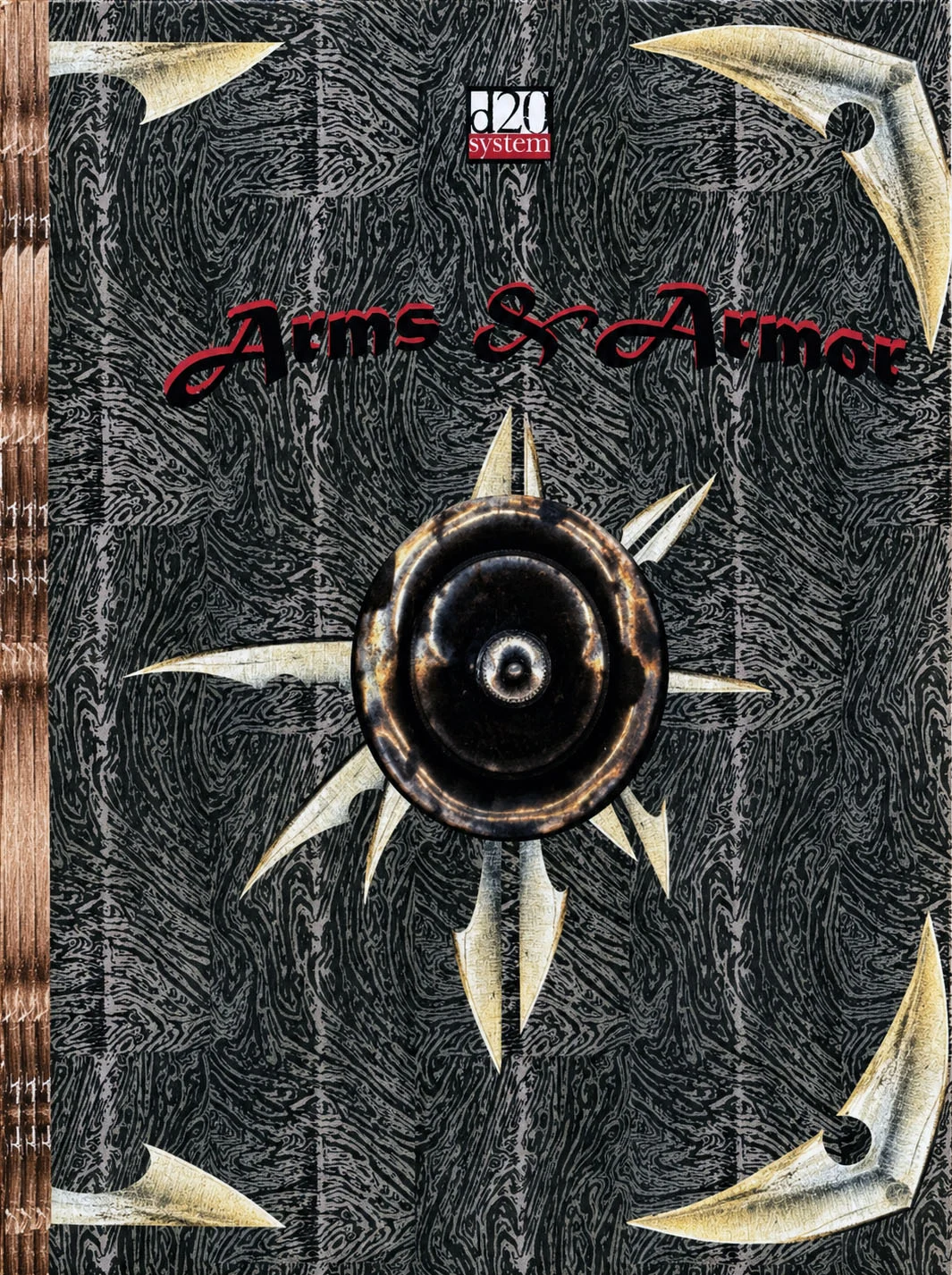
The landscape of tabletop role-playing games underwent a seismic shift with the introduction of the D20 System and its Open Game License (OGL) in the early 2000s. This revolutionary framework allowed third-party publishers to create and distribute content compatible with the wildly popular Dungeons & Dragons 3rd Edition, leading to an explosion of creativity and supplementary material. Among the myriad offerings, Bastion Press emerged as a notable player, contributing several "crunchy" and often ambitious titles to the D20 ecosystem. One such title, Arms & Armor, published in 2002, sought to dramatically expand the arsenal and protective gear available to players and Dungeon Masters (DMs) alike.
While initially met with a mixed reception, particularly concerning its price point and artistic direction, Arms & Armor carved out a significant niche for itself, offering an unparalleled volume of mechanical detail for weapons, armor, and even unique martial constructs. This retrospective analysis revisits Bastion Press’s second D20 supplement, exploring its ambitious content, its strengths and weaknesses, and its enduring legacy in the annals of D20 System history.
Main Facts
Arms & Armor is a 96-page, full-color softcover supplement published by Bastion Press, Inc., with Greg Dent credited as the Lead Designer. Released during the heyday of the D20 System, its primary objective was to furnish Dungeons & Dragons 3rd Edition campaigns with a vast array of new combat equipment. The book meticulously details approximately 125 new weapons, ranging from historical to exotic, alongside roughly 70 new magical weapon properties and 50 unique magical weapons. On the defensive front, it introduces around 60 new armor types, 70 new magical armor qualities, and several dozen suits of magical armor, including class-specific options.
Beyond conventional gear, Arms & Armor ventured into more specialized items, such as cleric domain rods, arcane school staves, racial masks, and an innovative section on "martial constructs"—golems and other animate objects designed to function as self-wielding weapons or armor. Notably, the supplement also presented what was considered the first published 3rd Edition system for "armor as damage reduction," a mechanic that would later become more common in subsequent editions of D&D.
Despite its rich content and mechanical depth, the book faced criticism for its premium price tag of $24.95, which many reviewers and players deemed high for a 96-page volume. Furthermore, the artwork by Todd Morasch, who served as Lead Artist and Art Director, was frequently described as mediocre and, at times, inaccurate, failing to consistently match the written descriptions. Nonetheless, for Dungeon Masters seeking to inject an unprecedented level of detail and variety into their campaign’s loot tables and enemy armaments, Arms & Armor proved to be an invaluable resource.
Chronology
The D20 System Era: An Explosion of Content
The early 2000s marked a pivotal period for tabletop role-playing games with the launch of Dungeons & Dragons 3rd Edition in 2000. Accompanying this release was the Open Game License (OGL), a revolutionary move by Wizards of the Coast that allowed third-party publishers to create content compatible with the D20 System ruleset. This decision democratized game design, leading to an unprecedented surge in supplementary materials, from new character classes and prestige classes to monsters, spells, and, critically, equipment. Publishers ranging from established names to fledgling independent studios eagerly joined the fray, each striving to carve out a niche in this vibrant new market. The era was characterized by a voracious appetite from players and DMs for "crunchy" content—detailed rules, statistics, and mechanics that could be directly integrated into their games.
Bastion Press’s Entry and Early Offerings
Bastion Press, Inc. was one of the many independent publishers that emerged during this fertile period. Recognizing the demand for highly detailed, mechanically rich content, Bastion Press positioned itself as a provider of such supplements. Their first major D20 offering was Minions: The Fearsome Foes, a creature compendium that, like its successor, was noted for its extensive mechanical detail, full-color printing, and glossy pages. Minions set a precedent for Bastion Press’s aesthetic and design philosophy: ambitious content, often with a focus on deep mechanical implementation, but sometimes marred by artistic inconsistencies and a premium price point. The company quickly established a reputation for producing supplements that, while sometimes rough around the edges, delivered substantial utility for DMs looking to add depth and exotic elements to their campaigns.
The Release of Arms & Armor
Building on the foundation laid by Minions, Bastion Press released Arms & Armor in 2002. The supplement was a direct response to the ongoing demand for expanded equipment options beyond the core rulebooks. It aimed to provide DMs with an extensive toolkit to customize their campaign worlds, offering everything from mundane but historically diverse weapons to fantastical magical armaments and innovative constructs. The book’s release was timely, as DMs were constantly seeking ways to make dungeon delves more rewarding, monster encounters more varied, and player characters more unique through their gear. Arms & Armor was intended to be a comprehensive resource, a one-stop shop for expanding the physical and magical items that defined a character’s prowess and a campaign’s flavor.
Post-Release and Legacy
Upon its release, Arms & Armor entered a crowded market. Initial reviews, including the one from March 2002, highlighted its mechanical strengths but also its significant drawbacks. Despite the criticisms, particularly regarding the artwork and price, the book found its audience among DMs who valued its sheer volume of content and the mechanical depth it offered. It became a go-to resource for those looking to add unique treasures, equip specialized enemies, or simply broaden the options available to players. The inclusion of the first published 3E system for armor as damage reduction cemented its place as a minor but significant innovator. Over time, as the D20 System evolved into D&D 3.5 Edition and eventually 4th and 5th Editions, Arms & Armor, like many D20 supplements, became a historical artifact. However, for those still playing D&D 3.x or seeking inspiration for other systems, it remains a testament to the vibrant, experimental era of third-party D20 publishing and a source of creative ideas for combat gear. The reviewer’s retrospective comment about Bastion Press’s entire product line still sitting on his gaming shelf speaks volumes about the enduring, if imperfect, value these books provided.
Supporting Data
In-Depth Content Analysis
Arms & Armor distinguishes itself through its sheer volume and granular detail, fulfilling its promise of being "very, very crunchy." This characteristic was highly valued by DMs who sought to add layers of mechanical complexity and unique flavor to their games.
-
Weaponry Unveiled: The book’s primary draw is its extensive collection of new weapons. With approximately 125 new entries, it goes far beyond the standard fare. Examples like the mundane claymore and brass knuckles offer realistic historical or contemporary combat options, while the combat hook and cicada wing sword introduce more unusual or exotic flair, potentially drawing inspiration from various cultures or fantasy tropes. The double-bladed sword represents the more fantastical end of the spectrum, catering to players who enjoyed unique weapon aesthetics.
The magical weapons section is equally robust, presenting roughly 70 new properties. "Alterable weapons," which can change their form or properties, and "pivoting arrows," which likely allow for mid-flight trajectory adjustments, represent innovative magical concepts that open up new tactical possibilities. The 50 new magical weapons, including powerful class weapons and artifacts, further enrich the treasure tables. The silent dagger, projecting a 5-foot field of silence, is a clever tool for stealth-focused characters, while the arrow of seeing, which grants remote vision, offers unique scouting and tactical advantages. The inclusion of new rules for intelligent weapons, a staple of D&D lore, adds another layer of depth, allowing for sentient items with their own personalities and agendas. -
Armaments & Enhancements: The defensive side is just as comprehensive, with roughly 60 new types of armor. These range from the visually striking bone mail (chain mail crafted from bone) to the tactically cunning daggered plate (armor with concealed daggers). Practical innovations like quick don armor address common logistical challenges in D&D, reducing the time required for donning cumbersome protection. The magical armor qualities are equally impressive, with around 70 new options. Phoenix armor, which grants a single resurrection at the cost of the armor’s destruction, provides a powerful, high-stakes safety net. Healing armor, capable of restoring the wearer’s health, offers continuous utility. Perhaps the most significant contribution in this section was the introduction of optional rules for armor, including "armor as damage reduction." At the time, this was a novel concept for 3rd Edition, offering a different approach to defense beyond increased AC, and it foreshadowed mechanics that would become more prevalent in later D&D editions.
-
Beyond Conventional Gear: Arms & Armor doesn’t stop at weapons and armor. It delves into specialized magical items like cleric domain rods and arcane school staves, providing flavorful and mechanically distinct tools for spellcasters. Racial masks add cultural and magical significance. The "martial constructs" section is particularly inventive, pushing the boundaries of what constitutes "gear." Amulet servitors, golems that collapse into compact amulets, offer portable guardians. Golem armor blurs the line between wearer and worn, creating living, sentient protection. Silver steeds provide magical mounts, enhancing mobility and combat prowess. Furthermore, the book explores several new materials for weapon and armor construction, allowing DMs to introduce exotic resources and craft unique items.
Design Philosophy and Execution
-
The "Crunch" Factor: The term "crunchy" in TTRPGs refers to a system or supplement rich in detailed rules, statistics, and mechanics. Arms & Armor fully embraced this philosophy. For DMs and players who enjoyed intricate combat, precise item definitions, and a wide array of choices, this book was a treasure trove. It empowered DMs to create highly specific encounters and reward players with unique, mechanically distinct items that went beyond simple numerical bonuses. This emphasis on detail ensured that each new item felt significant and offered tangible tactical implications.
-
Avoiding the Absurd: A common pitfall for supplements that introduce a vast amount of new gear is the tendency to create items that are overly whimsical, impractical, or outright "goofy," breaking immersion. Arms & Armor largely succeeded in avoiding this. While some designs might lean towards the exotic, they generally retained a sense of functionality within a fantasy context. The reviewer notes that "even if you really dislike the bizarre and exotic weapons of 3rd Edition, there’s more than enough here that you’ll happily be able to incorporate into your campaign," highlighting the book’s broad applicability despite some niche entries.
Critiques and Controversies
Despite its content strengths, Arms & Armor was not without its flaws, some of which were significant enough to impact its overall reception.
-
Artistic Missteps: Todd Morasch’s artwork was a recurring point of criticism, echoing sentiments from the review of Minions. While not universally condemned as "bad," it was consistently described as "mediocre"—failing to elevate the product aesthetically. More damningly, the artwork frequently failed to accurately depict the items described in the text. The reviewer provides specific examples: a "chained axe" drawn without its haft, and a "basket-hilted broadsword" lacking its basket hilt and inexplicably sporting a double-blade. Such discrepancies undermine the utility of the illustrations, leading to confusion rather than clarification. The decision to leave almost all armor and many weapons unillustrated further diminished the book’s visual appeal and practical guidance, especially for items whose unique characteristics might be best conveyed visually. In a visually driven hobby, subpar and inaccurate art can significantly detract from a product’s perceived quality and usability.
-
Design Peculiarities: While generally mechanically sound, Arms & Armor contained instances of head-scratching design choices. The "axe-hammer" example perfectly illustrates this: described as a long-hafted weapon with an axe blade on one side and a blunt hammer on the other, it is inexplicably statted as a double weapon. A double weapon in D&D typically implies two distinct ends that can be wielded separately in combat (e.g., a quarterstaff). An axe-hammer, with a single head featuring two different striking surfaces, functionally operates more like a greataxe or warhammer, not a double weapon. Such inconsistencies, while perhaps minor in isolation, suggest a lack of rigorous editing or a misunderstanding of established D20 mechanics, potentially leading to confusion at the game table.
-
The Price Point Debate: The most significant "bad stuff" mentioned in the original review, and a common complaint across many D20 supplements of the era, was the price. At $24.95 for a 96-page softcover, Arms & Armor was considered expensive. For comparison, many core rulebooks (which were significantly larger and hardcover) were priced in the $30-$40 range. A 96-page supplement at nearly $25 represented a significant investment, especially for DMs who might only "dip into it sparingly." This price-to-content ratio often forced GMs to be "choosier" about their purchases, meaning a supplement had to offer truly indispensable value to justify the cost. For many, Arms & Armor, despite its richness, struggled to consistently meet that threshold, particularly if a DM didn’t have a specific, immediate "niche" for its content.
Official Responses
While no direct "official responses" from Bastion Press to this specific review are available, we can infer the publisher’s intent and how such criticisms were generally received within the D20 community, along with the reviewer’s own retrospective insights.
Publisher’s Vision and Intent
Bastion Press, as a third-party D20 publisher, operated within a competitive and burgeoning market. Their vision, as evidenced by Minions and Arms & Armor, was to provide highly detailed, mechanically rich supplements that expanded upon the core D&D experience. They aimed to cater to DMs who desired more options, more "crunch," and more exotic elements than the official Wizards of the Coast products typically offered. The choice of full-color, glossy pages, while contributing to the higher price, also suggested an aspiration for a premium product that would stand out visually. They likely believed that the sheer volume of new mechanics and ideas presented in Arms & Armor justified its cost, appealing to a segment of the audience that prioritized content density over strict page count. Their focus on niche areas like martial constructs and detailed magical item properties further indicates an attempt to fill perceived gaps in the existing D20 library.
Community Dialogue and Reception
During the D20 System’s peak, online forums like RPGNet (where this review was originally published), EN World, and various publisher-specific message boards were hotbeds of discussion. It is highly probable that the artistic criticisms leveled against Todd Morasch’s work in Arms & Armor were not isolated. Discrepancies between art and text, as well as general aesthetic quality, were frequent topics of debate for many D20 supplements. Similarly, the price-to-page ratio was a constant point of contention for many third-party products. Consumers were navigating an overwhelming flood of new material, and value for money was a critical factor in purchasing decisions. Publishers often found themselves balancing production costs (especially for color printing) against perceived market value. While Arms & Armor may have been praised for its content, these common criticisms likely shaped its broader community reception, influencing sales and long-term perceptions.
Reviewer’s Post-Publication Reflection
The meta-commentary appended to the review—"Bastion Press’ D20 System supplements were mechanically sloppy and often ugly, but as a GM I got an incredible amount of value out of them. They were often the first thing I would reach for when looking to add either depth or a touch of the exotic to an adventure. I believe this is the last of their books that I wrote a review for, but their entire product line still sits on my gaming shelf"—serves as a powerful retrospective "official response" from the reviewer himself. This reflection highlights a crucial paradox: despite acknowledged flaws (mechanical sloppiness, ugly art), the utility and inspirational value of Bastion Press’s products, including Arms & Armor, often outweighed their shortcomings for an active Dungeon Master. This suggests that for a specific type of GM—one who could overlook aesthetic imperfections in favor of raw, usable content—these books were indispensable tools, validating Bastion Press’s core design philosophy, even if its execution wasn’t always perfect. The fact that the entire product line remained on the reviewer’s shelf underscores its enduring practical worth, long after the initial review’s immediate concerns had faded.
Implications
The journey of Arms & Armor from its 2002 release to its current status as a piece of D20 history carries several important implications for the tabletop role-playing game industry, for DMs, and for the evolution of TTRPG supplements.
Impact on D20 System Gaming
Arms & Armor, along with other "crunchy" supplements, significantly influenced the D20 System gaming experience. It empowered DMs to move beyond the limited item lists of core rulebooks, fostering a more diverse and detailed approach to campaign design. Players could encounter more specialized foes, discover more unique treasures, and outfit their characters with gear that felt truly distinct. This fostered a playstyle that celebrated mechanical variety and tactical depth, encouraging more intricate combat scenarios and more flavorful loot distribution. The introduction of concepts like "armor as damage reduction" also pushed the boundaries of D&D 3rd Edition’s mechanics, offering alternative ways to balance combat and character progression.
Legacy of Third-Party Publishers
Bastion Press, through Arms & Armor and its other offerings, represents a critical facet of the D20 System’s legacy: the vital role of third-party publishers. These companies demonstrated that the OGL could unleash an incredible wave of creativity, filling niches and exploring ideas that core publishers might overlook. The experience of Arms & Armor teaches valuable lessons:
- Niche Publishing: Focusing on a specific area (like weapons and armor) with deep detail can create a highly valuable product for a dedicated audience.
- Content Volume vs. Quality: The book’s strength lay in its sheer volume of ideas, which often outweighed its production flaws for many DMs. However, the consistent criticism of art and minor design inconsistencies highlights the ongoing challenge of maintaining high quality across all aspects of a product.
- Artistic Direction: The importance of cohesive and accurate artwork cannot be overstated. Even for mechanically strong products, poor or inconsistent art can detract from the overall user experience and perceived value.
Evolving Expectations for TTRPG Supplements
Since 2002, player and DM expectations for TTRPG supplements have evolved considerably.
- Art Quality: Modern supplements typically boast high-quality, consistent, and often evocative artwork that enhances the text rather than detracting from it. The standard set by companies like Wizards of the Coast and other major players has raised the bar significantly.
- Balance and Editing: While mechanical "crunch" is still desired, there’s a greater emphasis on rigorous playtesting and editing to ensure balance and minimize design oddities. Digital tools and larger playtesting communities facilitate this.
- Digital Accessibility: The rise of digital platforms like DriveThruRPG (where Arms & Armor is now available in PDF) has changed how supplements are consumed. PDFs offer searchability, hyperlinking, and often a lower price point, potentially mitigating the "price per page" concern.
- Value Proposition: The market is still sensitive to price, but the perception of value now often includes not just page count but also production quality, innovative design, and ease of integration into existing campaigns.
Enduring Value
Despite its age and its specific D&D 3.x ruleset, Arms & Armor retains an enduring value. For DMs still running D&D 3.x campaigns, it remains an unparalleled source of detailed equipment. More broadly, for DMs of any system looking for inspiration—whether for unique weapon properties, unusual armor concepts, or inventive martial constructs—the sheer breadth of ideas within Arms & Armor makes it a valuable resource. Its ability to "fill a niche" in a campaign, such as populating a dwarven stronghold like Khundrukar with unique treasures, demonstrates its timeless utility as a wellspring of creative content. While the mechanical details might require adaptation for modern systems, the core concepts of its vast armory continue to offer a touch of the exotic and depth to any fantasy adventure.
Author: Greg Dent (Lead Designer)
Publisher: Bastion Press, Inc.
Price: $24.95
ISBN: 0-9714392-2-2
Product Code: BAS1001
Pages: 96