The Day of Infamy: Japan’s Surprise Attack on Pearl Harbor Ignites World War II
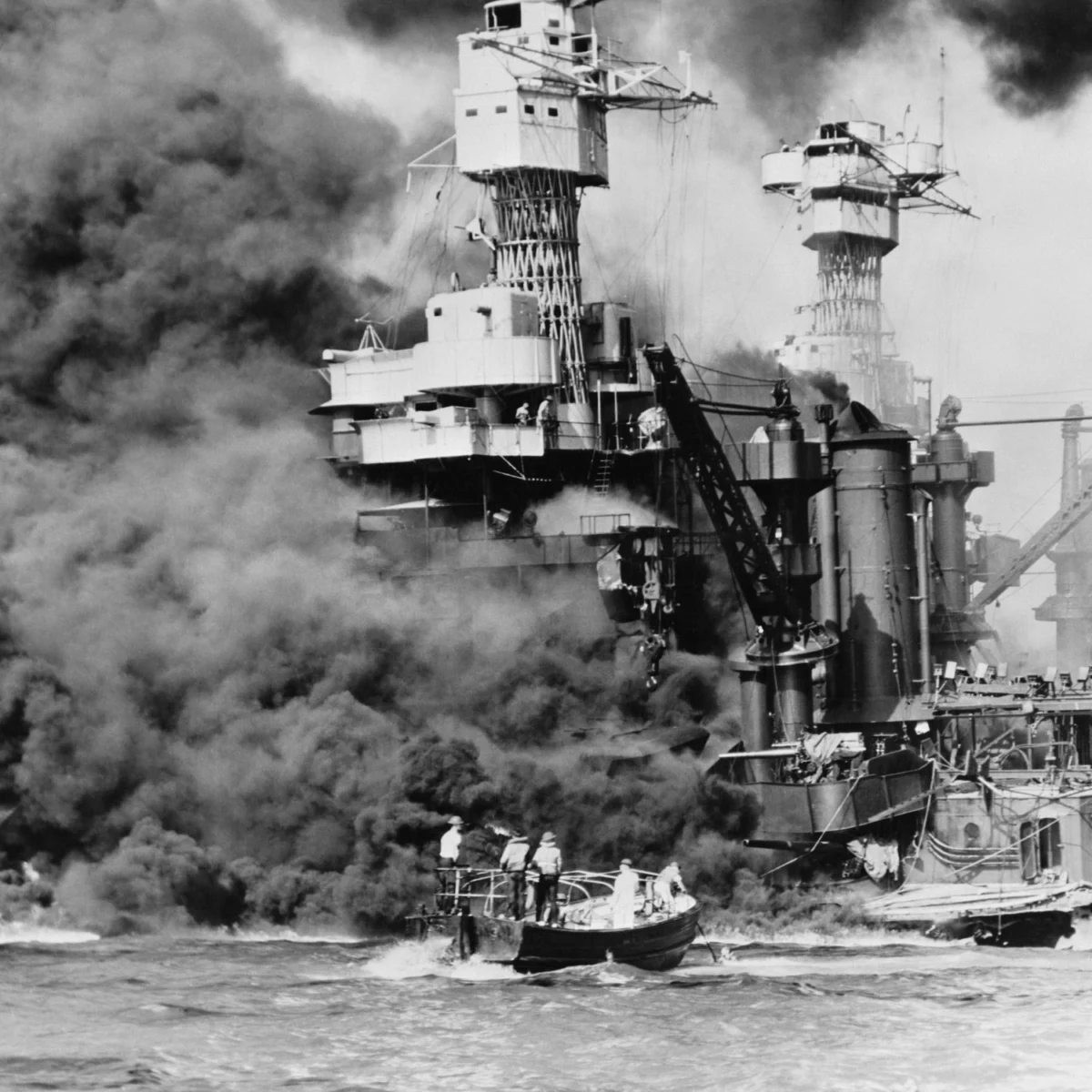
December 7, 1941, dawned as a peaceful Sunday morning in the Hawaiian Islands, a tranquility shattered forever by the thunderous roar of Japanese warplanes. In a stunning act of military audacity, a Japanese carrier force launched a devastating surprise attack on the US naval base at Pearl Harbor, O’ahu. This meticulously planned assault, executed without a formal declaration of war, inflicted catastrophic damage on the US Pacific Fleet, claimed over 3,500 lives, and irrevocably plunged the United States into the Second World War.
The aerial bombardment, which lasted less than two hours, left a trail of destruction: 18 ships were sunk or seriously damaged, including eight formidable battleships. Yet, amidst the carnage, crucial elements of the US fleet – particularly its vital aircraft carriers – were providentially absent, out on maneuvers. Furthermore, essential supply dumps, repair facilities, and submarine pens remained largely intact. These critical omissions by the Japanese, born of a strategic decision to withdraw prematurely, would ultimately allow the US Navy to recover with remarkable speed, laying the groundwork for Japan’s eventual and devastating defeat in the Pacific War. From the ashes of Pearl Harbor rose an American resolve that would define the next four years of global conflict, culminating in Japan’s surrender in August 1945 and the United States gaining what many perceived as the ultimate revenge.
A Dawn Raid Ignites a Global Conflict
The attack on Pearl Harbor was a strategic gamble by Imperial Japan, designed to cripple the US Pacific Fleet and secure time for its expansionist ambitions across Southeast Asia. The immediate impact was profound: thousands of casualties, both military personnel and civilians, and a significant portion of the US naval power in the Pacific rendered temporarily inert. President Franklin D. Roosevelt, addressing a shocked nation and a galvanized Congress the following day, famously declared December 7, 1941, "a date which will live in infamy," a phrase that encapsulated the profound sense of betrayal and outrage felt by the American public. This act of aggression, a calculated risk by Japan, inadvertently forged a unified American determination to enter the war and fight for total victory.
Imperial Ambitions and Mounting Tensions
The attack on Pearl Harbor was not an isolated incident but the culmination of years of escalating geopolitical tensions and Japan’s relentless pursuit of regional dominance. By late 1941, the Japanese Empire had already established a vast sphere of influence, driven by a potent mix of nationalist ideology, military expansionism, and an insatiable demand for natural resources.
Japan’s Quest for Dominance in Asia
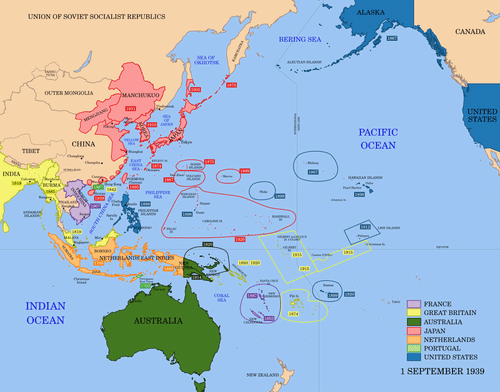
Imperial Japan’s military government had systematically annexed or occupied significant territories across East Asia. Manchuria, Formosa (Taiwan), Korea, parts of coastal China, and the northern regions of French Indo-China (encompassing modern-day Laos, Cambodia, and parts of Thailand) were already under Tokyo’s control. This aggressive expansion was underpinned by the concept of the "Greater East Asia Co-Prosperity Sphere," an ideological pretext for Japanese hegemony over Asia, ostensibly freeing Asian nations from Western colonial rule but in reality replacing it with Japanese imperial control.
A brief setback to this expansion occurred in the summer of 1939 when Japanese forces suffered a significant defeat at the hands of the Soviet Union in the border region between Manchuria and Outer Mongolia, known as the Battle of Nomunhan (or Khalkhin Gol). The Japanese army sustained an estimated 18,000 casualties, a stark reminder of the challenges of continental warfare. This defeat, however, merely reinforced the arguments of the Japanese navy, which advocated for a strategic shift towards the Pacific and Southeast Asia, areas where naval power would be paramount for conquest.
The Economic Squeeze and Diplomatic Deadlock
The rapid expansion of Japan’s military and industrial complex demanded massive quantities of raw materials that the resource-poor island nation simply did not possess. Petroleum, iron ore, coal, copper, steel, lead, tin, rubber, and nickel were all vital for its war machine. Unable to secure these resources through trade due to international condemnation of its aggression, Japan faced a crippling economic squeeze.
The United States, along with Great Britain and the Netherlands, responded to Japanese aggression with increasingly stringent economic sanctions. A comprehensive US embargo on critical resources was imposed, intended to compel Japan to withdraw from China and to protect American interests in regions like the Philippines. British Malaya and the Dutch East Indies (modern-day Indonesia), rich in oil and rubber, also severely restricted sales to Japan. Adding to Japan’s woes, Japanese financial assets in US banks were frozen, further hamstringing its ability to procure essential supplies. By mid-1941, the Japanese military leadership felt that the acquisition of necessary resources through conquest was not merely desirable, but an imperative for its survival and continued imperial ambition.
In April 1941, a Soviet-Japanese non-aggression pact was signed, temporarily neutralizing Japan’s northern flank and allowing it to focus its military might on its growing empire to the south. By July 1941, Japan had extended its reach into southern Indo-China. The Japanese military government, convinced that a confrontation with the Western powers was inevitable if it continued its expansion, particularly into the oil-rich territories of British Malaya and the Dutch East Indies, made a fateful decision on December 1, 1941. It resolved to declare war on the United States, Britain, and the Netherlands. A preemptive strike on the US Pacific Fleet, it was hoped, would buy Japan precious time to solidify its control over new territories and establish an impenetrable defensive perimeter in the Pacific theatre of World War II.
Yamamoto’s Audacious Plan
The architect of this audacious plan was Admiral Yamamoto Isoroku (1884-1943), Commander-in-Chief of the Combined Fleet. Yamamoto understood that Japan could not hope to compete with the numerically superior US Navy or the immense industrial capacity of the United States in a prolonged war. His strategy was to deliver a knockout blow to the American fleet at the outset, thereby securing a six-month to a year window during which Japan could consolidate its gains and potentially force a negotiated peace on favorable terms.
Yamamoto’s plan involved a large aircraft carrier group sailing secretly across the vast Pacific to Pearl Harbor in Hawaii, the home of the US Pacific Fleet. The key innovation enabling this attack was the development of new torpedoes capable of operating effectively in the shallow waters of Pearl Harbor, a capability the US military did not believe existed. The primary targets were the US aircraft carriers and battleships, which, if destroyed while still in port, would severely cripple America’s ability to project power in the Pacific.
The Unsuspecting Target: Pearl Harbor
The US naval base at Pearl Harbor, while a formidable strategic outpost, harbored critical vulnerabilities that the Japanese meticulously exploited.
A Strategic Outpost, Yet Vulnerable
The United States had acquired the Hawaiian islands in 1898, but the Pearl Harbor naval base, a crucial hub for the Pacific Fleet, had only been formally established at the beginning of 1940. Commanded by Rear-Admiral Husband E. Kimmel (1882-1968), the Pacific Fleet at Pearl Harbor comprised almost 100 ships, representing a significant portion of American naval power.
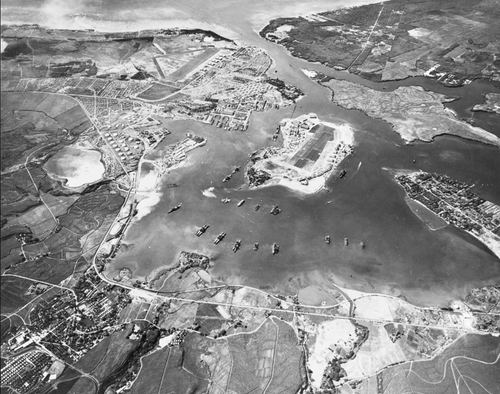
However, US strategic thinking largely underestimated the threat to Pearl Harbor. The prevailing belief was that the Philippines, located just 200 miles (320 km) from Japan’s bases on Formosa, represented the most logical and likely target for Japanese aggression. Pearl Harbor, situated some 3,400 miles (5,500 km) from Japan, was considered too distant for a direct attack. Compounding this geographical misjudgment was the American military’s unawareness of Japan’s new shallow-water torpedo technology. Consequently, the harbor lacked protective anti-torpedo nets, and the general consensus was that any attack on the base would come in the form of sabotage, not a full-scale aerial assault. This fundamental miscalculation left Pearl Harbor dangerously exposed.
The Japanese Strike Force: A Stealthy Advance
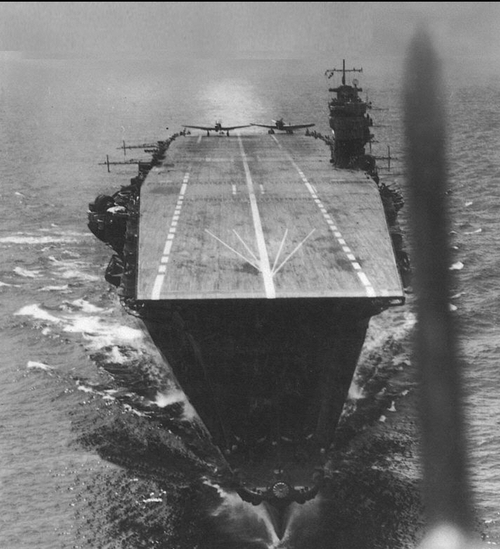
The formidable Japanese attack group, under the command of Vice-Admiral Chuichi Nagumo (1887-1944), was a marvel of naval power and operational secrecy. It comprised six aircraft carriers – the Akagi, Kaga, Soryu, Hiryu, Shokaku, and Zuikaku (two of which, the Kaga and Akagi, had been ingeniously converted from a battleship and a cruiser, respectively). This core was supported by two battleships, two heavy cruisers, one light cruiser, and a protective escort of nine destroyers. Critical to the fleet’s extended range were eight fuel tankers, along with three submarines and several other support ships. The air assault itself was commanded by Captain Mitsuo Fuchida (1902-1976), a highly experienced pilot who personally flew in the first attack wave, leading from the front.
The entire carrier group departed its bases at Kure during the second and third weeks of November, embarking on an arduous and clandestine journey across the vast Pacific. To avoid detection by enemy intelligence, the ships maintained absolute radio silence and deliberately steered clear of major shipping lanes. The crews were under strict orders to intercept, board, or sink any vessel they encountered that could potentially report their progress across the ocean. This extreme caution and secrecy allowed the Japanese fleet to approach Hawaii undetected, preserving the element of surprise that was so crucial to the mission’s success.
A Cascade of Missed Warnings
The success of the Pearl Harbor attack hinged entirely on surprise, a surprise achieved not just by Japanese stealth, but also by a series of critical oversights, misinterpretations, and communication failures on the American side.
Overlooked Signals and Misinterpretations
Rear-Admiral Kimmel, aware of the escalating tensions, had indeed dispatched reconnaissance aircraft from Pearl Harbor during the first week of December. However, limited resources meant he could not cover all directions, and his focus was primarily on an arc of reconnaissance stretching southwest towards the Marshall Islands, the closest Japanese territory. Unbeknownst to the Americans, the Japanese force was approaching Hawaii from the north, an unpatrolled vector.
Crucially, US military intelligence had been intercepting and deciphering Japanese coded messages for some time. These intercepts provided tantalizing clues, with Pearl Harbor even being mentioned in a communication to the Japanese consul in Honolulu, instructing spies to identify which ships were in which part of the harbor. Astonishingly, this vital piece of intelligence was never effectively passed on to the command at the Hawaiian base.
On the morning of the attack itself, further warnings were missed. At 3:45 a.m., a US patrol boat spotted a Japanese midget submarine attempting to enter the harbor. While it was eventually sunk three hours later by a destroyer patrolling the approach, the information was not relayed to commanders of any consequence until it was too late. This critical delay in escalating the alert level proved disastrous. Between 6:45 and 7:00 a.m., US radar units on O’ahu picked up the incoming Japanese aircraft. Yet, this report, too, was tragically ignored. Operators believed the radar blips were a flight of US B-17 bombers expected in the area that morning, a misinterpretation that sealed Pearl Harbor’s fate.
Defensive Lapses on the Ground
The belief that Pearl Harbor was immune to an aerial torpedo attack led to catastrophic defensive lapses. The base’s anti-aircraft guns suffered from insufficient supplies of ammunition, and even where ammunition existed, readiness was severely compromised. Lt-General Walter Short (1880-1949), the island’s army commander, had made a deliberate decision to bunch up his aircraft on the ground and leave them unarmed. His rationale was to better safeguard them against acts of sabotage, the perceived primary threat. This left American airpower effectively defenseless, presenting easy targets for the Japanese planes.
Similarly, naval defenses were woefully unprepared for an air assault. Only one in four of the navy’s machine guns were manned, and critically, all spare ammunition was locked away in secure storage, inaccessible in the initial moments of chaos. To compound the vulnerability, it was a Sunday morning, and a significant portion of naval personnel, including one-third of the naval captains and a large number of other officers, were ashore, enjoying their weekend leave. These systemic failures, born of complacency and misdirection, created a perfect storm for the Japanese surprise attack.
The Moment of Impact: Chaos and Destruction
The meticulous planning and the American lapses converged on December 7, 1941, in a furious crescendo of explosions, fire, and death that would forever be etched into history.
"Tora, Tora, Tora": The Surprise Achieved
Still undetected and positioned approximately 275 miles (450 km) from Hawaii, the Japanese aircraft left their carriers at 6:00 a.m. on that fateful Sunday. Japanese diplomats in Washington had intended to present a formal declaration of war at 1 p.m. EST, corresponding to 7:30 a.m. Hawaiian time, just prior to the attack. However, a crucial delay, likely attributable to the translation office not realizing the extreme urgency of the matter, meant that the declaration was delivered after news of the attack had already reached the US president. This procedural misstep solidified the perception of a "sneak attack," fueling American outrage.
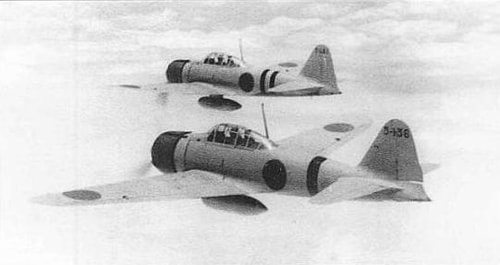
The first attack wave, comprising 40 torpedo bombers, 51 dive-bombers, and 43 fighter planes, descended upon Pearl Harbor at approximately 7:55 a.m. These aircraft struck with brutal efficiency, targeting the battleships anchored in "Battleship Row" and the various airfields around the base. The initial moments were characterized by a complete lack of response from the stunned US defenses. Captain Mitsuo Fuchida, leading the first wave, was able to send the triumphant radio signal "Tora, tora, tora" ("Tiger, tiger, tiger") back to Nagumo, confirming that complete surprise had been achieved.
The sheer shock of the attack was palpable. Many at Pearl Harbor initially struggled to comprehend what was happening, even as bombs rained down around them. Lieutenant Ken Murray, a US staff officer, vividly recalled the disbelief: "My first knowledge of the attack was when I was awakened by the sound of bombs dropping and the roaring of aircraft all around us. I ran out and saw immediately that they were Japanese planes and there was this fellow standing next to me who said, ‘Boy, it certainly looks real, doesn’t it?’…I happened to be standing next to the Commander-in-Chief, Admiral Kimmel, and we were glumly watching the havoc that was going on. Suddenly he reached up and tore off his four-star shoulder boards, which indicated his rank…" (Holmes, 200). This personal act by Kimmel underscored the sudden and devastating realization of war.
Devastation on Battleship Row
The clear weather conditions over Pearl Harbor that morning greatly aided the Japanese pilots, allowing them to easily pick out targets identified by their military intelligence. Pilots had been strictly ordered not to drop their torpedoes unless certain of a hit, ensuring maximum effectiveness. Around 8:25 a.m., conventional Japanese bombers unleashed their payloads from high altitude, further adding to the destruction.
A second, larger attack wave, consisting of 54 bombers, 78 dive-bombers, and 36 fighters, struck between 8:55 a.m. and 9:15 a.m. By this point, some semblance of American resistance had begun to materialize. Fierce fire erupted from anti-aircraft guns, and a handful of US fighters, remarkably, managed to get airborne amidst the chaos. The second wave, however, also had to contend with rapidly deteriorating visibility as huge clouds of smoke billowed from the stricken warships and burning airfields.
Accompanying the aerial assault, 16 Japanese submarines approached the harbor, five of which carried midget submarines designed for close-range attacks. As it turned out, the submarine element of the attack was a total failure, with most being detected and destroyed, including the one sunk hours before the main air raid. The devastating damage came almost exclusively from the air.
The attack concluded around 9:45 a.m. At this critical juncture, Vice-Admiral Nagumo made the controversial decision not to send in a planned third wave of aircraft. His primary concern was the potential for a counterattack from the missing US aircraft carriers, whose location remained unknown, and the risk of exposing his valuable carriers to American submarines or land-based air power. This decision, though cautious, would prove to be a significant strategic miscalculation for Japan.
The Immediate Aftermath: A Crippling Blow, Yet Not Decisive
The immediate fallout from Pearl Harbor was devastating for the United States, yet concealed within the tragedy were elements that would ultimately define the course of the Pacific War.
A Horrific Toll in Lives and Ships
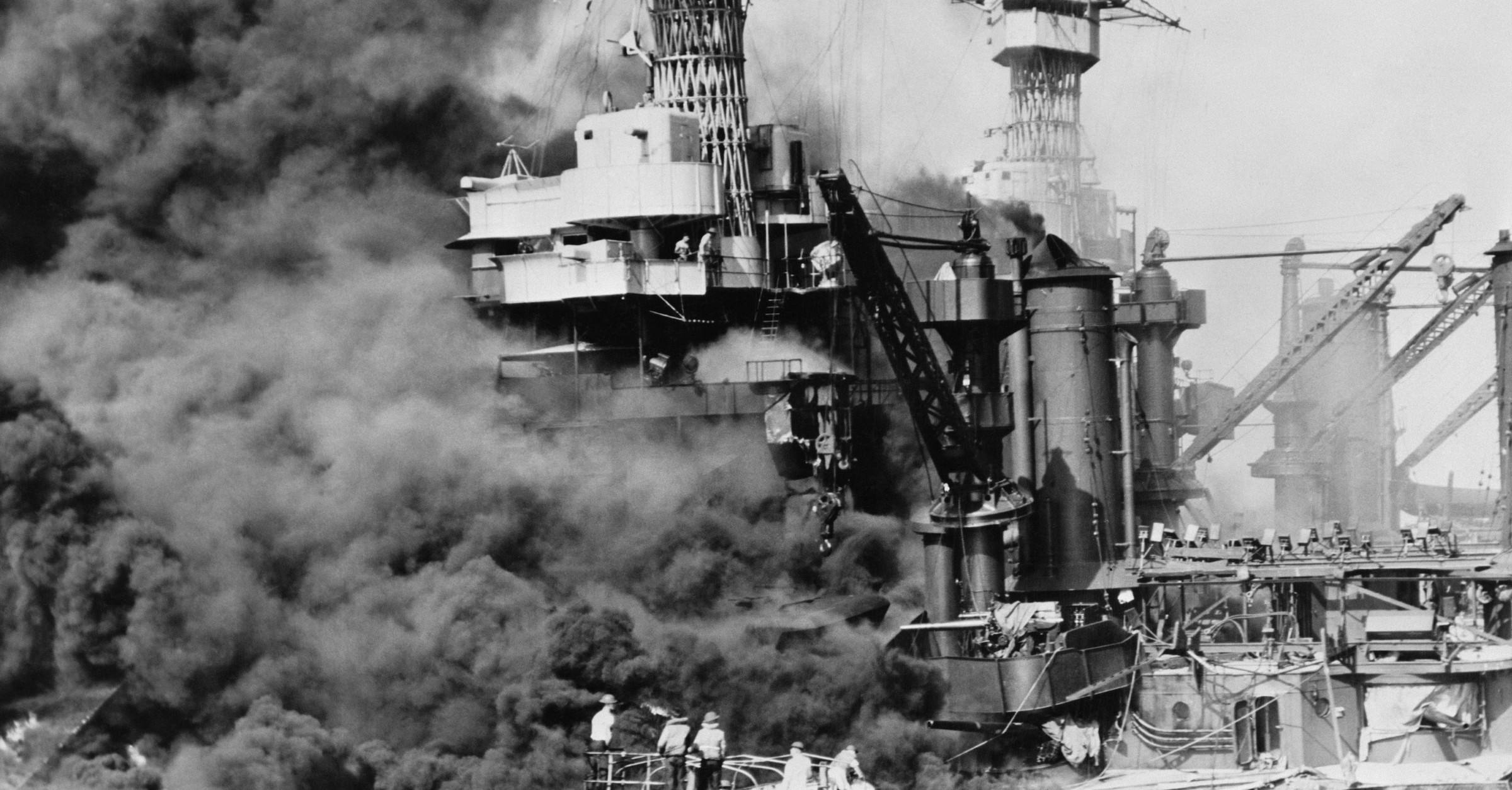
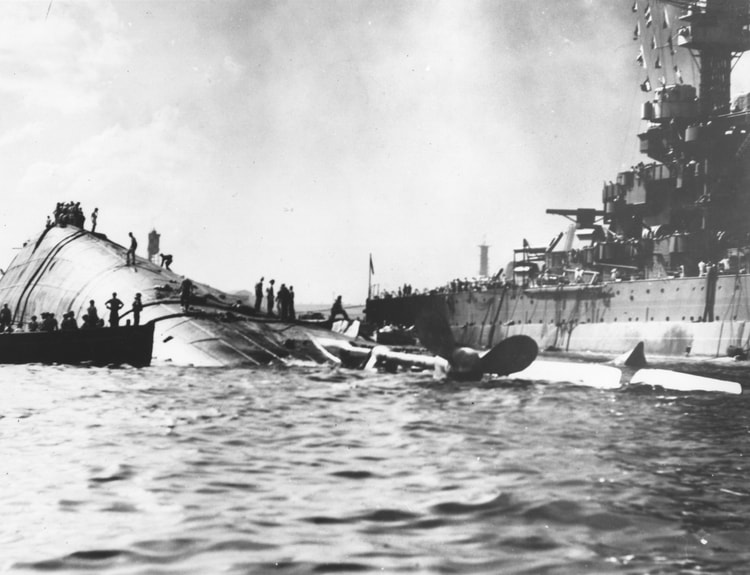
The Japanese task force achieved a staggering tactical victory, sinking or seriously damaging 18 US Navy ships. Six battleships were sunk, and the other two badly damaged, neatly lined up in what was known as ‘Battleship Row.’ The USS Arizona suffered the most catastrophic fate when its forward magazines exploded, killing 1,103 of the ship’s crew instantly or drowning them as the broken vessel rapidly sank. The sheer horror of the moment was seared into the memories of survivors. Eyewitness Marine Richard Fiske, serving on the USS West Virginia, recounted: "I saw the Arizona blow up and she just sort of rained sailors. I wasn’t very scared at this particular time because I couldn’t imagine that this was happening to us: it just wasn’t real; it seemed like a nightmare. I didn’t really comprehend the impact of it until afterwards when I swam ashore and realised, my God, we’re at war." (Holmes, 201-2).
In addition to the battleships, three destroyers, three cruisers, and four other ships were either sunk or badly damaged. The aerial assault also decimated American airpower, destroying 164 US aircraft and damaging another 128. The human toll was equally horrific: 2,403 people, including service personnel and civilians, were killed, and another 1,178 were wounded. In stark contrast, the Japanese force suffered minimal losses: just 29 aircraft and six submarines (mostly easily replaceable minisubs), with 64 Japanese servicemen killed in the attack. The Japanese carrier group returned to Japan intact on December 23, having executed its mission with devastating precision.
Fortuitous Absences and Untouched Infrastructure
Despite the crushing blow, several crucial factors mitigated the long-term strategic impact for the United States. Most significantly, the two primary US aircraft carriers in the Pacific, the USS Enterprise and USS Lexington, were out on maneuvers during the attack. While Japanese intelligence had anticipated four carriers, the USS Hornet and USS Yorktown were operating in the Atlantic Ocean in December. The absence of these highly mobile and strategically vital assets meant the core of future American naval power remained untouched. Similarly, the fleet’s heavy cruisers were also out on maneuvers, sparing them from the assault.
Furthermore, Nagumo’s decision to forgo a third wave of aircraft proved to be a critical strategic error. The base’s extensive fuel depots, holding some 4.5 million barrels of oil, its vast ammunition stocks, crucial repair shops, dry docks, and submarine pens—all vital infrastructure for sustaining a prolonged naval war—had survived the attack. These targets, if destroyed, would have incapacitated Pearl Harbor as a forward operating base for months, if not years. Their survival meant Pearl Harbor could continue to operate and support recovery efforts.
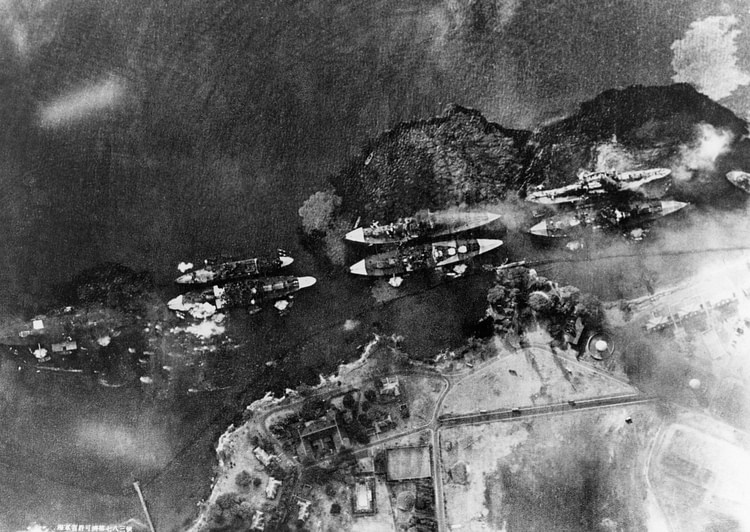
Indeed, the relatively shallow waters of Pearl Harbor proved to be another saving grace. This characteristic meant that all but three of the lost or damaged ships could eventually be recovered, refloated, repaired, and astonishingly, returned to active service. The USS Oklahoma, capsized but later righted, and the USS West Virginia, sunk but salvaged, are prime examples of this resilience. The USS Arizona and USS Utah (a target ship) were the only battleships permanently lost.
In essence, while Pearl Harbor was a tactical disaster for the US, it was not a strategic one. Had the aircraft carriers been sunk and the essential infrastructure destroyed, the US Navy would have been forced to retreat to the mainland, severely prolonging and complicating the Pacific conflict. The psychological impact of what was widely regarded as a "sneak attack" galvanized US public opinion, transforming a previously isolationist nation into one wholeheartedly committed to entering the war and seeking vengeance. This resolve was further stiffened when Germany and Italy, Japan’s Axis allies, declared war on the United States on December 11, solidifying the global nature of the conflict.
A Nation Awakened: The United States Enters World War II
The attack on Pearl Harbor, far from achieving Japan’s strategic goal of deterring American intervention, instead awakened a sleeping giant, irrevocably drawing the United States into the global conflict and setting the stage for a brutal and protracted war in the Pacific.
"A Date Which Will Live in Infamy"
President Franklin D. Roosevelt’s address to Congress on December 8, 1941, delivered with solemn gravity, articulated the national outrage and galvanized the American people. His declaration of December 7 as "a date which will live in infamy" resonated deeply, solidifying public opinion behind the immediate and unequivocal entry into World War II. The perception of a treacherous, unprovoked assault united a nation that had previously been deeply divided over interventionism.
The unified American response was swift. Congress, with near unanimity, declared war on Japan. This resolve was further intensified when, just days later, Germany and Italy, fulfilling their Axis alliance obligations, declared war on the United States on December 11. Suddenly, the war was not a distant European or Asian conflict, but a global struggle in which the United States was a central participant.
Scapegoats and Lessons Learned
In the immediate aftermath of the disaster, six official investigations and one inquiry by Congress were launched to determine what had gone wrong. Rear-Admiral Husband E. Kimmel and Lt-General Walter Short, the naval and army commanders at Pearl Harbor, were made the immediate scapegoats, both forced to resign from their commands. While they were later exonerated by subsequent investigations and public sentiment, their careers were effectively ended. The investigations ultimately revealed a complex web of interservice rivalries, communication breakdowns, and a failure to adequately process and disseminate critical intelligence rather than deliberate malfeasance. There has never been convincing evidence to support the conspiracy theories that US officials deliberately allowed the attack to happen to force the US into war, nor that British military intelligence knew of the attack beforehand. In truth, the sheer audacity and effectiveness of the Japanese attack simply defied pre-existing American assumptions and defensive preparations.
The Long Road to Victory in the Pacific
The Pearl Harbor attack was not the end, but merely the dramatic beginning of the Pacific War, a conflict the Japanese referred to as the Great East Asia War. The initial phase of this war continued to go well for Japan. On December 8, 1941 (December 9 across the International Date Line), Japanese forces launched devastating raids on the Philippines, effectively destroying the majority of the 35 B-17 Flying Fortress aircraft belonging to the USAAF on Luzon Island, further crippling American airpower in the region.
Throughout 1942, Japan achieved many more victories, rapidly expanding its territorial control across Southeast Asia. Its vast empire stretched from Manchuria to the Dutch East Indies from north to south, and from Burma (Myanmar) to the Marshall Islands from west to east. However, this rapid expansion was unsustainable in the long term. The war, fundamentally, was a fight Japan could not win against the combined resources of the Allies. The industrial might, technological innovation, and sheer personnel numbers of the United States, Great Britain, and their allies proved to be far superior.
The United States, fueled by the memory of Pearl Harbor, embarked on a relentless "island-hopping" campaign, gradually pushing back the Japanese. The recovery of most of the Pearl Harbor battleships, combined with the untouched aircraft carriers, formed the nucleus of a resurgent US Pacific Fleet. Through brutal campaigns and technological superiority, Japan was slowly but inexorably pinned back, eventually defending only its own home islands. The war in the Pacific concluded with devastating consequences for the Japanese people, as two atomic bombs were dropped on Hiroshima and Nagasaki in August 1945, forcing Japan’