The Enduring Epic: Poul Anderson’s Masterful Forays into Fantasy and Myth
Poul Anderson stands as a towering figure in the annals of speculative fiction, celebrated for his prolific output across science fiction and fantasy. While his scientific romances garnered immense acclaim, his contributions to the fantasy genre are equally profound, often exhibiting a depth and literary sophistication that set them apart. This article delves into the rich tapestry of Anderson’s fantasy works, focusing on the seminal The Broken Sword, the mythic Hrolf Kraki’s Saga, and his intriguing venture into the world of Conan pastiches, Conan the Rebel. Through these narratives, Anderson not only showcased his unparalleled skill in weaving tales drawn from Northern European mythology but also helped to define the very contours of modern fantasy.
Main Facts: Pioneering Fantasy and Mythic Depth
At the heart of Poul Anderson’s fantasy legacy lies The Broken Sword (1954, revised 1971), a work often hailed as his finest and a pioneering novel-length fantasy. This epic tale masterfully blends the ethereal grandeur of High Fantasy with the visceral grit of Sword & Sorcery. Its setting is a nuanced Faerie, an invisible, parallel realm existing alongside 9th-century England during the reign of Alfred the Great. The narrative is populated by elves, trolls, and other supernatural entities, lending it a distinct high-fantasy ambiance, yet it is equally replete with the "good bloody action" characteristic of Sword & Sorcery, delivering fierce battles and perilous quests.
The core of The Broken Sword is a tragic saga of intertwined destinies. It tells the story of Skafloc, a human child abducted by elves and raised in their fae realm, and Valgard, a half-elf, half-troll changeling who replaces Skafloc in the human world. The story escalates into profound tragedy when Skafloc unknowingly falls in love with his own human sister, a twist that underscores the novel’s dark, mythic undertones.
Following this, Anderson continued his exploration of Norse mythology with Hrolf Kraki’s Saga (1977). While stylistically similar to The Broken Sword, this work shifts its focus, delving more deeply into human heroes and their struggles, albeit within a world still touched by the supernatural. Though the titular character, Hrolf Kraki, only fully embodies his legendary status late in the book, the narrative is an ambitious undertaking, showcasing Anderson’s extraordinary ability to bring ancient sagas to vivid life. It, too, contains a recurring "incest twist," suggesting a thematic continuity in Anderson’s engagement with the tragic and often morally ambiguous elements of myth.
Anderson’s versatility extended even to the realm of pastiche, as evidenced by his contribution to the Conan mythos, Conan the Rebel (1980). This venture saw Anderson, a respected figure within the fantasy community and a member of the "Swordsmen and Sorcerers Guild," applying his formidable talent to Robert E. Howard’s iconic barbarian. While an intriguing addition to the Conan canon, it also sparked discussions about the challenges of capturing another author’s unique voice.
Chronology: A Journey Through Publication and Revisions
Poul Anderson’s fantasy works represent distinct phases in his career and the broader evolution of the genre.
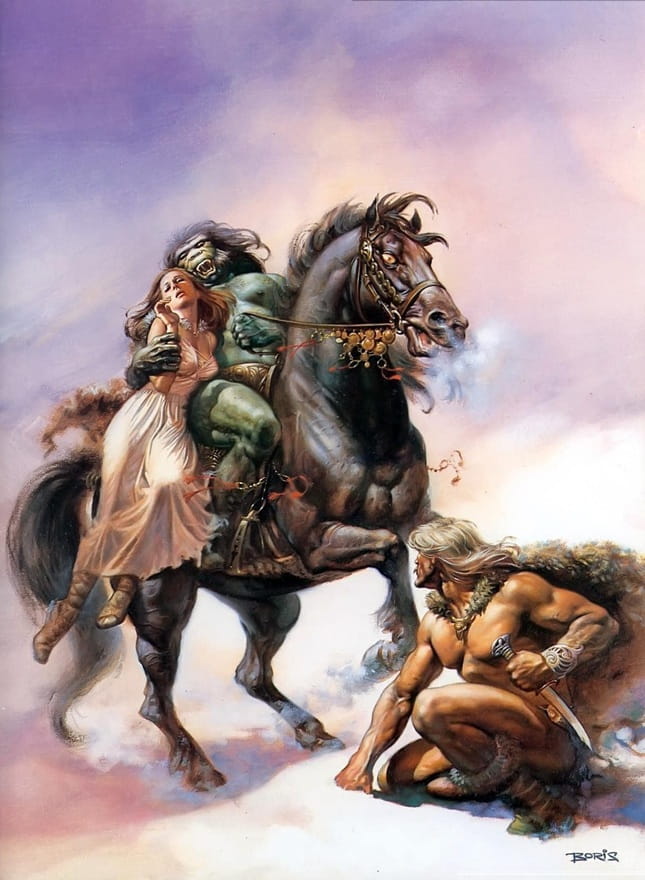
The Broken Sword first saw publication in 1954, a pivotal year that also witnessed the release of the first two volumes of J.R.R. Tolkien’s The Lord of the Rings. While Tolkien’s magnum opus would go on to reshape the fantasy landscape, Anderson’s darker, more brutal tale, published by Abelard-Schuman, initially garnered less widespread attention. Its true impact was delayed, awaiting the resurgence of interest in fantasy during the 1960s. Recognizing its potential, Anderson thoroughly revised the novel for its 1971 Ballantine Adult Fantasy #24 edition, featuring a striking cover by George Barr. This revision, often considered the definitive version, allowed The Broken Sword to find a new audience and solidify its place as a genre classic, further cemented by the 1977 Del Rey reprint with a memorable cover by Boris Vallejo.
Hrolf Kraki’s Saga, published in July 1977 by Del Rey/Ballantine with a cover by Darrell Sweet, arrived at a time when fantasy was firmly established in the popular consciousness, largely due to the "Tolkien boom." This later work demonstrated Anderson’s continued commitment to exploring deep mythological themes, building upon the stylistic foundations laid by The Broken Sword but expanding its scope and ambition. It showcased a maturation of his "Northern Thing" aesthetic, moving further into the human drama within mythic settings.
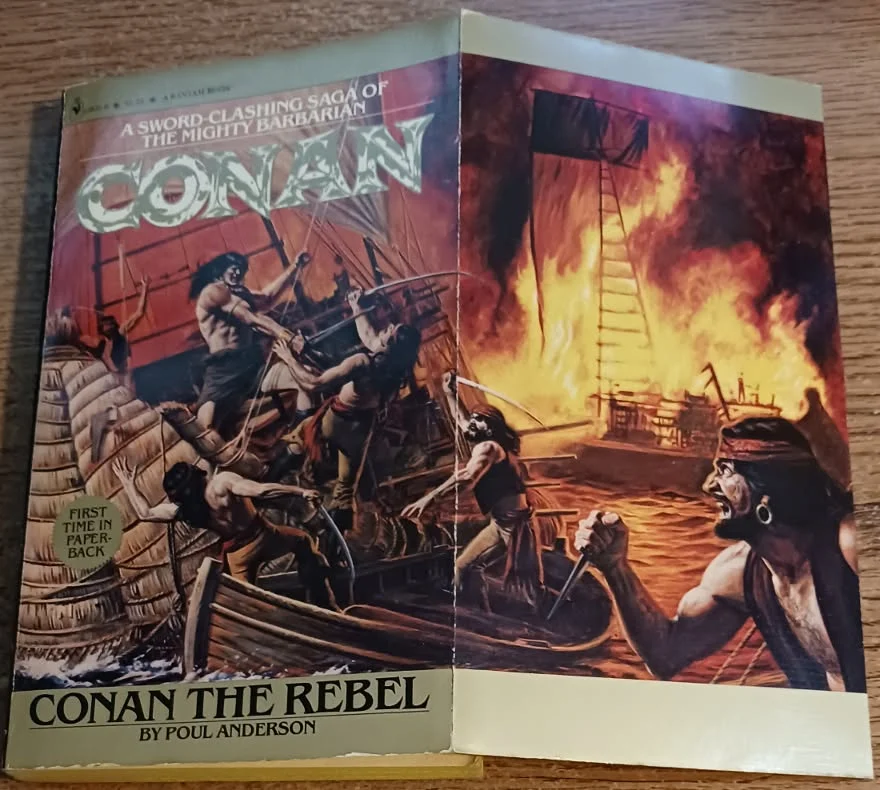
Anderson’s Conan the Rebel followed in July 1980, published by Bantam Books as part of their popular Conan series. This was a direct result of his association with figures like L. Sprague De Camp and Lin Carter, who were instrumental in expanding the Conan universe through pastiches. The book featured a distinctive fold-out cover by Bob Larkin and interior illustrations by Tim Kirk, marking it as a significant entry in the burgeoning Conan publishing phenomenon. This chronological placement highlights Anderson’s engagement with the commercial demands and opportunities of the fantasy market, even while maintaining his high literary standards.
It is also worth noting that this exploration of Anderson’s fantasy work is part of a larger series, with previous installments covering The Last Viking Trilogy (discussed in Part One). This trilogy, while leaning more towards historical fiction with mythological undertones, represents an earlier, significant part of Anderson’s "Northern Thing" output, chronologically preceding Hrolf Kraki’s Saga and demonstrating a consistent thread of inspiration drawn from Northern European lore throughout his career.
Finally, the discussion of Conan pastiches naturally extends to Andrew Offutt’s contributions. Offutt’s three Conan novels – Conan the Sorcerer (Ace, 1978), Conan the Mercenary (Ace, 1980), and The Sword of Skelos (Bantam, 1979) – were published somewhat out of their internal chronological order, a common practice in serialized fantasy at the time. These works, featuring covers by Sanjulian, Bob Larkin, and Lou Feck, and interior art by Esteban Maroto and Tim Kirk, provide a comparative perspective on the various attempts to expand Howard’s legacy.
Supporting Data: Unpacking Anderson’s Craft and Thematic Depth
Anderson’s literary prowess is evident in his meticulous world-building and nuanced character development. In The Broken Sword, the "otherworldliness" of Faerie is evoked with breathtaking detail, making the invisible realm a palpable presence. The narrative is infused with a sense of fated tragedy, particularly through the figures of Skafloc and Valgard, whose lives are irrevocably bound by the machinations of the fae and the cruel twists of destiny. The incestuous relationship, while shocking, serves to heighten the mythic tragedy, mirroring ancient Greek dramas and Norse sagas where such forbidden love often leads to downfall.
Anderson’s prose is consistently described as "beautiful," possessing a poetic quality that elevates his narratives beyond mere adventure. Literary critics and readers often draw parallels between his style and that of Robert E. Howard and Michael Moorcock. However, these similarities are not indicative of direct influence as much as they are a testament to all three authors drawing from a shared wellspring of Norse and British mythological sources. Anderson, like Howard, revels in vivid, action-packed battle scenes, while sharing Moorcock’s penchant for fatalistic heroes and the blurring of moral lines.
The genre blend in The Broken Sword is particularly noteworthy. The presence of elves, trolls, and a distinct fae realm firmly places it within High Fantasy. Yet, the brutal, often bloody, action sequences, the focus on individual prowess, and the darker, less overtly moralistic tone align it equally with Sword & Sorcery. This fusion predates many later attempts at hybridizing fantasy subgenres, showcasing Anderson’s innovative approach.
A fascinating aspect of Anderson’s fantasy is his evolving engagement with the "Northern Thing" – his deep immersion in Northern European mythology and history. As observed by Charles Gramlich, his works exhibit a progression from narratives heavily focused on the "alien" (Faerie) to those centered more on the human condition. The Broken Sword is a rich mixture of human and fae elements. Hrolf Kraki’s Saga then reduces the fae aspect, delving deeper into human actions and motivations, albeit within a mythic framework. The Last Viking series, discussed in earlier parts of this article, completes this trajectory, moving almost entirely away from explicit magic to focus on human historical drama. This thematic shift underscores Anderson’s versatility and his profound understanding of how to adapt mythological inspiration across different narrative registers.
The visual component of these books also plays a crucial role in shaping reader perception. The iconic covers by artists like George Barr, Boris Vallejo, Darrell Sweet, Bob Larkin, Lou Feck, and Sanjulian are not mere adornments; they are integral to the genre’s identity, often serving as the first gateway into these imaginative worlds. Similarly, interior illustrations by artists such as Tim Kirk and Esteban Maroto enhance the narrative, providing visual interpretations that deepen the reader’s immersion.
Regarding Conan the Rebel, Anderson’s take on the Cimmerian is a testament to his talent, even if it deviates from Howard’s original. While Anderson was arguably one of the most gifted writers to attempt a Conan pastiche (with Karl Edward Wagner being another strong contender), his Conan is often perceived as more introspective and less primal than Howard’s creation. This highlights the inherent challenge of writing pastiches: balancing faithfulness to the original with an author’s distinct voice. The preference for Offutt’s Conan pastiches by the article’s author, despite acknowledging Offutt’s lesser perceived talent compared to Anderson or Wagner, speaks to the subjective nature of pastiche appreciation and the elusive quality of "capturing" a character.
Official Responses: Critical Reception and Historical Impact
The initial reception of The Broken Sword in 1954 was, unfortunately, muted. Published concurrently with the initial volumes of Tolkien’s The Lord of the Rings, it was largely overshadowed by the unprecedented impact of Tolkien’s work on the development of fantasy’s main subgenres. While Tolkien’s epic rapidly gained widespread recognition and defined what many came to understand as "High Fantasy," Anderson’s darker, more ambiguous tale struggled to find its footing. It was nearly forgotten until the "Tolkien boom" of the 1960s, a period of burgeoning interest in fantasy literature, led to its reissue and subsequent rediscovery. This second life allowed The Broken Sword to finally receive the critical attention it deserved, establishing its reputation as a foundational work.
Anderson’s standing among his peers was consistently high. His membership in the "Swordsmen and Sorcerers Guild," alongside luminaries like L. Sprague De Camp and Lin Carter, underscores his recognized talent and his influence within the burgeoning fantasy community of the mid-20th century. It was likely through such associations that he was persuaded to write Conan the Rebel, contributing to a collaborative effort to expand the Conan universe.
However, critical responses to Conan the Rebel were mixed. While praised for Anderson’s undeniable skill in prose and plotting, it often faced the inevitable comparison to Robert E. Howard’s original. Many readers and critics felt that Anderson’s Conan, while compelling, lacked the raw, untamed essence that defined Howard’s creation. This observation is not a detraction from Anderson’s talent but rather an acknowledgment of the unique and often inimitable quality of Howard’s voice for that particular character. It highlights the difficulty, even for a writer of Anderson’s caliber, in fully inhabiting the stylistic and thematic world of another author.
The historical impact of Anderson’s fantasy is significant. While Tolkien may have popularized the archetypes of High Fantasy, Anderson, particularly with The Broken Sword, demonstrated an earlier, darker, and more mythologically complex approach. He proved that fantasy could explore themes of fate, tragedy, and moral ambiguity with a literary depth comparable to mainstream fiction. His works, drawing heavily from Norse sagas and British folklore, enriched the genre by providing a powerful alternative to the more prevalent Arthurian and classical influences. He was a master at evoking a sense of ancient dread and epic grandeur, paving the way for later authors who would explore similar mythic landscapes.
Implications: Anderson’s Enduring Contribution to Fantasy Literature
Poul Anderson’s fantasy works, especially The Broken Sword and Hrolf Kraki’s Saga, represent a cornerstone of the genre, demonstrating a profound mastery of myth, narrative, and prose. His ability to seamlessly blend the grandeur of High Fantasy with the visceral action of Sword & Sorcery, while exploring deep, often tragic, human and supernatural themes, set a high bar for subsequent generations of fantasy writers.
His meticulous use of Norse and British mythology not only provided rich source material but also imbued his stories with an authentic, ancient resonance. Anderson’s prose, lauded for its beauty and evocative power, ensures that his works remain compelling reads, transcending the temporal confines of their initial publication. The thematic journey observed across his "Northern Thing" works—from the fae-dominated world of The Broken Sword to the human-centric sagas of Hrolf Kraki and The Last Viking—illustrates a remarkable evolution in his storytelling, always grounded in a deep respect for historical and mythological sources.
Even his foray into pastiche with Conan the Rebel serves as a valuable lesson in genre writing, showcasing the unique challenges of adapting iconic characters while maintaining one’s own literary integrity. It underscores Anderson’s versatility and his willingness to engage with different facets of the fantasy landscape.
Ultimately, Poul Anderson’s fantasy legacy is one of innovation, literary quality, and enduring relevance. He was a writer who understood the power of myth to illuminate the human condition, crafting stories that are as emotionally touching as they are epically grand. His works continue to resonate with discerning readers, inviting them to explore the rich, complex worlds he so skillfully created. For those seeking to delve deeper into the epic science fiction and fantasy of Poul Anderson, further explorations can be found in Part One and Part Two of this ongoing series, offering a comprehensive look at a master storyteller whose influence continues to shape the genre.