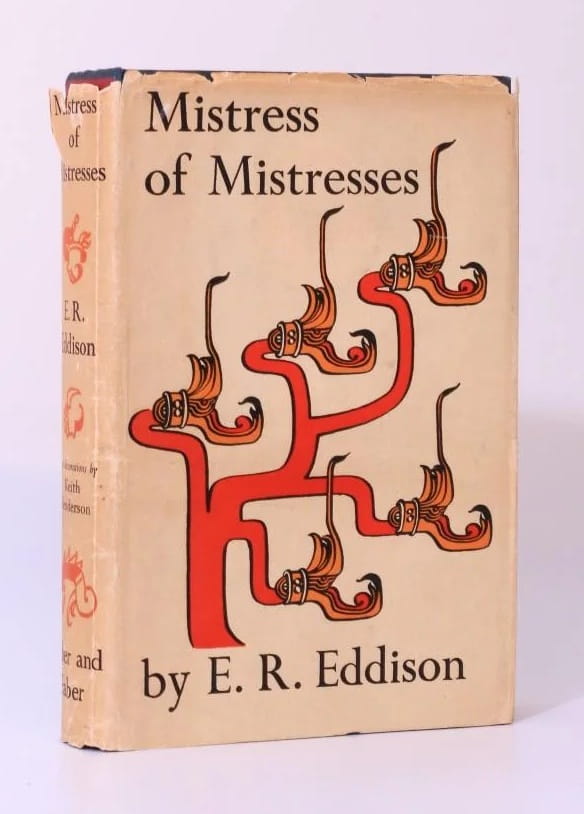
E.R. Eddison’s "Mistress of Mistresses": A Portal to the Baroque Grandeur of Zimiamvia
“The fabled land of Zimiamvia. Is it true, will you think, which poets tell us of that fortunate land: that no mortal foot may tread it, but the blessed souls do inhabit it of the dead that be departed: of them that were great upon earth and did great deeds while they were living, that scorned not earth and the delights and the glories of earth, and yet did justly and were not dastards nor yet oppressors?”
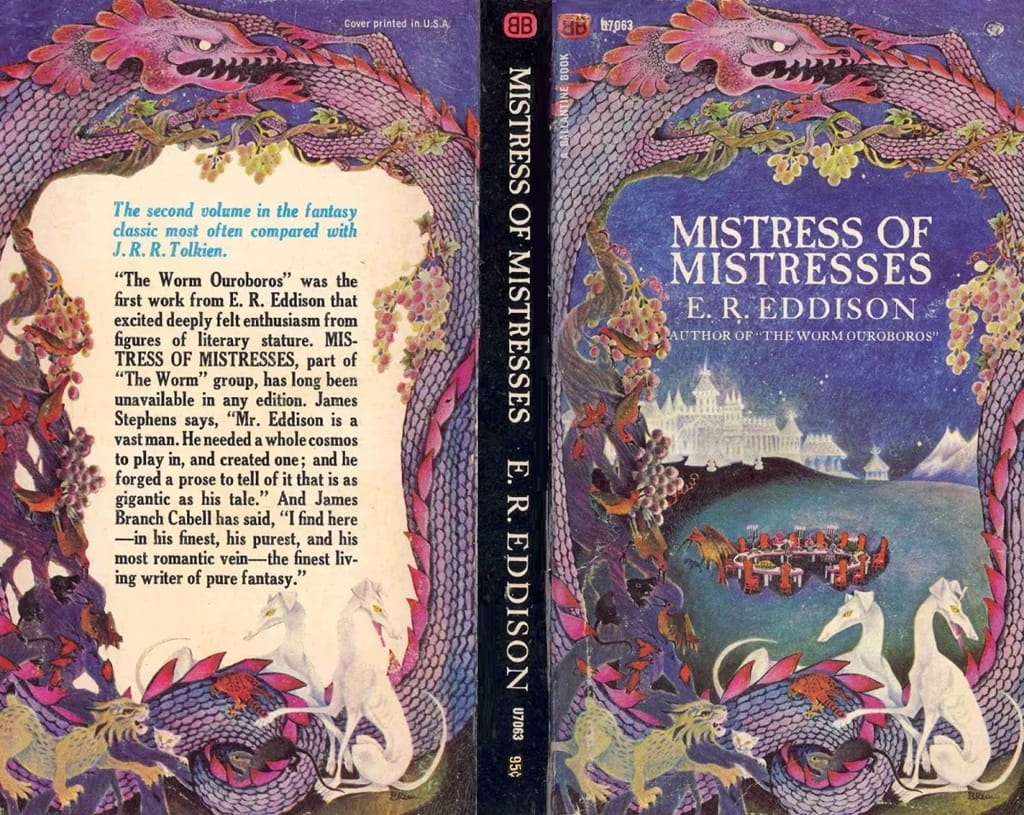
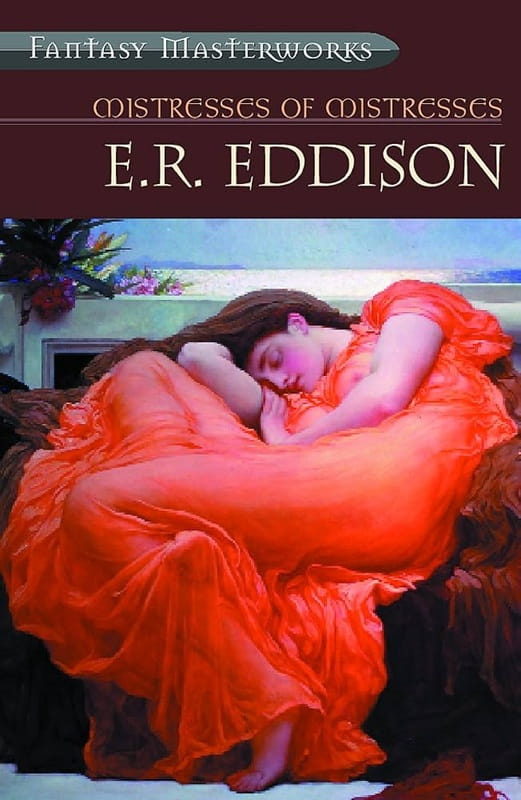
This evocative query, whispered "faint as the breath of nightflowers under the stars," serves as an irresistible invitation into the opulent, intricate, and often brutal world of E.R. Eddison’s Zimiamvia. Penned by a singular voice in early 20th-century fantasy, Mistress of Mistresses, first published in 1935, is not merely a novel but a portal to a realm where political intrigue, passionate love, and epic warfare intertwine with philosophical musings and a distinct, archaic linguistic flair. Re-released to critical attention by Ballantine Books in the wake of The Lord of the Rings‘ paperback success, Eddison’s work stands as a monumental, if often challenging, cornerstone of the fantasy genre, offering a vision of heroism and damnation unlike any other.
The Genesis of a Unique Vision: Eddison’s Early Works
E.R. Eddison, a British civil servant with a profound passion for Norse sagas and classical literature, carved a unique niche in the nascent genre of fantasy. His works are characterized by their elevated prose, intricate world-building, and a worldview deeply steeped in a heroic ethos that prioritizes action, beauty, and fierce individualism.
The Worm Ouroboros (1922): A Progenitor’s Epic
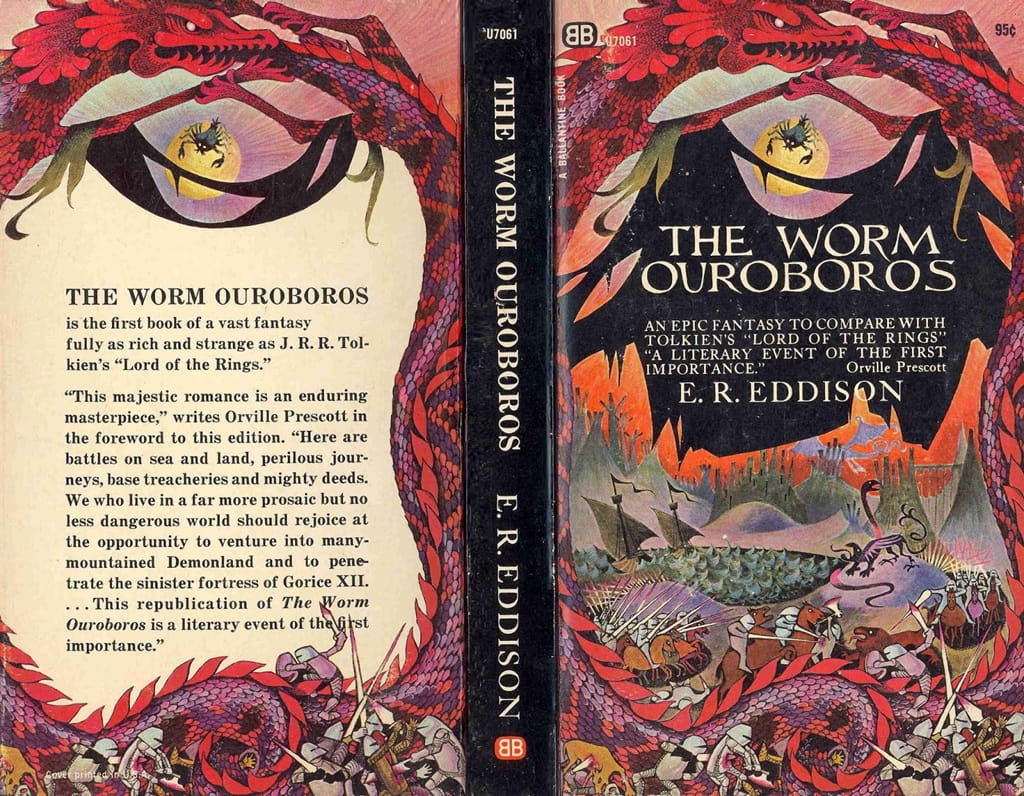
Eddison began his fantasy journey in 1922 with The Worm Ouroboros, a sprawling heroic romance set on an alternate version of Mercury. This novel, a grand epic of warring nations, formidable sorcery, and larger-than-life characters, immediately distinguished itself with its archaic, almost Elizabethan prose and its uncompromising vision of heroism. It introduced the character of Lessingham as a viewpoint character, whose consciousness is transported to Mercury in a dream, witnessing the epic conflicts of the Lords of Demonland and Witchland. While Lessingham’s role in Ouroboros is largely that of an observer, a fleeting connection is established that would become crucial in Eddison’s later works. Ballantine Books, recognizing the intrinsic link and Eddison’s unique style, republished The Worm Ouroboros shortly before Mistress of Mistresses, presenting them as interconnected volumes, effectively creating a nascent series for a new generation of readers.
Mistress of Mistresses (1935): Unveiling Zimiamvia
Mistress of Mistresses, the first volume of what would become known as the Zimiamvian Trilogy, represents a deepening of Eddison’s imaginative landscape and a more direct exploration of his philosophical concerns. The novel opens with a poignant scene: the venerable Lessingham, now ninety years old, lying dead in Norway, attended by a loyal old friend and the enigmatic Señora Aspasia del Rio Amargo. It is she, with a name hinting at bitter destinies ("of the bitter river"), who poses the profound question about Zimiamvia – a fabled land, a haven for the blessed souls of the great departed. Her subsequent pronouncement, "I have promised and I will perform," signifies Lessingham’s transition, not to an ethereal afterlife, but to a realm of renewed vitality and purpose.
The narrative then plunges in medias res, transporting the reader to Zimiamvia, where a twenty-five-year-old Lessingham is fully immersed in a world teeming with political machinations and military campaigns. This abrupt shift from a deathbed scene to a vibrant, active realm immediately establishes Zimiamvia not as a passive paradise, but a dynamic stage for great deeds. While The Worm Ouroboros had hinted at Zimiamvia being an inaccessible region of that fantasy Mercury, Mistress of Mistresses and its sequels clarify its nature: it is a realm of the blessed dead, a heaven whose geographical location is as incidental as the Elysian Fields’ placement in ancient myth. It is a place specifically tailored for men of action, where the pursuit of glory and the complexities of power are not merely permitted but celebrated.
Completing the Saga: A Fish Dinner in Memison (1941) and The Mezentian Gate (1958)
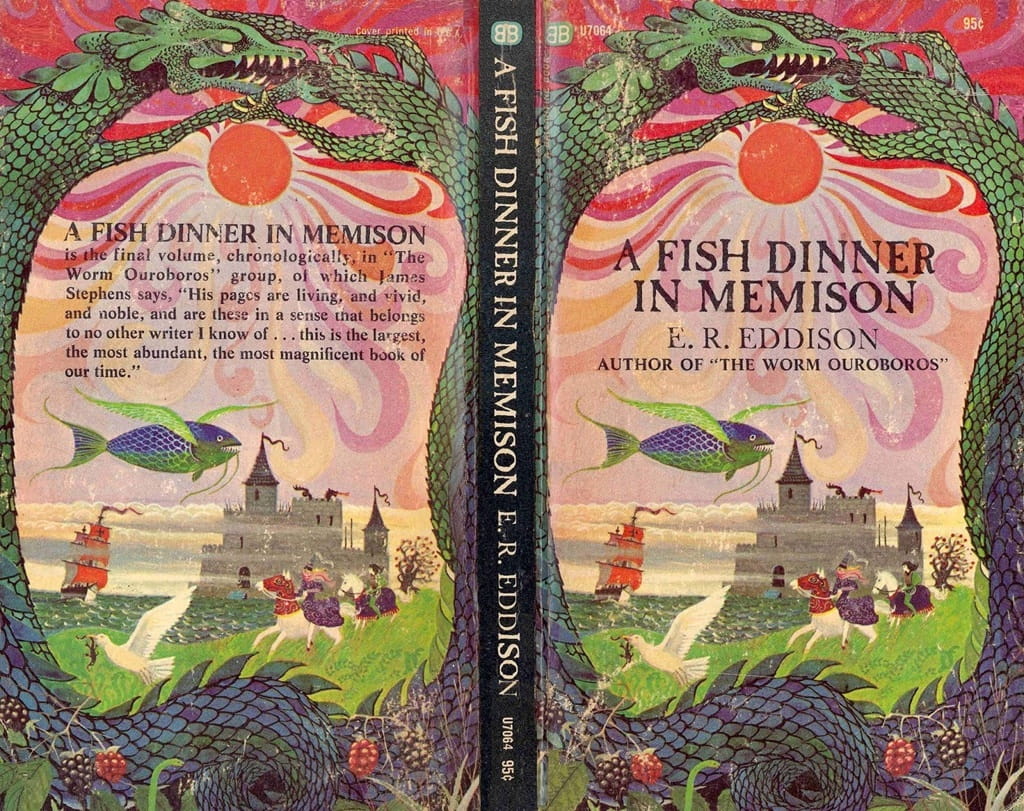
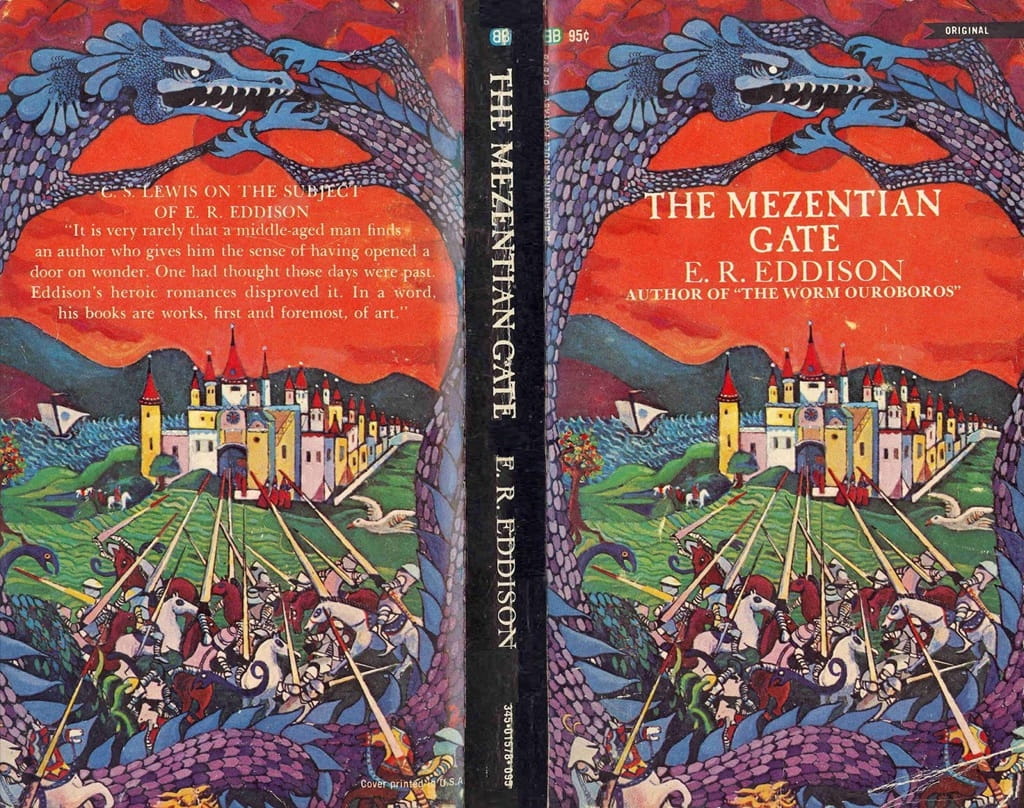
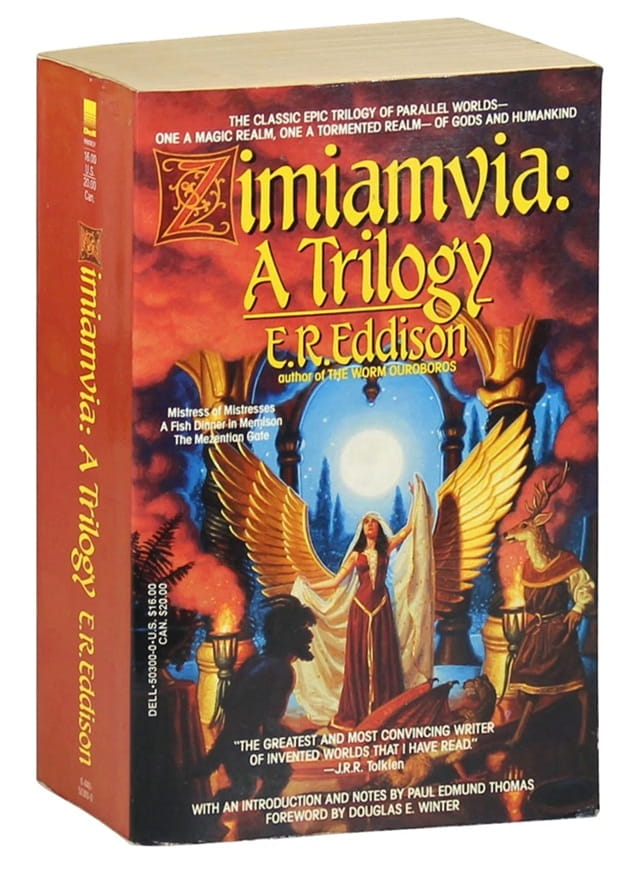
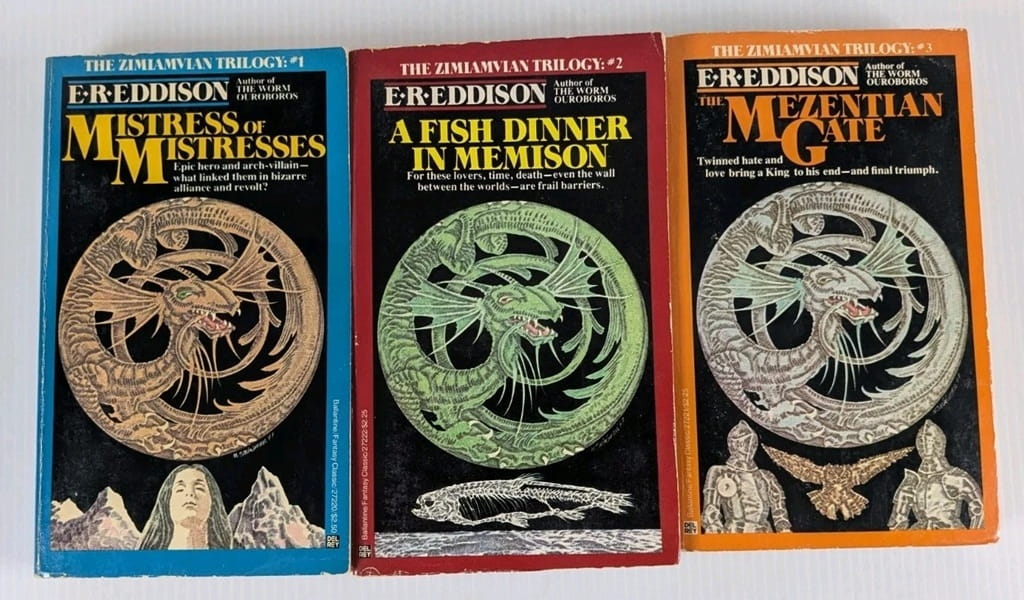
The Zimiamvian Trilogy continues with A Fish Dinner in Memison (1941) and concludes with The Mezentian Gate (published posthumously in 1958). These subsequent volumes further elaborate on the intricate political landscape of Zimiamvia, deepen the philosophical explorations of fate, free will, and the nature of the divine, and solidify the complex relationships between Lessingham and the other key figures. A Fish Dinner in Memison, in particular, offers glimpses of Eddison’s ability to write in more modern prose, contrasting sharply with the archaic style of Zimiamvia, further emphasizing the distinct nature of the two realms. Together, the trilogy forms a cohesive and ambitious narrative, solidifying Eddison’s vision of a heaven that must contain both good and evil, triumph and tragedy, to truly be a place for souls of immense will and passion.
The Tapestry of Zimiamvia: Politics, Passion, and Philosophy
Eddison’s Zimiamvia is far from a simplistic paradise. It is a world of vibrant, often dangerous, beauty, populated by characters whose ambitions and passions drive a narrative as complex as any historical drama.
A Heaven of Action: Political Intrigue and Grand Warfare
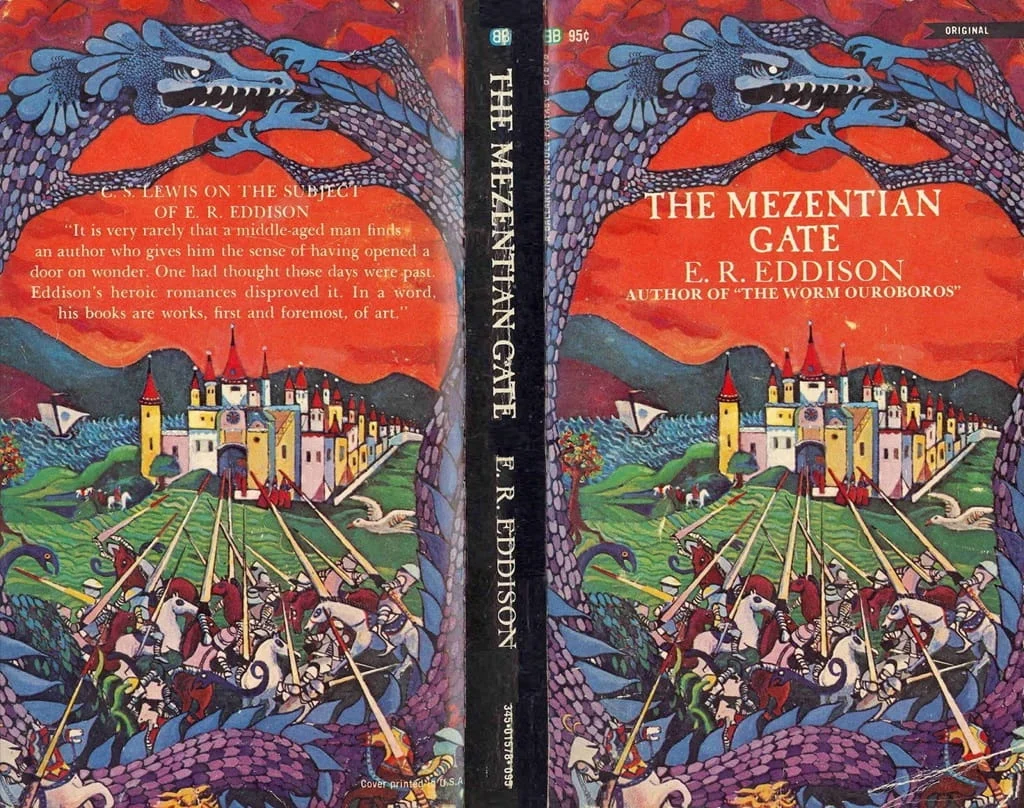
If Zimiamvia is a heaven, it is one custom-designed for the man of action, a soul who finds fulfillment in the cut and thrust of statecraft and the clash of arms. The political landscape is reminiscent of Renaissance Italy, a period characterized by powerful city-states, shifting alliances, Machiavellian strategists, and brutal warfare. The death of King Mezentius, the powerful ruler of Fingiswold, Rerek, and Meszria, throws the kingdoms into turmoil, setting the stage for the novel’s intricate plot. His legitimate children, Styllis and Antiope, along with his bastard son, Duke Barganax, become pawns and players in a dangerous game of succession and power.
The military technology in Zimiamvia is deliberately anachronistic, evoking an earlier age of warfare. There is no gunpowder, no cannonfire, and scant evidence of projectile weapons like bows or catapults. Combat is primarily man-to-man, fought with swords, spears, and shields, emphasizing individual prowess and the brutal intimacy of battle. This choice heightens the heroic aspect of the conflicts, making the large battles, particularly those at the novel’s climax, feel visceral and intensely personal. The customs, while largely those of Renaissance Europe, are stripped of Christianity, with paganism widespread, further contributing to Zimiamvia’s unique, almost classical, moral and spiritual atmosphere.
Eddison uses this setting to explore his views on statecraft. Lessingham, a man gifted in "all the arts, in war, and in statecraft," finds in Zimiamvia the ultimate arena to practice these skills. This concept of a "heaven of action" necessitated the inclusion of evil and tragedy, a point Eddison himself articulated and which Holly Ordway quotes in Tolkien’s Modern Reading. This perspective notably diverged from Tolkien’s more nuanced approach to evil, though both authors ultimately created worlds rich with moral conflict. For Eddison, true heroism and divine favor were intertwined with the willingness to engage with the world’s complexities, its dangers, and its moral ambiguities.
Characters of Monumental Stature
Eddison’s characters are not mere archetypes but deeply etched personalities, often larger than life, whose motivations and interactions form the core of the Zimiamvian saga.
- Lessingham: The protagonist, he embodies the ideal Eddisonian hero. Initially introduced as a ninety-year-old dying man, he is reborn in Zimiamvia as a twenty-five-year-old man of action. He is a master diplomat, a skilled military commander, and a man of strong moral conviction, often at odds with the more pragmatic or treacherous figures around him. His "stature is more than that of mortal men," marked by moments of profound self-awareness and a unique affinity with Barganax, suggesting a deeper, almost divine, nature.
- Horius Parry (The Vicar): The novel’s primary antagonist, Lessingham’s cousin, is a truly unforgettable creation. Physically grotesque – "not tall, but strong and massively built, with fiery red hair and grotesque features" – his moral character is equally formidable. Cunning, ferociously ambitious, and utterly devoid of loyalty, he is a master manipulator, always ready to break his word or change sides for personal gain. His dialogue, "manipulative and full of real and manufactured grievances," is a highlight of the novel. The comparison to Frank Herbert’s Baron Harkonnen is apt, yet Eddison’s Vicar is arguably more compellingly written, a force of nature whose treachery drives much of the narrative. The complex dynamic between him and Lessingham, where Lessingham serves him despite the Vicar’s flaws, and often binds him to agreements that provoke "nearly mortal" anger, remains a central enigma and a powerful driving force of the plot.
- Barganax: King Mezentius’s bastard son, a duke in Meszria, is a figure of intense passion and artistry. He is passionately in love with Fiorinda, and his character, too, possesses a "stature… more than that of mortal men," sharing a profound, almost spiritual, affinity with Lessingham. This bond is memorably illustrated in a scene where each looks into a mirror and sees the other’s face, suggesting a shared essence or a complementary destiny.
- Fiorinda and Antiope: These two women are not mere love interests but figures of significant power and depth. Fiorinda, Chancellor Beroald’s younger sister, and Antiope, King Mezentius’s daughter, both exhibit moments of "transcendent self-awareness" that elevate them above ordinary mortals. Their choices of lovers – Fiorinda choosing Barganax, and Antiope choosing Lessingham – are acts of will rooted in this higher consciousness, making their romantic relationships central to the novel’s metaphysical themes.
- Doctor Vandermast: An aged philosopher, Vandermast serves as a mystical guide and a fount of arcane knowledge. He quotes Spinoza in the original Latin, practices magic, and is the patron of two shape-shifting nymphs, Anthea (a wildcat) and Campaspe (a water rat). He appears to possess a deeper understanding of the "true natures" of Lessingham, Barganax, Fiorinda, and Antiope than they themselves do, acting as a crucial, albeit often cryptic, expositor of the novel’s esoteric undercurrents.
- Amaury and Gabriel Flores: Lessingham’s loyal friend, Amaury, provides a foil to the hero’s sometimes reckless plans, offering a voice of caution and unwavering support. Gabriel Flores, the Vicar’s secretary, is as manipulative and treacherous as his master, yet bound by a complex devotion and terror to him. Flores serves as both a confidante for the Vicar’s schemes and a tool for their execution, while also harboring his own motives concerning Lessingham.
The Erotic and the Esoteric: Love and Metaphysics
Beyond the political and military arenas, Mistress of Mistresses is deeply concerned with the nature of passionate, erotic love. The relationships between Barganax and Fiorinda, and Lessingham and Antiope, are depicted with an intensity that transcends mere romance. These are unions of powerful, almost divine, beings, whose choices are informed by a "transcendent self-awareness." The mirror scene between Lessingham and Barganax, where they see each other’s reflections, underscores a profound, shared destiny or identity that binds them beyond mortal understanding. This metaphysical dimension of love, intertwined with the philosophical underpinnings provided by Doctor Vandermast and his Spinozan maxims, elevates the narrative beyond simple adventure, delving into the very essence of existence and the nature of the blessed souls inhabiting Zimiamvia.
A Literary Divide: Reception and Influence
E.R. Eddison’s work has always been a subject of fervent admiration and, occasionally, profound frustration. His unique style and complex themes set him apart, making him a divisive but undeniably influential figure in fantasy literature.
Ballantine Books and the Fantasy Revival
The 1960s marked a pivotal moment for the fantasy genre, largely catalyzed by the paperback publication of J.R.R. Tolkien’s The Lord of the Rings. Ballantine Books, under the visionary editorship of Lin Carter, seized upon this burgeoning interest, embarking on a deliberate campaign to establish fantasy as a distinct and marketable genre. This initiative involved not only promoting contemporary authors like Joy Chant, Katherine Kurtz, and Evangeline Walton but, crucially, bringing older, foundational works back into print. Eddison’s novels, with their epic scope and distinct literary quality, were prime candidates. The Ballantine editions, adorned with iconic covers by Barbara Remington, introduced Eddison’s Zimiamvian Trilogy to a new, eager audience, solidifying its place in the emerging canon of modern fantasy. This strategic republication was instrumental in shaping the genre’s identity and paving the way for countless future fantasy authors.
The Divisive Stylist: Language and Readability
Perhaps the most defining and divisive characteristic of Eddison’s writing is his prose. He deliberately crafted a style that emulates Elizabethan English, replete with archaic vocabulary, inversions, and a formal cadence that demands careful attention from the reader. This is further enriched by frequent passages in verse and dialogue in multiple languages, including Latin and French.
This stylistic choice is not merely an affectation but a crucial element of Eddison’s world-building, as Ursula K. Le Guin famously discussed in her essay "From Elfland to Poughkeepsie." Le Guin argued for the importance of "Elfland" prose – language that evokes a sense of the magical and ancient – as opposed to commonplace "Poughkeepsie" prose in fantasy. Eddison’s work is a quintessential example of "Elfland" prose; the language itself creates an immersive atmosphere, lending his characters and settings a greater sense of grandeur and historical depth. The multilinguality, a feature also found in Dorothy Dunnett’s acclaimed Lymond Chronicles, adds layers of authenticity and intellectual challenge, reflecting the learned background of his characters and the rich cultural tapestry of Zimiamvia.
Consider this passage from the novel, a French poem that exemplifies Eddison’s linguistic richness:
Mère des souvenirs, maîtresse des maîtresses,
O toi, tous mes plaisirs! O toi, tous mes devoirs!
Tu te rappelleras la beauté des caresses,
La douceur du foyer et le charme des soir,
Mère des souvenirs, maîtresse des maîtresses!
[Mother of memories, mistress of mistresses!
O you, my pleasures and my duties all!
You will call back the beauty of caresses,
The sweetness of the hearth and the evening’s enchantment,
Mother of memories, mistress of mistresses!]
This blend of high Elizabethan English, classical allusions, and multi-lingual flourishes creates a reading experience that is either deeply rewarding or utterly impenetrable. For many, this unique approach to language is the "most decisive reason for them to love Eddison or find him intolerable." It is a testament to his uncompromising artistic vision, demanding a reader willing to engage with his world on its own terms.
Enduring Legacy and Modern Comparisons
Despite its challenges, Eddison’s work has garnered enduring admiration and influence. He is recognized as a precursor to modern epic fantasy, a writer who dared to imagine worlds of immense scale and complex moralities before the genre fully blossomed. The comparison to George R.R. Martin, particularly in the portrayal of grand conflicts and characters "larger than life," is insightful. However, Eddison achieves this through a distinct, elevated style, offering ingenious plot turns and even moments of unexpected humor within his baroque narrative. Later editions of his works, featuring covers by renowned artists like John Howe, Keith Henderson, and Murray Tinkelman, attest to his continued relevance and the persistent fascination his unique vision inspires.
Beyond the Gates of Zimiamvia: Eddison’s Lasting Impact
E.R. Eddison’s Mistress of Mistresses and the Zimiamvian Trilogy are more than just old fantasy novels; they are literary monuments that challenge and reward in equal measure.
A Challenge and a Reward for the Reader
Reading Eddison is an undertaking. His archaic language, complex narrative structures, and philosophical density are not for the faint of heart. However, for those who persevere, the rewards are immense. Eddison offers a richly imagined world, characters of monumental depth, and a narrative that explores profound questions about heroism, ambition, love, and the very nature of existence. It is a work that stands proudly outside the mainstream, a unique voice that defies easy categorization and offers an experience unlike any other in literature. It is for those who seek to delve into a masterwork that prioritizes linguistic artistry and intellectual engagement alongside epic adventure.
A Cornerstone of High Fantasy
E.R. Eddison’s Zimiamvian Trilogy stands as a crucial, if sometimes overlooked, cornerstone of high fantasy. He demonstrated that fantasy could be a vehicle for sophisticated philosophical inquiry, intricate political drama, and profound character exploration, all wrapped in a language of unparalleled beauty and power. In an era where the fantasy genre continues to evolve and diversify, rediscovering Eddison’s works offers a vital connection to its roots, a reminder of the genre’s capacity for grandeur, challenge, and truly original thought. For those seeking to understand the full breadth and potential of fantasy literature, the journey into Zimiamvia, though arduous, promises an unforgettable and enriching experience.
William H. Stoddard is a professional copy editor specializing in scholarly and scientific publications. As a secondary career, he has written more than two dozen books for Steve Jackson Games, starting in 2000 with GURPS Steampunk. He lives in Lawrence, Kansas with his wife, their cat (a ginger tabby), and a hundred shelf feet of books, including large amounts of science fiction, fantasy, and graphic novels.