A Tsunami of Innovation Hits Fantasy Fiction with "Physical Magic": An SPFBO Semi-Finalist Review
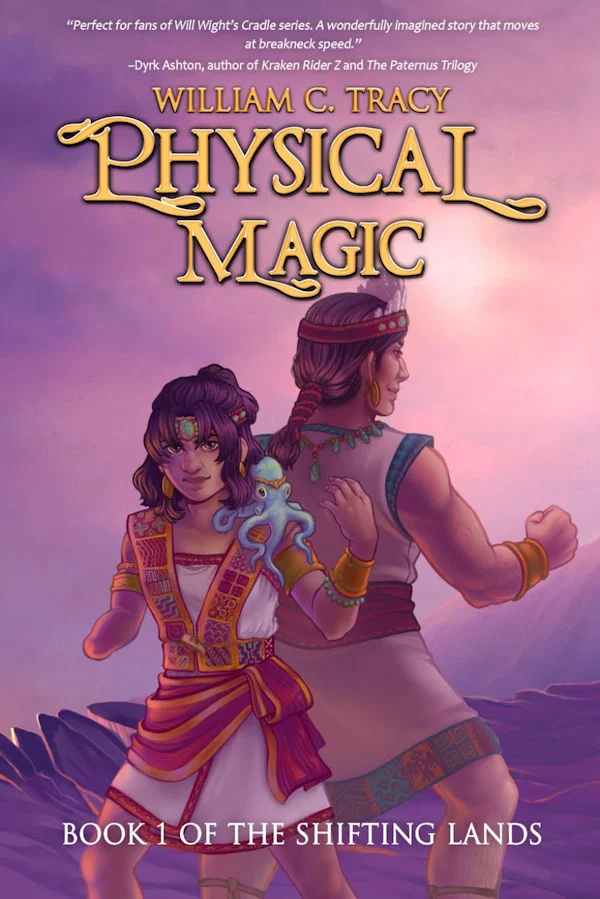
In the vibrant and ever-expanding landscape of self-published fantasy, a novel has emerged from the depths to capture the imagination and critical acclaim of judges in the 11th annual Self-Published Fantasy Blog-Off (SPFBO). Physical Magic, a compelling debut, has distinguished itself as a semi-finalist, lauded for its refreshing approach to worldbuilding, its deeply resonant protagonist, and its thoughtful exploration of identity and societal norms. As Round One of the SPFBO competition draws to a close, with the highly anticipated finalist pick just days away, Physical Magic stands as a testament to the power of diverse storytelling and innovative fantasy.
From its very first chapters, Physical Magic challenged conventional fantasy tropes, opting for a rich, Pacific Island-inspired setting over the more ubiquitous Western medieval template. This strategic departure has infused the narrative with a distinctive atmosphere and a sense of fresh discovery that resonated profoundly with the judges. Beyond its unique backdrop, the novel introduces a protagonist whose journey of self-worth is handled with an honesty and care that left a lasting impression. Described by judges as thoughtful, inclusive, and quietly ambitious, Physical Magic has proven itself to be more than just a captivating read; it is a significant entry into the modern fantasy canon, pushing boundaries and inviting readers into a world both wondrous and challenging.
The Heart of the Storm: A Synopsis of Silluka’s Unconventional Path
At the core of Physical Magic lies the compelling saga of Silluka, a young woman born with a profound physical difference: only one arm. In a society where the exacting motions required to summon the favor of the gods are paramount, her disability renders her seemingly incapable of practicing traditional magic. This perceived failing sets her on a perilous path. Caught in the act of stealing, Silluka is forced into a desperate trial to test her powers. When she inevitably fails, the consequences are dire: she is stripped of her citizenship and branded an outcast from her village.
In a fit of desperation, Silluka attempts to reclaim her status by stealing a badge of citizenship from the mysterious Elder Quilqi. This act of defiance, however, inadvertently opens a door to an entirely different destiny. Instead of punishment, Elder Quilqi reveals to Silluka an alternative route to accessing divine powers, a path that hinges on the enigmatic concept of "Physical Magic." Her training is further aided by an extraordinary, octopus-like technological wizard who worships its own eldritch divinities, injecting a unique blend of ancient mysticism and inventive futurism into the narrative.
Time, however, is a luxury Silluka does not possess. A new, menacing island is rapidly approaching the coastal town, heralded by deadly hurricanes and devastating tidal waves that threaten to engulf all who live there. The village’s traditional protectors—the gods and godlike storm warriors—prove insufficient against the encroaching peril. Their failure is dramatically underscored when a mysterious creature bursts through their defenses, revealing itself to be merely the forerunner of a terrifying, fast, and deadly species poised to invade the larger island.
With imminent destruction looming, the village is forced to flee inland. Yet, Silluka finds herself weighed down not only by the external threat but also by the internal burden of her outcast status and the failing abilities of her beloved brother. To save herself, her family, and her community, Silluka must embark on a transformative journey. She must overcome the crushing weight of societal stigma and her own deep-seated self-doubt. Her quest demands that she learn the true scope of the world beyond her village’s familiar shores, and, crucially, she must master the secrets of Physical Magic. Her story is one of resilience, reinvention, and the redefinition of what it means to be powerful.
Charting New Waters: Worldbuilding and Cultural Depth
One of the most universally praised aspects of Physical Magic by the SPFBO judges is its exceptional worldbuilding. Julia, one of the judges, immediately highlighted the story’s distinct setting, noting, "It is clearly not drawing from the usual Western medieval fantasy toolbox. Instead, the world feels inspired by island-based cultures of the Pacific, with gods tied to storms and survival, and communities that must eventually move on when their land can no longer sustain them." This fresh perspective creates a vibrant and immersive environment, rich with unique customs, elemental affinities, and a deep connection to the natural world.
Maureen further elaborated on the "delightful" worldbuilding, praising Tracy’s (the author) skillful portrayal of both martial arts forms and their elemental ties, as well as the intricate societies of the islands. The Huaca people, though the term for them is later corrected as a "tribe," are depicted with a clear hierarchy and roles, from esteemed village elders to the "lowly undesirable" outcasts. This societal structure, intrinsically linked to the environment’s inherent impermanence, imbues the narrative with a distinct atmosphere that Julia found "both fresh and unsettling." The constant threat of islands crashing together and the need for communities to migrate when their land can no longer sustain them establish a powerful sense of urgency and a unique set of survival rules.
The magic system, too, is deeply woven into this cultural fabric. Known as "chayus," these martial arts forms are performed to appeal to various gods, who then lend elemental power according to the specific chayu. This martial arts-based magic system, with its technical rules and elemental affinities, offers a tangible and visually compelling form of magic that enhances the world’s authenticity. The blending of cultural inspiration with a meticulously crafted magical system provides a rich tapestry that sets Physical Magic apart.
A Protagonist Forged in Adversity: Silluka’s Journey of Self-Worth
At the emotional core of Physical Magic is Silluka, a disabled protagonist whose struggle with self-worth resonates deeply. Julia lauded the space the book dedicates to Silluka’s internal battle, emphasizing that her journey is not about an overnight transformation into an exceptional hero, but rather a "slowly questioning the story she has been told about herself." Born with only one arm in a society that values physical perfection for magical practice, Silluka has internalized the belief that she is useless. This internal conflict is portrayed with an honesty that grounds her fantastical journey in relatable human experience.
Adawia, while noting a minor concern about Silluka’s cleverness being "told" rather than consistently "shown," powerfully highlighted the character’s "extraordinary courage—even ‘under fire.’" This courage, displayed in moments of intense pressure and personal risk, becomes a defining characteristic, arguably more impactful than intellectual prowess in her perilous circumstances. Silluka’s path to self-acceptance is neither easy nor immediate, reflecting the complex nature of overcoming deep-seated insecurities. Her gradual shift in mindset, proving her worth to herself first, makes her journey all the more impactful and earned.
The societal context further amplifies Silluka’s struggle. The Huaca society, built on the premise that only the strong and magically capable deserve to survive and progress, is depicted as deeply flawed. Julia appreciated that the book doesn’t neatly resolve these societal biases but instead shows tentative shifts in thinking among some characters, reflecting a more realistic portrayal of change. Silluka’s fight is thus not just against external threats but also against the ingrained prejudices of her own community, making her personal triumph a subtle yet profound challenge to established norms. Her development, especially given her "disadvantage trying to perform perfect chayus with only the one forearm," as Maureen points out, is central to the narrative, underscoring the theme that true power can be found in unconventional ways.
The Mechanics of the Mystical: Exploring Physical Magic
The magic system in Physical Magic offers a refreshing departure from traditional spellcasting, providing a "technical system of magic with lots of rules" that EG found entertaining. While some readers might be wary of overly detailed magical explanations, Julia noted that the book avoids getting "lost in pages of technical explanation." Instead, the focus is on the foundational elements of "balance, stance, dexterity, and intention." This approach makes the magic system "easy to grasp without feeling shallow," allowing readers to understand its principles without being bogged down by minutiae.
Crucially, the book "gently suggests physically perfect movement might not be the only way to access the power of the gods," a theme that directly ties into Silluka’s journey. This subtle undermining of a seemingly rigid magical requirement provides a powerful message of inclusion and adaptability, hinting at broader possibilities for those who don’t fit conventional molds.
An interesting element later introduced is an assistive tool for magic use. Julia, while generally cautious about "magical cures for disability," found this particular solution handled with care. Rather than a miraculous fix, it functions more as an aid, opening up possibilities for individuals with "many different kinds of bodies and conditions." This nuanced approach ensures that the tool enhances capability rather than erasing disability, aligning perfectly with the book’s inclusive ethos and reinforcing the idea that strength and ability manifest in diverse forms. The interplay between physical discipline, divine connection, and technological assistance creates a dynamic and innovative magical framework.
A Tapestry of Inclusivity: Diversity in "Physical Magic"
Beyond its innovative setting and compelling protagonist, Physical Magic shines as a beacon of quiet inclusivity. Julia highlighted this as a "strength of this book," noting the natural and organic way diversity is woven into the narrative fabric. Silluka’s brother, Ichu, is openly bisexual, moving "naturally between relationships with different genders," a fact that is presented without fanfare or judgment. This matter-of-fact queerness extends to Silluka herself, who is described as being attracted to more than one gender. While her lack of relationships is attributed to her internalized feelings of unworthiness, the subtle hint of future romantic possibilities is present without overshadowing her primary journey.
This seamless integration of LGBTQ+ identities feels authentic and meaningful, a quality Julia attributes in part to the author’s own identity as bi/pan. The absence of tokenism or performative representation allows the diversity to simply exist within the world, reflecting a reality that is often underrepresented in fantasy literature. This commitment to depicting a diverse range of experiences and identities without making them the central conflict or a "special" element further solidifies Physical Magic‘s position as a thoughtful and forward-thinking work. It normalizes what is too often marginalized, creating a world where characters can simply be who they are.
Whimsical Allies and Engaging Dialogue: The Artificers’ Charm
Adding another layer of charm and inventive flair to Physical Magic are the unique octopus-like technological wizards, or artificers. These delightful characters were a particular highlight for several judges, bringing humor and a quirky intelligence to the narrative. Eva confessed to "absolutely cackling in chapter four when Silluka meets a small creature who uses their own translation invention (a translation circlet) to attempt to communicate with her." The malfunctioning circlet, which requires a good "smack" to deliver hilariously garbled translations like "rotten kelp" and "still under torture," provides genuinely funny moments that lighten the narrative. The creature’s referring to a wake-up call as a "wake attack" further exemplifies their unique linguistic and technological quirks.
Julia also praised the artificers, noting their "dialogue and banter are genuinely fun, and their enthusiasm for inventing all the things adds humor and a slightly strange, inventive edge to the world." These characters are not just comic relief; their technological wizardry and unusual perspectives contribute significantly to Silluka’s training and the broader worldbuilding. Their presence underscores the novel’s blend of ancient magic and futuristic innovation, creating a captivating dynamic that keeps the reader engaged and often amused. These whimsical allies are a testament to the author’s creativity, offering memorable interactions and a fresh take on the mentor archetype.
Navigating the Tides: Minor Criticisms and Overall Impact
While Physical Magic garnered overwhelming praise, judges also offered constructive observations, which, in the spirit of SPFBO, are shared to provide a comprehensive review. Adawia, for instance, expressed a minor "niggling issue" regarding the portrayal of the Female Main Character (FMC), Silluka. She noted that while the text often states Silluka is clever, instances of her displaying "profound cleverness" were less frequent. Adawia suggested that playing up Silluka’s "extraordinary courage" more consistently might have been more effective, believing that the author might have been trying to "compensate for the character’s disability" by emphasizing intellect.
Julia identified "one small worldbuilding hiccup early on involving how citizenship tokens are handled," which briefly pulled her out of the story. However, she quickly added that it "never becomes a real plot issue and was easy to move past." Maureen, while praising immersion, found the "start/stop parts of the voyage felt a bit clunky" in terms of pacing. EG, acknowledging her personal preference, mentioned that she’s "not hugely fond of highly technical magic systems," though she still found the story entertaining despite the detailed magic.
These minor points, however, did not detract from the overall positive reception. As SPFBO reviews emphasize, "Reading is subjective. What didn’t click for us might be exactly your kind of story." The judges universally recognized the book’s strengths and its powerful impact, considering these "niggling issues" as minor ripples in an otherwise compelling narrative. The fact that judges often had to search for minor critiques underscores the novel’s quality and its ability to captivate.
Julia also shared her experience with the audiobook narration, which took "a little getting used to at first" due to pauses at commas feeling "almost as long as full stops." However, she adjusted and ultimately found the casting "thoughtful and fitting" given the narrator is queer, uses they/them pronouns, and is Native Hawaiian – a choice that deeply aligns with the book’s inclusive themes and Pacific Island inspiration. This thoughtful casting choice further enhances the immersive experience for listeners.
The SPFBO Journey: A Stepping Stone to Wider Recognition
This review of Physical Magic marks a pivotal moment in Round One of this year’s SPFBO. As one of the semi-finalists under review, its strong performance has positioned it as a serious contender for the coveted finalist spot. The Self-Published Fantasy Blog-Off, created by author Mark Lawrence, serves as a crucial platform for independent fantasy authors, providing them with invaluable exposure and critical assessment from a panel of dedicated fantasy bloggers and readers. For a self-published novel, being recognized as a semi-finalist is a significant achievement, highlighting its quality and potential in a highly competitive field.
The SPFBO process is rigorous, involving multiple stages of reading and evaluation. Each entry is carefully considered, and the semi-finalist reviews are a testament to the books that have truly stood out. The impending announcement of the finalist pick is a moment of high anticipation, as the chosen book will advance to Round Two, where it will compete against finalists from other judging teams for the ultimate SPFBO champion title. This competition not only celebrates exceptional talent but also guides readers toward hidden gems they might otherwise miss.
Implications and Future Horizons
The success of Physical Magic as an SPFBO semi-finalist carries significant implications for both the author and the broader fantasy genre. For the author, this recognition provides a powerful boost in visibility and credibility, opening doors to a wider readership and potentially further publishing opportunities. It validates the immense effort and talent invested in creating such a distinctive world and compelling story.
More broadly, Physical Magic serves as a powerful example of the growing demand for diverse and innovative fantasy. Its Pacific Island-inspired setting challenges the Eurocentric bias often found in the genre, demonstrating that rich, engaging fantasy can draw from a multitude of cultural traditions. The novel’s thoughtful handling of disability, self-worth, and casual LGBTQ+ inclusion sets a high standard for contemporary fantasy, proving that inclusivity can be woven seamlessly into the narrative without feeling forced or didactic. It encourages other authors to explore untold stories and underrepresented voices, enriching the tapestry of fantasy literature for all readers.
The judges, including Maureen, expressed confidence that "there are more surprises in subsequent books," with Julia adding that the book "clearly sets up a larger series, with much more to come, but it still felt satisfying on its own." This bodes well for the future, suggesting that Physical Magic is not just a standalone success but the beginning of an expansive and promising saga. Its impact will likely resonate for years to come, inspiring both readers and writers to seek out and create stories that are as diverse as the world itself.
Conclusion: A Resounding Acclaim for a Fresh Voice
In summation, Physical Magic stands as a remarkable achievement in self-published fantasy. Its unique blend of Pacific Island-inspired worldbuilding, a nuanced portrayal of disability and self-worth, an inventive magic system, and authentic inclusivity has garnered widespread acclaim from the SPFBO judges. From Silluka’s arduous journey of self-discovery to the humorous antics of the octopus-like artificers, the novel offers a rich, immersive, and emotionally resonant experience.
Despite minor criticisms, which are inherent in any subjective review process, the overarching sentiment is one of profound admiration. Physical Magic is lauded as a thoughtful, inclusive fantasy with a strong emotional core, a distinctive setting, and a protagonist whose struggle with self-worth feels honest and earned. As the SPFBO competition nears its thrilling conclusion, Physical Magic has undeniably made its mark, not just as a strong contender, but as a vital and refreshing voice in the fantasy landscape, proving that true magic lies in the power of an original and heartfelt story. It invites readers to embark on an adventure that challenges preconceptions and celebrates the strength found in difference.