
Nanna: The Enduring Luminary of Mesopotamia’s Night Sky
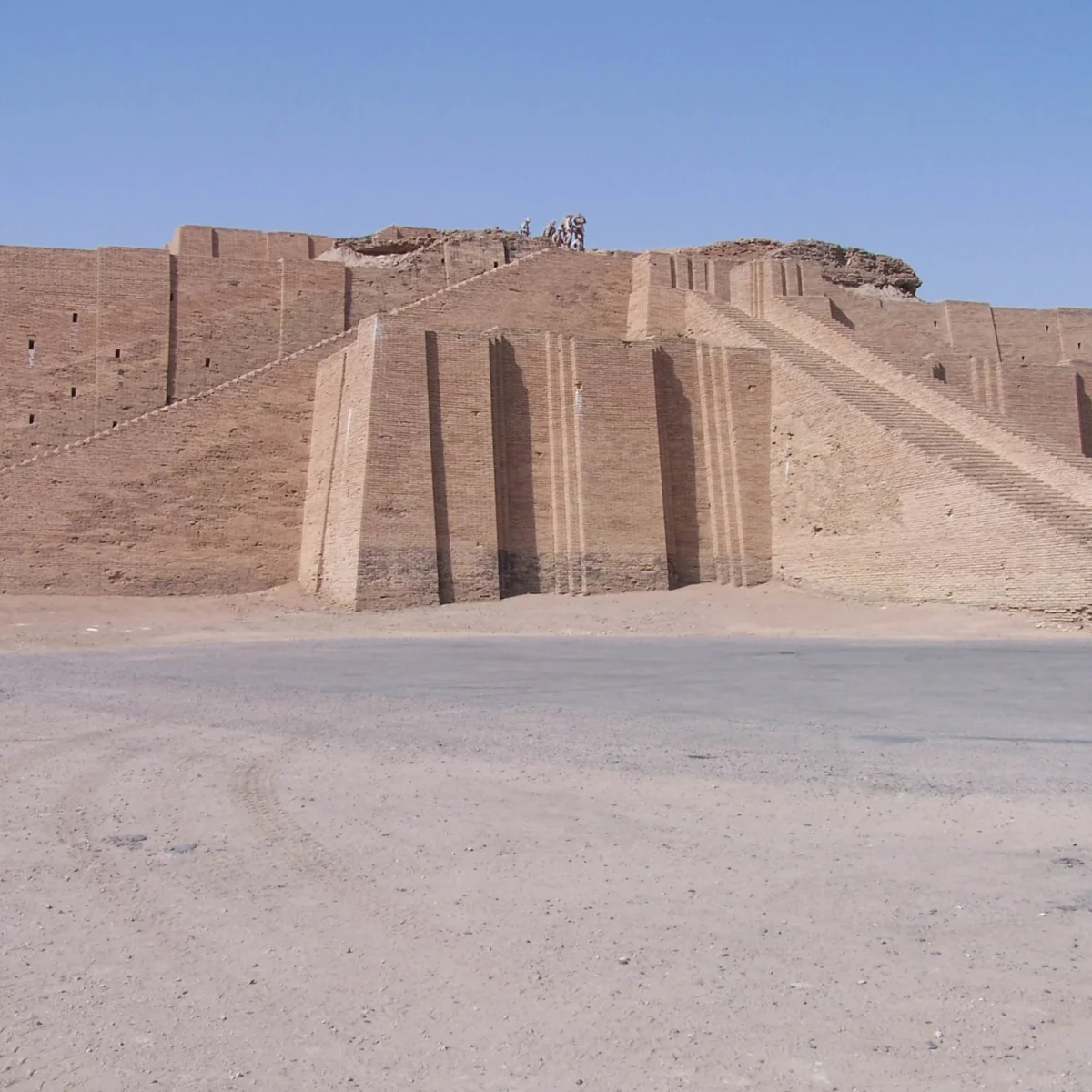
Ur, Mesopotamia – From the earliest glimmers of civilization to the twilight of ancient empires, the Mesopotamian god Nanna, known by many names including Sin and Nanna-Suen, reigned supreme as the divine embodiment of the moon and wisdom. One of the oldest deities in the vast Mesopotamian pantheon, his veneration dates back to the very dawn of writing in Sumer around 3500 BCE and persisted, in varying forms and degrees of prominence, until the 3rd century of the Common Era. His influence permeated religious, political, and cultural life, casting a long, illuminating shadow across millennia of human history.
The Enduring Luminary: Nanna’s Historical Trajectory
Nanna’s journey through Mesopotamian history is a testament to the enduring power of celestial observation and its integration into spiritual belief. His cult centers, particularly the grand temple and ziggurat in the Sumerian city of Ur, became beacons of religious and political power, reflecting his profound significance.
From Sumerian Dawn to Akkadian Zenith
The earliest mentions of Nanna, whose Sumerian name’s meaning remains elusive, surface in archaic texts from circa 3500 BCE, indicating his established importance even in humanity’s nascent literary efforts. As the region transitioned and new empires rose, so too did Nanna’s nomenclature evolve. While Sumerians revered him as Nanna, the Akkadians, Assyrians, and Babylonians predominantly knew him as Sin, Nanna-Sin, or Nanna-Suen. This linguistic shift did not diminish his stature; rather, it cemented his place across diverse cultural groups.
By the time of Sargon of Akkad’s reign (2334-2279 BCE), Nanna, now frequently referred to as Sin/Suen, was hailed as "The Illuminator." This epithet underscored his fundamental role in providing light and guidance in the nocturnal world. His prestige was further acknowledged by Sargon’s grandson, the formidable Naram-Sin (reign 2254-2218 BCE), who adopted the god’s name upon his ascension, signaling a profound connection between royal authority and divine endorsement. Such a gesture by one of the greatest Akkadian kings highlights Nanna’s perceived capacity to legitimize rule and inspire societal cohesion.
A Pantheon’s Anchor
Nanna’s influence reached a zenith during the Ur III period (circa 2112 to circa 2004 BCE), a golden age for Sumerian culture. During this era, he was frequently lauded in hymns and inscriptions as the chief god of the pantheon, often bearing the epithet Enzu, meaning "lord of wisdom." His centrality is vividly illustrated by the sheer volume of literary and monumental references praising him, as well as the numerous myths and stories in which he plays a pivotal role. The sophisticated astronomical observations of the Mesopotamians undoubtedly contributed to the moon god’s elevated status, as the lunar cycles were critical for timekeeping, agriculture, and religious festivals.
Shifting Sands of Faith
While Nanna’s prominence fluctuated across different historical epochs and regional cults, his worship remained remarkably resilient. Beyond Ur, another significant temple dedicated to Nanna, or Sin, flourished in Harran, a city in modern-day Syria. This northern cult center gained particular importance in later periods, even sustaining his veneration long after many other Mesopotamian deities had faded from widespread recognition. This geographical spread indicates a robust and adaptable religious framework that allowed Nanna’s cult to endure through political upheavals and cultural shifts, persisting until its eventual replacement by the Christian God in the 3rd century CE.
Unveiling the Divine: Family, Iconography, and Sacred Roles
Nanna was not merely a distant celestial body; he was intricately woven into the fabric of Mesopotamian cosmology, with a rich family life and a complex set of symbolic representations that reflected his diverse divine functions.

A Celestial Lineage
In the Mesopotamian tradition, Nanna’s familial ties positioned him firmly within the divine hierarchy. He was the firstborn son of Enlil, the powerful god of wind, air, earth, and storms, and Ninlil, the goddess of air and grain. Their union, famously recounted in the myth Enlil and Ninlil, originated by a riverbank, underscoring the natural elements intertwined with divine genesis. Nanna’s wife was Ningal, the "Great Lady" and a fertility goddess. Together, they fathered Utu-Shamash, the radiant sun god, and in some traditions, his twin sister Inanna/Ishtar, the formidable goddess of love, sexuality, and war. Other offspring included Ereshkigal, Queen of the Dead, and Ishkur (Adad), the god of storms.
A particularly intriguing aspect of this divine family tree is the lunar deity (Nanna) preceding and fathering the solar deity (Utu-Shamash). This theological ordering is believed to reflect a profound cultural evolution. Early hunter-gatherer societies, dependent on nocturnal travel and lunar cycles for seasonal tracking, often prioritized the moon’s significance. The sun’s preeminence, however, grew with the advent of settled agricultural societies, where its light and warmth were crucial for cultivation. Thus, religious belief mirrored the changing socio-economic landscape. Scholar Stephen Bertman illuminates this perspective:
"The Mesopotamians thus conceived of day, illuminated by the sun, as emanating from the darkness of night and the lesser light of the moon. As the time of lovemaking, the night and the moon were linked to the goddess of the erotic. As a source of light, the moon was also viewed as humanity’s protector against acts of criminality undertaken under the cover of darkness even as the illuminating and all-seeing sun was looked upon as a guardian of justice." (122)
This intricate relationship highlights the moon’s role not just as a celestial body, but as a guardian, a source of romantic mystery, and a predecessor to the sun’s vigilant justice.
Symbols of Sovereignty and Wisdom
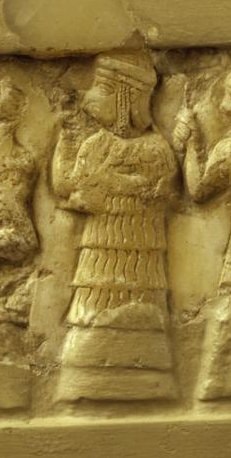
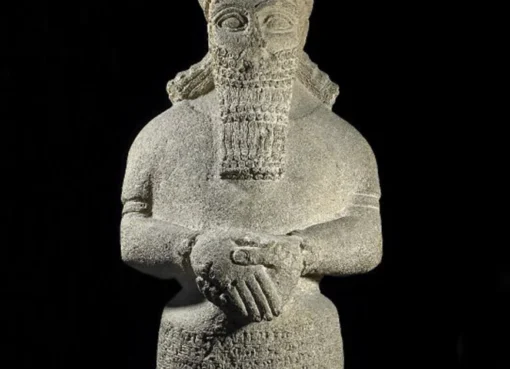
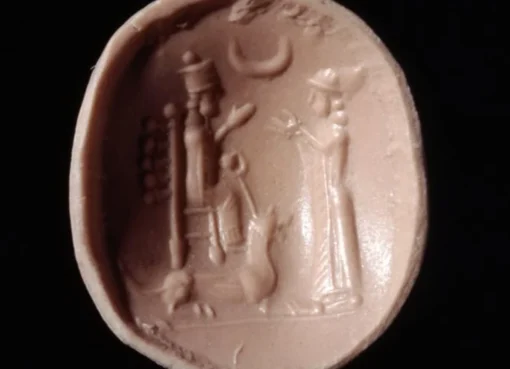
Nanna’s iconography was rich and multifaceted, embodying his divine attributes. He was often represented as a recumbent moon, a direct visual link to his celestial domain. His association with powerful animals like the bull and the lion-dragon conveyed strength, majesty, and perhaps a connection to primal forces. Visually, he was also depicted as a dignified, seated man with a long beard, sometimes specifically described as being made of lapis lazuli – a precious blue stone symbolizing divinity and royalty – with a crescent moon hovering above him. Another common portrayal showed him riding on the back of a winged bull, merging his lunar aspect with symbols of fertility and power.
Beyond these visual representations, Nanna was uniquely symbolized by the number 30, referring to the approximate number of days in a lunar month, thus cementing his role as a keeper of time. The crescent moon itself was often conceived as his celestial barge, upon which he sailed majestically through the night sky, overseeing the world below. These symbols were not mere artistic flourishes but potent signifiers of his divine authority, wisdom, and omnipresent watchfulness.
Beyond the Night Sky: Nanna’s Multifaceted Influence
Nanna’s roles extended far beyond merely illuminating the night. He was repeatedly revered in ancient texts as a god who provides and unifies, a benevolent force ensuring the well-being of humanity. His functions were extensive:
- Provider and Unifier: He was seen as a source of sustenance and a force that brought communities together.
- Keeper of Time and Diviner: The lunar cycles made him the quintessential timekeeper, and his wisdom granted him foresight, enabling him to reveal human destiny and offer counsel for a better future.
- Protector and Guardian: Nanna was invoked for protection against the dangers of the night and as a moral guide.
- Judge of the Dead: A unique development in the Ur III period saw Nanna assume the role of judging the deceased, offering a departure from the traditional bleak Mesopotamian underworld.
These diverse attributes underscore Nanna’s comprehensive impact on the daily lives and spiritual aspirations of the Mesopotamian people, making him a central figure in their understanding of the cosmos and their place within it.
Royal Endorsements and Political Ingenuity: Nanna in Governance
The worship of Nanna was not solely a spiritual affair; it was deeply intertwined with the political landscape of Mesopotamia. Rulers frequently leveraged his immense popularity and unifying attributes to consolidate their power and legitimize their reign.
Sanctuaries of Power: Ur and Harran
Nanna’s primary cult center in Ur was more than just a temple; it was a sprawling complex encompassing a ziggurat, administrative buildings, and residences for priests and priestesses. This sacred precinct served as a vibrant economic hub and a powerful symbol of Ur’s prosperity and divine favor. The city’s identity was inextricably linked to Nanna, and its rulers understood that maintaining the god’s favor was paramount to maintaining their own.
Similarly, the temple at Harran, located in a strategically important region, became another focal point of Nanna’s worship, particularly in later periods. The influence of these cult centers extended far beyond their immediate vicinities, acting as gravitational forces for religious pilgrimage, economic activity, and political alliances.
High Priestesses and Imperial Consolidation
A striking feature of Nanna’s cult was the prominent role of high priestesses, often members of royal families. The most famous was Enheduanna (circa 2300 BCE), daughter of Sargon of Akkad. Sargon’s strategic placement of his daughter as Nanna’s high priestess in Ur was a masterstroke of political and religious integration. It ensured the loyalty of the powerful southern Sumerian cities to the newly established Akkadian Empire, effectively binding disparate regions under a shared divine authority. Enheduanna herself was not merely a figurehead; she was a prolific poet and hymnographer whose works remain cornerstones of ancient literature.
Centuries later, under the reign of Nabonidus (circa 556-539 BCE), the last king of the Neo-Babylonian Empire, this practice was revived. Nabonidus appointed his mother as high priestess at Harran and his daughter to the same prestigious position at Nanna’s temple in Ur. This move, much like Sargon’s, was a deliberate effort to consolidate power and establish a broad base of religious and political support, particularly as Nabonidus faced internal dissent and external threats. Nanna’s perceived role as a god who provides and unifies made his cult an ideal instrument for rulers seeking stability and legitimacy.
Kings and the Moon God’s Favour
Beyond appointing priestesses, many Mesopotamian kings directly honored Nanna to invoke his favor and project an image of divinely sanctioned rule. Naram-Sin’s adoption of the god’s name is a prime example. By aligning themselves with Nanna, rulers sought to tap into his attributes of wisdom, protection, and destiny-decreeing power. They understood that religious belief was a powerful tool for governance, fostering loyalty and a sense of shared purpose among their subjects. The prosperity of the land and the success of military campaigns were often attributed to the benevolent gaze of Nanna, reinforcing the symbiotic relationship between divine power and earthly authority.
Echoes in Eternity: Nanna’s Literary and Afterlife Legacy
Nanna’s profound impact is perhaps nowhere more evident than in the rich tapestry of Mesopotamian literature and the evolving beliefs surrounding the afterlife, where his influence offered comfort and guidance.
Narratives of Divine Benevolence
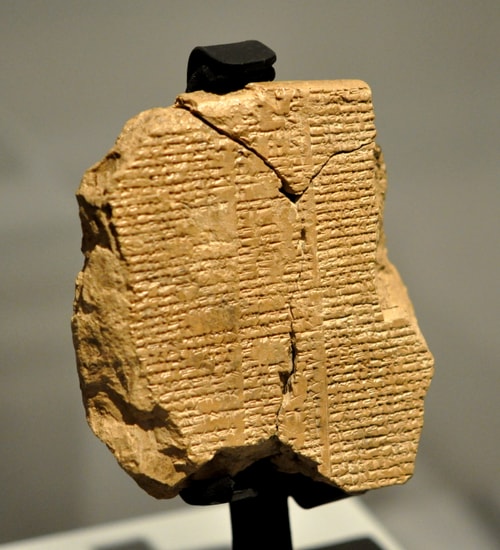
Nanna/Sin features prominently in some of Mesopotamia’s most iconic literary works. In The Epic of Gilgamesh, he is acknowledged as the father of Shamash and Ishtar. Gilgamesh himself, at one point, composes a poignant song for Nanna, praising the moon god for inspiring transformative changes in life that spur individuals to undertake great deeds. This depiction reinforces Nanna’s association with motivation, fertility, and the vital forces of existence.
His role as a "keeper of time" and "guardian of the future" is particularly fascinating. The Mesopotamians believed Nanna possessed a unique understanding of the past as a blueprint for the future. By discerning patterns in history, he could perceive human destiny, both collective and individual. Those seeking divination from Nanna were offered the opportunity to alter their future for the better by heeding his sagacious counsel, highlighting his role as a compassionate guide.
The poem The Journey of Nanna to Nippur beautifully illustrates his benevolence and connection to fertility. Nanna embarks on a voyage from Ur, laden with abundant gifts – trees, plants, and animals – to present to his father Enlil in Nippur. Along the way, he stops at five cities, receiving acclaim and honoring their respective deities. Upon reaching Nippur, he is joyfully welcomed by Enlil, and after a shared feast, Nanna makes a series of heartfelt requests: for rivers to swell with sweet water, for fields to yield bountiful harvests, for success in honey production and winemaking, and for a long life to savor these blessings. Enlil, in a grand gesture of generosity, grants all his son’s petitions, and Nanna returns triumphantly to Ur. This narrative eloquently portrays the moon god as the conduit of divine blessings, ensuring the fertility and prosperity of the land through his intercession with the King of the Gods.
Similarly, The Herds of Nanna praises him as the "god of living creatures, leader of the land," and the "great father of humanity." While Enki was typically considered the Sumerian creator god, Nanna sometimes assumed this role as his worship spread, underscoring his widespread influence. The poem opens with the striking image of Nanna illuminating the night sky as brightly as the sun at noon, signifying his immense power. He is depicted as Enlil’s closest confidant, with whom Enlil "speaks day and night" concerning the fate of humankind. The poem then meticulously tallies Nanna’s vast herds, their numbers recorded on divine tablets by Nisaba, the goddess of writing. Nanna is further celebrated as the god of abundance, even attributed with the gift of alcoholic drink (despite Ninkasi being the goddess of beer), a testament to his supreme importance in providing all good things, including the most popular beverage in Mesopotamia.
Nanna also appears in The Descent of Inanna, where he is one of the deities Ninshubur is instructed to appeal to should Inanna fail to return from the underworld. In The Curse of Agade, a significant piece of Mesopotamian naru literature, Nanna attempts to mediate between an enraged Enlil and the ungrateful Naram-Sin, showcasing his protective and compassionate nature towards humanity. His role as a guardian extended beyond earthly life, influencing beliefs about the afterlife.
Mediator, Protector, Judge: Nanna’s Role in the Afterlife
For millennia, Mesopotamian belief held that all souls, regardless of their earthly deeds, journeyed to a bleak, shadowy underworld, "the land of no return," ruled by Ereshkigal. There, they subsisted on dust and stagnant water, losing all interest in their former lives. However, a significant theological shift occurred during the Ur III period when Nanna was elevated to the role of judge of the dead. Scholar Samuel Noah Kramer notes:
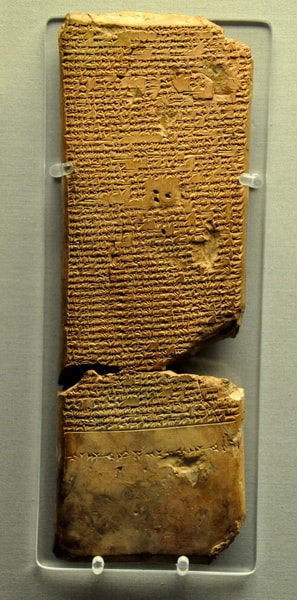
"The moon god Nanna decreed the fate of the dead. In the nether world…were to be found ‘bread-eating heroes’ and ‘[beer] drinkers’ who satisfy the thirst of the dead with fresh water. We learn, too, that the gods of the nether world can be called upon to utter prayers for the dead, that the personal god of the deceased and his city’s god were invoked in his behalf, and that the welfare of the family of the deceased was by no means overlooked in the funerary prayers." (132)
This development marked a profound departure from traditional views, introducing the concept of divine judgment and the possibility of intervention on behalf of the deceased. Nanna became a bridge between the living and the dead, his judgment shaping individual fates in the underworld and allowing for ongoing connection through prayers. Despite this innovation, Kramer also points out that the older, more somber view of the afterlife largely persisted, suggesting a complex and sometimes contradictory set of beliefs regarding post-mortal existence. Bertman adds that during the new moon, when Nanna’s light was invisible, "the god was said to be in the netherworld, where he judged the dead" (123), further cementing his dual role in both the celestial and chthonic realms.
The Eyes of Ningal: Vigilance and Virtue
Nanna’s consort, Ningal, also played a role in the broader system of divine oversight, potentially influencing human conduct. Archaeological discoveries have yielded numerous "eyes of Ningal" – crafted eye models made from precious stones, semi-precious materials, or clay. These artifacts sometimes depict only eyes, while others show a stylized figure with enlarged, accentuated eyes, occasionally featuring a lemniscate (infinity symbol). The precise significance remains debated, but scholars propose they served as protective talismans or, more intriguingly, as constant reminders that "the eyes of the gods were on them."
Among the most notable examples are a pair carved from onyx, dedicated by King Nabonidus to Ningal. While eye carvings are associated with other deities, those resembling the "eyes of Ningal" are often attributed to her cult. These artifacts likely served as tangible expressions of divine watchfulness, encouraging virtuous behavior and reminding individuals that their actions were constantly under the gaze of the "Great Lady" and her divine husband, Nanna. At Harran, this divine oversight extended to justice, where Nanna and Ningal presided over trials, and their son Nusku was invoked in the execution of those found guilty of dark arts.
Conclusion: A Legacy Cast in Moonlight
Nanna’s consistent portrayal in a position of judgment and his inclusion among the earliest Sumerian "Seven Divine Powers" (Anu, Enki, Enlil, Inanna, Nanna-Sin, Ninhursag, and Utu-Shamash) underscores his fundamental and enduring importance. These foundational deities, including Nanna, evolved and adapted over Mesopotamia’s long history, assuming new roles and responsibilities as societies changed.
Even as the Neo-Assyrian Empire waned in 612 BCE and many older gods lost favor, Nanna’s worship demonstrated remarkable resilience. His veneration continued, particularly in the Syrian region, for centuries longer than many of his peers. It was only with the inexorable rise of Christianity in the 3rd century CE that the light of Nanna, the enduring luminary of Mesopotamia, finally receded, replaced by a new divine order. Yet, his legacy as the wise, benevolent moon god, keeper of time, arbiter of destiny, and protector of humanity, remains etched in the cuneiform tablets and monumental ruins of a civilization that looked to the night sky for guidance and inspiration.


Leave a Comment