The Gift of Clarity: How Intentional End-of-Life Planning Transforms the Experience of Grief
In an era often defined by the accumulation of material goods and the avoidance of uncomfortable conversations regarding mortality, the story of Liz Darago offers a profound counter-narrative. Joe Darago, the Executive Director of the international non-profit The Hope Effect, recently shared a poignant reflection on the passing of his aunt. His account serves as a masterclass in how intentionality, minimalism, and open communication can mitigate the logistical and emotional burdens typically associated with death.
The following analysis explores the core components of Darago’s experience, the chronological steps taken toward a peaceful transition, and the broader implications for families navigating the complex intersection of legacy and loss.
I. Main Facts: The Intersection of Legacy and Logistics
The death of a loved one is universally regarded as one of life’s most significant stressors. However, the intensity of this stress is frequently exacerbated by the "administrative burden of grief"—the daunting task of settling estates, liquidating assets, and sorting through decades of physical possessions.
Joe Darago’s account highlights a specific case study in Northeast Ohio, where his aunt, Liz, recognized the approaching end of her life and took proactive steps to shield her survivors from these burdens. Darago identifies three pillars of her strategy:
- Legal and Financial Structuring: The establishment of a trust to bypass probate and prevent familial discord.
- Physical Curation: A late-life commitment to "Swedish Death Cleaning" (Döstädning), or the systematic reduction of personal belongings.
- Relational Transparency: Direct, albeit difficult, conversations regarding final wishes and the delegation of family roles.
By prioritizing these actions, Liz shifted the focus of her final days—and her funeral—from the management of "stuff" to the celebration of "presence." Darago notes that during the memorial service, not a single mention was made of his aunt’s material wealth; instead, the discourse centered entirely on her character and the way she made others feel.
II. Chronology: From Connection to Transition
The timeline of the Darago family’s experience illustrates a transition from a lifetime of "quiet presence" to a final year of "vocal preparation."
The Foundation of Presence (1960s – 2010s)
Raised in a bustling household in Northeast Ohio, Joe Darago grew up with five sisters. His father’s side of the family was smaller, consisting of two aunts, Marilyn and Liz, who remained childless. For decades, these aunts served as the emotional bedrock of the extended family. They were "constants," attending every graduation, sporting event, and holiday. Their investment was characterized by steady, low-flash, high-impact love—a form of emotional minimalism that prioritized time over trophies.
The Health Transition (Circa 2014)
Approximately a decade ago, both Marilyn and Liz began to face declining health. In a move of practical solidarity, they consolidated their households, moving into a single home to share expenses and provide mutual care. While this solved immediate logistical needs, it created a "density of belongings," as two lifetimes of possessions were merged into one space already filled with multi-generational heirlooms.
The Final Year of Intentionality (2023 – 2024)
Sensing that her time was limited, Aunt Liz underwent a psychological shift. While the family had historically struggled with "letting go"—preserving everything from great-grandfather’s documents to remnants of an old family store—Liz began a deliberate process of simplification.
In the twelve months preceding her death, she worked with professionals to secure her estate, began labeling family artifacts, and initiated "legacy conversations" with her nieces and nephews. This period was marked by a transition from being the "family cloud" (the keeper of all data) to an "archivist" (deciding what was worth saving for the next generation).
III. Supporting Data: The Mechanics of a "Good Death"
Darago’s reflections align with emerging sociological and financial data regarding end-of-life satisfaction. To understand why Liz’s actions were so effective, it is necessary to examine the specific mechanisms she employed.
1. The Legal Shield: Trusts vs. Wills
Aunt Liz opted for a Living Trust rather than a simple will. According to financial experts, a trust is a superior tool for avoiding "probate"—the court-supervised process of authenticating a will and distributing assets. Probate can take months or even years, often freezing assets when families need them most for funeral costs or debt settlement.

- Conflict Mitigation: By appointing an executor and documenting the distribution of her coin collection, retirement accounts, and two homes, Liz removed the "gray areas" that often lead to litigation or permanent estrangement among siblings.
2. The Psychology of "The Family Cloud"
Darago describes his aunt as the "family cloud," a metaphor for the person who holds the collective history of a lineage. In many families, the death of this individual results in a "data wipe"—the loss of names on photos, the origins of heirlooms, and the "why" behind traditions.
- Selective Preservation: Liz’s decision to label photos and write notes explaining the significance of items served as a bridge between the physical object and its emotional value. This allowed Darago, as the new family historian, to inherit a curated archive rather than a mountain of mystery.
3. The Swedish Death Cleaning Movement
While not explicitly named as such in the text, Liz’s actions mirror Döstädning, a Swedish concept popularized by Margareta Magnusson. The practice suggests that individuals should begin decluttering in their 50s or 60s to ensure that their children do not have to spend weeks sorting through "junk" while they are in the depths of mourning.
IV. Professional Responses: Expert Perspectives on Legacy
While Darago speaks from a personal and pastoral perspective, his observations are echoed by professionals in the fields of estate law and grief counseling.
The Financial Perspective:
Estate attorneys frequently cite "lack of communication" as the primary driver of estate disputes. "It is rarely about the dollar amount," says one industry analyst. "It is about the perception of fairness. When a loved one speaks their wishes clearly while still alive, it carries a moral authority that a legal document alone sometimes lacks."
The Psychological Perspective:
Grief counselors emphasize that the "chaos of the aftermath" can impede the healing process. When survivors are forced to spend their first week of loss arguing with insurance companies or cleaning out a "musty basement" packed with decades of trash, they are denied the mental space to process their sorrow. Liz’s preparation granted her family the "luxury of grief."
The Pastoral Perspective:
As a family pastor, Joe Darago observed a stark contrast between the funeral service and the estate management. He noted that at the service, the community focused on her being, not her having. This reinforces a core tenet of minimalism: the things we own eventually own us, but the love we give is our only true enduring asset.
V. Implications: Preparing for the Inevitable
The story of Aunt Liz serves as a call to action for the "Sandwich Generation"—those currently caring for aging parents while raising their own children—as well as for those entering the final chapters of their lives. Darago offers three actionable steps that serve as a framework for anyone looking to leave a "cleaner" legacy.
1. The Necessity of the "Awkward Conversation"
Darago argues that initiating conversations about wills, powers of attorney, and health directives is a profound act of love. He suggests a compassionate approach: "The goal isn’t control—it’s understanding what matters most and honoring it." Waiting for a crisis to discuss these topics often results in decisions made under duress, which are rarely optimal.
2. Moving Beyond the Object to the Story
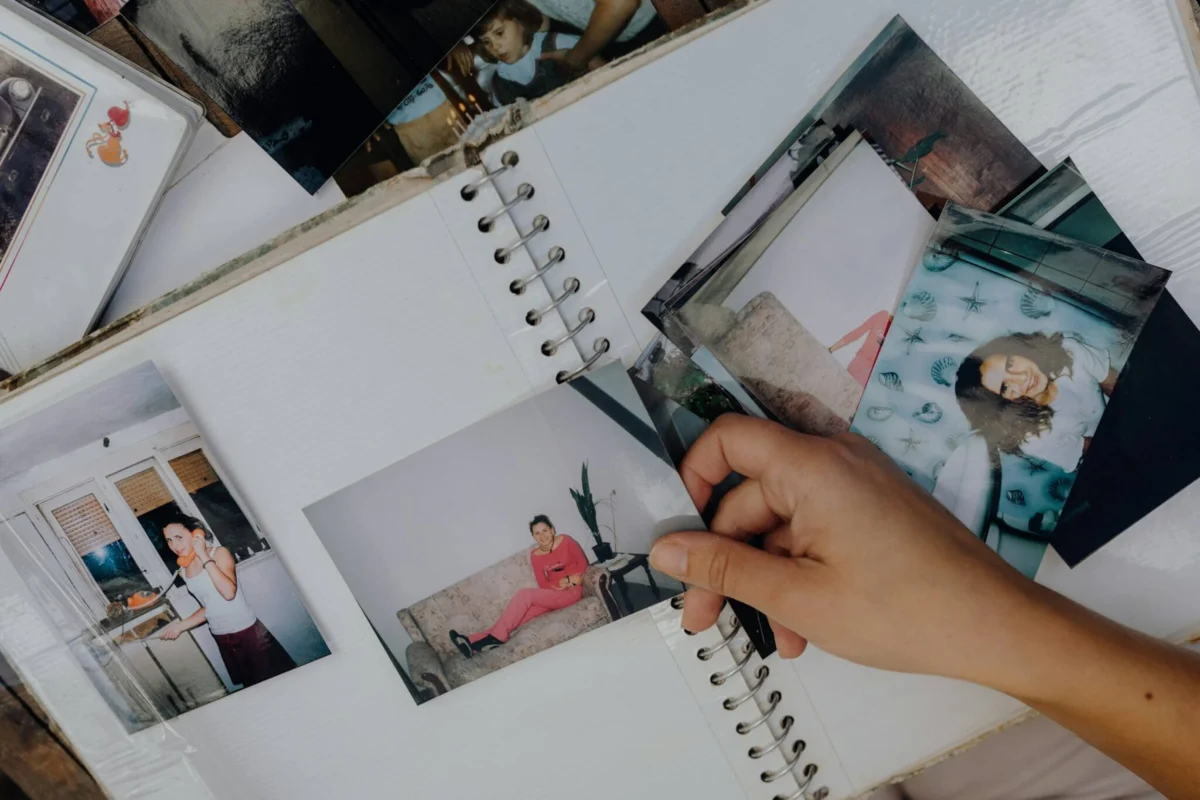
The value of an heirloom is rarely in its material composition; it is in its narrative. Darago’s "Pro Tip" of writing names on the backs of photos is a simple yet revolutionary act of legacy preservation. By asking open-ended questions—“What does this remind you of?” or “Who gave this to you?”—families can extract the meaning of an object and, in many cases, realize that the story is worth keeping even if the object is eventually donated.
3. The "Living Eulogy"
Perhaps the most significant implication of Darago’s reflection is the concept of the "Living Eulogy." He questions whether his aunt heard the beautiful tributes shared at her funeral while she was still alive. His advice is clear: do not wait for a memorial service to express gratitude, admiration, and love. Speaking these truths while the recipient can hear them is a form of "emotional minimalism"—stripping away the pride and hesitation that prevent us from saying what truly matters.
Conclusion: Minimalism as a Final Act of Love
Ultimately, Joe Darago’s account reframes minimalism. It is not merely an aesthetic choice or a trend for the young and unencumbered. Rather, it is a tool for end-of-life dignity. By setting up a trust, simplifying her environment, and speaking her truth, Aunt Liz ensured that her departure was not a burden to be managed, but a legacy to be cherished.
As Darago concludes, the goal is to be "brave enough to start the conversation, kind enough to preserve the stories, and wise enough to speak our love while there’s still time." In doing so, we ensure that when we say goodbye, the only thing left behind is the immense weight of a love well-lived.