Fair is Fair: The Resurrection and Legacy of The Legend of Billie Jean
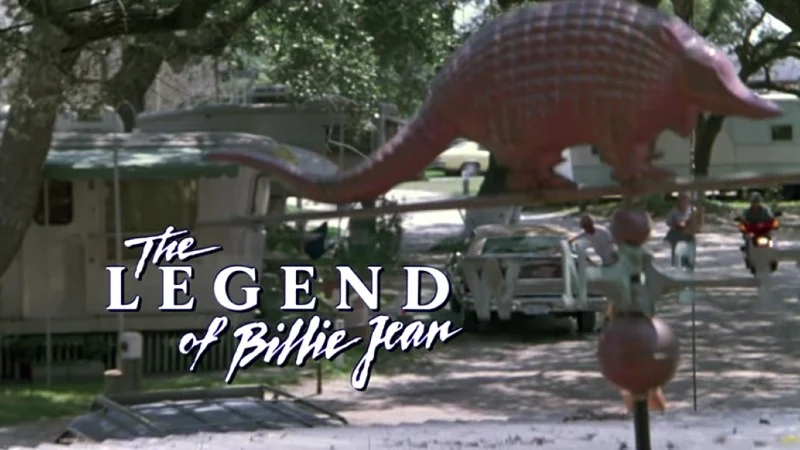
In the sweltering summer of 1985, the American cinematic landscape was dominated by high-concept adventures and hyper-masculine fantasies. It was the year of Back to the Future, The Goonies, and Rambo: First Blood Part II. Amidst these titans of the box office, a smaller, grittier, and decidedly more feminist teen odyssey quietly hummed onto the screen on the back of a Honda Elite scooter. The Legend of Billie Jean, directed by Matthew Robbins, arrived with the rallying cry of "Fair is Fair," only to be met with critical derision and commercial indifference.
Decades later, however, the film has transcended its status as a "box office bomb" to become a seminal cult classic. Its journey from a "bankrupt" teen flick to a celebrated feminist manifesto offers a compelling case study in how cultural relevance can be found long after the theatrical curtains have closed.
I. Main Facts: The Anatomy of a Cult Classic
The Legend of Billie Jean was released by TriStar Pictures on July 19, 1985. Despite its pedigree—produced by future Fast & Furious mogul Rob Cohen and featuring a script by Mark Rosenthal and Lawrence Konner—the film struggled to find its footing. It was rated PG-13, a relatively new rating at the time, positioning it for an older teen demographic that was currently preoccupied with the time-traveling antics of Marty McFly.
Technical Specifications and Cast
- Director: Matthew Robbins
- Screenwriters: Mark Rosenthal & Lawrence Konner
- Primary Cast: Helen Slater (Billie Jean Davy), Christian Slater (Binx Davy), Keith Gordon (Lloyd), Peter Coyote (Detective Ringwald), Richard Bradford (Mr. Pyatt), and Yeardley Smith (Putter).
- Key Musical Theme: "Invincible" by Pat Benatar.
The film stars Helen Slater, who was coming off the high-profile but commercially disappointing Supergirl (1984). She plays Billie Jean Davy, a teenager from a Texas trailer park whose quest for simple justice—payment for her brother’s trashed scooter—escalates into a statewide manhunt. Joining her was a young Christian Slater (making his film debut) and Keith Gordon, playing the quintessential 80s "movie geek."
II. Chronology: From the "Bandit Queen" to the Bargain Bin
The genesis of The Legend of Billie Jean is far more complex than its "bubble-gum mythmaking" reputation suggests. The project began with an ambitious, politically charged foundation that was gradually sanded down by the Hollywood studio system.
Origins and Script Evolution
The original concept, according to screenwriter Mark Rosenthal, was loosely inspired by the life of Phoolan Devi, the "Bandit Queen" of India. Devi was a lower-caste woman who led a gang of outlaws in response to systemic sexual violence and social repression. Rosenthal and Konner aimed to translate this spirit of righteous rebellion to the American suburbs.

Early drafts reportedly involved Walter Bernstein, a formerly blacklisted screenwriter known for his socialist leanings. This political DNA is still visible in the final product’s focus on class warfare—the "trailer park" kids versus the wealthy shop owner—but Rosenthal has noted that the studio "simplified and dumbed down" the script, removing much of the nuanced character drama in favor of a more traditional chase narrative.
The 1985 Theatrical Failure
Upon its release, the film was a non-starter. It grossed only $8.1 million against a modest budget, failing to break into the top tier of summer hits. The timing was catastrophic; it opened against E.T. the Extra-Terrestrial (re-issue), Mad Max Beyond Thunderdome, and the aforementioned Back to the Future.
The Cable TV Renaissance
While the film died in theaters, it found a second life on cable television in the early 1990s. Networks like HBO and USA Network played the film in heavy rotation. For a generation of latchkey kids, Billie Jean’s story of standing up to "creepy" adults and corrupt systems resonated deeply. The film’s central mall-chase scene and Billie Jean’s radical haircut became iconic imagery for a demographic that felt ignored by the more polished "Brat Pack" films of the era.
III. Supporting Data: Critical Reception and Thematic Weight
The critical reception in 1985 was famously harsh. Janet Maslin of The New York Times dismissed the film as "bankrupt beyond belief," while David Edelstein of The Village Voice called it "cretinous." These reviews largely missed the film’s burgeoning feminist undertones, focusing instead on the perceived absurdity of a teenage girl becoming a folk hero over a $608 scooter repair.
The "Fair is Fair" Philosophy
At the heart of the film is a socioeconomic conflict. The antagonist, Mr. Pyatt (Richard Bradford), is not just a villain; he is a predator and a cynical capitalist. When Billie Jean asks for money to fix the scooter his son trashed, he attempts to extort sexual favors from her. Her refusal and subsequent accidental shooting of Pyatt (by her brother Binx) set the "outlaw" plot in motion.
The film’s mantra, "Fair is Fair," became a rallying cry for the characters and the audience. It represented a demand for basic accountability in a world where adults held all the power and the wealth.

Aesthetic and Soundtrack
The film’s visual language, though criticized for a "workmanlike" or "TV-movie" quality, effectively captured the sweltering, oppressive heat of coastal Texas. This naturalism provided a stark contrast to the neon-soaked, "MTV-style" transformation Billie Jean undergoes mid-film.
The soundtrack, headlined by Pat Benatar’s "Invincible," became an anthem of the decade. The song’s lyrics—"We can’t afford to be innocent / Stand up and face the enemy"—perfectly encapsulated the film’s transition from a teen drama to a modern-day myth.
IV. Official Responses and Production Insights
The production of The Legend of Billie Jean was marked by a sense of missed potential from its creators and a surprising lack of archival support.
Screenwriter Discontent
In various retrospectives, Mark Rosenthal has expressed a lingering frustration with the final cut. He argued that the studio’s intervention turned a "radical" story into something more palatable but less impactful. "They took out the heart of the class struggle," Rosenthal remarked in a 2014 interview, suggesting that the film’s failure was due to it being neither "fish nor fowl"—not quite a serious drama, yet too dark for a lighthearted teen romp.
Cast Reflections
Helen Slater has often spoken about the physical and emotional demands of the role. The scene where she cuts her hair—a deliberate homage to Joan of Arc—was a pivotal moment for her as an actress. It signaled Billie Jean’s abandonment of traditional "pretty girl" expectations in favor of a warrior persona.
Interestingly, the film marked the start of Christian Slater’s career. His performance displayed the manic, Jack Nicholson-esque energy that would define his later roles in Heathers and Pump Up the Volume. However, cast members have since noted the "nervy" atmosphere on set, partly due to the high stakes following Helen Slater’s Supergirl flop.

V. Implications: The Proto-Viral Heroine
In retrospect, The Legend of Billie Jean was decades ahead of its time in its portrayal of media manipulation and the "viral" nature of fame.
The First "Viral" Video Star
Long before TikTok or YouTube, Billie Jean Davy understood the power of the medium. When the media and the police began painting her as a dangerous, drugged-out criminal, she took control of the narrative. She recorded a videotaped manifesto, speaking directly to her peers and explaining her side of the story. This act of self-broadcast turned her into a folk hero, inspiring a "Billie Jean" cult of lookalikes who protected her from the law.
Feminist Legacy
The film’s resolution is remarkably progressive for 1985. Billie Jean does not "get the guy" in a traditional sense, nor does she return to her old life. She burns down the symbols of her exploitation—literally setting fire to a giant cardboard cutout of her sexualized image that Pyatt used for merchandising.
The film’s ending, featuring Billie Jean walking away from the fire as a free woman, serves as a powerful rejection of the male gaze and capitalist exploitation. It suggests that "Fair" isn’t something given by the system; it is something seized through defiance.
Conclusion
The Legend of Billie Jean remains a fascinating artifact of 1980s cinema. While it lacks the polish of a John Hughes film or the budget of a Spielberg production, it possesses a raw, rebellious spirit that those films often lacked. It is a story of class, gender, and the loss of innocence that refused to play by the rules of its era.
Today, the film stands as a testament to the power of the "cult classic." It proves that a movie’s value is not determined by its opening weekend, but by the resonance it finds with the audience that eventually discovers it. For those who grew up watching Billie Jean cut her hair and demand justice, the message remains as potent as ever: Fair is fair, and some legends are worth the wait.