
Cylinder Seals: The Ancient World’s Enduring Mark of Identity and Authority
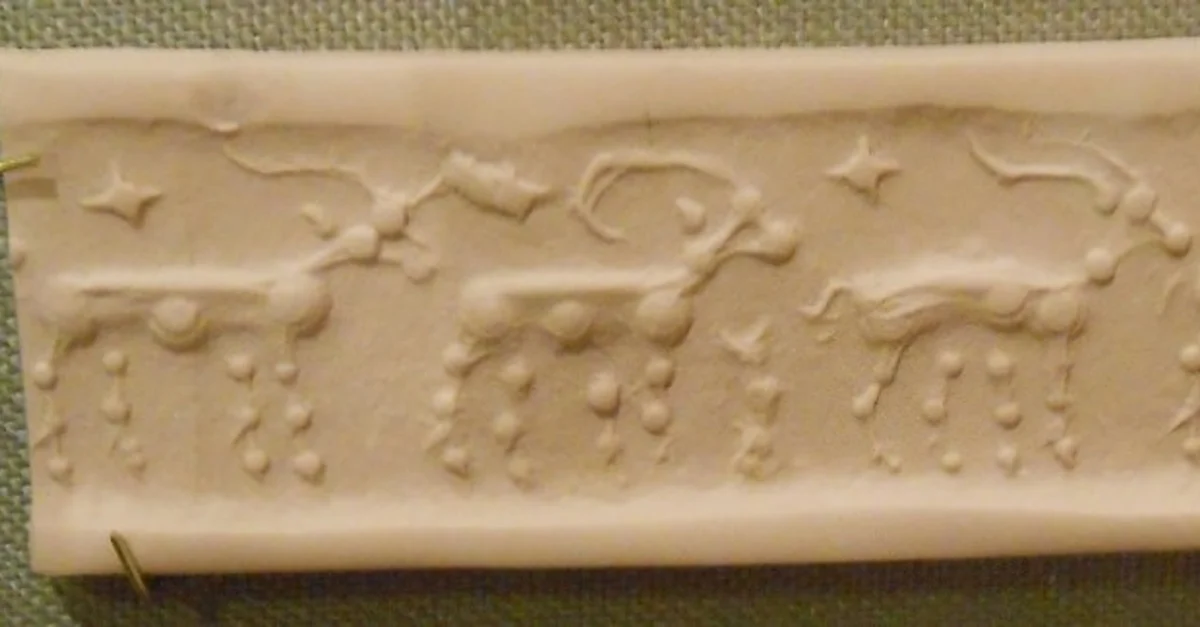
Baghdad, Iraq – Long before the advent of biometric scans or digital signatures, the people of ancient Mesopotamia possessed a sophisticated and deeply personal method of authentication: the cylinder seal. These intricate, miniature works of art, known as kishib in Sumerian and kunukku in Akkadian, served as the bedrock of identity and trust across a vast and burgeoning civilization. From powerful monarchs to humble laborers, these ubiquitous impression stamps were not merely tools but extensions of self, embodying status, belief, and the very fabric of daily life in the cradle of civilization.
Main Facts: The Unveiling of Ancient Identity
The cylinder seal stands as a testament to Mesopotamian ingenuity, a practical yet profound invention that permeated every stratum of society. More than just a signature, it was a portable declaration of self, rolled onto moist clay to authenticate documents, legitimize transactions, and secure property.
The Ubiquitous Signature
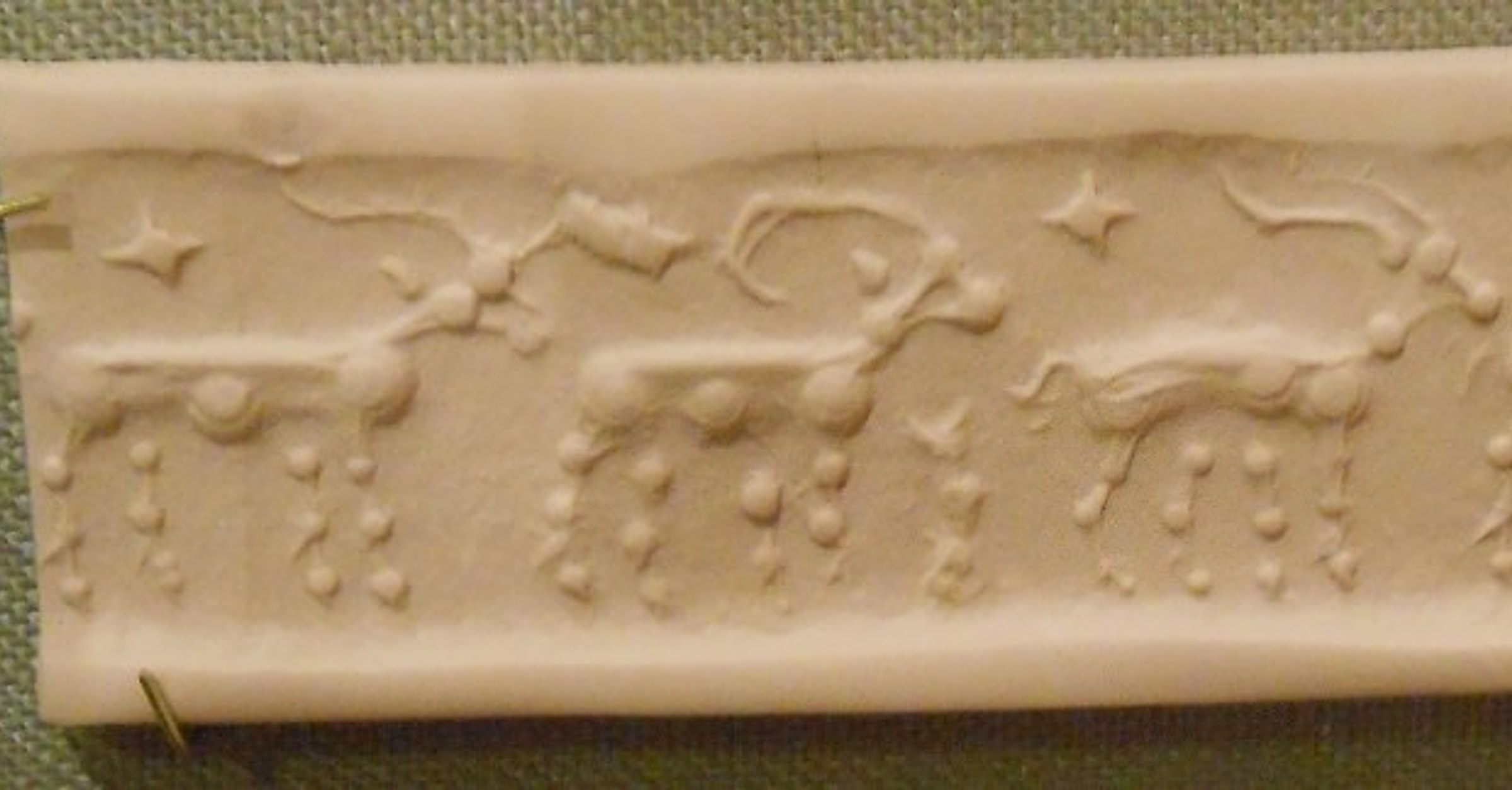
At its core, the cylinder seal functioned as a personal signature, much like a handwritten mark or a return address on an envelope today. When pressed and rolled across wet clay tablets, pottery, or door locks, the engraved images and cuneiform script left a unique impression, binding individuals to their agreements and declarations. This system fostered trust in a society grappling with increasingly complex administrative and commercial needs. Its use was universal, adopted by kings signing royal decrees, merchants sealing contracts, and even slaves marking their property. The loss of such a seal was, therefore, a matter of grave concern, akin to modern identity theft, necessitating official declarations to invalidate any subsequent misuse.
Materials and Adornment
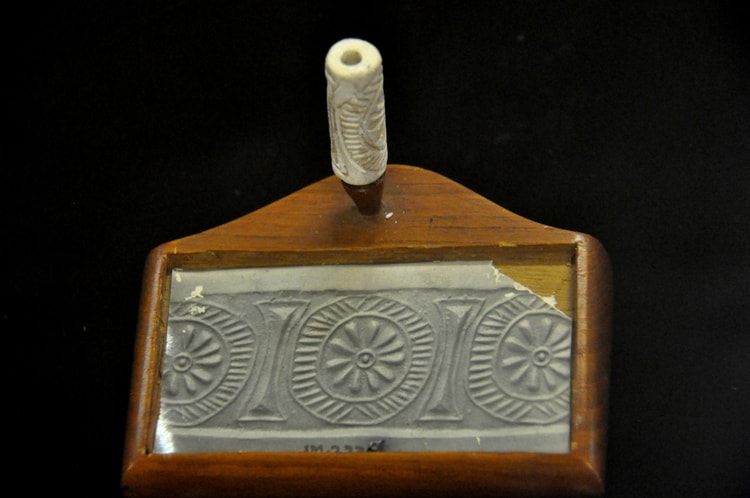
These miniature marvels were crafted from an array of materials, reflecting both their owner’s status and the available resources. Semi-precious stones like marble, obsidian, amethyst, and the highly prized lapis lazuli were common choices, offering durability and aesthetic appeal. For the elite, seals fashioned from precious metals such as gold or silver denoted immense wealth and power. Typically measuring between 3 to 4 inches (7-10 cm) in length, cylinder seals were designed to be worn. Owners often threaded them onto leather strings or other durable materials, adorning their necks or wrists, or pinning them to garments, ensuring their constant accessibility and visible display as a personal emblem.
Beyond Mesopotamia: A Global Phenomenon
While Mesopotamia is renowned as the primary hub for cylinder seals, their influence and independent development extended beyond its fertile crescent. Archaeological excavations have unearthed cylinder seals in ancient Egypt, suggesting cultural exchange or parallel innovation. Even more remarkably, a completely independent tradition of cylinder seals emerged in Mesoamerica, evidenced by Olmec cylinder seals dating back to circa 650 BCE. These discoveries underscore the universal human need for authentication and individual mark-making, even across continents and cultures that had no direct contact. However, the Mesopotamian cylinder seal remains the most well-documented and widely used, offering an unparalleled window into an ancient civilization.
Chronology: Tracing the Origins and Evolution
The history of the cylinder seal is deeply intertwined with the rise of complex societies, reflecting advancements in administration, art, and social organization.
From Neolithic Roots to Urban Complexity
The earliest precursors to cylinder seals, and indeed the seals themselves, emerged during the Late Neolithic Period, approximately 7600-6000 BCE. The region corresponding to modern-day Syria is widely credited as their birthplace, though some scholars argue for a slightly later origin in Sumeria, located in modern Iraq. This period saw the transition from nomadic hunter-gatherer lifestyles to settled agricultural communities, which in turn spurred the need for property identification and rudimentary record-keeping. As villages grew into bustling city-states like Uruk, the demand for more sophisticated authentication mechanisms intensified. The cylinder seal, with its capacity for intricate and unique designs, perfectly met this burgeoning bureaucratic need, evolving alongside the administrative demands of a rapidly developing urban landscape.
Parallel Developments: The Olmec Enigma
The independent development of cylinder seals in Mesoamerica presents a fascinating chronological parallel. Dating to approximately 650 BCE, Olmec cylinder seals demonstrate that the concept of rolling an engraved object to create a repeated impression was not confined to the Near East. While culturally distinct, these Mesoamerican seals served similar functions, indicating a universal human drive to authenticate, adorn, and communicate through symbolic imagery. This independent invention highlights the elegance and effectiveness of the cylinder seal as a technological solution for widespread identity and transactional verification.
Supporting Data: Craft, Function, and Social Fabric
The cylinder seal was not a monolithic entity; its design, purpose, and cultural significance varied, providing rich data for understanding ancient Mesopotamian life.
Cylinder vs. Stamp Seals: A Question of Bureaucracy
Contemporaneous with cylinder seals were stamp seals – smaller, often simpler devices that predate the more elaborate cylinder form in some regions. While stamp seals were typically less than an inch (2 cm) in diameter and resembled later signet rings, cylinder seals offered a much larger surface area for engraving. Scholar Clemens Reichel, whose work is featured in Englehardt’s Agency in Ancient Writing, posits that the preference for one type over the other was largely a matter of "necessity."
- The Uruk Model: Demands of a Complex State: In regions like southern Mesopotamia, particularly the sprawling city-state of Uruk, a highly developed bureaucracy necessitated detailed identification. Uruk’s complex administrative structure, with its myriad agencies and officials, required seals that could convey not just a personal signature, but also the name of the agency, the individual’s title, and sometimes even the specific office of origin. The longer, rolling surface of the cylinder seal provided ample space for this detailed "story" of the individual and their institutional affiliation, making it indispensable for managing the intricate web of transactions and decrees in a sophisticated urban environment.
- Artistry in Miniature: The Sealcutter’s Domain: Creating these detailed narratives on a curved, small surface demanded extraordinary skill. A skilled artist was required who could carve the story of the individual on the stone cylinder in exacting detail. This artistry elevated the seals beyond mere administrative tools into significant cultural artifacts.
The Art of Intaglio: Crafting the Reverse Image
The manufacture of cylinder seals was a specialized and highly respected craft. The artisans, known as burgul in Sumerian and purkullu in Akkadian, underwent rigorous training, typically apprenticing with a master sealcutter for at least four years before establishing their own workshops. Their toolkit was surprisingly advanced for the era, comprising copper chisels and gravers, whetstones, borers, and saws for cutting through various stones.
Scholar Stephen Bertman suggests that sealcutters might have acquired pre-cut "blanks" from dealers, adding the intricate details in their workshops. The process involved carving the seal in intaglio, meaning the design was cut into the surface of the stone. When rolled onto clay, this recessed carving produced an image in relief – a raised impression. This required the artist to envision and carve the image in reverse, a demanding feat of spatial reasoning and manual dexterity. The difficulty of this technique, combined with the artistic skill required, meant sealcutters were highly paid and held in great esteem. Before or after the carving, holes were meticulously drilled through the cylinder, allowing it to be worn or pinned.
Stylistic Narratives: Uruk and Jemdet Nasr
The motifs and carving techniques employed on cylinder seals often reflect distinct artistic periods and cultural preferences. Two prominent styles are the Uruk-Style and the Jemdet Nasr-Style, named after the cities where they were predominantly found. Authors Megan Lewis and Marian Feldman articulate their unique characteristics:
- Uruk Style: Naturalism and Ritual: "The Uruk-style seals show animals and figures depicted in an exceptionally naturalistic fashion, suggesting that the seal carvers were aiming for expressive clarity. The motifs include ritual narratives involving temples, boats and offerings to gods, as well as depictions of the natural world in hierarchical arrangements. They are skillfully cut, detailed, and their composition tends to be balanced and aesthetically pleasing." These seals often provide glimpses into religious ceremonies, the role of temples, and the natural order as perceived by the Uruk populace.
- Jemdet Nasr Style: Efficiency and Domestic Life: "The Jemdet Nasr-style seals are less detailed than Uruk-style seals and are characterized by the heavy use of drills and cutting discs, which produce round and linear marks respectively. Common motifs from the Jemdet Nasr-style include women with pigtails involved in domestic labor and herds of animals in front of temples." This style, while perhaps less naturalistic, offers valuable insights into daily life, gender roles, and the economic activities of the period, often reflecting a more efficient, almost mass-produced aesthetic compared to the meticulous Uruk style.
Practicality Meets Spirituality: Dual Roles
The uses of cylinder seals extended beyond the purely administrative. Lewis and Feldman highlight their dual nature: practical and spiritual. Practically, they served as signatures, restricted access (only authorized individuals could break a sealed package), and provided personal identification. Spiritually, they were often considered "amuletic," imbued with the power to ward off evil spirits, protect the wearer from harm, or attract good fortune. This belief underscores the deep integration of magic and spirituality into Mesopotamian daily life.
For rulers, the seal was a powerful symbol of their authority and their divine mandate. Mesopotamians believed in a cosmic partnership with the gods to maintain order against the forces of primordial chaos. A king’s seal would visually articulate his role as the intermediary, depicting him in control, perhaps subduing monstrous creatures or receiving blessings from deities. A famous seal from Persia, for example, shows an unknown king firmly grasping two griffin-like creatures, symbolizing his control over chaos and his ability to maintain cosmic and societal order. The specific symbols adjacent to the central image would then identify the king, making his seal a constant reminder of his stature and divine power with every impression.
Official Responses: Scholarly Insights and Interpretations
Modern scholarship has illuminated the nuanced role of cylinder seals, moving beyond simple descriptions to interpret their deeper cultural and historical significance.
Decoding the Preferences: Reichel’s Bureaucratic Theory
Clemens Reichel’s hypothesis regarding the co-existence and regional preference for stamp versus cylinder seals is a cornerstone of understanding ancient Mesopotamian administration. His argument that the complexity of a region’s bureaucracy dictated the need for the more detailed cylinder seal, especially in highly urbanized centers like Uruk, highlights the practical drivers behind technological adoption. This interpretation provides a functional explanation for stylistic variations and the distribution patterns observed in archaeological records, linking administrative needs directly to artistic expression and tool design.
The Master Craftsmen: Bertman on Seal Production
Stephen Bertman’s observations on the manufacturing process, particularly the suggestion that sealcutters might have worked with pre-made blanks, offer valuable insight into the economy of ancient craft. This detail indicates a degree of specialization and perhaps a supply chain for raw materials or semi-finished goods, pointing to a more organized industrial landscape than might be immediately apparent. His emphasis on the intaglio technique and the high status of sealcutters underscores the value placed on specialized artistic and technical skills in Mesopotamian society.
Visual Language of an Empire: Lewis & Feldman on Styles
Megan Lewis and Marian Feldman’s detailed descriptions of the Uruk-style and Jemdet Nasr-style seals are crucial for art historians and archaeologists. Their analysis moves beyond mere categorization, interpreting the stylistic choices as reflections of cultural priorities. The "expressive clarity" and "naturalistic fashion" of Uruk seals speak to an emphasis on narrative and ritual grandeur, while the "heavy use of drills and cutting discs" in Jemdet Nasr seals suggests a shift towards efficiency, possibly reflecting a different economic or administrative focus. These interpretations allow researchers to infer aspects of social structure, religious beliefs, and daily routines from the visual lexicon of the seals.
Implications: Echoes in the Modern World
The cylinder seal’s legacy extends far beyond its historical context, offering profound implications for understanding identity, governance, and human interaction across millennia.
The Precursor to Modern ID: A Legacy of Trust
The cylinder seal served as the ultimate precursor to modern forms of identification. Its function as a binding signature, proof of identity, and marker of authority laid the groundwork for contemporary concepts like personal IDs, credit cards, and digital certificates. The serious implications of a lost seal in ancient Mesopotamia—requiring official invalidation—directly mirror modern concerns about identity theft and the safeguarding of personal information. This ancient system highlights a fundamental human need for reliable authentication in social and economic exchanges, a need that remains constant despite radical shifts in technology.
Unlocking Ancient Lives: Historical and Artistic Value
For historians and art historians, cylinder seals are invaluable "snapshots" of the past. Their intricate carvings offer a direct, intimate glimpse into the daily lives, religious beliefs, social hierarchies, and artistic sensibilities of the ancient Mesopotamians. Each seal tells a unique story—of an individual, an occupation (e.g., a spider symbolizing a weaver), a deity, or a ritual—providing primary source material that complements textual records. They are not merely beautiful artifacts but rich historical documents, allowing scholars to reconstruct aspects of ancient civilization that might otherwise be lost.
A Window into Worldviews: Order, Chaos, and Power
Beyond their practical uses, cylinder seals articulate the deeply held cosmological beliefs of the Mesopotamians. The recurring motif of the ruler maintaining order against chaos, as seen in the Persian seal, speaks to a fundamental worldview where human endeavor, particularly that of the king, was seen as essential for cosmic balance. This artistic expression on a personal seal demonstrates how even individual identity was intertwined with grand narratives of divine purpose and societal responsibility. The seals thus provide a unique lens through which to understand the ancient Mesopotamian perception of power, governance, and their place in the universe.
Conclusion
The cylinder seal, a seemingly simple device, stands as a monument to ancient Mesopotamian ingenuity and foresight. From its origins in the Neolithic period to its widespread adoption across a vast empire, it evolved from a basic marker of ownership into a sophisticated tool for authentication, a potent symbol of identity, and a profound expression of culture and belief. Its intricate carvings, crafted by highly skilled artisans, offer an unparalleled visual record of a bygone era, providing historians and art enthusiasts alike with an intimate glimpse into the daily lives, administrative complexities, and spiritual landscapes of one of humanity’s earliest and most influential civilizations. In an age where digital identities dominate, the enduring legacy of the cylinder seal reminds us that the quest for authenticity and self-representation is a timeless human endeavor.



Leave a Comment