The Shattered Illusion: How the First Battle of Bull Run Redefined the American Civil War
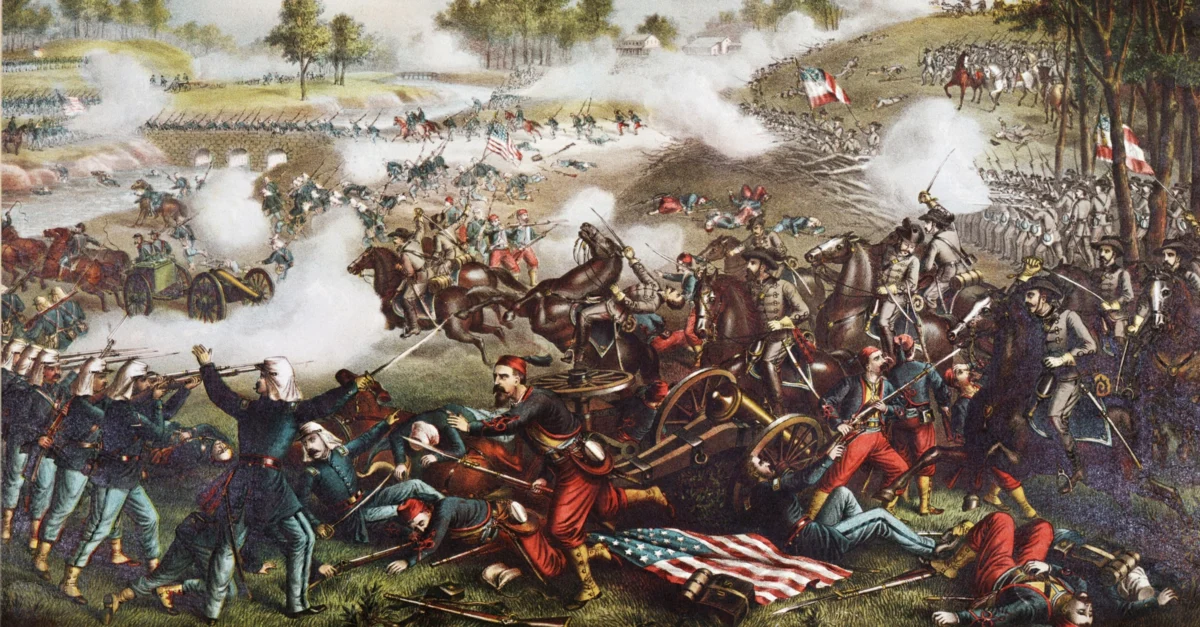
Manassas, Virginia – July 21, 1861 – The tranquil fields surrounding Bull Run Creek and Manassas Junction bore witness to a seismic shift in American history on July 21, 1861. What began as an eagerly anticipated, almost celebratory, engagement between Union and Confederate forces—each side convinced of a swift and decisive victory—culminated in the First Battle of Bull Run (or First Manassas). This brutal encounter not only delivered the Confederacy its first major triumph but also served as a stark, bloody "wake-up call" for both North and South, shattering widespread illusions of a short, glorious war and ushering in an era of prolonged, devastating conflict.
The battle, known by two names reflecting the nomenclature conventions of the opposing sides—the Union naming battles after natural features like streams (Bull Run), and the Confederates after nearby towns (Manassas Junction)—was the inaugural large-scale clash of the American Civil War. Its immediate aftermath profoundly altered perceptions of military readiness, leadership, and the sheer resolve of the fledgling nations. While earlier, smaller skirmishes had offered glimmers of hope to both Union and Confederate supporters, Bull Run laid bare the disorganization, critical errors, and fierce determination that characterized both armies, fundamentally reshaping their understanding of the war they had just begun.
Background to Conflict: A Nation Divided and Underequipped
The secession crisis and the subsequent firing on Fort Sumter in April 1861 ignited the American Civil War. Initial engagements, such as the Battle of Fort Sumter itself (April 12-13, 1861) and the Battle of Rich Mountain (July 11, 1861), were characterized by relatively low casualty counts. For instance, Rich Mountain saw only 46 Union casualties and between 170-600 Confederate losses. These numbers, coupled with early Union victories led by Major General George B. McClellan at places like Philippi and Rich Mountain, fueled a dangerous optimism in the North. Many believed a direct strike on the Confederate capital at Richmond would swiftly conclude the war.
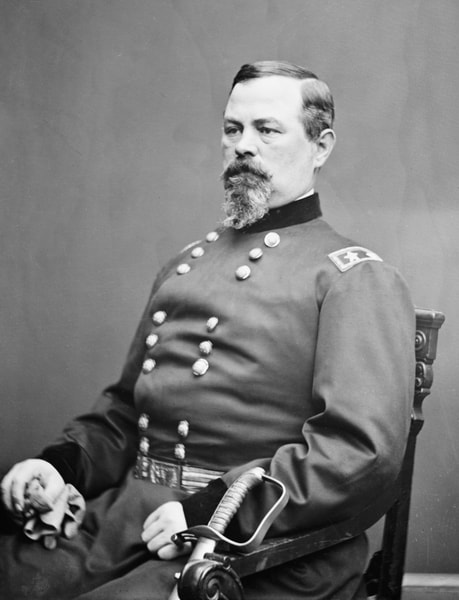
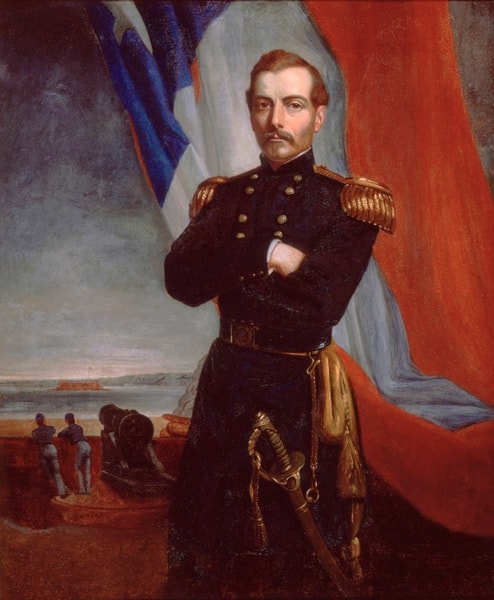
The South harbored similar illusions of an easy triumph, bolstered by their victory at Big Bethel (June 10, 1861), where they sustained a mere eight casualties. Following Fort Sumter, both sides issued calls for volunteers, and the response was overwhelming. Brigadier General P.G.T. Beauregard, fresh from his success at Sumter, was entrusted with Confederate forces at Manassas. On the Union side, Brigadier General Irvin McDowell, whose strengths lay in administration rather than combat, was appointed to lead the Army of Northeastern Virginia.
McDowell, acutely aware of his troops’ lack of experience, requested time to properly train and discipline his volunteer army, many of whom had no prior military background. His plea was, however, denied by the Lincoln Administration. President Abraham Lincoln and his cabinet, influenced by the Northern press and the prevailing sentiment, were convinced that a rapid advance on Richmond would end the conflict. Furthermore, the enlistment terms for many volunteers were set to expire by the end of July, necessitating immediate action.
Consequently, McDowell was ordered to advance on Richmond without delay. His army was a motley collection of untrained and undisciplined troops, often wearing varied uniforms—some blue, some gray, some brown, and others whatever civilian attire they pleased. The volunteers had signed up for what they imagined would be a grand adventure, expecting to return home within months. Their conduct reflected this naivete; they often dressed as they saw fit, behaved casually, and frequently challenged their officers.
The Confederate forces under Beauregard were in a similarly disorganized state, lacking cohesive discipline and thorough training. Many Confederate soldiers, having served in the U.S. Army, still wore their old blue uniforms, adding to the confusion. These uniform variations would prove to be a significant factor in several critical moments of the battle, including a pivotal turning point late in the day. Compounding the chaos, Beauregard’s command structure was muddled. Despite devising a grand offensive plan, communication breakdowns and misinterpretations plagued his headquarters throughout the engagement, forcing constant amendments to his strategy.
A significant advantage for Beauregard was the intelligence provided by Rose O’Neal Greenhow, a pro-Confederate spy in Washington, D.C., who successfully relayed McDowell’s battle plans. Yet, even this crucial information struggled to be effectively leveraged by an army suffering from profound organizational and communication deficiencies.
The Chronology of Conflict: From March to Rout
Prelude to Confrontation: July 16-20
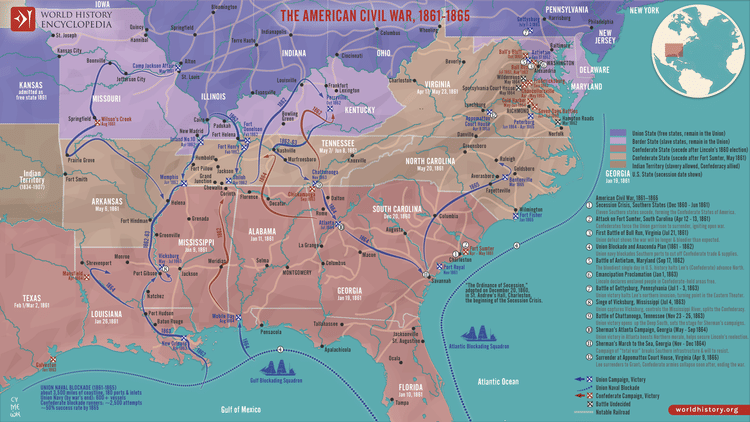
The Confederate Army of the Potomac, under Beauregard, was entrenched at Manassas Junction, a vital railway hub. Further west, in the Shenandoah Valley, lay the Army of the Shenandoah, commanded by Confederate Brigadier General Joseph E. Johnston. Union Major General Robert Patterson was tasked with engaging Johnston, specifically to prevent him from reinforcing Beauregard. Patterson executed these orders, seemingly pinning Johnston down near Winchester.
Meanwhile, on the afternoon of July 16, McDowell commenced his march with a massive force of approximately 35,000 Union soldiers towards Centreville, a strategic point near Manassas Junction. The march, intended to be swift, was anything but. The untrained soldiers, unaccustomed to military discipline, treated the advance more like a leisurely stroll, often pausing to pick berries or drink from streams. This casual approach meant the approximately 35-mile journey took a laborious two days to complete.
On July 16, Greenhow’s message reached Beauregard, alerting him to McDowell’s impending movement, prompting him to prepare his defenses. Crucially, on the morning of July 18, General Johnston received orders to move his forces to Manassas to support Beauregard. General J.E.B. Stuart’s cavalry skillfully screened Johnston’s departure, deceiving Patterson into believing Johnston remained pinned down. In reality, Johnston’s troops rapidly boarded trains, making their way to Manassas Junction, where they were fully in position by July 20.
Beauregard’s initial plan was an offensive strike against McDowell’s left flank and rear. Ironically, McDowell had devised an almost identical strategy: a feint attack at the Stone Bridge over Bull Run, followed by a full assault on the Confederate left flank. Both commanders aimed for the same weakness, setting the stage for a chaotic and unpredictable clash.
Morning Engagements: Dawn to Noon
McDowell initiated his offensive in the pre-dawn hours of July 21, marching his troops from Centreville towards the Confederate left at 2:30 AM. The darkness and the troops’ general inexperience in disciplined marching led to significant blockages, particularly behind General Tyler’s division on the Warrenton Turnpike. These unforeseen delays meant the Union army would not be in their designated positions until approximately 6:00 AM, hours behind schedule.
Beauregard was eating breakfast at his headquarters—located in the home of Wilmer McLean—when Union artillery shells began falling shortly after 5:00 AM. A shell piercing the roof of McLean’s house vividly confirmed that McDowell’s attack had begun. In a remarkable twist of fate, McLean would later sell his farm and move to Clover Hill, Virginia, which would become known as Appomattox Court House. There, his second home would host the surrender of Confederate General Robert E. Lee to Union General Ulysses S. Grant on April 9, 1865. McLean is famously quoted as saying, “The war began in my front yard and ended in my front parlor.”
Recognizing his original offensive plan was now untenable, Beauregard swiftly transitioned to a defensive posture, dispatching orders to his generals via couriers. However, as scholar T. Harry Williams noted, the command structure at Beauregard’s headquarters was deeply flawed: "But a strange set of people were employed at [Beauregard’s] headquarters that day. In addition to his not too competent staff, a good many enlisted men and civilian guides who were present were entrusted with the bearing of important orders. Apparently, no record was kept of their names, and after the battle, curiously enough, they disappeared and were never heard of again…" (Williams, 81). This administrative chaos led to critical delays and miscommunications. For example, Brigadier General Richard S. Ewell, ordered to lead an attack, never received the follow-up order to advance, remaining stationary and missing a crucial opportunity. General James Longstreet, similarly, never received orders to move south to Ewell’s position.
Despite these Confederate internal struggles, the bulk of the Union force steadily advanced. Confederate Colonel Nathan “Shanks” Evans, commanding a brigade of 1,100 men, mounted a heroic stand against a Union contingent estimated at 20,000 soldiers, including divisions under Major General David Hunter, General Tyler, Colonel William Tecumseh Sherman, and Colonel Ambrose Burnside. Evans’s lines eventually broke under the overwhelming pressure of Sherman’s advance, forcing a disorderly retreat towards Henry House Hill.
McDowell, believing victory was within his grasp, famously declared, "The day is ours!" and hesitated to press his advantage. Instead, he ordered an artillery bombardment of the hill by the batteries of Captain Charles Griffin and Captain James B. Ricketts. Unbeknownst to the combatants, a peculiar scene was unfolding behind the Union lines: numerous dignitaries and citizens from Washington, D.C., had arrived at Centreville, some on foot, others in carriages, many bringing picnic lunches, eager to witness what they expected to be a glorious and swift Union victory.
The Tide Turns: Noon to Afternoon
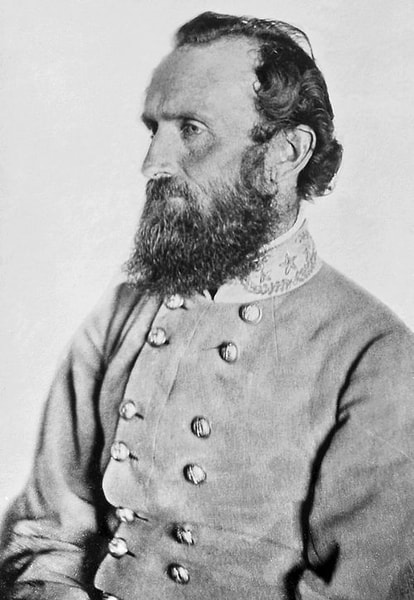
On Henry House Hill, the retreating Confederate lines were rallied and reorganized by Colonel F.S. Bartow, Brigadier General Barnard Bee, and Colonel Thomas J. Jackson, who commanded a brigade of Virginians. Jackson, a deeply religious man seemingly immune to fear, stood calmly amidst the intense gunfire and cannonballs, steadfastly directing his troops to hold their position.
It was during this crucial moment that General Bee, rallying his own brigade, famously pointed to Jackson and shouted, “There is Jackson standing like a stone wall! Rally behind the Virginians!” (McPherson, 342). While some historians speculate Bee’s remark might have been a criticism of Jackson’s perceived inaction, Bee was mortally wounded shortly thereafter, leaving his true intent ambiguous. Regardless, the phrase was interpreted as high praise, and the Virginian colonel earned the immortal moniker, "Stonewall Jackson." This moment of resolve provided a crucial anchor for the faltering Confederate defense.
McDowell, seeking to gain further advantage, ordered Griffin and Ricketts to advance their artillery closer to Henry House Hill. Tragically, some of their shells struck the Henry House itself, mortally wounding 85-year-old widow Judith Carter Henry, who later died from her injuries, becoming the first civilian casualty of the Civil War.
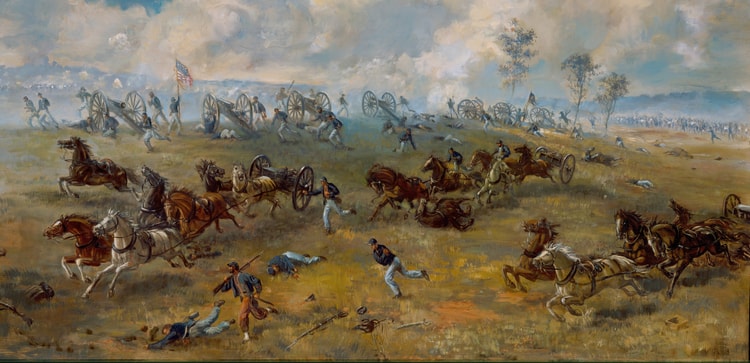
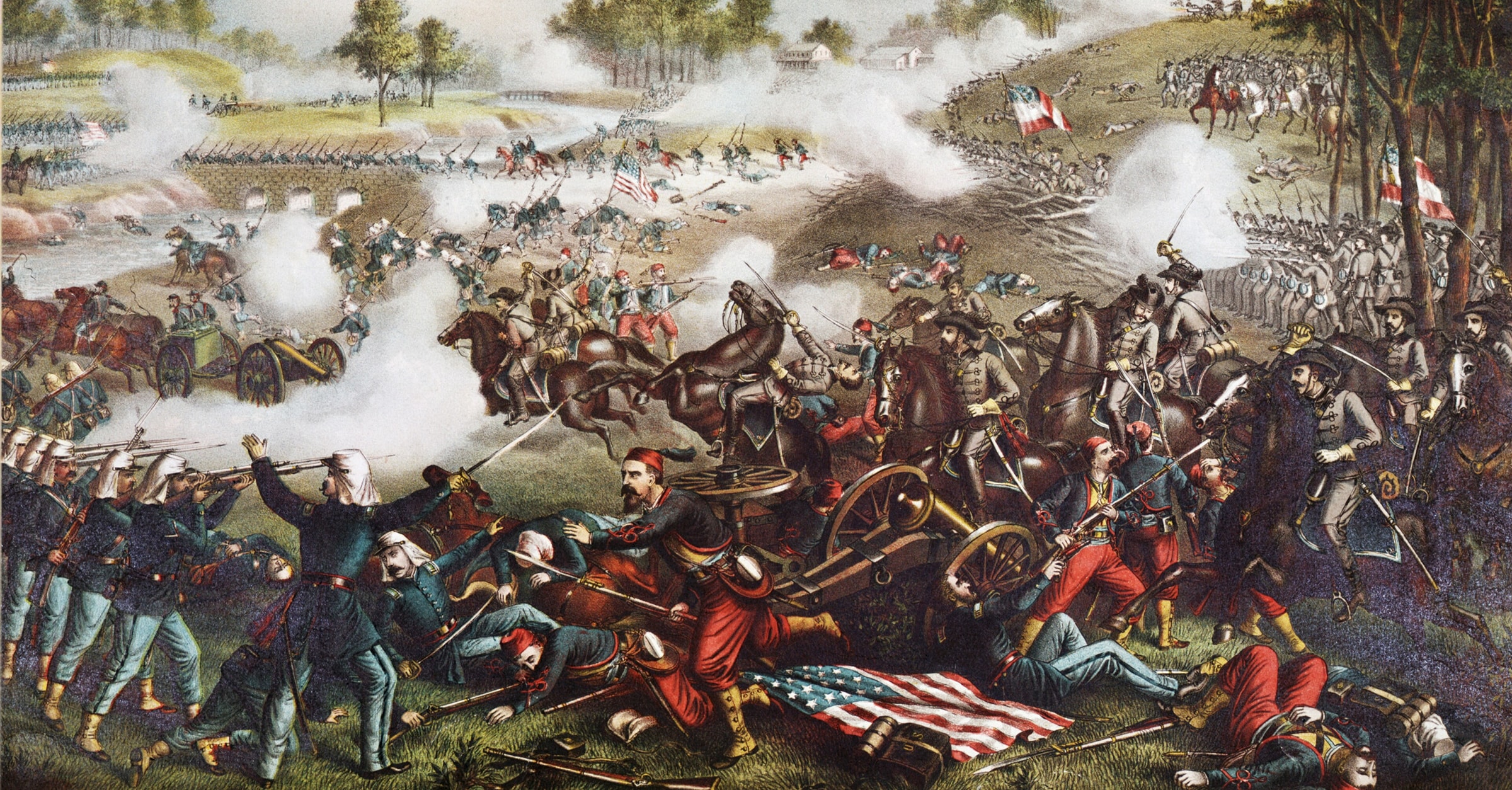
The battle reached its pivotal moment around 3:00 PM. A group of men in blue uniforms advanced towards Griffin’s and Ricketts’s batteries. The Union artillerists prepared to open fire but were stopped by Major William F. Barry, who mistakenly identified them as Union troops. In a fatal error, these were actually the Confederate 33rd Virginia Infantry. Seizing the opportunity, J.E.B. Stuart’s cavalry quickly supported the 33rd Virginia, and the Union batteries were swiftly overrun and captured by the Confederates.
This misidentification and subsequent capture of the Union artillery irrevocably shifted the momentum. The Confederates immediately turned the captured guns on the Union troops. Around 4:00 PM, Beauregard, sensing the turn of the tide, ordered a full charge of his entire line. The Confederate advance swept across the field, effectively breaking the Union army and sending them into a disorderly retreat.
The Great Skedaddle: Afternoon to Evening
Initially, Union lines attempted to hold, but by approximately 5:00 PM, the defensive structure had completely collapsed, and the retreat devolved into a full-blown rout. Historian Alan Taylor vividly describes the scene: "Exhausted by the heat of July and smoke of battle, the Yankees panicked and fled, throwing away guns and packs to make better speed. McDowell’s army dissolved into a terrified, fleeing mob, but the Confederates were too disorganized and weary to pursue. Instead, they looted the dead and wounded Yankees." (Taylor, 173).
The fleeing Union soldiers converged with the civilian spectators and their carriages who were already on the road back to Washington, D.C. The sudden influx of panicked troops, convinced that the Confederates were in hot pursuit, transformed the retreat into utter chaos. William H. Russell, the English journalist who observed the battle and was caught in the midst of the retreat, noted the "disgraceful conduct" of Union troops desperately trying to clamber into occupied carriages or onto horses (Streissguth, 53). The Southern press, reveling in the Confederate victory, mockingly dubbed the chaotic flight "The Great Skedaddle."
Aftermath and Ramifications: Official Responses and Shattered Credibility
Confederate President Jefferson Davis arrived at Manassas that evening, promptly telegraphing a joyous message of victory back to Richmond. However, his elation was tempered by a crucial question: why had the enemy not been pursued all the way to Washington, D.C.? Neither Beauregard nor Johnston provided a satisfactory answer, primarily because the Confederate army, though victorious, was almost as disorganized and exhausted as the retreating Union forces. Davis pressed for an immediate advance, but heavy rain began to fall, turning the roads into impassable mud and rendering any pursuit or further offensive impossible.
Back in Washington, D.C., Lincoln and his cabinet had been eagerly awaiting news of a Union triumph. The arrival of the news of their decisive defeat was, to put it mildly, a profound disappointment. The citizens, soldiers, and politicians of the North were stunned; a Confederate victory had been largely inconceivable. Alan Taylor articulates the international reaction: "The stunning Union defeat undercut American credibility abroad. The editor of the London Times scoffed at the United States as ‘a so-called Power that can scarcely defend its capital against its fellow-citizens.’ Irritated by Yankees, a Canadian woman exulted when Manassas ’caused all Canadians to scorn and laugh at them.’" (Taylor, 174).
In the South, the victory at Manassas was met with widespread jubilation and a fervent hope that the "Yankees" would now abandon their invasion. Taylor describes the Southern sentiment: "Confederates grew cocky, for Manassas seemed to confirm their superiority over the wretched Yankees. An Alabaman wrote a new song, entitled, ‘Run Yank or Die,’ in which Union troops broke and fled whenever they heard the chorus ‘Hurrah for Slavery.’ The song became a hit in the Confederate army and on the home front. A Georgia congressman boasted that this one battle ‘has secured our independence.’" (Taylor, 174). This inflated confidence, however, would prove to be another dangerous illusion.
Enduring Legacy: A Long and Bloody Road Ahead
The widespread belief that the Battle of First Bull Run would bring a swift end to the war, whether through Union victory or Confederate independence, proved utterly false. On July 22, the day after the battle, President Lincoln responded decisively to the defeat. He signed a bill authorizing the enlistment of 500,000 soldiers for three years of service, signaling a clear commitment to a protracted conflict. Lincoln then replaced the administratively gifted but militarily inexperienced McDowell with Major General George B. McClellan, the celebrated hero of Northwestern Virginia. McClellan was tasked with the formidable challenge of transforming the demoralized survivors of Bull Run and the new recruits into the professional fighting force that would become the Army of the Potomac.
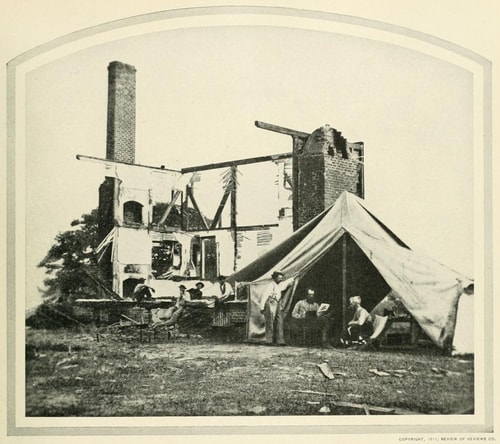
In the South, the initial euphoria and hopes for peace gradually gave way to a sobering realization: the North had lost a battle, not the war. As the casualty counts became more widely known—a total of 4,878, with 2,896 for the Union and 1,982 for the Confederacy, far exceeding any previous engagement—the early optimism for an easy victory dissipated. Beauregard, though hailed as a national hero, faced criticism from President Davis and his supporters for not pursuing the Union army and, in their view, failing to end the war at Manassas.
Ultimately, both sides came to understand that the First Battle of Bull Run (First Manassas) was not an end, but merely a brutal beginning. It was the curtain-raiser to a series of increasingly devastating battles, each with exponentially higher casualty counts, such as Antietam and Gettysburg, where Bull Run’s losses would indeed "seem minor." The illusion of a quick, decisive conflict was irrevocably shattered on those Virginian fields, replaced by the grim reality of a long, bloody, and existential struggle that would define the American nation.