Electrifying the Long Haul: Octopus Energy and CATL Launch ‘Swaptopus’ to Revolutionize European Freight
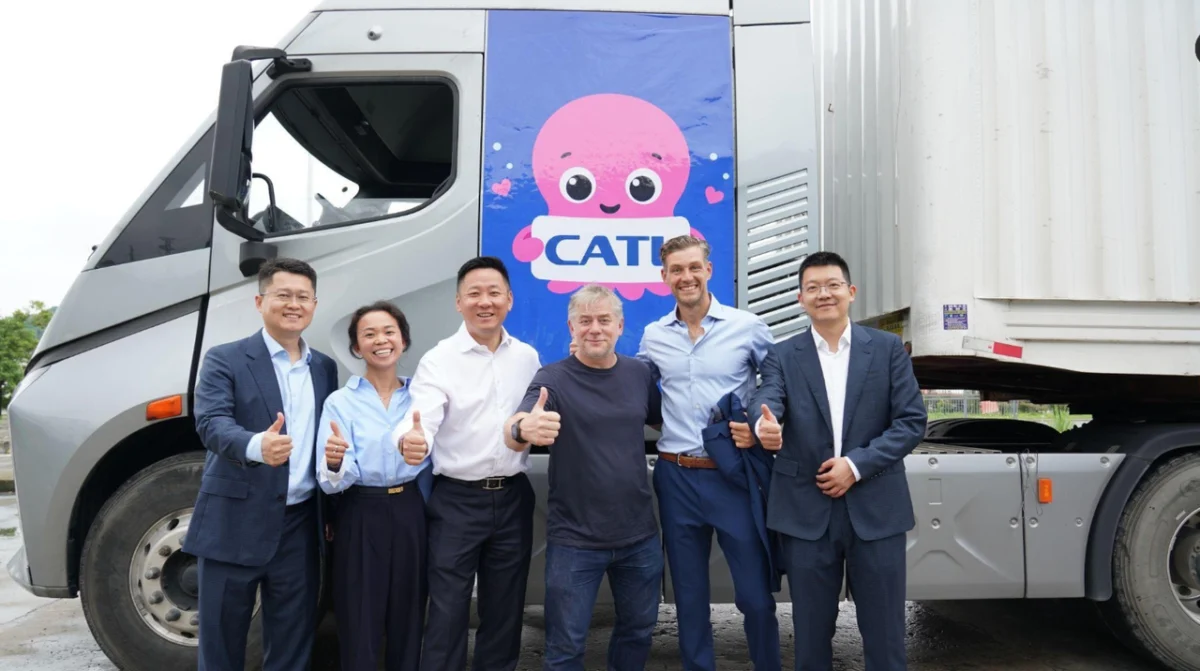
The transition to a carbon-neutral economy has long faced a formidable bottleneck: the heavy-duty transport sector. While passenger vehicles have seen a rapid pivot toward electrification, the logistics industry has remained tethered to diesel, hampered by the prohibitive charging times and weight constraints of massive battery packs. However, a new strategic alliance between British energy pioneer Octopus Energy and the world’s largest battery manufacturer, Contemporary Amperex Technology Co., Limited (CATL), aims to dismantle these barriers.
Under a newly formed joint venture dubbed "Swaptopus," the two companies have unveiled an ambitious roadmap to deploy large-scale battery-swapping infrastructure across Europe. This initiative is designed not only to keep electric lorries on the move but also to transform the vehicles themselves into critical components of the continent’s energy grid. By merging CATL’s hardware dominance with Octopus Energy’s advanced software capabilities, the partnership seeks to unlock billions in investment and provide a scalable solution for the 300,000 electric trucks expected to hit European roads in the coming decade.
Main Facts: The Genesis of Swaptopus
At its core, Swaptopus represents a fundamental shift in how heavy-duty electric vehicles (EVs) operate. Traditionally, the primary deterrent for fleet operators considering electric trucks has been "downtime." A standard long-haul electric truck requires a massive battery to move heavy loads over long distances; charging such a battery can take several hours, even with high-speed DC chargers. Swaptopus bypasses this issue entirely through battery-swapping technology.
The Mechanics of the Swap
Instead of plugging into a stationary charger, an electric lorry enters a specialized "swap station." Within minutes—roughly the same time it takes to refuel a diesel tank—automated machinery removes the depleted battery pack and replaces it with a fully charged one. This "modular" approach to energy allows for continuous operation, effectively decoupling the vehicle from the constraints of the charging cable.
Technical Specifications
The partnership leverages CATL’s cutting-edge commercial battery technology. CATL’s largest units for the freight sector can reach a staggering capacity of 1,000 kWh. To put this in perspective, this is approximately 20 times the capacity of an average electric passenger car. Managing such high-density energy units requires sophisticated thermal management and safety protocols, areas where CATL leads the global market.
Software Integration
Octopus Energy brings its proprietary AI-powered platform, Kraken, to the venture. Kraken will be used to manage the "Swaptopus" hubs, optimizing when batteries are charged based on grid demand and renewable energy availability. This ensures that the batteries are not just fueling trucks, but are also acting as a giant, distributed energy storage system.
Chronology: A Decade of Expansion
The rollout of Swaptopus is structured as a multi-phase deployment, beginning with localized proof-of-concepts and scaling into a pan-European network.
- 2024–2025: Research and Development Phase: Octopus and CATL will finalize the technical integration between CATL’s swapping hardware and Octopus’s energy management software. This period involves site selection and securing regulatory approvals for the first wave of infrastructure.
- 2027: The UK Launch: The first large-scale battery-swapping hubs are scheduled to begin operations in 2027. The initial sites will be strategically located along major UK logistics corridors, such as the M1 and the "Golden Triangle" of distribution centers in the Midlands.
- 2028–2032: European Integration: Following the UK pilot, the venture will expand into mainland Europe. Key markets like Germany, France, and the Netherlands—which host some of the world’s busiest freight ports and highways—will be prioritized.
- 2035: Full-Scale Network Realization: By 2035, the partners intend to have more than 30 massive "Swaptopus" hubs operating across the continent. At this stage, the infrastructure is projected to support a fleet of over 300,000 electric trucks, creating a seamless "green corridor" for European trade.
Supporting Data: Economic and Environmental Impact
The financial and logistical figures underpinning the Swaptopus project highlight the sheer scale of the opportunity.
Investment Potential
The companies estimate that the project could unlock more than £30 billion ($38 billion) in private investment over the next decade. This capital will be directed toward the construction of swapping stations, the manufacturing of modular battery packs, and the reinforcement of local grid connections.
Operational Efficiency
Data released alongside the announcement suggests that electric trucks already outperform diesel counterparts in terms of running costs per mile. However, the total cost of ownership (TCO) has historically been skewed by the high initial cost of batteries and the lost revenue during charging downtime. Swaptopus addresses both:
- Reduced Downtime: Swapping takes less than 5 minutes, compared to 2–4 hours for traditional fast charging.
- Battery-as-a-Service (BaaS): By allowing fleet operators to "rent" or swap batteries rather than own them outright, the upfront cost of the vehicle is significantly reduced, making electric trucks more competitive with diesel models from day one.
Grid Capacity
The 30 hubs planned by 2035 will house thousands of 1,000 kWh batteries. When not in use by trucks, these batteries provide a collective storage capacity measured in gigawatt-hours (GWh). This allows the hubs to store excess wind and solar power during the day and discharge it back into the grid during peak evening hours, providing a vital service for grid stability.
Official Responses: Insights from the Leadership
The leaders of the involved entities have emphasized that this partnership is a marriage of hardware prowess and software intelligence.
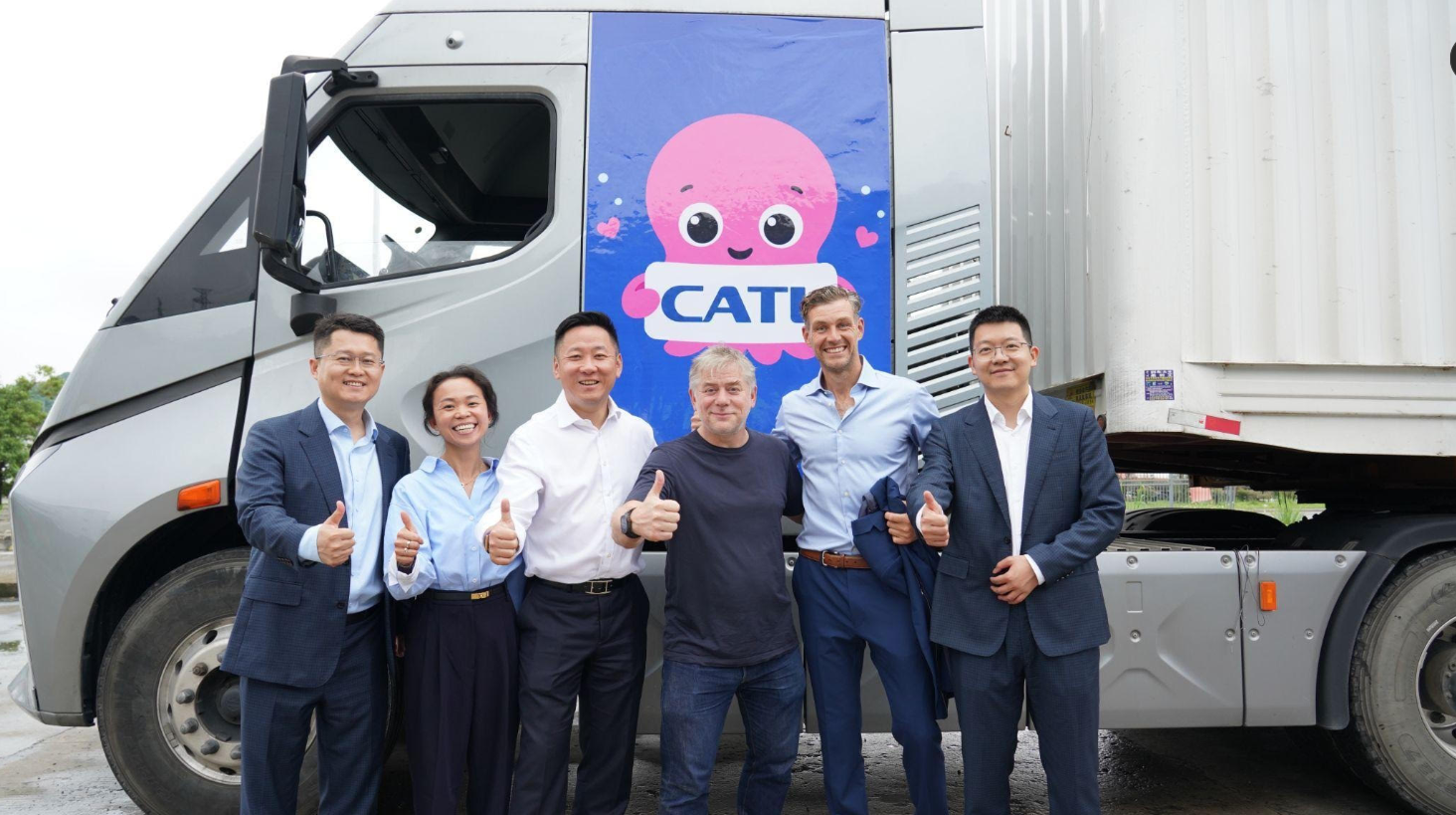
Greg Jackson, CEO and Founder of Octopus Energy Group, highlighted the practical necessity of the technology:
"Electric trucks already beat diesel on running costs; the challenge is keeping them moving. Battery swapping changes that. Instead of waiting for hours, trucks can be back on the road in minutes. By combining Octopus’s software and energy expertise with CATL’s world-class battery technology, we’re making clean freight practical at scale across Europe."
Dr. Robin Zeng, Chairman and CEO of CATL, pointed to the proven success of the technology in other markets:
"Battery swapping will be a significant part of the future of commercial transport. We have field-proven this technology in China, and we are delighted to bring it to the UK and Europe. Together, our expertise in battery swapping, B2G (Battery-to-Grid), and energy storage, paired with Octopus’s AI-powered energy trading and management technologies, will speed up the electrification of road transport across the region."
William Rowe, CEO and Founder of Swaptopus, focused on the broader technological landscape, including the move toward automation:
"We believe the future of land-based transport is electric and autonomous, and battery swapping is a massive part of the enabling infrastructure. Not only does it significantly reduce downtime, but since the batteries at the swapping stations can be charged and discharged when the grid needs it, they act as a virtual power plant and in turn lower costs for consumers."
Implications: Reshaping Energy and Logistics
The Swaptopus initiative carries profound implications for several sectors, extending far beyond the trucking industry.
1. The Rise of the Virtual Power Plant (VPP)
The most significant secondary impact of Swaptopus is its contribution to energy flexibility. As Europe increases its reliance on intermittent renewable energy (wind and solar), the need for massive, fast-responding storage becomes critical. Each Swaptopus hub effectively becomes a "Virtual Power Plant." Through Vehicle-to-Grid (V2G) and Battery-to-Grid (B2G) technology, these hubs can absorb surges in renewable production and prevent curtailment, while supporting the national grid during periods of high demand.
2. Standardizing the Freight Industry
One of the historical hurdles for battery swapping has been the lack of standardization across different vehicle manufacturers. CATL’s involvement is a major catalyst for change; as the dominant supplier to the global EV market, their modular battery designs are likely to become the de facto industry standard. This could force European truck manufacturers (such as Volvo, MAN, and Scania) to adapt their chassis to accommodate CATL’s swappable units, leading to a more unified and efficient logistics ecosystem.
3. Decarbonizing the "Hard-to-Abate" Sector
Heavy-duty trucking accounts for a disproportionate amount of transport emissions. By making electric freight "practical at scale," Swaptopus provides a viable path for logistics companies to meet the stringent emissions targets set by the EU’s Green Deal and the UK’s Net Zero strategy. The success of this model could serve as a blueprint for other hard-to-abate sectors, such as maritime shipping or heavy construction equipment.
4. Economic Sovereignty and Infrastructure
The £30 billion investment represents a massive influx of capital into European infrastructure. However, it also highlights the growing influence of Chinese technology (via CATL) in Western energy systems. While the partnership with a UK-based firm like Octopus Energy provides a local anchor, the project underscores the global nature of the green energy supply chain and the necessity of international cooperation to solve the climate crisis.
Conclusion
The launch of Swaptopus marks a turning point in the electrification of Europe’s heavy transport. By addressing the twin challenges of charging downtime and grid stability, Octopus Energy and CATL are proposing a system that treats energy as a fluid, tradable commodity rather than a static constraint. As the first hubs begin to appear in the UK in 2027, the success of this venture will likely determine the speed and efficiency with which the rest of the world’s freight networks move toward a zero-emission future. In the race to decarbonize, the "swap" may prove to be just as important as the "charge."