Digital Spelunking Meets Historical Preservation: Tham Luang Rescue Recreated in ‘Cave Crave’ VR
The intersection of immersive technology and historical documentation has reached a new milestone with the release of the "Tham Luang" downloadable content (DLC) for the virtual reality (VR) spelunking title Cave Crave. Developed by 3R Games, this latest update brings one of the most harrowing and miraculous rescue stories of the 21st century to the Meta Quest platform, allowing users to navigate the treacherous subterranean passages of the Chiang Rai province in Thailand.
The 2018 Tham Luang cave rescue, which saw the successful extraction of twelve members of a youth football team and their coach, has been the subject of global fascination, inspiring documentaries and feature films. However, Cave Crave’s rendition offers a unique perspective: a first-person, high-fidelity simulation that prioritizes topographical accuracy and technical realism over Hollywood dramatization.
Main Facts: A New Frontier for ‘Real Caves in VR’
The Tham Luang DLC serves as the centerpiece of 3R Games’ ambitious "Real Caves in VR" initiative. This project aims to digitize world-famous cave systems with millimeter precision, providing both an educational tool for geologists and a high-stakes adventure for VR enthusiasts. This release follows the developer’s previous recreation of Utah’s notorious Nutty Putty Cave, a site known for its extreme narrowness and a tragic 2009 incident.
Key features of the Tham Luang update include:
- Authentic Topography: Using advanced survey data to recreate the exact scale and layout of the cave system.
- New Gameplay Mechanics: The introduction of swimming and technical diving systems to simulate the flooded sections of the cave.
- Expert Narration: Voice-over guidance from the actual divers and surveyors involved in the 2018 operation.
- Multi-Platform Roadmap: While currently available on Meta Quest, the update is slated for release on PlayStation VR2 and Steam VR in the near future.
By integrating the expertise of the individuals who were physically present during the rescue, 3R Games has moved beyond mere entertainment, venturing into the realm of "interactive documentary."
Chronology: From Monsoon Rains to Virtual Reality
To understand the significance of this VR recreation, one must revisit the timeline of the events that captivated the world in the summer of 2018.
June 23 – July 2, 2018: The Disappearance and Discovery
On June 23, 2018, twelve members of the "Wild Boars" youth football team, aged 11 to 16, and their 25-year-old assistant coach, Ekkapol Chantawong, entered the Tham Luang Nang Non cave system after a practice session. Unexpectedly heavy monsoon rains began to fall, rapidly flooding the cave’s lower chambers and trapping the group deep within the mountain.
For nine days, the boys were missing, their fate unknown. It was not until July 2 that British cave divers John Volanthen and Rick Stanton navigated kilometers of submerged, jagged passages to find the group alive on a small, elevated rock shelf known as "Pattaya Beach."
July 3 – July 10, 2018: The Impossible Rescue
The discovery was only the beginning of the ordeal. With oxygen levels dropping and more rain forecasted, an international coalition of thousands—including Thai Navy SEALs, US Air Force specialists, and expert divers from across the globe—debated how to extract the boys. The journey out required navigating "Sump 3" and other tight, zero-visibility passages while submerged in freezing, turbulent water.
The rescue was eventually executed by sedating the boys and maneuvering them through the water in specialized stretchers, a high-risk operation that had never been attempted at this scale. By July 10, all 13 individuals had been brought to the surface safely.
2024: The Digital Reconstruction
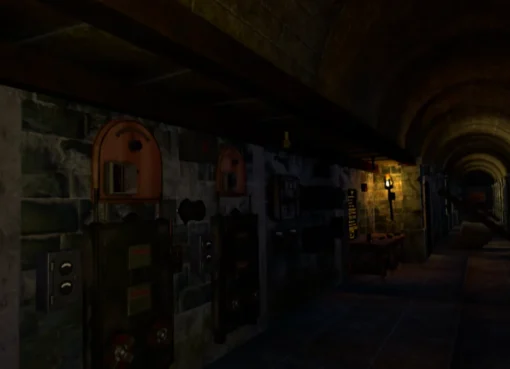
Six years after the event, 3R Games has utilized the technological advancements in VR hardware to bring this environment to the public. By leveraging the Meta Quest’s standalone processing power, the developers have managed to render the claustrophobic and aqueous environments of Tham Luang, providing a visceral sense of the environment that trapped the Wild Boars.
Supporting Data: The Technical Architecture of the Cave
The development of the Tham Luang DLC was not merely an artistic endeavor; it was a data-driven reconstruction. 3R Games collaborated with a trio of experts to ensure the virtual cave was indistinguishable from its physical counterpart.
Precision Mapping with Richard Walters
Cave-scanning expert Richard Walters played a pivotal role in interpreting survey data. Unlike traditional game environments, which are often designed for player flow and aesthetic appeal, Tham Luang in Cave Crave adheres to the real geometry of the cave. Walters helped the developers transfer complex LIDAR (Light Detection and Ranging) scans and topographical maps into the game engine. This ensures that the scale—the height of the ceilings, the width of the "choke points," and the incline of the muddy slopes—is accurate to the centimeter.
The Role of John Volanthen and Vern Unsworth
The involvement of John Volanthen, the diver who first located the team, adds a layer of "living history" to the experience. Volanthen provided voice-overs that guide players through the newly introduced underwater sections. These mechanics require players to manage their buoyancy and navigate through silt-heavy water where visibility is reduced to nearly zero—a direct reflection of the conditions Volanthen faced.
Vern Unsworth, a British caver who had spent years exploring Tham Luang prior to the 2018 incident, contributed his extensive knowledge of the "dry" sections of the cave. His narration covers the geological formations and the logistical hurdles faced by the ground crews during the rescue.
Mechanics and Sensory Fidelity
Cave Crave utilizes spatial audio to simulate the echoing drips of water and the rushing sound of subterranean floods. The visual fidelity focuses on "dynamic darkness," where the player’s head-mounted lamp is the only source of light, casting realistic shadows that shift as the player crawls through narrow crevices.
Official Responses and Developer Philosophy
3R Games has positioned the "Real Caves in VR" initiative as a tribute to the resilience of the human spirit and the majesty of natural geological formations.
In statements regarding the DLC’s release, the development team emphasized the educational value of the project. "We wanted to move beyond the headlines and the movies," a spokesperson for 3R Games noted during the project’s announcement. "In VR, you don’t just watch the rescue; you feel the weight of the mountain above you. You understand the physical reality of what those divers and those children went through."
John Volanthen has also commented on the project, noting that VR provides a safe way for the public to understand the complexities of cave diving. By providing the voice-over, Volanthen aims to educate players on the discipline and calm required in high-pressure environments, rather than simply providing a "thrill ride."
The response from the VR community has been largely positive, with many praising the studio for its commitment to accuracy. Critics of "tragedy-based" media have noted that by focusing on the technical and geological aspects—rather than the personal trauma of the victims—3R Games has maintained a respectful and journalistic distance.
Implications: The Future of Virtual History and Spelunking
The release of the Tham Luang DLC carries significant implications for several industries, ranging from gaming and education to search-and-rescue training.
1. VR as a Tool for Historical Preservation
As climate change and natural erosion threaten physical landmarks, digital preservation becomes increasingly vital. The work done by 3R Games ensures that a perfect 1:1 model of Tham Luang exists in perpetuity. This "digital twin" can be used by future historians and geologists to study the cave system without the risk of physical entry or environmental impact.
2. The Evolution of "Serious Games"
The success of Cave Crave suggests a growing market for "serious games"—software that prioritizes realism and education over traditional "gamified" loops like points and levels. The introduction of swimming and diving mechanics in this DLC could potentially be adapted for training purposes, allowing amateur divers to practice navigation in a controlled, virtual environment before attempting real-world cave entries.
3. Ethical Considerations in Digital Recreations
The inclusion of sites associated with near-tragedies (Tham Luang) or actual fatalities (Nutty Putty Cave) raises questions about the ethics of "dark tourism" in virtual spaces. However, the involvement of the original participants, such as Volanthen and Unsworth, suggests a model for how these projects can be handled with sensitivity. By centering the narrative on the heroism of the rescuers and the science of the cave itself, the medium serves as a tribute rather than exploitation.
4. Accessibility to Extreme Environments
Most people will never have the physical capability or the specialized training required to explore a cave like Tham Luang. VR democratizes these extreme experiences. For a user sitting in a living room with a Meta Quest headset, the ability to "dive" through a flooded Thai cave offers a level of perspective that no 2D documentary can match.
Conclusion
The Tham Luang DLC for Cave Crave represents a sophisticated blend of technical achievement and narrative depth. By eschewing the sensationalism often found in media adaptations of the 2018 rescue, 3R Games has created a piece of software that functions as a museum, a classroom, and a simulation all at once.
As the DLC prepares for its launch on PSVR2 and Steam, the "Real Caves in VR" initiative continues to set a high bar for how developers can utilize real-world data to create meaningful, immersive content. In the dark, cramped, and flooded passages of the virtual Tham Luang, players find more than just a game; they find a profound appreciation for the experts who braved the depths and the technology that now allows us to follow in their footsteps.