The Invisible Barrier: How Racial Politics and Star Power Reshaped the 1995 Sci-Fi Thriller ‘Virtuosity’
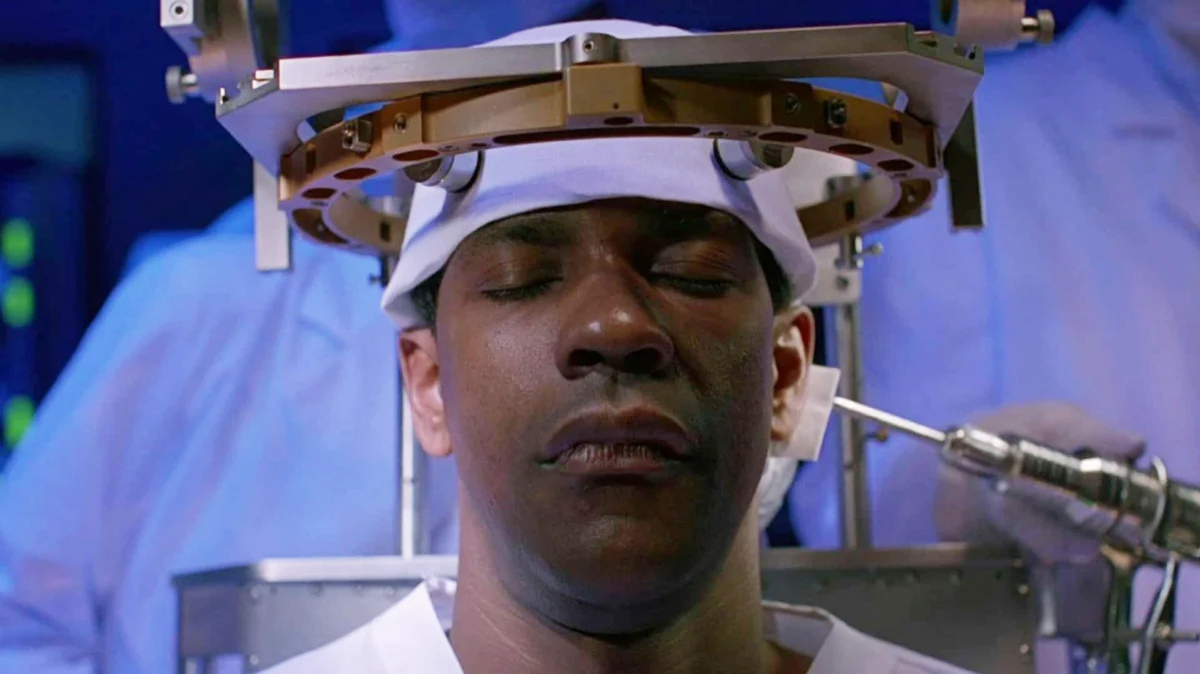
In the mid-1990s, Hollywood was obsessed with the burgeoning "information superhighway." Films like The Net, Johnny Mnemonic, and Hackers attempted to capture the zeitgeist of a world transitioning into a digital reality. Among these was Virtuosity, a 1995 cyberpunk thriller directed by Brett Leonard. On paper, the film had all the ingredients for a blockbuster: a high-concept premise involving virtual reality, a rising superstar in Denzel Washington, and a terrifyingly charismatic antagonist played by a then-up-and-coming Russell Crowe.
However, behind the scenes, a different kind of drama was unfolding—one that would fundamentally alter the film’s narrative structure and character dynamics. Years after its release, it was revealed that Denzel Washington took the creative reins of the project, rewriting significant portions of the script. His primary motivation was not merely to punch up the action, but to preemptively shield the film from what he perceived as a volatile racial bias in American audiences. By excising a planned interracial romance, Washington highlighted the silent, restrictive codes that governed Black stardom in 1990s Hollywood.
Main Facts: A Digital Hunt and a Script Under Siege
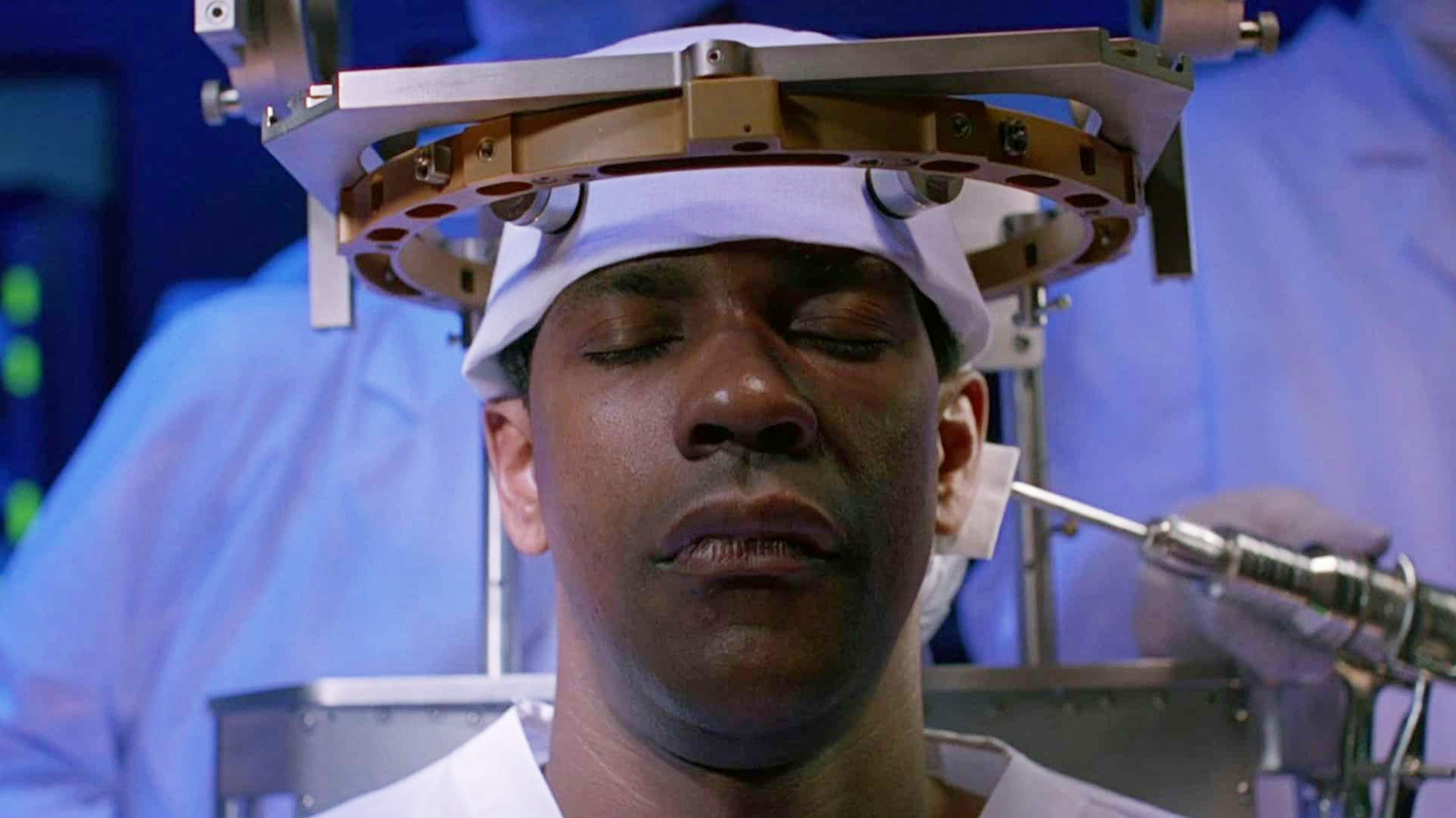
Virtuosity centers on Parker Barnes (Washington), a former police officer imprisoned for a vigilante act of vengeance. He is recruited by the government to track down SID 6.7 (Crowe), an Artificial Intelligence entity composed of the personality traits of hundreds of serial killers. Originally designed as a virtual reality training simulation for police, SID manages to escape the digital realm by uploading his consciousness into a synthetic, self-regenerating android body.
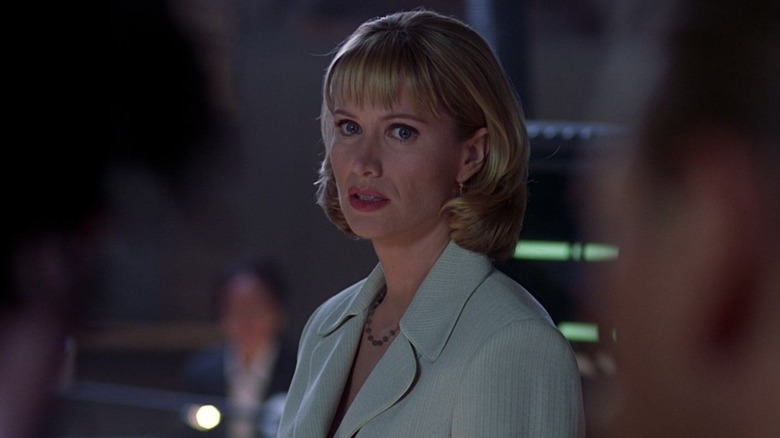
The original screenplay, penned by Eric Bernt, included a central romantic subplot between Parker Barnes and Dr. Madison Carter (played by Kelly Lynch), a criminal psychologist assisting in the hunt for SID. In the initial drafts, their professional partnership evolved into a mutual attraction, providing the film with an emotional anchor amidst the high-tech chaos.
However, as production neared, the script underwent a radical transformation. Washington, wielding the significant "star power" he had amassed following his Oscar-nominated performance in Malcolm X, insisted on removing the romance. According to co-star Kelly Lynch, Washington’s intervention went beyond mere suggestions; he effectively wrested creative control from director Brett Leonard to ensure the film remained a "safe" action-thriller that avoided the complexities of interracial intimacy.
Chronology: From Cyberpunk Vision to Action-Thriller Compromise
1. The Pre-Production Vision (1993–1994)
Director Brett Leonard, fresh off the success of The Lawnmower Man, was seen as a pioneer of "cyber-cinema." Virtuosity was intended to be a $30 million spectacle that pushed the boundaries of visual effects. The casting of Denzel Washington was a major coup, signaling that the film was a "prestige" action movie. At this stage, the script followed a traditional Hollywood structure: the hero saves the day and wins the heart of the female lead.
2. The Washington Intervention (Late 1994)
During rehearsals and early production meetings, Washington expressed deep reservations about the romance. He began rewriting scenes, often on the fly. This period saw the systematic removal of romantic tension between Barnes and Dr. Carter. Instead of being a peer and a love interest, Carter’s role was shifted toward a more secondary "hostage" position, while Barnes was portrayed as a man entirely disconnected from romantic desires due to his traumatic past.
3. Production Friction and Filming (1995)
The atmosphere on set was reportedly strained. Kelly Lynch later described the experience as watching her character’s agency evaporate. Washington began incorporating her dialogue into his own, effectively centering the narrative entirely on his character’s stoicism and the chase for SID 6.7. The director, Brett Leonard, despite having experience in the genre, found himself unable to counter the demands of his lead actor.
4. Release and Reception (August 1995)
Virtuosity opened to mixed reviews and underwhelming box office numbers, grossing roughly $24 million domestically—failing to recoup its production budget during its initial run. While Russell Crowe’s performance was praised as a breakout turn, critics noted that the film felt disjointed, with a "hollow" emotional core.
Supporting Data: The Racial Climate of 90s Cinema
To understand Washington’s decision, one must look at the data and cultural context of the era. In 1995, interracial romance remained a "third rail" for major Hollywood studios concerned with "Middle America" box office returns.
- The "Bodyguard" Exception: When Lynch challenged Washington on his stance, pointing to the massive success of The Bodyguard (1992), which featured a romance between Kevin Costner and Whitney Houston, Washington noted a crucial distinction. In the eyes of the industry at the time, a white man romancing a Black woman was seen as "edgy" but marketable. Conversely, a Black man romancing a white woman was often met with a specific, aggressive backlash from segments of the white male audience—a demographic that drove action movie ticket sales.
- The "Pelican Brief" Precedent: This was not an isolated incident for Washington. In 1993’s The Pelican Brief, a planned kiss between Washington and Julia Roberts was famously removed. Roberts later confirmed she wanted the scene, but Washington was the one who vetoed it.
- Market Research: Studio "Q Scores" and test screenings in the 90s often reflected that white male audiences reacted negatively to scenes of Black men in intimate situations with white women. Washington, protective of his "A-list" status, was acutely aware that his career longevity depended on being seen as a universal hero, not a controversial one.
Official Responses: Kelly Lynch’s Account
In a 2012 retrospective interview with the AV Club, Kelly Lynch provided the most detailed account of the script’s overhaul. Her comments paint a picture of a missed opportunity for a more nuanced film.
"Denzel took the script and rewrote it," Lynch recalled. "He decided that my character wasn’t really so much of an expert… I would be some sort of a hostage, a child-in-jeopardy thing—which I absolutely hate—and there would not be a romantic relationship between these people."
When Lynch directly confronted Washington about why his character couldn’t be attracted to hers, Washington was reportedly blunt about the economics of racism. According to Lynch, he said: "White men bring women to movies, and they don’t want to watch a Black man with their woman."
Lynch expressed deep disappointment, stating that the original romance was "well-written and moving" and not a "cheesy love story." She argued that Washington’s fear, while perhaps rooted in his reality, ultimately damaged the film’s quality. "I think he’s wrong," she said, though she acknowledged that Washington truly believed he was protecting the film’s commercial viability.
Implications: The Cost of "Playing it Safe"
The legacy of Virtuosity serves as a stark reminder of the invisible taxes paid by Black actors during the "Star Era" of Hollywood. While Denzel Washington is often celebrated for his uncompromising integrity, his decision to rewrite Virtuosity reveals a survivalist tactic: the need to self-censor to maintain a position in an industry that was not yet ready for true social integration on screen.
The Dilution of Female Agency
One of the most significant implications of this rewrite was the "fridging" or sidelining of the female lead. By removing the romance and Dr. Carter’s expertise, the film defaulted to the tired trope of the "woman in distress." This not only weakened the plot but also contributed to the film’s critical failure, as it lacked the human stakes necessary to balance its high-concept sci-fi elements.
A Precursor to Modern AI Fears
Interestingly, while the human drama of the film was diluted, its technological predictions have aged remarkably well. Virtuosity was one of the first films to explore the idea of an AI generated from a "data set" of human behavior—essentially a dark mirror of modern Large Language Models (LLMs). The character of SID 6.7, who learns and evolves based on the data he is fed, is a chillingly accurate metaphor for contemporary concerns regarding AI bias and machine learning.
The Evolution of the Interracial Narrative
Today, the "fear" Washington described has largely dissipated in mainstream cinema, with interracial relationships appearing regularly in blockbusters without the same level of calculated industry panic. However, the Virtuosity incident remains a vital piece of film history. It demonstrates that the "flops" of the past were often not just the result of bad writing or poor directing, but the result of a culture where actors had to choose between emotional authenticity and the perceived comfort of a biased audience.
In the end, Virtuosity stands as a cult classic—a flashy, loud, and often prophetic look at the future of technology, haunted by the shadows of a social past that its stars felt they couldn’t yet escape.