The Evolution of VR Dungeon Crawling: Legendary Tales Expands with Sandbox Mode and Friendly Fire
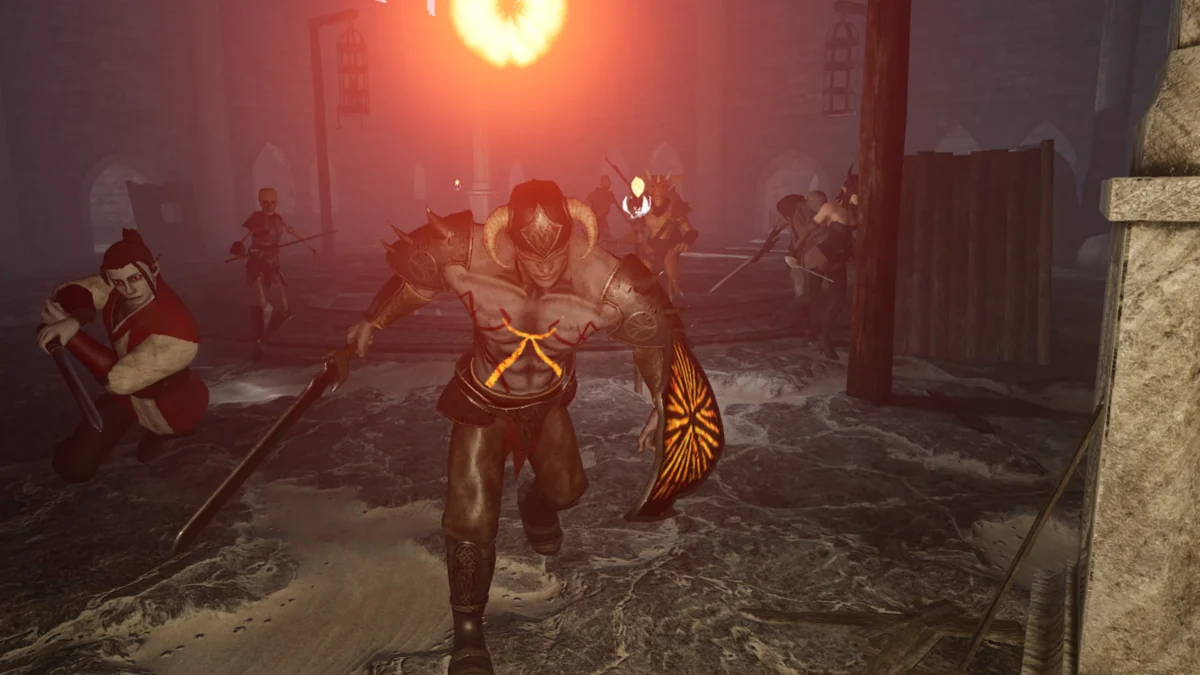
The landscape of Virtual Reality (VR) Action Role-Playing Games (ARPGs) has undergone a significant transformation over the last several years. Among the titles leading this charge is Legendary Tales, a physics-based dungeon crawler that has garnered a reputation for its punishing difficulty, deep mechanical complexity, and rewarding combat. Developed by Urban Wolf Games, the title recently reached a new milestone by fulfilling several key promises made in its 2024 development roadmap. With the introduction of a comprehensive Sandbox Mode and a toggleable Friendly Fire feature, the developers are not only enhancing the current gameplay loop but also laying the groundwork for a future Roguelite expansion that could redefine the game’s longevity.
Main Facts: A New Era of Player Agency and Chaos
The latest update for Legendary Tales focuses on two primary pillars: player experimentation and multiplayer unpredictability. By addressing these areas, Urban Wolf Games is responding directly to community feedback that has persisted since the game’s initial launch and its subsequent port to the Meta Quest platform.
The Sandbox Mode: A Testing Ground for Heroes
The centerpiece of the recent update is the long-awaited Sandbox Mode. In a game as statistically dense as Legendary Tales, where character builds involve intricate balances of Strength, Dexterity, Intelligence, and specific skill tree investments, the "grind" has traditionally been a barrier to experimentation. Before this update, testing a new "hybrid mage-warrior" build required dozens of hours of gameplay to acquire the necessary levels and equipment.
The Sandbox Mode removes these shackles. It functions as a dedicated environment where players can:
- Instantly set their character to any level.
- Allocate skill points across various disciplines without permanent consequences.
- Equip any weapon or piece of gear available in the game’s database.
- Spawn specific monsters, ranging from standard fodder to high-tier "Champions" with up to three unique special abilities.
Friendly Fire: Enhancing the Co-op Stakes
In addition to the Sandbox Mode, the update introduces a toggleable Friendly Fire feature for multiplayer sessions. Legendary Tales has always prided itself on its physics-based combat—where swords clink against shields and arrows can be deflected mid-air. By allowing players to enable Friendly Fire, the developers have added a layer of tactical depth (and potential hilarity) to the co-op experience. While the developers have explicitly stated that this is not intended to serve as a dedicated PvP (Player vs. Player) mode, they acknowledge that the community will likely utilize it for dueling and testing their builds against one another.
Chronology: From Roadmap to Reality
The journey to this update began in early 2024, following a period of intense growth for Urban Wolf Games.
- February 2024: Legendary Tales sees a massive surge in popularity following its official 1.0 release on PlayStation VR2 and PCVR, alongside a significant graphical and mechanical overhaul.
- April 2024: Following the successful launch of the Meta Quest port, which brought the game to a much wider audience, Urban Wolf Games released an ambitious roadmap. This roadmap identified "Summer 2024" as the target window for Sandbox Mode and Friendly Fire.
- May – June 2024: The developers focused on stability and cross-play optimizations between the Quest, PSVR2, and Steam versions of the game.
- Late Summer 2024: The Sandbox and Friendly Fire updates are deployed, marking the completion of the "Phase 1" roadmap goals.
- Present Day: Urban Wolf Games confirms that the previously teased "Roguelite Mode" has moved from the exploratory research phase into full active production, signaling the next major chapter for the title.
Supporting Data: The Mechanics of the Sandbox
To understand the impact of these updates, one must look at the data-driven nature of Legendary Tales. The game’s combat is governed by a proprietary physics engine that calculates damage based on the velocity of a swing, the angle of impact, and the specific hitboxes of enemy armor.
The Champion System
In the new Sandbox Mode, the ability to spawn "Champions" is a critical feature for high-level players. In the standard game, Champions are rare, procedurally generated elite enemies that possess randomized buffs. By allowing players to spawn these enemies at will—and even stack their abilities—the Sandbox Mode acts as a "stress test" for both the player’s skill and their character’s statistical viability.
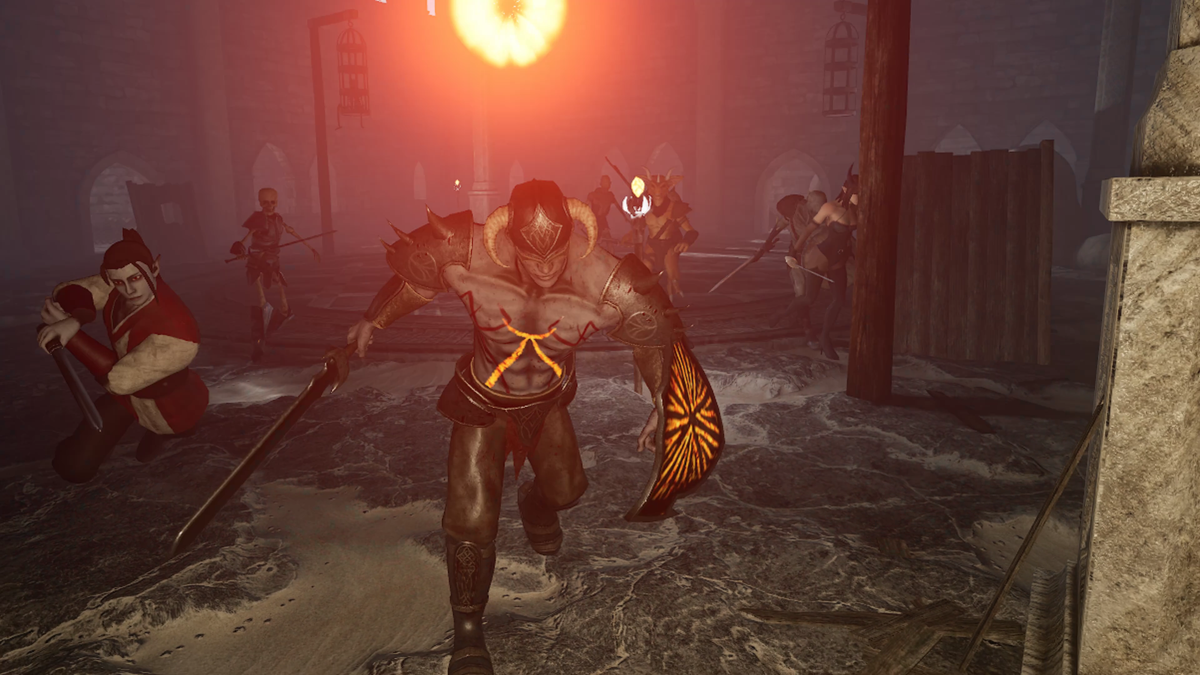
A player can, for example, spawn five Skeleton Champions, each imbued with "Teleportation," "Fire Aura," and "Explosive Death" traits. This level of customization allows the community to create "community challenges" or "speed-run trials" that were previously impossible to replicate consistently.
The Grind Reduction
Data from the player community suggests that reaching the level cap in Legendary Tales can take upwards of 40 to 60 hours for a single character. For a game with dozens of viable class combinations, this created a "meta-stagnation" where players were afraid to try new things for fear of wasting points. The Sandbox Mode effectively functions as a "Calculator" in 3D space, allowing for immediate data gathering on DPS (Damage Per Second) and defensive mitigation.
Official Responses: Urban Wolf Games’ Vision
Urban Wolf Games has maintained a transparent, if somewhat stern, relationship with its player base. The studio is known for its "hardcore" philosophy, often resisting calls to make the game easier. However, their response to the Sandbox update shows a willingness to provide tools for player growth.
Regarding the Friendly Fire feature, a spokesperson for Urban Wolf Games emphasized the intent behind the mechanic:
"Friendly fire was added to increase the immersion and the stakes of high-level dungeon crawling. When you are swinging a massive two-handed axe in a cramped corridor, you should have to worry about your teammates. It isn’t a makeshift PvP mode, though we know the community will treat it as such. Our focus remains on the PvE (Player vs. Environment) experience."
On the topic of the Roguelite Mode, the developers provided a significant update on its production status. Initially mentioned in April as a "possibility" being researched, the studio confirmed that the project has been greenlit for full development.
"The Roguelite mode has transitioned from a research project into full production. We are designing it to be a fresh way to experience the combat of Legendary Tales without the narrative constraints of the main campaign. While we aren’t ready to discuss a release date, we can confirm this will likely be a paid DLC expansion due to the scope of work involved."
Implications: What This Means for the VR Industry
The expansion of Legendary Tales carries several broader implications for the VR gaming industry and the ARPG genre.

1. The Shift Toward "Forever Games" in VR
Early VR titles were often criticized for being "tech demos"—short, one-off experiences with little replay value. By adding a Sandbox Mode and a future Roguelite mode, Urban Wolf Games is positioning Legendary Tales as a "forever game." These are titles designed to be played for hundreds of hours, similar to Diablo or Path of Exile in the flat-screen gaming world. This shift is crucial for the maturation of VR as a primary gaming platform.
2. Physics-Based Combat as a Standard
Legendary Tales is often compared to Blade & Sorcery, but while the latter focuses on "sandbox murder," the former applies those physics to a structured RPG framework. The success of the Sandbox Mode highlights a growing demand for "tactile" gaming. Players no longer want to just press a button to swing a sword; they want the weight of the sword to matter, and they want a controlled environment to master that weight.
3. The Viability of Cross-Platform VR
The fact that these updates are being rolled out across PSVR2, Steam, and Meta Quest simultaneously (or in close succession) proves that high-fidelity physics-based games can exist on mobile VR hardware (Quest). This narrows the gap between "hardcore" PCVR enthusiasts and the more casual "standalone" VR audience, creating a unified community that can share builds and strategies developed in the Sandbox Mode.
4. The Paid DLC Model in VR
Confirming the Roguelite mode as a likely paid DLC is a strategic move. As development costs for high-end VR titles rise, developers are looking for sustainable ways to fund long-term support. If Urban Wolf Games can successfully transition Legendary Tales into a modular experience—where the core game is a solid foundation and new "modes" are added as expansions—it could provide a roadmap for other indie VR developers to follow.
Conclusion
The latest updates to Legendary Tales represent more than just a few new menu options; they represent a commitment to the "hardcore" RPG community that has supported the game since its early access days. By providing a Sandbox Mode, Urban Wolf Games has handed the keys to the laboratory over to the players, ensuring that the next "meta" build will be discovered not through tedious grinding, but through creative experimentation.
As the studio shifts its focus toward the production of the Roguelite DLC, the VR community will be watching closely. Legendary Tales has already proven that it can deliver a deep, challenging ARPG experience. Now, it is tasked with proving that it can evolve into a multi-faceted platform that offers something for every type of dungeon crawler, whether they seek the chaos of friendly fire or the structured unpredictability of a roguelite run. For now, players can head to the arena, spawn a trio of champions, and finally perfect that build they’ve been dreaming of.