Unveiling Ancient Justice: The Sumerian Hymn to Nungal
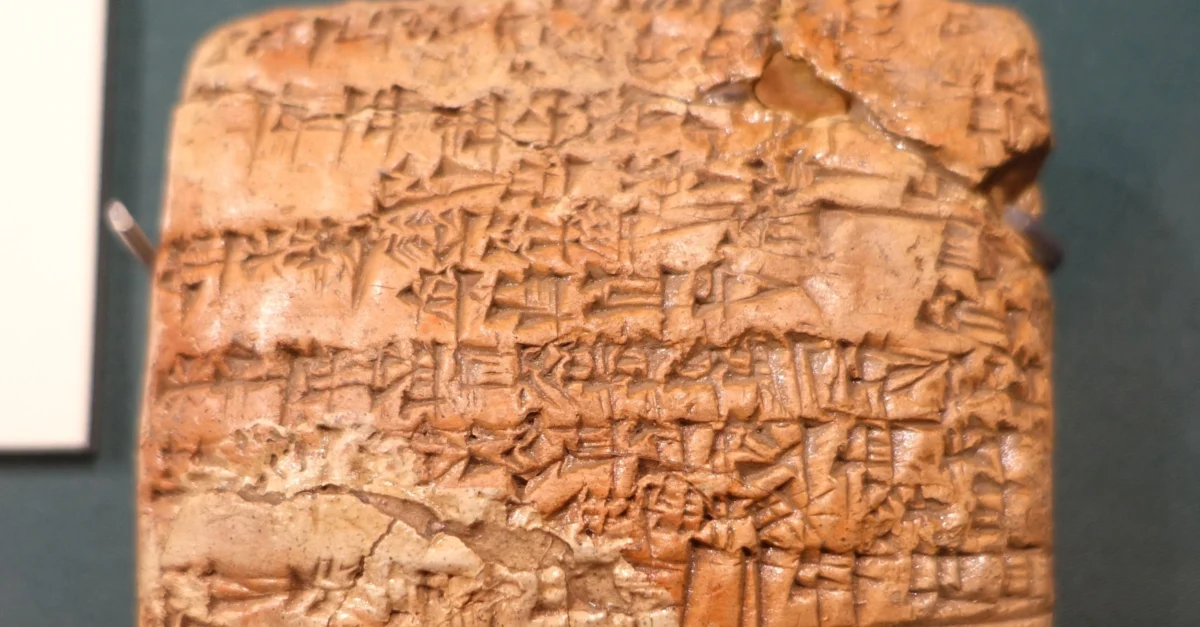
Nippur, Mesopotamia – Circa 1894-1595 BCE – In the annals of ancient literature, few texts offer as profound and complex a window into early concepts of justice, divinity, and human accountability as the Hymn to Nungal. This Sumerian poem, dating back to at least the Old Babylonian period, extols Nungal, a deity whose portfolio uniquely encompassed both the grim realities of incarceration and the transformative potential of rehabilitation. Known as the "Great Princess" (Manungal, or "Mother Nungal"), she presided over the prison house, a realm depicted as simultaneously terrifying and merciful, a crucible for the purification of souls.
The Hymn to Nungal, also referred to as Nungal A, was not merely a religious ode but a cornerstone of Sumerian intellectual life. It held a prominent place in the curriculum of the edubba, the scribal schools, where future administrators, priests, and legal professionals were meticulously trained. Its frequent copying, evident from archaeological finds, underscores its widespread importance and the deep resonance of its themes within ancient Mesopotamian society.
The Hymn to Nungal: A Glimpse into Sumerian Spirituality and Law
At its core, the Hymn to Nungal is a poetic exploration of divine justice, depicting Nungal’s prison as a fearsome yet ultimately purposeful institution. Unlike modern carceral systems, imprisonment in ancient Mesopotamia was generally a temporary measure, a holding pen for the accused awaiting trial or the divine ordeal. Yet, Nungal’s domain transcends this earthly interpretation, suggesting a more profound spiritual confinement designed to distinguish the innocent from the guilty and, crucially, to facilitate moral transformation.
The poem’s structure is striking, beginning with an ominous, almost terrifying description of the prison house from an unidentified narrator’s perspective. It is a place of despair, where inmates wander like shadows, their faces so altered by suffering that they fail to recognize even their closest kin, passing their days "in weeping and lamentation." This initial portrayal establishes the gravity of transgressing divine and earthly laws, instilling a sense of awe and dread in the reader or listener.
However, the narrative shifts dramatically when Nungal herself speaks. Her voice introduces a dimension of compassion and redemptive purpose. She describes her house as "built on compassion," a place that "gives birth to a just person but exterminates a false one." This duality — punishment intertwined with the potential for rebirth — positions Nungal as a figure of immense moral authority, concerned not only with retribution but also with the spiritual and ethical restoration of individuals.
Nungal: Goddess of Dualities
Nungal’s divine lineage and associations further illuminate her complex role. She is identified as the daughter of Ereshkigal, the formidable Queen of the Underworld, thereby linking her directly to the afterlife and the fate of souls beyond mortal existence. This connection imbues her with a power over judgment and the unseen realms. Simultaneously, she is presented as the daughter-in-law of Enlil, the sky god revered for maintaining cosmic order and justice. Symbolically, she is also referenced as a "daughter of An" (Anu), Enlil’s father and the supreme sky god, further cementing her ties to foundational principles of justice and universal order.
Her consort, Birtum, an underworld god whose name translates tellingly as "shackle," reinforces Nungal’s authority over confinement and accountability. Together, their divine presence underscored the belief that human laws and their enforcement were not arbitrary but divinely sanctioned, validated by the gods who governed all aspects of existence.
Chronological Roots and Rediscovery
The precise origins of the Hymn to Nungal are a subject of scholarly discussion, though its prominence is firmly established in the Old Babylonian period (circa 1894-1595 BCE), evidenced by the numerous copies unearthed from that era. However, textual analysis suggests it may have been composed significantly earlier, perhaps during the Ur III period (circa 2112 to circa 2004 BCE). This earlier dating is often linked to the reign of Shulgi of Ur (2094 to circa 2046 BCE), a monarch renowned for his aggressive promotion of widespread literacy. Shulgi’s initiatives led to the establishment of numerous scribal schools, or edubba, fostering a fertile environment for the creation and dissemination of written works, including religious and pedagogical texts like the Hymn to Nungal.
Further intriguing evidence points to Nungal’s name appearing in texts from the even more ancient Early Dynastic period in Mesopotamia (circa 2900 to circa 2350/2334 BCE). This suggests that the hymn, or at least earlier versions or core themes, might have roots stretching back to this formative era of Mesopotamian civilization, evolving over centuries to reach the form known today.
The Edubba: Cradle of Sumerian Literacy
The edubba played a pivotal role in Sumerian society, serving as centers of learning where young men, primarily from elite families, were trained in the intricate art of cuneiform writing, mathematics, literature, and administration. The curriculum was rigorous, and specific compositions, known as the "Decad," were deemed essential for an advanced student to master before graduation. The Hymn to Nungal was one of these ten foundational texts, indicating its critical importance not just for religious understanding but also for instilling a particular ethical and legal worldview in the future leaders of Sumer.
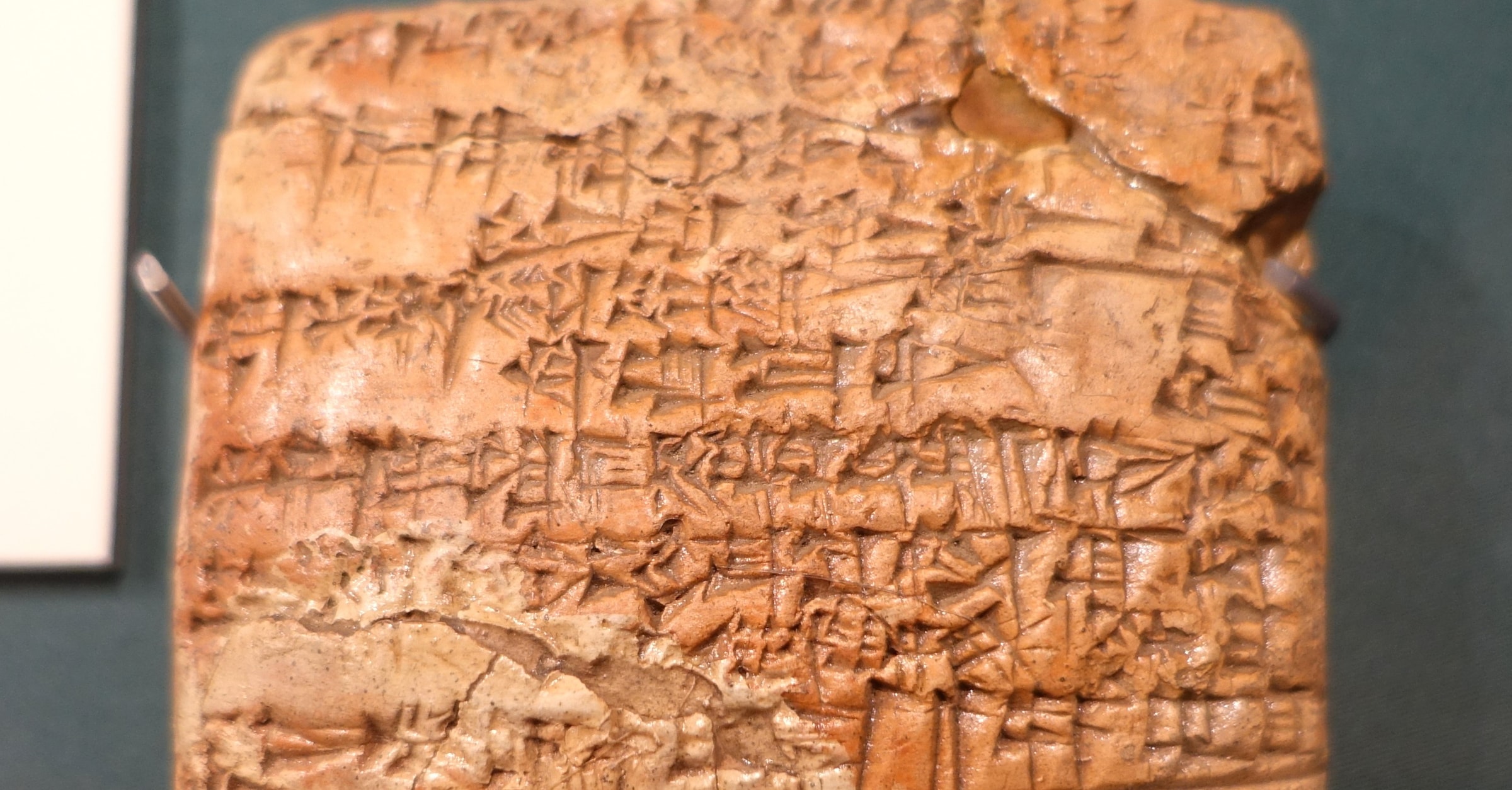
Studying this hymn would have familiarized scribes with the divine principles underpinning the legal system, the consequences of crime, and the potential for divine mercy. It served as both a moral compass and a practical guide to the theological framework of justice.
Echoes from Nippur
The numerous cuneiform copies of the Hymn to Nungal were primarily discovered in the ruins of Nippur, a city of immense religious and intellectual significance in ancient Mesopotamia. Nippur was home to the temple of Enlil, the chief deity of the Sumerian pantheon, and served as a major center for scribal activity and scholarship. The sheer volume of tablets found in Nippur, alongside other sites across modern-day Iraq during archaeological excavations from the mid-19th to mid-20th centuries, firmly established the hymn’s widespread popularity and integral role in Sumerian cultural life. These discoveries were crucial in piecing together the literary and religious landscape of one of the world’s earliest civilizations.
The Fabric of Mesopotamian Justice
To fully appreciate the Hymn to Nungal, one must understand the context of justice in ancient Mesopotamia. Societies like Sumer and later Babylon operated under elaborate legal codes, such as the famous Code of Ur-Nammu and the Code of Hammurabi. These codes meticulously defined crimes and prescribed corresponding punishments, ranging from fines and mutilation to forced labor, slavery, or even death. However, these human-made laws were never seen as standalone directives; they were understood to be ultimately validated and upheld by the gods.
Divine Mandate and Earthly Codes
Scholar Stephen Bertman highlights the fundamental principle guiding Mesopotamian justice: "The key [to Mesopotamian justice] was an innate compliance to higher authority, a behavioral characteristic that permeated Mesopotamian culture. Society’s prime personal virtue was humble and unquestioning obedience to the gods and their earthly surrogates. Within society, it was the state and its demands, rather than the individual and his rights, that were supreme." (Bertman, 70). This perspective underscores that justice was less about individual rights and more about maintaining cosmic and social order through adherence to divine will, as interpreted and enforced by the state.
While deities like Utu-Shamash were also associated with justice, Nungal held a distinct portfolio: she was the deity specifically responsible for overseeing the accused after a crime, tasked with discerning innocence from guilt. Her role was crucial in a system that often relied on divine intervention, such as through the "river ordeal," where the accused might be subjected to a trial by water, with their survival or demise interpreted as divine judgment.
The Nature of Punishment and Rehabilitation
As mentioned, physical imprisonment as a long-term punishment was rare in Mesopotamia. Instead, confinement in a guardhouse or prison was typically temporary, pending a trial or an ordeal. Once guilt was established, punitive measures were diverse and often severe. Yet, Nungal’s hymn suggests a deeper, spiritual dimension to this process, where her prison house exists on a plane beyond the mortal, designed not just for retribution but for profound moral rectification.
The concept of a deity overseeing both the punitive and rehabilitative aspects of justice is remarkably sophisticated for its time. Nungal’s "house" functions as a spiritual forge, where the "wicked" are disciplined and the "misguided" are transformed, leading to a "just person" being "given rebirth." This element of rehabilitation hints at an understanding that transgressions could stem from error rather than inherent evil, and that divine intervention could guide individuals back to a righteous path.
An Ancient "Official Response": Shaping Societal Norms
The Hymn to Nungal served as a powerful tool for societal control and moral instruction in ancient Mesopotamia. Its inclusion in the edubba curriculum meant that it was an "official response" to the challenges of maintaining order and justice, shaping the values of the intellectual and administrative elite.
The Pedagogy of Fear and Hope
For the scribes-in-training, the hymn delivered a clear message: uphold the legal system with integrity, or face dire consequences, both earthly and divine. Jeremy Black, a prominent scholar of Sumerian literature, notes, "This is one of the most menacing and unsettling compositions in the Sumerian literary corpus, posing difficult questions about the nature of justice and hinting darkly at the fate of criminals and transgressors in early Mesopotamia – for while the legal process is well recorded in law-codes and court records, the operation of prisons themselves is virtually undocumented." (Black, Literature, 339).
Yet, the hymn also balanced this fear with a message of hope. Nungal’s self-description as a "compassionate mother" who "tempers severe punishments" and "snatches men from the jaws of destruction" offered a path to redemption. It assured those who erred, whether through ignorance or circumstance, that divine mercy was attainable through purification within Nungal’s transformative house. This dual approach – leveraging both intimidation and the promise of forgiveness – was a highly effective method for reinforcing societal norms and encouraging compliance.
Ritual and Recitation
Beyond its pedagogical role, the Hymn to Nungal was likely integrated into public life. It is thought to have been read aloud or recited at festivals and religious events honoring Nungal, a common practice during ancient Mesopotamian celebrations. Such public performances would have served to disseminate its powerful messages to a wider populace, reinforcing the omnipresent nature of divine justice and the ultimate accountability of all individuals before the gods. These recitations would have been communal affirmations of the social contract and the divine order.
The Hymn’s Poetic Power and Theological Depth
The literary quality of the Hymn to Nungal is remarkable, employing vivid imagery and a compelling narrative arc to convey its profound themes.
The Terrifying Prison: A Narrative of Despair
The opening lines paint a stark, almost hallucinatory picture of the prison: "House, furious storm of heaven and earth, battering its enemies; prison, jail of the gods, august neck-stock of heaven and earth!" It is described as a "raging sea," a "pitfall waiting for the evil one," and a "net whose fine meshes are skillfully woven." The architectural features are imbued with monstrous attributes: stairs like a "great open-mouthed dragon," a door jamb like a "great dagger," and pilasters like "lions." The inmates’ despair is palpable: "Brother counts for brother the days of misfortune, but their calculations get utterly confused. A man does not recognize his fellow men; they have become strangers." This initial section effectively evokes the terror and isolation of a soul facing divine judgment.
Nungal’s Voice: Compassion Amidst Confinement
The shift to Nungal’s voice in lines 62-116 marks a profound thematic transition. She asserts her divine authority and lineage, "An has determined a fate for me, the lady; I am the daughter of An. Enlil too has provided me with an eminent fate, for I am his daughter-in-law." But crucially, she emphasizes her compassionate nature: "Mercy and compassion are mine. I frighten no one. I hold the tablet of life in my hand, and I register the just ones on it."
Her house, despite its initial fearsome portrayal, is ultimately a place of healing: "My house is built on compassion… It soothes the heart of that person, and refreshes his spirits." She promises transformation: "When it has polished him clean like silver of good quality… he will be entrusted again into the propitious hands of his god." This portrayal of Nungal as a benevolent yet firm mother figure who "cools down even the angriest heart" and "snatches men from the jaws of destruction" provides a powerful counterpoint to the initial dread, offering a path to spiritual renewal.
Enduring Implications and Legacy
The Hymn to Nungal remains a vital document for understanding the sophisticated moral and legal philosophy of ancient Mesopotamia. It challenges simplistic notions of ancient justice as purely punitive, revealing a nuanced system that grappled with concepts of accountability, rehabilitation, and divine mercy.
A Blueprint for Justice
As Jeremy Black observed, the hymn served as a "blueprint" for justice, instructing future leaders on the importance of a fair legal system while simultaneously demonstrating the spiritual consequences of transgression. It illustrates how ancient societies integrated their legal codes with their deepest religious beliefs, creating a holistic framework for social order. The emphasis on Nungal’s ability to separate the innocent from the guilty, and her role in purification, speaks to a fundamental desire for truth and equity in judgment.
The Eternal Dance of Punishment and Redemption
Ultimately, the hymn’s most enduring legacy lies in its exploration of the eternal human struggle between wrongdoing and the desire for redemption. Nungal’s promise that her "house gives birth to a just person" offers a powerful message of second chances, suggesting that even after grave errors, a path to spiritual rebirth and reintegration into divine favor is possible. This ancient Sumerian poem, therefore, resonates with themes that continue to challenge and inspire discussions about justice, punishment, and rehabilitation in contemporary societies, proving that the pursuit of a just and compassionate world is a human endeavor with roots stretching back to the dawn of civilization.