The Unfinished Shadow: Reassessing Ralph Bakshi’s ‘The Lord of the Rings’ and the Evolution of Adult Animation
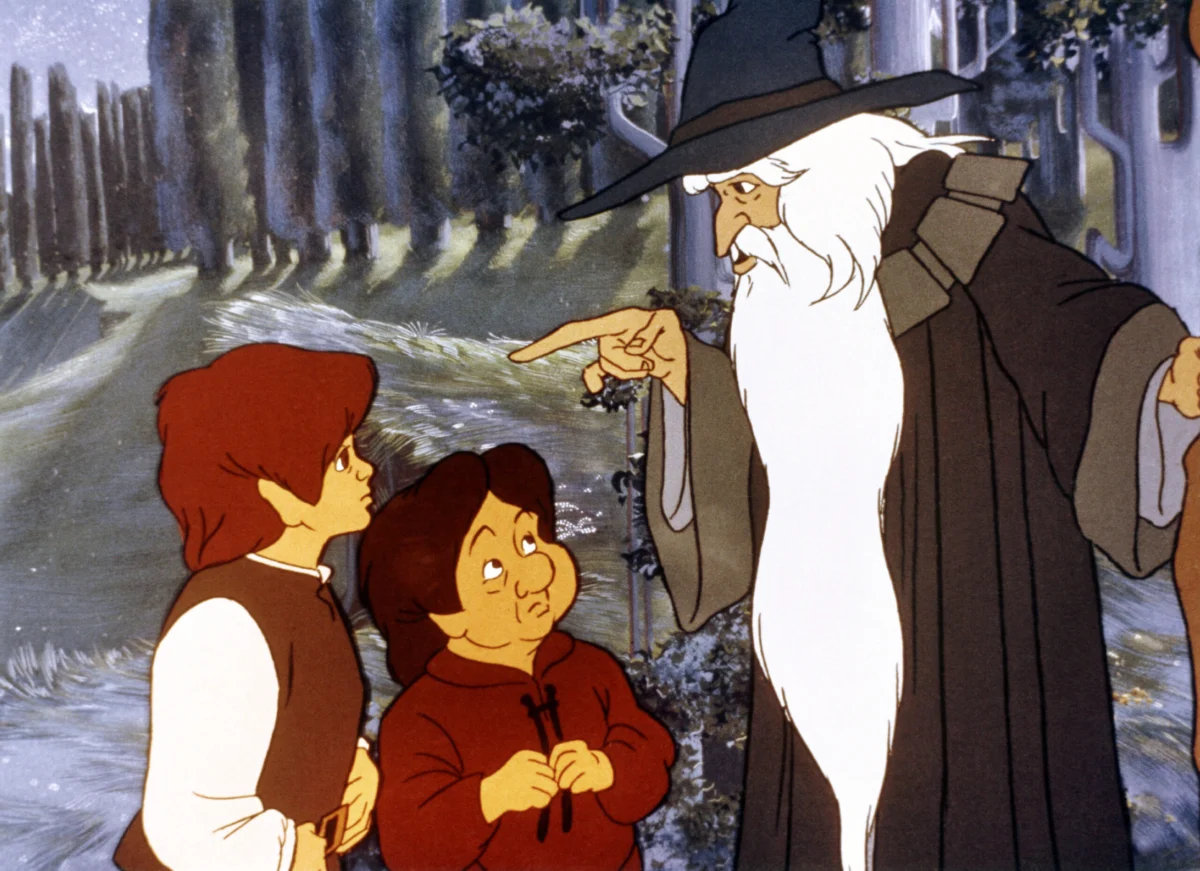
The history of cinema is littered with "what ifs," but few are as visually arresting or historically significant as Ralph Bakshi’s 1978 animated adaptation of The Lord of the Rings. Conceived as a bold, two-part epic that would drag animation out of the "family-friendly" ghetto and into the realm of high-fantasy realism, the film remains a polarizing monument to artistic ambition. Today, nearly five decades after its release, Bakshi’s work is being reappraised not merely as a failed experiment, but as a crucial bridge between the hand-drawn innocence of early animation and the digital grandiosity of modern blockbusters.
Main Facts: The Collision of Middle-earth and the Midnight Movie
Ralph Bakshi, the provocateur behind the first X-rated animated feature Fritz the Cat (1972), took on J.R.R. Tolkien’s legendarium at a time when live-action technology was deemed insufficient to capture the scale of Middle-earth. Released in 1978 by United Artists, The Lord of the Rings covered roughly one-and-a-half books of the trilogy, ending abruptly after the Battle of Helm’s Deep.
The film is most famous for its heavy use of rotoscoping—a technique where live-action footage is filmed and then traced onto animation cels. This created a jarring, often eerie "uncanny valley" effect, particularly in the depiction of the Ringwraiths and the Orc armies. While the film was a financial success—grossing over $30 million on a budget of approximately $4 million—internal studio politics and a marketing blunder regarding its "Part One" status led to the cancellation of the planned sequel. This left the story unfinished until the Rankin/Bass television special The Return of the King attempted to provide a loosely related conclusion in 1980.

Chronology: The Rise and Fragmentation of an Auteur’s Vision
To understand the 1978 Lord of the Rings, one must look at the trajectory of Ralph Bakshi’s career and the state of the industry during the 1970s.
1956–1971: The Terrytoons Apprenticeship
Bakshi began his career at the bottom of the ladder at Terrytoons, polishing dirt off cels. By 25, he was directing. He learned the "factory" method of American animation but grew to loathe its creative limitations. He saw animation as a medium for social commentary and adult storytelling, not just talking animals.
1972–1975: The Provocateur Era
Bakshi exploded onto the scene with Fritz the Cat, followed by the gritty, street-level stories of Heavy Traffic and the controversial satire Coonskin. These films established him as a "midnight movie" king—an artist who used the medium to explore race, sex, and urban decay.

1976–1978: The Pursuit of Tolkien
Bakshi had been a lifelong fan of Tolkien. After learning that United Artists had abandoned a live-action script by John Boorman (which would have condensed the entire trilogy into one hyper-sexualized film), Bakshi stepped in. He insisted on a two-part structure to preserve the source material’s integrity. Production was grueling, involving live-action shoots in Spain to provide the rotoscope reference for the massive battle scenes.
1978–1980: The "Part One" Controversy and the Fallout
When the film was released in November 1978, United Artists made the fateful decision to remove "Part One" from the title, fearing audiences wouldn’t pay for an incomplete story. The move backfired; viewers felt cheated when the credits rolled mid-saga. Despite the film’s profitability, the negative word-of-mouth regarding the ending stalled the sequel.
1992: The Cool World Echo
Bakshi’s later career, including the 1992 hybrid film Cool World, mirrored the LOTR struggle. Like his Tolkien adaptation, Cool World was plagued by studio interference, with his original psychological horror script being rewritten into a comedy during production. It reinforced Bakshi’s status as a visionary constantly at odds with the "machinery" of Hollywood.

Supporting Data: The Technical and Financial Paradox
The numbers behind Bakshi’s The Lord of the Rings tell a story of a "successful failure."
- Box Office Performance: The film earned $30.5 million in the United States alone. Adjusted for inflation, this would be roughly $140 million today—a massive hit for an independent animated feature.
- Rotoscoping Scale: Bakshi’s team rotoscoped thousands of frames of live-action footage. While traditional animation typically runs at 12 to 24 frames per second, the rotoscoped battle scenes required a level of fluid motion that pushed the limits of the studio’s technical capacity.
- The Script: The screenplay was co-written by Peter S. Beagle, the acclaimed author of The Last Unicorn. Beagle’s involvement ensured that the dialogue remained largely faithful to Tolkien’s prose, a feat that critics at the time acknowledged as one of the film’s strengths.
Despite these strong metrics, the film was viewed by the studio as a liability. The sheer cost of producing a sequel with the same labor-intensive rotoscoping techniques, combined with the fractured relationship between Bakshi and the producers, led to the project’s abandonment.
Official Responses and Historical Reception
The reaction to the film in 1978 was a mixture of awe and confusion.

The Critics: Many contemporary critics praised the film’s visual daring but found the rotoscoping distracting. The New York Times described it as "an extraordinary, if uneven, achievement," noting that the transition between hand-drawn characters and "processed" live-action backgrounds was often jarring.
The Studio (United Artists): Historically, the studio’s decision to hide the "Part One" label has been cited by film historians as one of the great marketing blunders of the era. Saul Zaentz, the producer who held the Tolkien rights, later expressed regret over how the distribution was handled, though he would eventually go on to produce Peter Jackson’s trilogy decades later.
The Director’s Stance: Ralph Bakshi has remained vocal about his experience. In various retrospectives, he has described the process as "heartbreaking." He famously stated that he wanted to create a film that looked like "moving paintings," and felt that the studio’s refusal to finish the story was a betrayal of the fans. Bakshi also famously dismissed the Rankin/Bass television specials as "commercial rip-offs" that lacked the soul of the original books.

Legacy Holders: Interestingly, Peter Jackson has openly credited Bakshi’s film as his introduction to Tolkien. Jackson’s 2001 The Fellowship of the Ring even features several shots that are direct homages to Bakshi’s compositions—most notably the scene where the Hobbits hide under a tree root from a Ringwraith.
Implications: The Cinematic Future Bakshi Helped Carve
The long-term implications of Bakshi’s The Lord of the Rings are felt in the very DNA of modern adult animation and fantasy cinema.
1. The Validation of Animation as Cinema
Before Bakshi, animation in America was almost exclusively the domain of Disney-style family entertainment. Bakshi proved that the medium could handle high-stakes drama, complex mythology, and "adult" themes. Without his 1978 experiment, the path for films like Akira, Ghost in the Shell, or even the recent Spider-Man: Across the Spider-Verse (which heavily utilizes mixed-media and "glitch" aesthetics) would have been much harder to pave.

2. The Prototype for the Epic Fantasy Format
Bakshi was the first to argue that Tolkien’s work could not be contained in a single film. His insistence on a multi-part structure set the precedent for the trilogy format that Peter Jackson would eventually perfect. He demonstrated that the audience had an appetite for the "travelogue" nature of fantasy—the slow build of lore and world-building.
3. The Cult of the "Auteur Animator"
Bakshi’s career established the archetype of the "auteur animator"—the director whose fingerprints (or "smudges," as some critics called them) are visible in every frame. His work on The Lord of the Rings and Cool World showed that animation could be as personal and idiosyncratic as live-action indie cinema.
4. The Spiritual Sequel Phenomenon
As noted in the IndieWire After Dark retrospective, Bakshi’s film functions as a "spiritual sequel" to the more innocent The Hobbit (1977). It represents the moment the audience "grows up." The shift from the bright, storybook colors of the Rankin/Bass Hobbit to the shadowy, horrific rotoscoping of Bakshi’s Rings mirrors the thematic shift in Tolkien’s own writing—from a children’s adventure to a world-altering war.

In conclusion, Ralph Bakshi’s The Lord of the Rings is a wonderfully misshapen masterpiece. It is a film that was defeated by its own ambition and the short-sightedness of its financiers, yet it refused to die. Today, it stands as a reminder that the most interesting art often happens at the margins, where creators are willing to lose control of their creations in the pursuit of something truly new. Bakshi didn’t just animate a book; he fought a war for the soul of a medium, and while he may have lost the battle for Part Two, he undeniably won the war for the future of the animated epic.